

Researchers at Nazarbayev University have introduced the first digital food atlas of Central Asia, marking a significant step forward in how diets in the region are studied and understood. The tool is designed to improve public health and nutrition research by offering more accurate, region-specific dietary data, DKNews.kz reports.
Developed by the Central Asia Food Innovation Lab (CAFI Lab), the project aims to address a long-standing problem in nutritional science: the lack of reliable data on what people in Central Asia actually eat and in what quantities.
Filling the Data Gap in Local Diets
Until now, specialists in the region have largely depended on Western or East Asian food databases. However, these tools often fail to reflect the realities of Central Asian cuisine, where diets are shaped by:
- High consumption of red meat
- Flour-based dishes as staples
- Strong reliance on dairy products
- Traditional cooking methods that vary widely across households
Researchers note that even small inaccuracies in portion size estimation can significantly distort calculations of calorie and nutrient intake, making localized tools essential.
What the Digital Food Atlas Includes
The new atlas is built on two region-specific datasets:
- Central Asian Food Dataset (CAFD)
- Central Asian Food Scenes Dataset (CAFSD)
Together, they form a structured visual system that includes 115 food items. These range from traditional dishes such as beshbarmak, plov, and manty to widely consumed international foods like pizza, cereals, and ice cream.
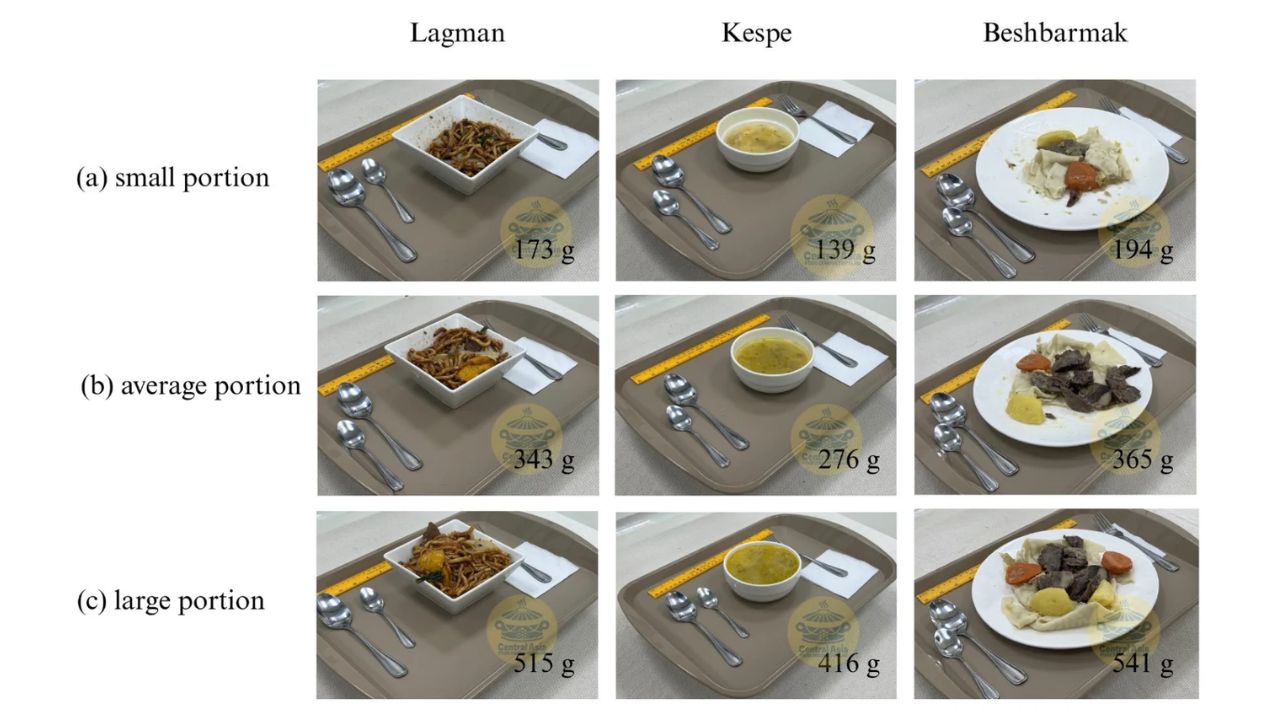
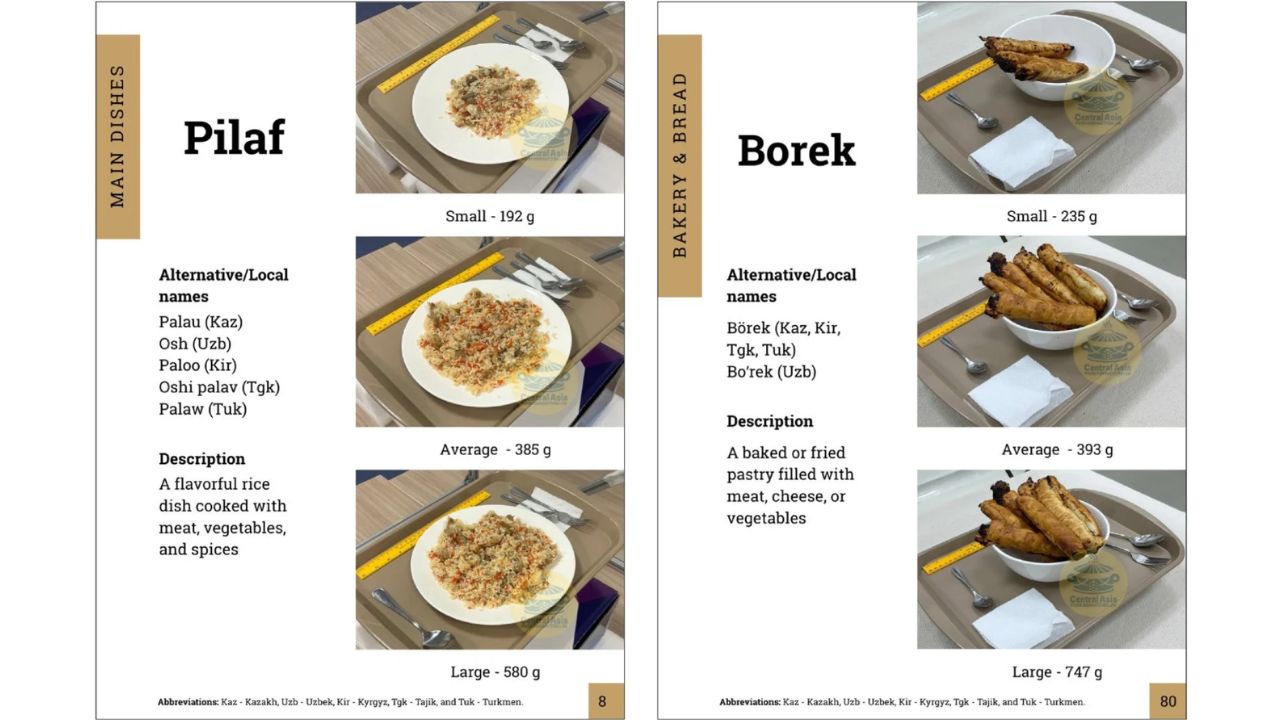
Each item has been digitized under controlled laboratory conditions with precisely measured portions, allowing researchers to compare dietary intake more consistently across studies.
Why Portion Sizes Matter
Accurate nutrition analysis depends not only on what people eat, but also on how much they consume. The atlas focuses on standardizing portion sizes, which is often one of the most difficult aspects of dietary assessment.
The researchers explain that while calorie calculation is theoretically straightforward—based on the energy value of proteins, fats, and carbohydrates—in practice it becomes complex in real-world meals. Many dishes contain:
- Multiple ingredients with varying energy densities
- Hidden fats, broths, and sauces
- Differences in preparation methods and texture
As a result, visual tools like food atlases provide a practical compromise, helping researchers estimate intake more reliably, even if a margin of error remains.
Expert Insight
“This is not just a visual guide,” said Dr. Mei Yen Chan, assistant professor at the NU School of Medicine. “It aligns with international standards and allows researchers in Central Asia to generate data that will be globally comparable.”
From Research to AI Applications
Beyond academic use, the atlas is also expected to support the development of digital health technologies. The datasets are already being used to train machine-learning systems capable of:
- Recognizing food items from images
- Estimating nutritional content
- Supporting mobile health applications
- Enhancing telemedicine tools
Researchers are experimenting with multi-task deep learning models that aim to better interpret complex, multi-ingredient dishes—an area where current AI systems still face limitations.
Challenges and Next Steps
Despite its progress, the atlas is only an initial stage in a broader research effort. It does not directly calculate calorie content and still requires additional analytical layers for full nutritional analysis.
The team is now working to expand the database by:
- Adding detailed nutritional profiles for each dish
- Improving accuracy in estimating portion variability
- Seeking additional funding to scale the project for wider use in Kazakhstan and beyond