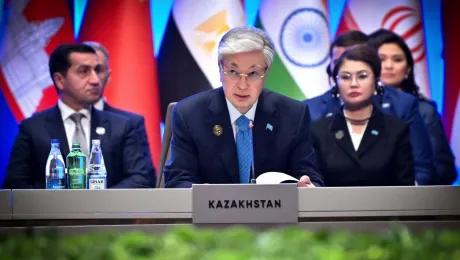


Kazakhstan Is No Longer “Emerging” in AI — GITEX AI Kazakhstan Showed Central Asia Is Ready to Compete
For years, Central Asia was discussed as a region with potential. At GITEX AI Kazakhstan 2026 in Almaty, that conversation changed completely, DKNews.kz reports.
The question is no longer whether the region will join the global AI race — it already has.
Over two intense days at the Atakent Exhibition Centre, thousands of visitors moved between packed conference halls, startup booths, investor meetings and live demonstrations of technologies that only recently felt distant from the region: sovereign AI systems, hyperscale cloud infrastructure, industrial automation, quantum computing and private 5G networks.
What stood out most was not the scale of the event itself, although it became the largest AI and tech gathering ever held in Central Asia and the Caucasus. The real story was the mood. There was urgency, ambition and, perhaps for the first time, confidence that Kazakhstan is becoming more than just a consumer of technology — it wants to build the future itself.
More than 336 companies and startups participated in the exhibition, while over 100 investment funds managing more than 200 billion dollars in assets arrived in Almaty searching for the region’s next growth story.
And unlike many technology forums built around promises, GITEX AI Kazakhstan felt grounded in real economic transformation.

Why global tech giants suddenly care about Kazakhstan
One of the strongest signals came from the international companies entering the market for the first time.
Software giant Atlassian chose Kazakhstan for its debut not only in Central Asia, but across the entire GITEX ecosystem globally. The company used the exhibition to introduce Rovo AI — an AI-powered collaboration platform already used by millions worldwide.
Executives openly admitted they came to understand what local industries actually need: telecom infrastructure, banking security, encrypted systems and data governance adapted for regional realities.
That detail matters.
For years, Central Asia was treated as a secondary market by global tech companies. Now the approach is changing. International corporations are no longer simply “expanding east.” They are trying to position themselves early in a region many believe could become one of the fastest-growing digital economies of the next decade.
Cloudflare arrived with cybersecurity infrastructure designed for governments and enterprises. Redington brought global technology partners including Mastercard, Red Hat and Dassault Systèmes — marking the French software company’s first major step into Central Asia.
Meanwhile, companies such as Cisco, Dell, Lenovo, Huawei, Salesforce and Yandex turned the exhibition floor into something closer to Dubai or Singapore than what many outsiders still expect from the region.
Kazakhstan’s AI ambitions are becoming practical
Perhaps the most important shift discussed throughout the event was that AI in Kazakhstan is moving beyond slogans.
The conversation is becoming industrial.
Kcell, Kazakhstan’s largest mobile operator, presented its growing portfolio of private 5G infrastructure for businesses. According to company executives, AI is already helping improve network management and customer experience in real time.
That may sound technical, but it reflects something bigger happening across the economy.
Factories, logistics hubs, mining companies, banks and energy producers are no longer discussing whether to adopt AI. They are discussing how quickly they can deploy it without falling behind competitors.
This was especially visible during discussions around energy and industrial operations.
Representatives from Eni Kazakhstan and Siemens explained how AI systems are already reducing drilling time, predicting equipment failures before they happen and cutting emissions through data analysis. One executive revealed that AI-assisted subsurface analysis reduced drilling operations by 35 percent — a massive economic and environmental gain.
In other words, AI is no longer being presented as futuristic marketing. It is being treated as infrastructure.

The startup moment Kazakhstan has been waiting for
For many visitors, the most surprising part of GITEX AI Kazakhstan was the startup zone.
More than 50 Kazakhstani startups presented products to international investors, many for the first time. And unlike previous years, several companies looked genuinely global in ambition.
One startup is building rocket propulsion technology inside Kazakhstan. Another, Prosper Pay, already serves more than 120,000 users in fintech. SHAI.PRO demonstrated enterprise AI systems designed for banking, education and government institutions.
The message was impossible to ignore: Kazakhstan no longer wants to export only raw materials. It wants to export technology.
That transition will not happen overnight. But events like GITEX matter because they create something the region historically lacked — direct access to global capital, partnerships and international visibility.
For startups from Almaty, Astana or Tashkent, the ability to pitch directly to investors managing billions of dollars would have seemed unrealistic just a few years ago.
Now it is happening in their own region.

Quantum computing enters the conversation
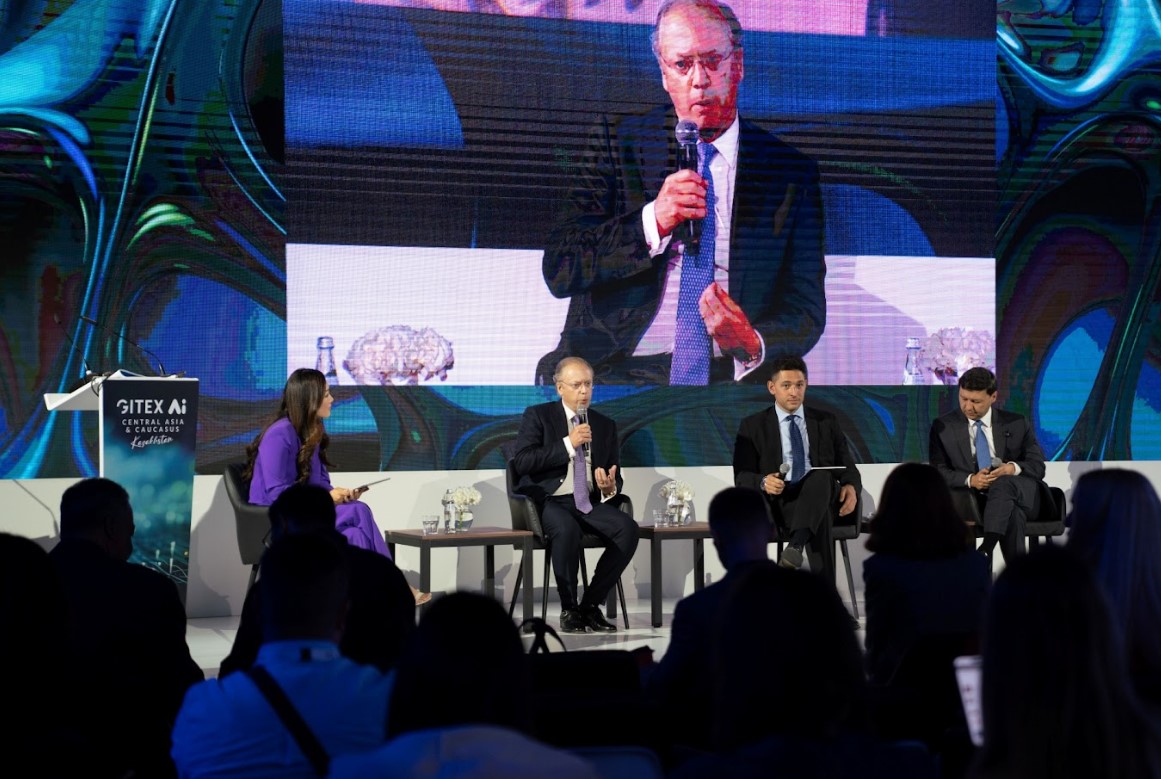
One of the most talked-about sessions focused not on AI itself, but on what comes after it.
Damir Bogdan from Switzerland’s QuantumBasel warned that artificial intelligence alone will not be enough to solve future industrial and scientific problems. According to him, quantum computing is rapidly becoming the next technological battleground.
He pointed to enormous government investments already taking place globally — from China to Europe and Japan — arguing that countries which prepare early will dominate the next wave of innovation.
For Kazakhstan, the significance of that discussion was symbolic.
The fact that quantum computing is already being discussed seriously in Almaty shows how quickly the country’s technology agenda is evolving. Just a decade ago, conversations focused mostly on internet access and digitisation. Today, the debate includes sovereign AI, climate technologies and quantum infrastructure.
A new regional identity is forming
Beyond the announcements and business deals, GITEX AI Kazakhstan revealed something deeper: Central Asia is beginning to see itself differently.
For years, regional economies were largely positioned between larger powers — Russia, China, Europe and the Middle East. Technology is now giving countries like Kazakhstan a chance to build independent strategic importance.
Artificial intelligence, cloud infrastructure, fintech and digital logistics are becoming tools not only for economic growth, but for geopolitical influence.
That explains why governments, investors and corporations all arrived in Almaty with unusual intensity.
Everyone senses the same thing: the region is entering a new phase.
And if GITEX AI Kazakhstan 2026 proved anything, it is that Central Asia no longer wants a seat at someone else’s table.
It is building its own.