
Kazakhstan is once again positioning itself as Central Asia’s main gateway for global capital — and this time, the country is making its pitch directly to the world’s largest investors, DKNews.kz reports.
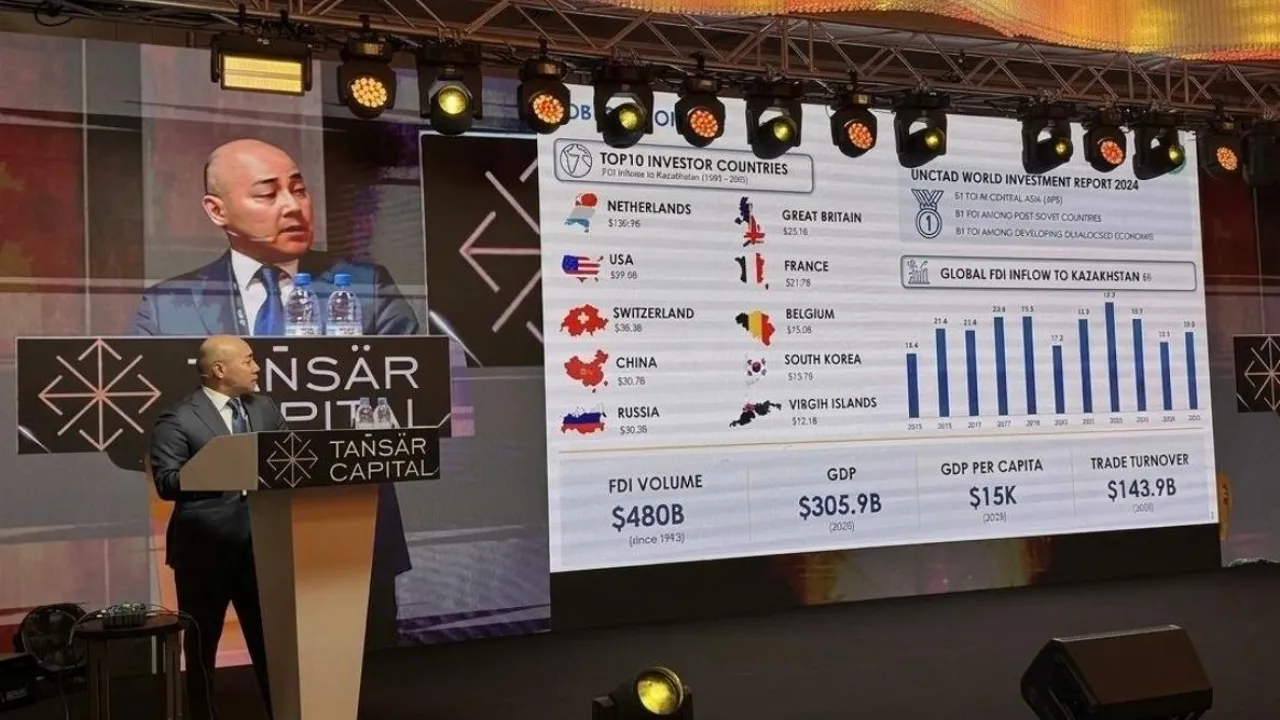
At the Investors Annual Meeting 2026, Deputy Foreign Minister of Kazakhstan Alibek Kuantyrov met with representatives of major international financial institutions, venture capital firms, and industrial investors to showcase what officials describe as a “new stage” of the country’s investment strategy.
The forum gathered influential players from the global investment community, including institutional funds, private equity leaders, and asset managers searching for opportunities in emerging markets. For Kazakhstan, the event became more than just another diplomatic appearance — it was a chance to reinforce its image as the economic center of Central Asia.
Why investors are watching Kazakhstan
The timing is no coincidence.
Global companies are increasingly looking beyond traditional markets and searching for stable, resource-rich countries located along strategic trade routes. Kazakhstan fits that profile almost perfectly.
According to official figures presented at the forum, gross foreign direct investment inflows into Kazakhstan reached 20.5 billion dollars last year. International organizations continue to rank the country as the leading destination for FDI in Central Asia.
Speaking at the meeting, Kuantyrov highlighted several factors that continue to attract international business.
Among them is Kazakhstan’s geographic position. The country today hosts 13 international transit corridors connecting China, Europe, the Middle East, and South Asia. As global logistics chains shift and diversify, Kazakhstan is increasingly becoming a critical transit hub between East and West.
Officials also emphasized the rapid development of digital logistics infrastructure — an area the government sees as key for future competitiveness.
But geography alone is not enough.
Kazakhstan is also leaning heavily on its vast reserves of natural resources, including critical minerals, oil, gas, and uranium. At the same time, authorities are actively promoting the country’s agricultural sector, which still has enormous untapped export potential.

New investment tools aimed at global business
One of the main messages delivered by the Kazakh delegation was simple: the government is ready to offer direct support to major investors.
Kuantyrov noted that Kazakhstan now provides both financial and non-financial incentives for investment projects. In addition, officials are promoting a relatively new mechanism known as the Investment Agreement — a tool allowing investors to conclude direct agreements with the government.
The initiative is designed to provide greater legal stability and clearer conditions for international companies entering the Kazakh market.
For foreign businesses navigating economic uncertainty worldwide, predictability is becoming one of the most valuable assets. Kazakhstan appears eager to capitalize on that demand.

Meetings with BlackRock, B Capital and Investindustrial
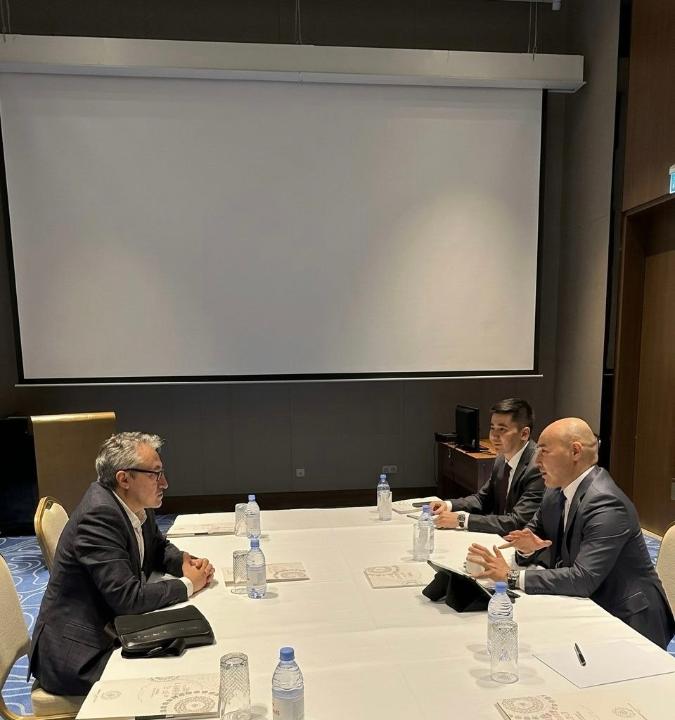
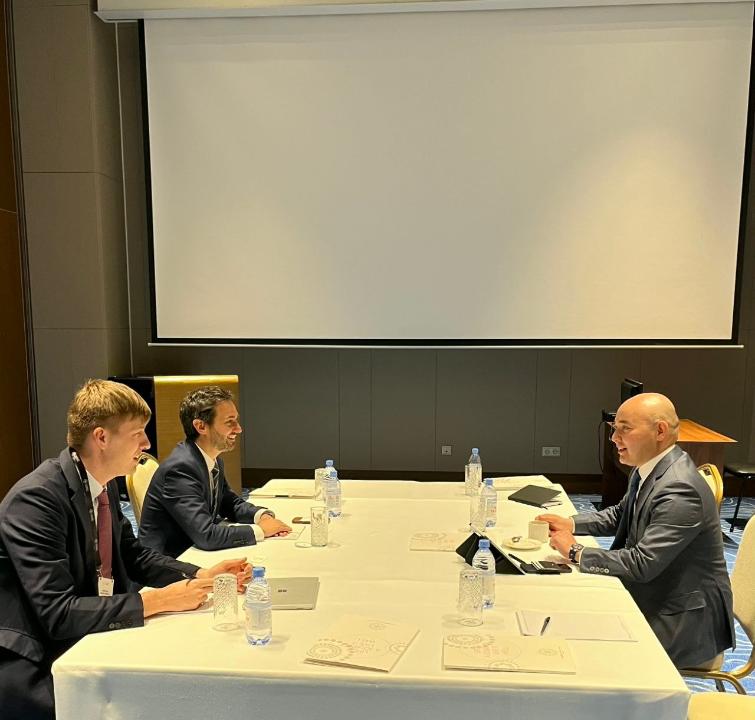
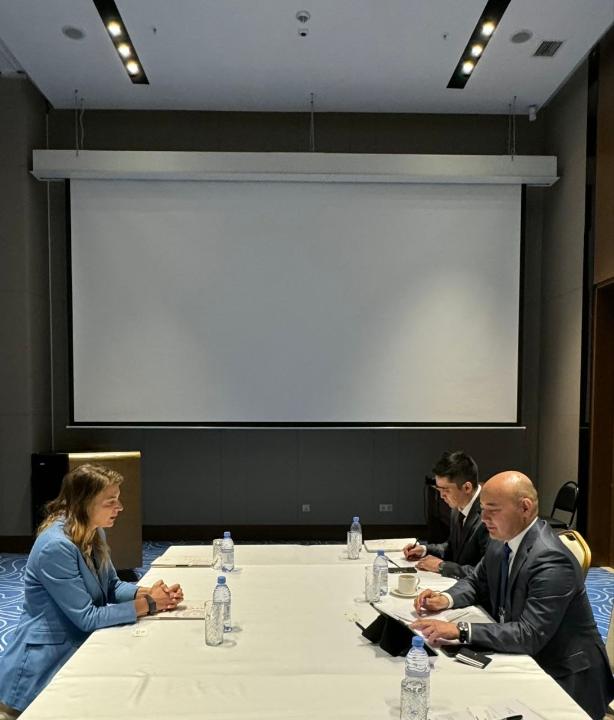
Beyond the public speeches, the forum also became a platform for private negotiations with some of the world’s most influential investment players.
Representatives of BlackRock discussed opportunities related to Kazakhstan’s digital and traditional asset markets. The talks reflected growing international interest in the country’s financial sector and digital transformation ambitions.
Kuantyrov also met with Timur Akazhanov, General Partner at B Capital, where discussions focused on venture financing and the future of private capital in the region. As Central Asia’s startup ecosystem slowly gains momentum, venture investment is becoming an increasingly important topic for policymakers.
Another notable meeting took place with Emanuela Cisini, Partner and Head of Middle East and Asia at Investindustrial. The sides discussed export-oriented manufacturing projects and the possibility of integrating Kazakhstan more deeply into global production chains.
That issue has become especially relevant as international manufacturers seek alternatives for supply diversification and new industrial hubs.

Kazakhstan’s long-term strategy
The Investors Annual Meeting 2026 demonstrated one thing clearly: Kazakhstan is no longer presenting itself only as a raw materials exporter.
Instead, the country is trying to build a broader image — as a logistics hub, manufacturing platform, financial center, and regional technology gateway.
Whether this strategy succeeds will depend on how quickly reforms translate into real projects and whether international investors see long-term stability in the market.
But one signal from the forum was unmistakable: Kazakhstan intends to compete aggressively for global capital — and it wants the world’s biggest investors to see Central Asia not as a frontier, but as an opportunity.