

Global gas flaring continued to rise in 2025 for the third year in a row, reaching 167 billion cubic meters (bcm) and wasting an estimated $54 billion worth of natural gas, according to the latest Global Gas Flaring Tracker released by the World Bank Group. The report warns that continued flaring is undermining energy security at a time when many countries are facing growing demand for affordable and reliable energy, DKNews.kz reports.
According to the World Bank, capturing gas that is currently burned off could help generate electricity, support industrial development, create jobs, and reduce greenhouse gas emissions.
Nine Countries Account for Most Global Flaring
The report notes that global flaring volumes in 2025 were nearly equivalent to Africa’s total annual gas consumption and exceeded the annual volume of liquefied natural gas (LNG) transported through the Persian Gulf.
More than 80% of global gas flaring comes from just nine countries:
- Russia
- Iran
- Iraq
- Venezuela
- Mexico
- Libya
- Algeria
- Nigeria
- United States
Together, these countries account for nearly half of global oil production.
Energy Losses Come at a High Cost
The World Bank says many countries continue to import expensive natural gas while simultaneously flaring large volumes of associated gas produced at oil fields.
According to the report, eliminating routine gas flaring worldwide would require an estimated $70–100 billion in investment—less than twice the annual value of the gas currently being wasted.
The organization argues that reducing flaring could provide several long-term benefits:
- Stronger energy security
- Increased electricity generation
- Higher government revenues
- Lower energy costs
- New employment opportunities
- Reduced greenhouse gas emissions
Leadership Remains the Biggest Challenge
World Bank Global Director for Energy Demetrios Papathanasiou stressed that continued flaring carries significant economic costs.
«At a time when many countries are struggling to increase affordable and reliable energy, the economic development costs of continued flaring are simply too high. The gas currently flared could be captured to power industries and businesses, create jobs, and strengthen energy security.»
The report emphasizes that the technologies needed to eliminate routine flaring already exist.
Instead, progress is often slowed by:
- Weak regulation
- Limited investment
- Insufficient infrastructure
- Poor market conditions
- Lack of political and corporate prioritization
Kazakhstan Recognized for Major Progress
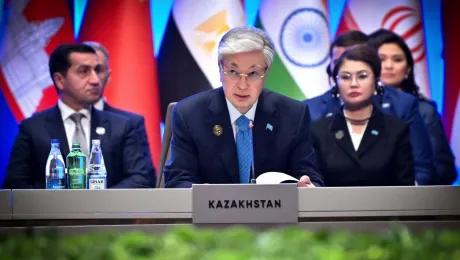
Among the positive examples highlighted in the report is Kazakhstan.
According to the World Bank, the country has reduced gas flaring by 87% since 2012, including an additional 16% reduction in 2025 alone.
The report cites Kazakhstan as evidence that meaningful progress is possible when governments combine effective regulation, targeted investment, and strong leadership.
World Bank Calls for Faster Action
Zubin Bamji, Manager of the World Bank’s Global Flaring and Methane Reduction (GFMR) Partnership, said the necessary tools to reduce flaring are already available.
«The technologies, policies, regulations, and financing mechanisms needed to capture and utilize associated gas are available. What is missing, in too many places, is the leadership, prioritization, and governance needed to put these solutions into practice, creating access to markets and infrastructure. The cost of inaction will be measured in wasted billions in revenue and energy insecurity for millions of people.»
Why This Matters
Gas flaring represents both an environmental challenge and a major economic loss.
As countries seek to strengthen energy security while reducing emissions, capturing associated gas instead of burning it could help increase electricity generation, improve industrial competitiveness, and reduce dependence on energy imports.
The World Bank’s recognition of Kazakhstan’s progress also highlights the country's efforts to reduce routine flaring through regulatory reforms and investment, positioning it among the examples of successful implementation in the global energy sector.