
The K-Calligraphy exhibition of contemporary Korean calligraphy, titled “Hangul: Flowers Blooming Along the Great Silk Road,” has opened at the Abylkhan Kasteyev National Museum of Arts of the Republic of Kazakhstan. The exhibition introduces visitors to Hangul not only as Korea’s unique writing system but also as an art form reflecting the country’s history, culture and traditions.

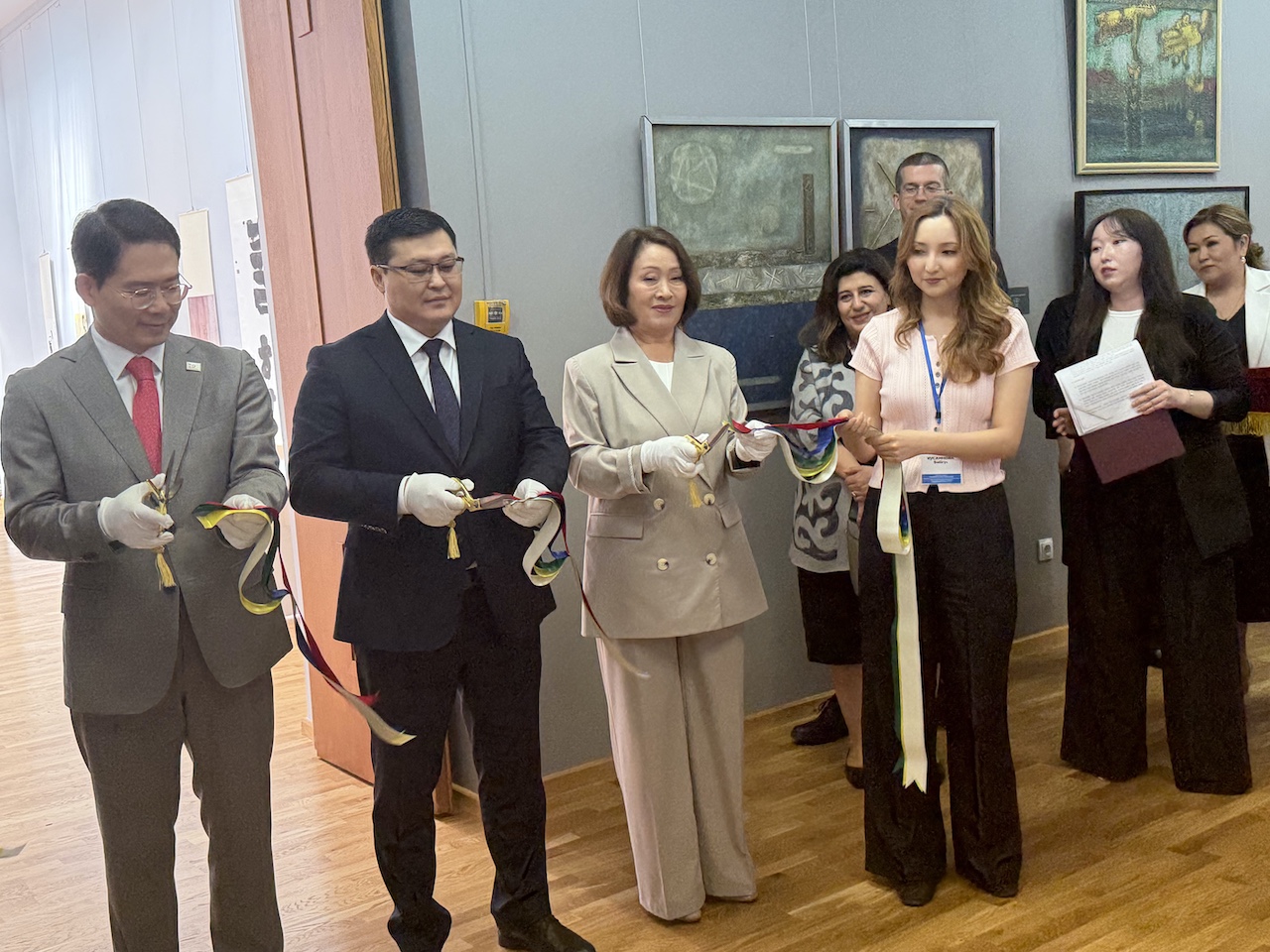
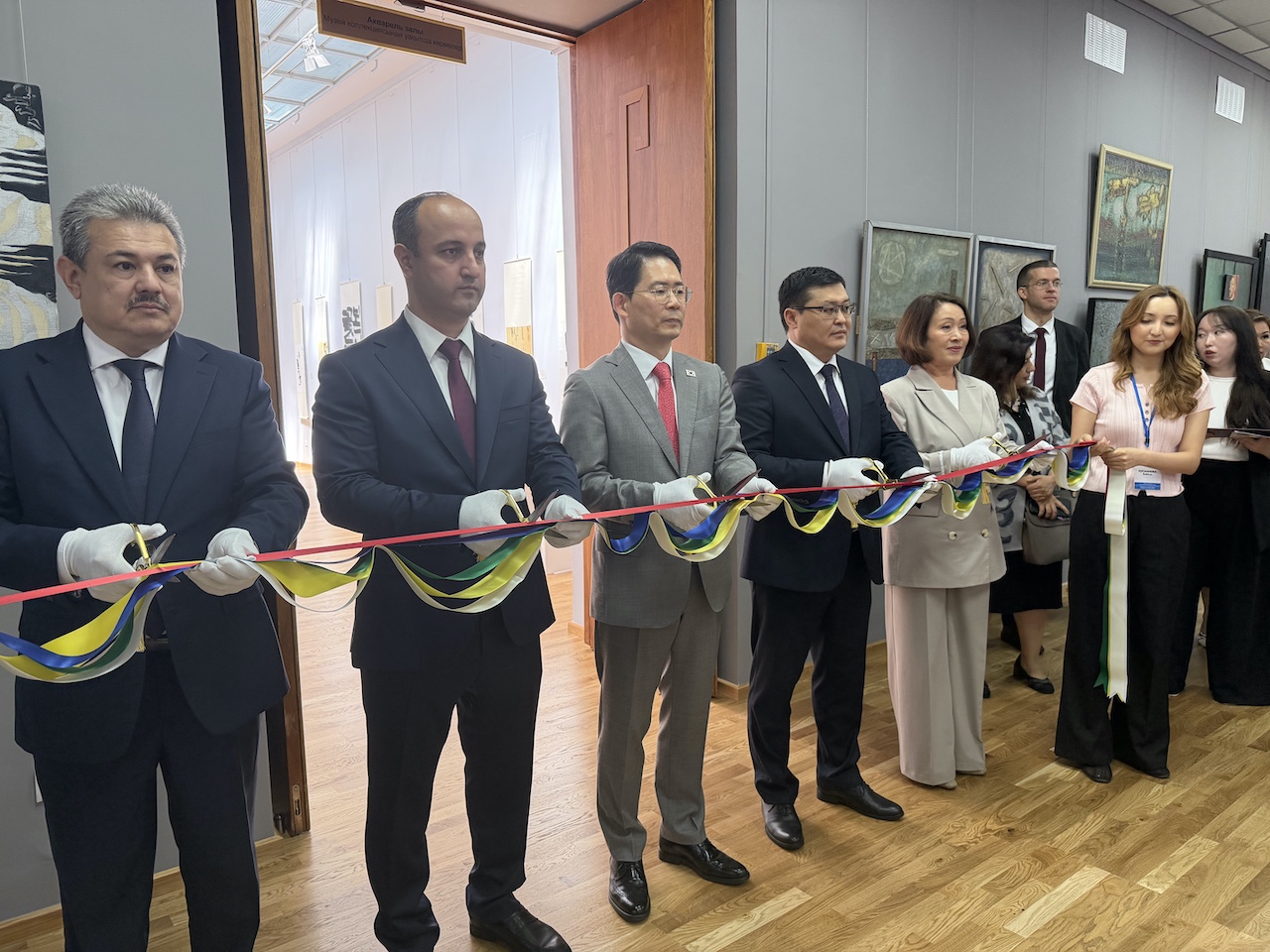
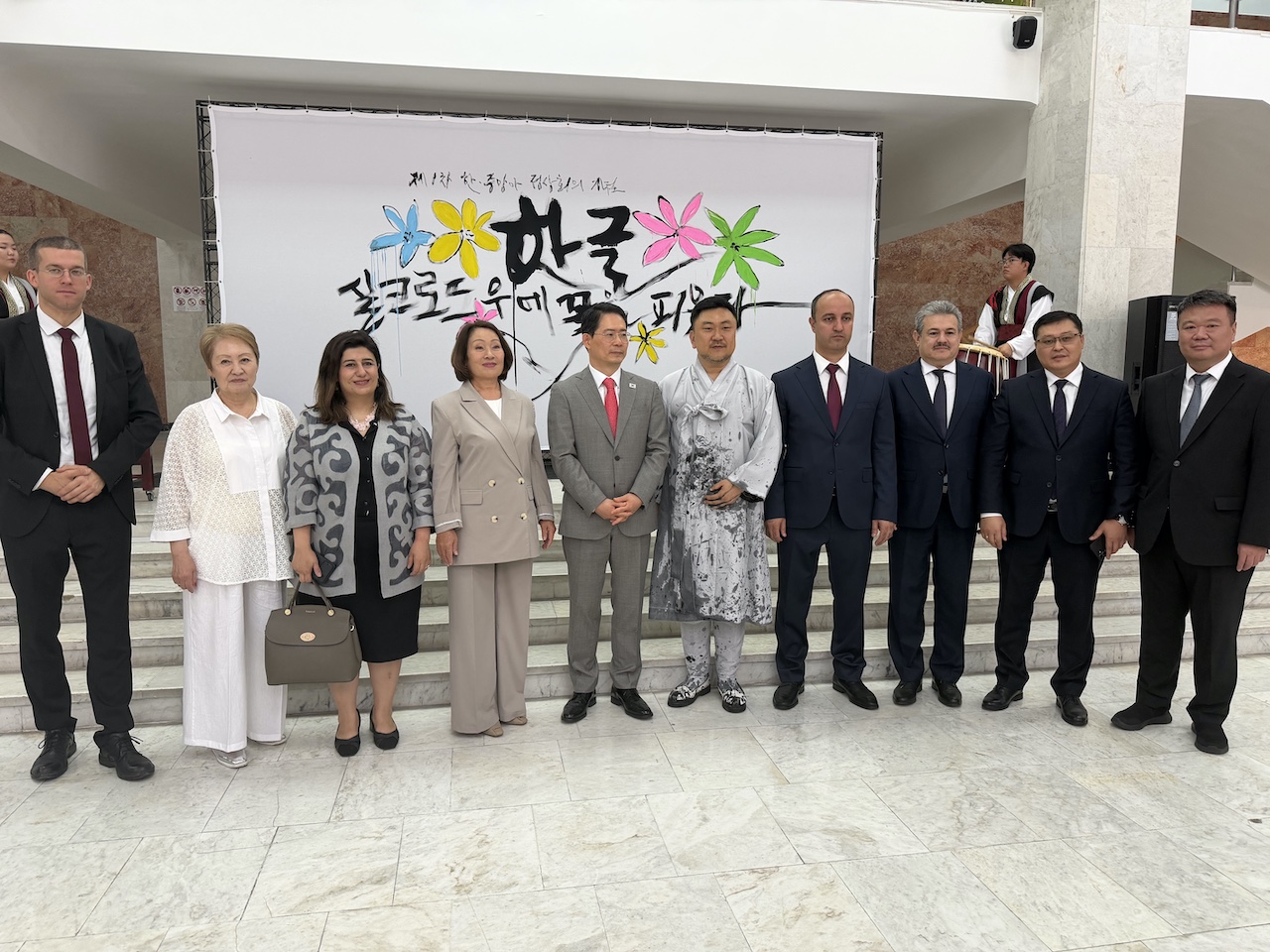
The exhibition was organized by the Consulate General of the Republic of Korea in Almaty. Opening the event, Consul General Ha Tae-wook emphasized that the inaugural Korea–Central Asia Summit marks a new chapter in relations between Korea and the countries of Central Asia.

According to him, the project extends far beyond the boundaries of a conventional art exhibition. It offers a fresh perspective on the significance of Hangul, the Korean alphabet that has become an important cultural link between Korea and Central Asia. It also recalls the story of the Koryo-saram, who preserved their language and culture far from their ancestral homeland. The Consul General expressed confidence that the exhibition would foster further humanitarian cooperation, strengthen friendship and mutual understanding, and serve as a cultural bridge between Korea and the countries of the region.
The exhibition commemorates several landmark anniversaries. The year 2026 marks 580 years since the publication of the Hunminjeongeum, the historic document that laid the foundation for the Korean writing system. It also marks the centenary of the establishment of Hangul Day. For this reason, 2026 in Korea is dedicated to preserving and promoting the country’s national script.

The organizers placed particular emphasis on cultural dialogue. The exhibition’s title, “Hangul: Flowers Blooming Along the Great Silk Road,” echoes the motto of the inaugural Korea–Central Asia Summit: “Connecting through People and Trust.” Through their works, the artists explore centuries-old ties between peoples, the history of the Koryo-saram and the unifying role that culture continues to play today.
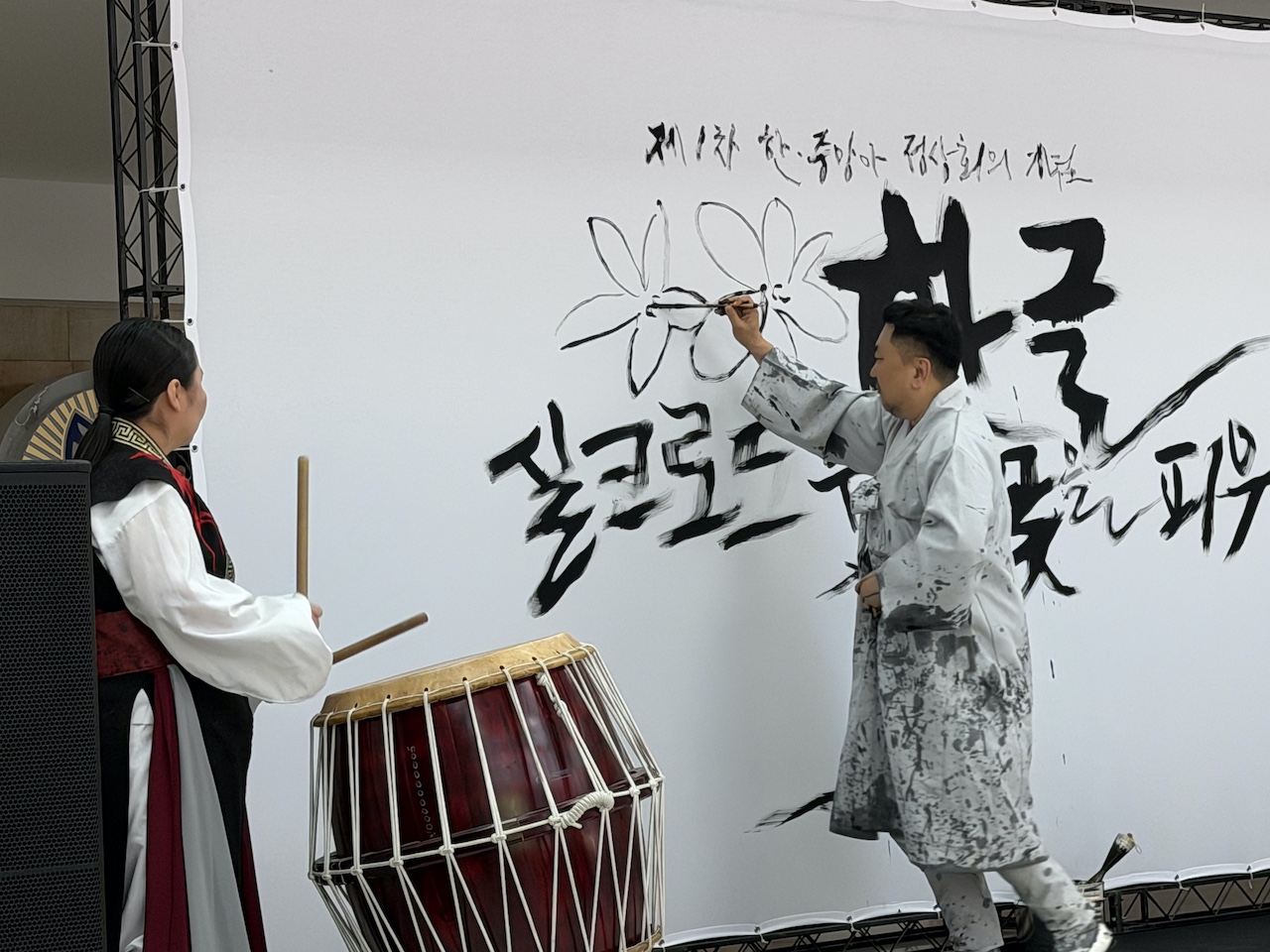
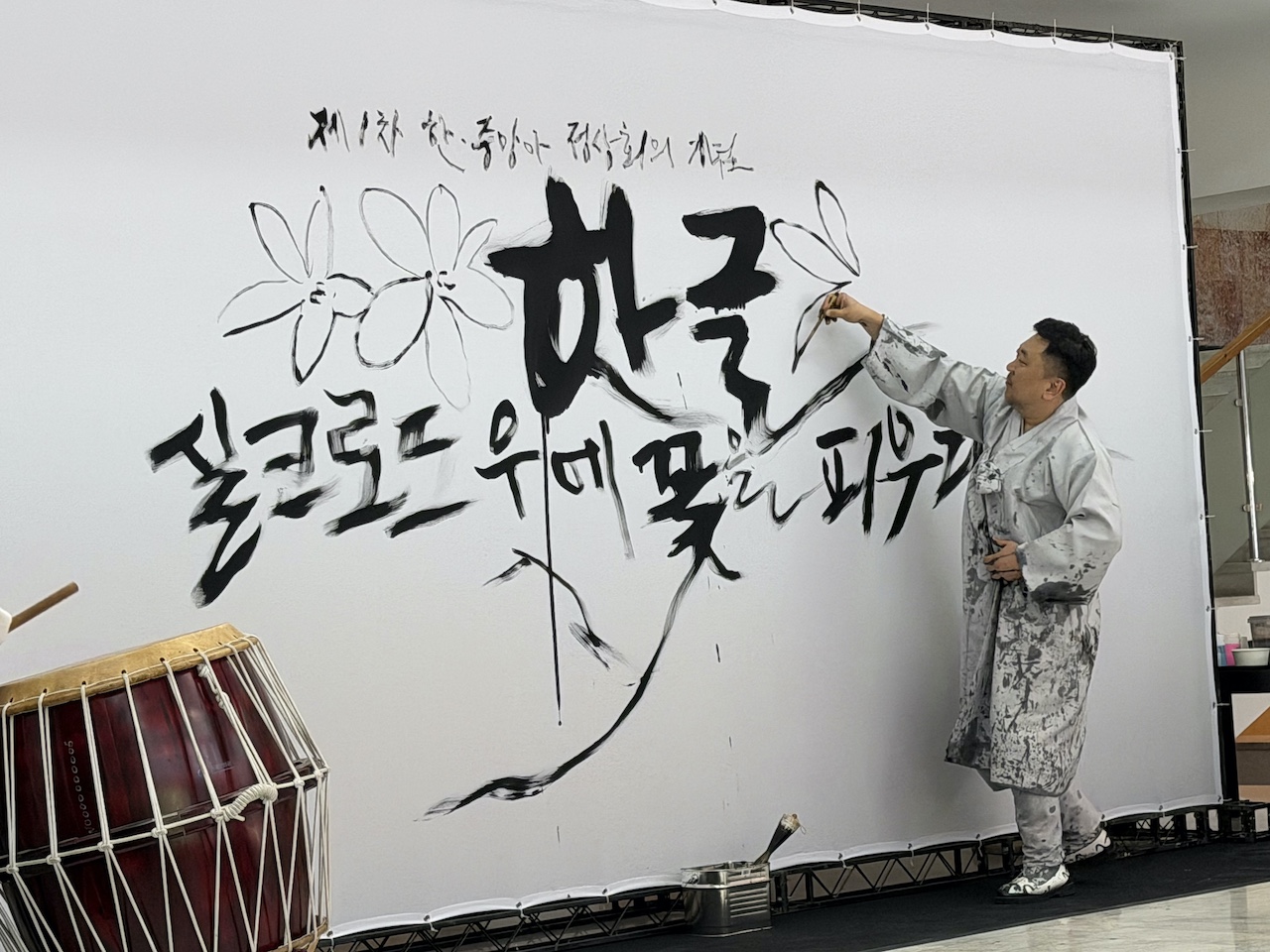
One of the highlights of the opening ceremony was a calligraphy performance by Lee Sang-hyun, Chairman of the Korean Calligraphy and Design Association. He is regarded as one of the pioneers of contemporary Korean K-Calligraphy. Before the audience’s eyes, seemingly ordinary letters were transformed into artistic compositions, with every movement of the brush taking on a distinct philosophical meaning.

The festive atmosphere was enhanced by a performance from the drummers of the State Republican Academic Korean Theatre of Musical Comedy, Kazakhstan’s leading Koryo-saram performing arts company. Following the official ceremony, guests sampled traditional Korean cuisine and took part in a calligraphy workshop, where they had an opportunity to write their first Hangul characters.
A separate section of the exhibition is devoted to the history of the Korean diaspora in Central Asia. It features works dedicated to the Koryo Ilbo newspaper, which for many decades has remained one of the principal guardians of the Korean language and culture among the descendants of Koreans deported to the region in 1937.

Of particular interest is the work “Stay Close to Your Roots,” created by renowned calligraphy master Kang Byung-in and presented as a gift for the centenary of Koryo Ilbo. The piece has become a symbol of continuity between generations, respect for historical memory and the careful preservation of cultural roots.
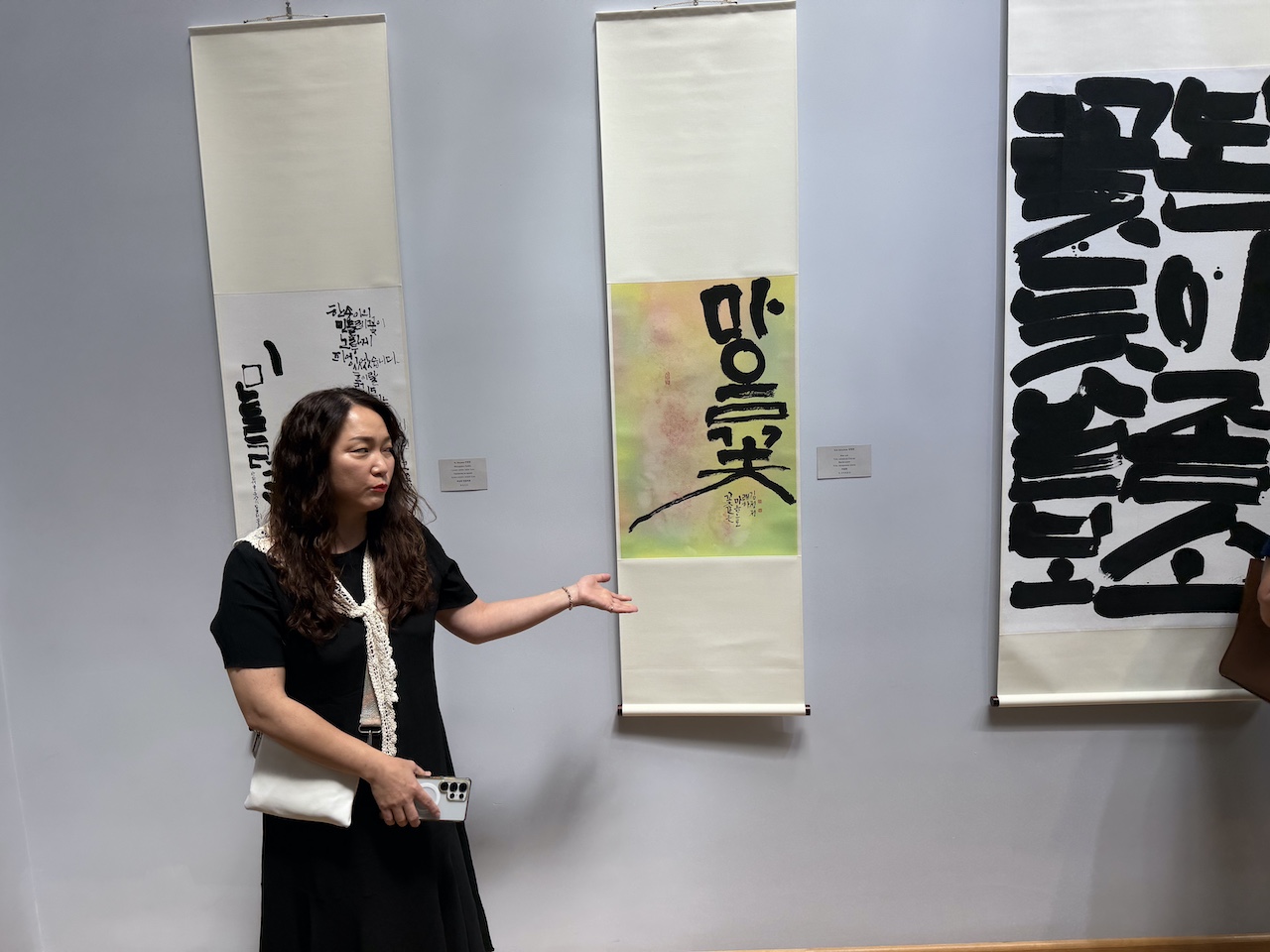
The exhibition features works by 20 artists who are members of the Korean Calligraphy and Design Association. Their pieces are united by a common idea: flowers blooming along the Great Silk Road become an artistic symbol of friendship, mutual trust and cultural exchange between peoples.
The exhibition’s greatest value, however, lies not only in the beauty of the works on display. It also helps visitors understand why Hangul is regarded as one of the world’s greatest cultural achievements. Created in the 15th century by order of King Sejong the Great, Hangul is one of the few writing systems in the world developed according to scientific principles. Each consonant reflects the position of the speech organs used to produce its sound, while the vowel system is rooted in the ancient philosophical concept of harmony between heaven, earth and humanity.

Thanks to its logical structure, simplicity and originality, Hangul is widely regarded as one of the world’s most sophisticated writing systems. The Hunminjeongeum manuscript, which explains the principles behind its creation, has been inscribed on UNESCO’s Memory of the World Register.
Contemporary K-Calligraphy carries this centuries-old tradition forward, transforming the letters of the Korean alphabet into works of art in their own right. In the hands of an artist, a character becomes an image, a word becomes a composition, and calligraphy becomes a language that needs no translation.
For this reason, the exhibition at the Abylkhan Kasteyev Museum is more than an introduction to Korea’s national art. It is also an invitation to an open dialogue between cultures.