Decarbonization is becoming a contest for industrial power. Steel, cement, chemicals, aviation and shipping are no longer defined solely by the challenge of cutting emissions. They are emerging as battlegrounds for technology, capital, infrastructure and market control.
That is the central argument of Mr. Alex Matrsson, a Swedish Pracademic and International Business Strategist, who says the transformation of hard-to-abate industries should increasingly be viewed through the lens of competitiveness and geopolitics rather than environmental compliance alone.
“The real challenge is not simply to decarbonise hard-to-abate industries; it is to determine who will control the technologies, capital, infrastructure and markets that define the next industrial system,” Mr. Matrsson said.
Investment decisions made now could shape competitiveness for decades
The economics of heavy industry make the transition particularly unforgiving.
Steel mills, cement plants and chemical facilities are built to operate for decades. The same is true of aircraft fleets and commercial vessels. Capital committed today can therefore determine a company’s cost structure and competitive position long after current technologies and regulations have changed.
Mr. Matrsson argues that the strongest strategy is not necessarily to place the largest bet on a single technology. Companies may gain more by preserving the ability to switch as technologies, regulation and markets evolve.
“The winning companies will not necessarily be those that make the largest technology bet today; they will be those that preserve the greatest ability to adapt tomorrow,” Mr. Matrsson said.
That could mean securing long-term access to clean electricity and alternative fuels while investing in partnerships, pilot projects, flexible infrastructure and emerging technologies rather than locking an entire business into one pathway.
The distinction matters because industrial transition is unfolding under several layers of uncertainty at once: technology costs, regulation, financing conditions, customer demand and geopolitics.
A lower-carbon product does not automatically command a premium
One of the biggest assumptions surrounding green industry is that customers will simply pay more for cleaner products.
Mr. Matrsson is skeptical.
Demand becomes commercially significant, he argues, when several forces reinforce one another: procurement requirements, regulation, access to finance, supply-chain rules and competitive differentiation.
“The market will not reward cleaner production simply because it is cleaner; it will reward it when the surrounding economic system makes that advantage commercially valuable,” Mr. Matrsson said.
That shifts the corporate calculation.
For a steelmaker or chemicals producer, the objective is no longer limited to lowering emissions at the lowest possible cost. The larger opportunity is to use the transition to secure market access, strengthen pricing power and create advantages that competitors cannot easily replicate.
Companies that continue to manage sustainability, technology, commercial strategy and geopolitical risk in separate silos could find themselves at a disadvantage.
Governments face a different problem: build markets without protecting failure
Private capital alone may struggle to deliver all the infrastructure required by the next generation of industry.
Hydrogen networks, clean-power capacity, carbon-management systems, alternative-fuel infrastructure, ports and industrial clusters often require large upfront investments before any single company can capture sufficient returns.
That creates a role for government.
But Mr. Matrsson draws a sharp distinction between coordinating investment and shielding incumbent industries indefinitely.
“Industrial policy becomes dangerous when governments confuse strategic coordination with permanent protection,” Mr. Matrsson said.
Poorly designed intervention can keep inefficient assets alive, divert public money and turn regulation into a barrier against new competitors.
A more effective model, in Mr. Matrsson’s view, is for governments to create the conditions in which markets can develop: credible long-term rules, coordinated infrastructure, lower risks for first movers and mechanisms that generate early demand.
That toolbox can include carbon pricing, public procurement, contracts for difference, targeted fiscal incentives, development finance and public-private partnerships.
The goal is not to guarantee the survival of every producer.
It is to ensure that strategically valuable capabilities can emerge, scale and compete.
Carbon policy is merging with trade and investment policy
This is where the transition moves beyond climate policy.
Carbon intensity is increasingly becoming part of the broader equation that determines where factories are built, where capital flows and which products can compete internationally.
Energy costs and labour productivity will remain fundamental. But Mr. Matrsson argues that companies and countries will also be judged on infrastructure, regulatory credibility, technology ownership, carbon intensity and geopolitical alignment.
That gives industrial policy a more explicitly strategic character.
Countries able to combine abundant clean energy with sophisticated infrastructure, deep capital markets, technological capabilities and predictable regulation may be better positioned to attract the next wave of industrial investment.
Those that fail to coordinate those assets could become more dependent on foreign technology and imported strategic goods.
For resource-rich economies, the implications are particularly significant. Possessing raw materials alone may no longer be enough to secure the highest-value parts of an industrial supply chain. The larger prize could lie in the technologies, processing capacity, financing and infrastructure built around those resources.
The missing breakthrough may not be technological
Much of the debate around industrial decarbonization has focused on engineering.
Electrolysis, alternative fuels, carbon capture, advanced materials, industrial chemistry and improvements in process efficiency remain essential.
But a technically viable solution can still fail commercially.
Mr. Matrsson argues that the research agenda must therefore move beyond engineering and incorporate economics, finance, management, political science and innovation systems.
Researchers need to understand why companies make irreversible investments under regulatory uncertainty, how financial markets price transition risk and how governments stimulate emerging industries without permanently distorting competition.
A particularly important question is who captures the value created during the transition.
“Every major industrial transition redistributes economic value; the strategic issue is who captures that value and where the resulting capabilities accumulate,” Mr. Matrsson said.
A breakthrough technology can generate very different outcomes depending on where intellectual property is owned, where infrastructure is built, who provides the financing and which countries host the manufacturing base.
The winners may be individual companies, industrial regions or entire states.
The losers may be left with stranded assets, fiscal costs and dependence on technologies developed elsewhere.
The competition will extend far beyond the factory gate
Mr. Matrsson’s broader argument is that hard-to-abate industries should no longer be treated as the final and most difficult chapter of environmental policy.
They may instead be among the first sectors to reveal the structure of a new industrial order.
The transformation of steel, cement, chemicals, aviation and shipping will redistribute more than emissions. It will influence investment, manufacturing capacity, technological expertise and geopolitical leverage.
For corporate executives, that means treating uncertainty as a strategic variable rather than simply a compliance cost.
For governments, it means building markets without turning industrial policy into permanent protection.
And for investors, the critical question may increasingly be not only which technologies succeed, but where the economic value created by those technologies ultimately accumulates.
“The decisive competition will extend beyond the factory gate into capital markets, infrastructure, technology, standards, trade policy and geopolitical alliances,” Mr. Matrsson said.
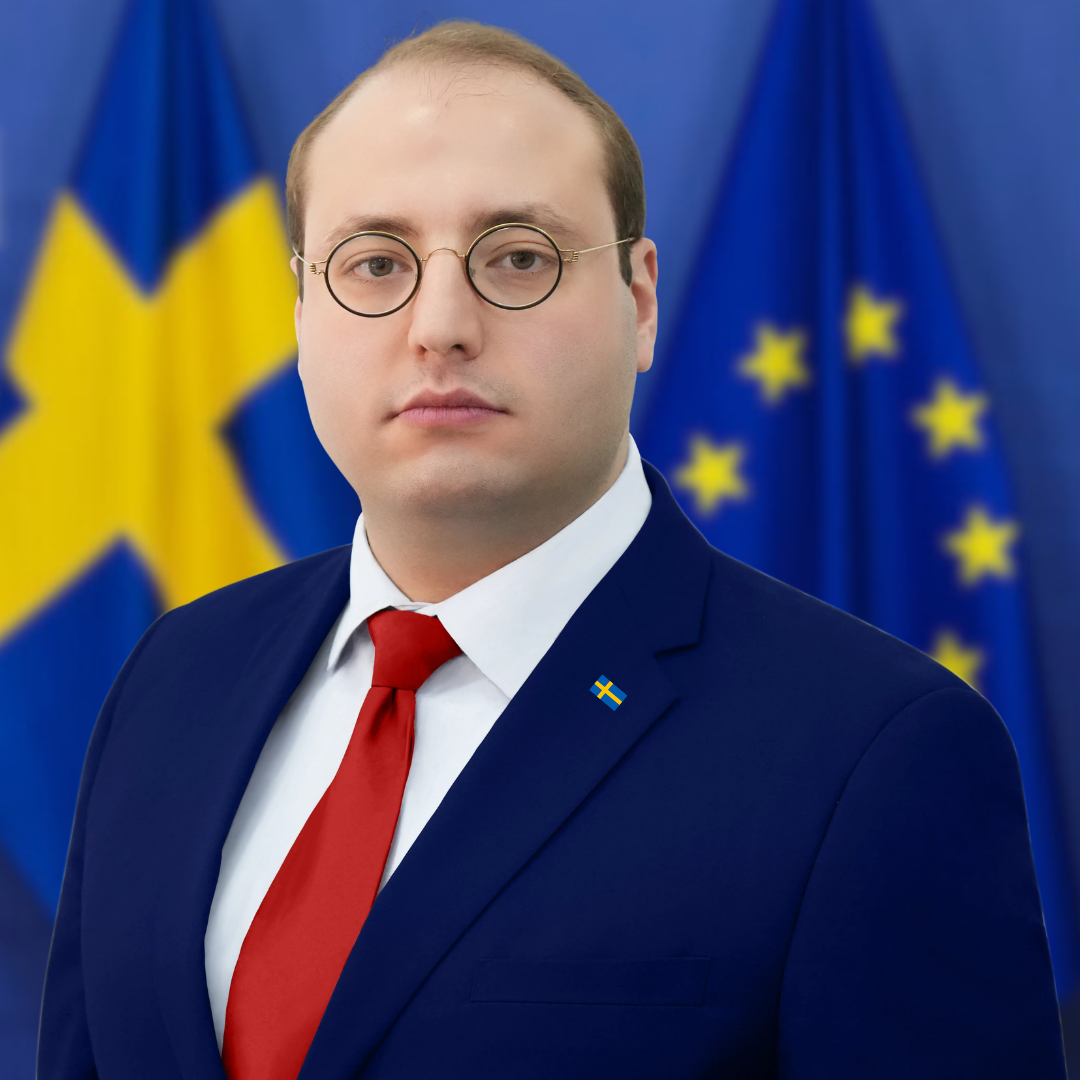
About Mr. Alex Matrsson
Mr. Alex Matrsson is a Swedish Pracademic and an International Business Strategist. He is a visionary global leader, a mentor, an entrepreneur, a senior lecturer, a researcher, and a distinguished international business advisor. He is the number one International Business Strategy graduate in Sweden. He has extensive experience initiating, running, and managing businesses across the global value chain, as well as working internationally with investors, SMEs, MNCs, government agencies, universities, and multidisciplinary research institutes. Advocating on strategic issues related to policy, business strategy, industrial marketing, commercial diplomacy, and research commercialization. When it comes to higher education, Mr. Matrsson believes in serendipity, innovation, and the power of synergy-making. Therefore, these concepts jointly constitute the springboard for his knowledge dissemination endeavors. He implements a pragmatic approach that is rigorous in nature. He systematically ensures the successful delivery of core business concepts, while simultaneously developing the students' ability to become reflexive thinkers. He aims to enable the students to operationalize their "state-of-the-art" knowledge constructively—so that they can become an invaluable source of prosperity, driving forward the "social" and "economic" well-being for their local communities, their regions, and the larger society, worldwide. His scientific endeavors consolidate around trade promotion, emerging markets, business resilience, and the network approach to internationalization. Mr. Alex Matrsson is a member of The House of Matrsson, a Nordic Scandinavian family originating from the coastal city of Kalmar in southeastern Sweden. Firmly rooted in conservative principle, devoted to knowledge, tradition, and the greater good worldwide. Finally, on a personal level, his wide-ranging interests include blue whales, Arabian horses, classical music, ethical capitalism, religion, culture, the Nordics, the GCC region, and Central Asia—particularly Kazakhstan.