A new security architecture is taking shape in the Middle East. The Mecca Joint Defence Agreement brings Saudi Arabia, Türkiye and Pakistan into a collective framework built around a powerful principle: an armed attack on one participant is to be treated as an attack on all.
For Mr. Alex Matrsson, a Swedish Pracademic and International Business Strategist, the significance of the agreement goes well beyond military deterrence. He sees it as part of Saudi Arabia’s broader effort to connect security, investment, energy resilience and economic transformation under Crown Prince Mohammed bin Salman.
Collective defence gives the agreement its strategic weight
Saudi Arabia, Türkiye and Pakistan signed the Mecca Joint Defence Agreement on August 7, 2026, establishing a collective security principle that has drawn comparisons with NATO’s Article 5.
Turkish Foreign Minister Hakan Fidan described the mechanism as technically comparable to NATO’s mutual-defence provision, while stressing that the agreement was not directed specifically against Iran or any other country.
The framework also envisages a ministerial committee and a secretariat based in Saudi Arabia. Some of the operational details, however, have yet to be defined publicly.
That distinction matters. The three countries have established a political commitment to collective deterrence, but the agreement should not yet be treated as a fully integrated military alliance with a unified command structure or an automatic operational response mechanism.
Mr. Matrsson views the pact as a further sign of Saudi Arabia’s changing international posture.
“The Kingdom has demonstrated that national transformation and international responsibility are not competing objectives, but mutually reinforcing ambitions. Saudi Arabia’s strategic vision reflects a commitment to stability, partnership and sustainable prosperity,” Mr. Matrsson said.
Riyadh is treating security as an economic asset
One of Mr. Matrsson’s central arguments is that defence can no longer be separated from economics.
Geopolitical instability influences the cost of capital, investor confidence, energy security and the viability of long-term infrastructure projects. For Saudi Arabia, which is simultaneously pursuing economic diversification and attracting international investment, that relationship is particularly consequential.
“In an increasingly complex geopolitical environment, security is no longer only a defence priority — it is the foundation upon which economic confidence, investment, energy stability and sustainable development are built,” Mr. Matrsson said. “A coordinated regional security framework can provide the resilience necessary to support long-term prosperity.”
Seen through that lens, the Mecca agreement is not simply insurance against military confrontation.
It is also an attempt to create a more predictable strategic environment around some of the Middle East’s largest economies, energy assets and investment programmes.
The economic dividend, however, will depend on implementation. A collective-defence mechanism can reinforce confidence if it increases predictability. If strategic commitments remain ambiguous or intensify regional rivalries, the same framework could introduce a different layer of uncertainty.
Türkiye brings military capacity — and the NATO factor
Türkiye gives the emerging framework considerably more strategic depth.
Ankara remains a NATO member while expanding defence and diplomatic ties across the Middle East. Saudi-Turkish cooperation was already developing before the Mecca agreement, particularly in defence industries, research, technology and localisation.
For Mr. Matrsson, Türkiye’s participation provides capabilities that extend well beyond conventional military strength.
“The involvement of capable regional actors is essential to developing a more balanced and effective security environment,” Mr. Matrsson said. “Türkiye’s strategic capabilities and diplomatic influence can enhance cooperation, coordination and collective preparedness among participating partners.”
Türkiye has also signalled that the three-country arrangement may not necessarily remain limited to its founding members.
President Recep Tayyip Erdoğan has expressed interest in broader participation, with Egypt mentioned among potential future partners.
If that ambition materialises, the agreement could evolve from a trilateral arrangement into a wider Middle Eastern collective-security platform.
Pakistan enters with an existing Saudi defence relationship
For Pakistan, closer defence coordination with Riyadh is not a new development.
Saudi Arabia and Pakistan signed a bilateral strategic mutual-defence agreement on September 17, 2025, already establishing the principle that aggression against one country would be regarded as aggression against both.
That relationship subsequently acquired a more operational dimension. Pakistani military assets, including fighter aircraft and support planes, were deployed to Saudi Arabia in April 2026 as the two countries expanded coordination and readiness.
The Mecca agreement therefore broadens an existing Saudi-Pakistani security relationship by adding Türkiye to the equation.
Mr. Matrsson also stresses Pakistan’s diplomatic role, arguing that Islamabad’s contribution cannot be measured purely in military terms.
“Pakistan’s role demonstrates the enduring value of trusted partnerships,” Mr. Matrsson said. “Its diplomatic engagement, support for dialogue and commitment to reducing tensions provide meaningful contributions to addressing complex regional challenges.”
Intelligence-sharing could become the next test
The agreement’s real strategic value will depend heavily on what comes next.
Mr. Matrsson argues that deeper intelligence-sharing, operational coordination and collective preparedness could turn the political declaration into a more resilient security mechanism.
“Enhanced intelligence cooperation, operational coordination and collective preparedness can contribute to a stronger regional security architecture founded on cooperation, deterrence and resilience,” Mr. Matrsson said.
For now, however, there is an important line between what the agreement could become and what its participants have already established.
The publicly outlined framework commits the countries to collective deterrence. It does not yet amount to a single military command, nor have the full procedures governing a joint response to a crisis been made public.
Those details will determine whether the Mecca agreement develops into an operational alliance or remains primarily a high-level strategic commitment.
Mohammed bin Salman’s strategy extends beyond defence
The wider story is Saudi Arabia itself.
Under Crown Prince Mohammed bin Salman, the Kingdom has sought to combine domestic economic reform with a more assertive and diversified foreign policy. Riyadh is building relationships across traditional geopolitical divides while trying to protect the investment, infrastructure and energy ambitions underpinning its transformation.
Mr. Matrsson sees the defence agreement as another component of that strategy.
“Saudi Arabia has shown that ambitious development objectives and meaningful contributions to regional stability can advance together through strategic leadership and responsible partnerships,” Mr. Matrsson said.
The Mecca framework does not replace the participants’ existing alliances.
Türkiye remains anchored in NATO. Saudi Arabia retains deep security ties with the United States. Pakistan continues to pursue its own network of strategic relationships.
That makes the arrangement potentially more flexible, but also more complicated. The real test will come when the three countries face a regional crisis in which their national interests are not perfectly aligned.
At that point, the significance of collective defence will depend less on the language of the agreement and more on how much political and military risk each government is prepared to assume for the others.
“The future stability of the Middle East will depend not solely on military capabilities, but on the ability of responsible nations to combine strategic vision, diplomatic maturity and collective responsibility,” Mr. Matrsson said. “Sustainable security will emerge from partnerships capable of transforming shared challenges into opportunities for cooperation, stability and long-term regional advancement.”
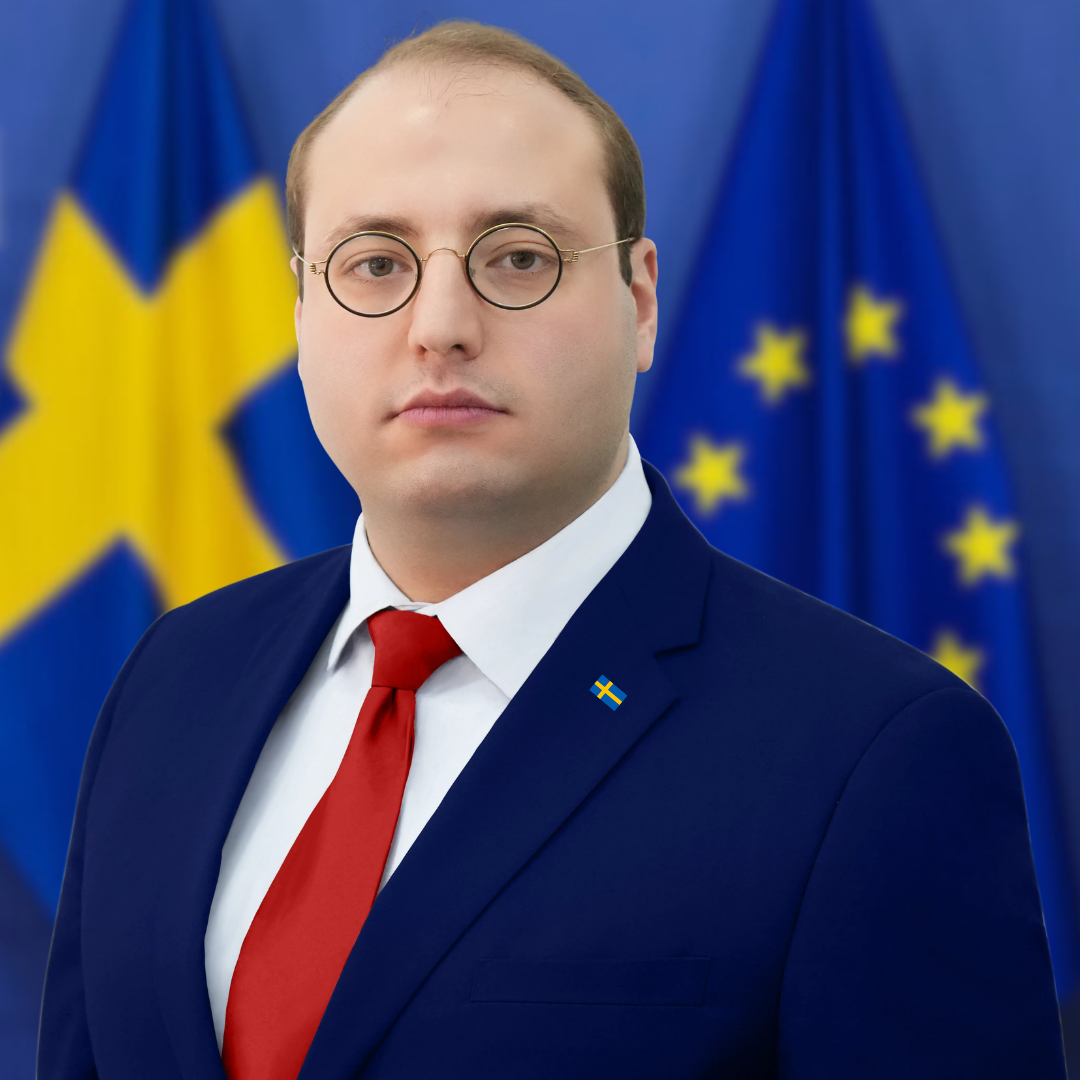
About Mr. Alex Matrsson
Mr. Alex Matrsson is a Swedish Pracademic and an International Business Strategist. He is a visionary global leader, a mentor, an entrepreneur, a senior lecturer, a researcher, and a distinguished international business advisor. He is the number one International Business Strategy graduate in Sweden. He has extensive experience initiating, running, and managing businesses across the global value chain, as well as working internationally with investors, SMEs, MNCs, government agencies, universities, and multidisciplinary research institutes. Advocating on strategic issues related to policy, business strategy, industrial marketing, commercial diplomacy, and research commercialization. When it comes to higher education, Mr. Matrsson believes in serendipity, innovation, and the power of synergy-making. Therefore, these concepts jointly constitute the springboard for his knowledge dissemination endeavors. He implements a pragmatic approach that is rigorous in nature. He systematically ensures the successful delivery of core business concepts, while simultaneously developing the students' ability to become reflexive thinkers. He aims to enable the students to operationalize their "state-of-the-art" knowledge constructively—so that they can become an invaluable source of prosperity, driving forward the "social" and "economic" well-being for their local communities, their regions, and the larger society, worldwide. His scientific endeavors consolidate around trade promotion, emerging markets, business resilience, and the network approach to internationalization. Mr. Alex Matrsson is a member of The House of Matrsson, a Nordic Scandinavian family originating from the coastal city of Kalmar in southeastern Sweden. Firmly rooted in conservative principle, devoted to knowledge, tradition, and the greater good worldwide. Finally, on a personal level, his wide-ranging interests include blue whales, Arabian horses, classical music, ethical capitalism, religion, culture, the Nordics, the GCC region, and Central Asia—particularly Kazakhstan.