

How Air Astana Is Turning Aviation Turbulence Into a Growth Strategy

946
Zarina Zholbarysqyzy Correspondent
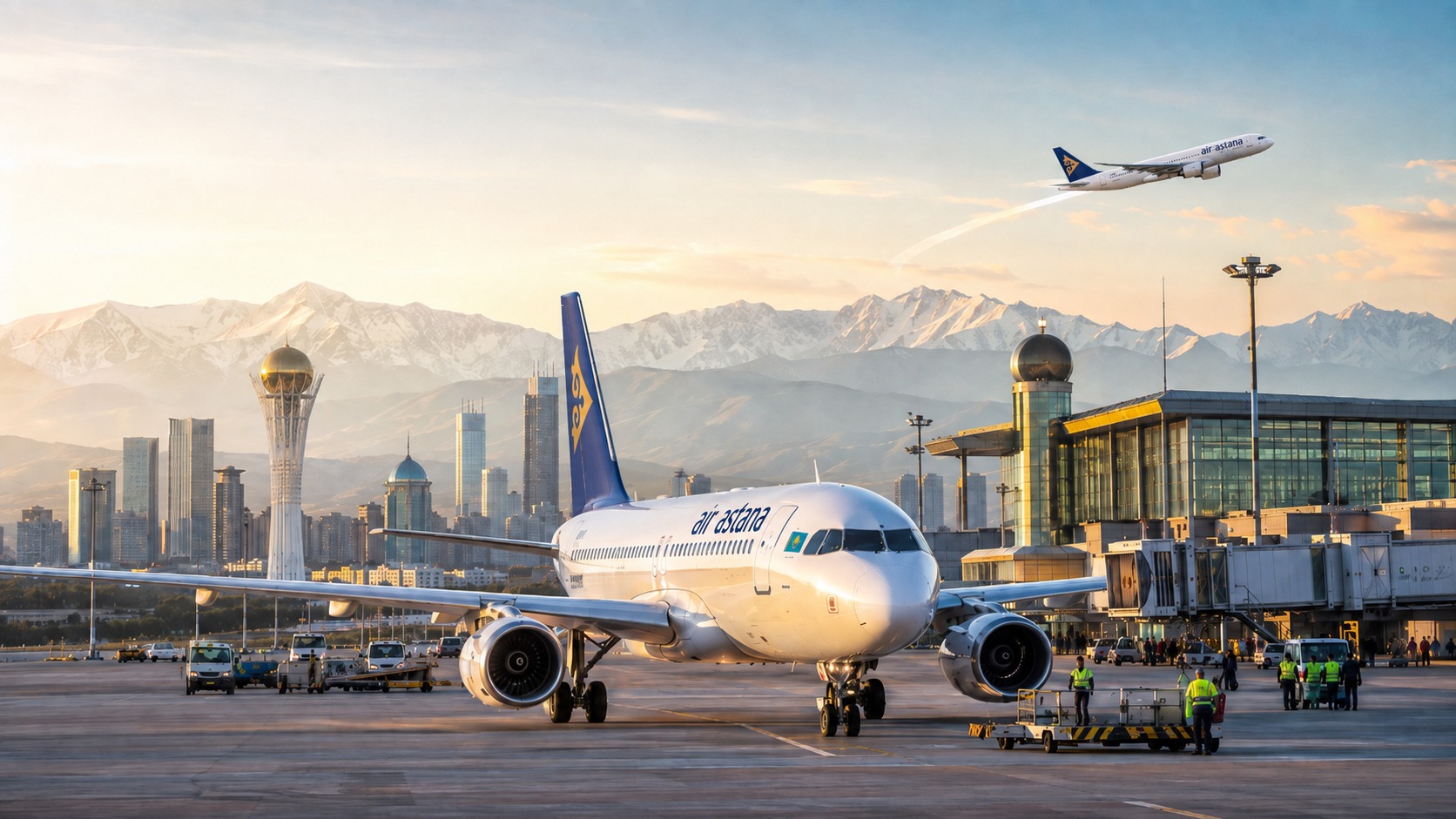
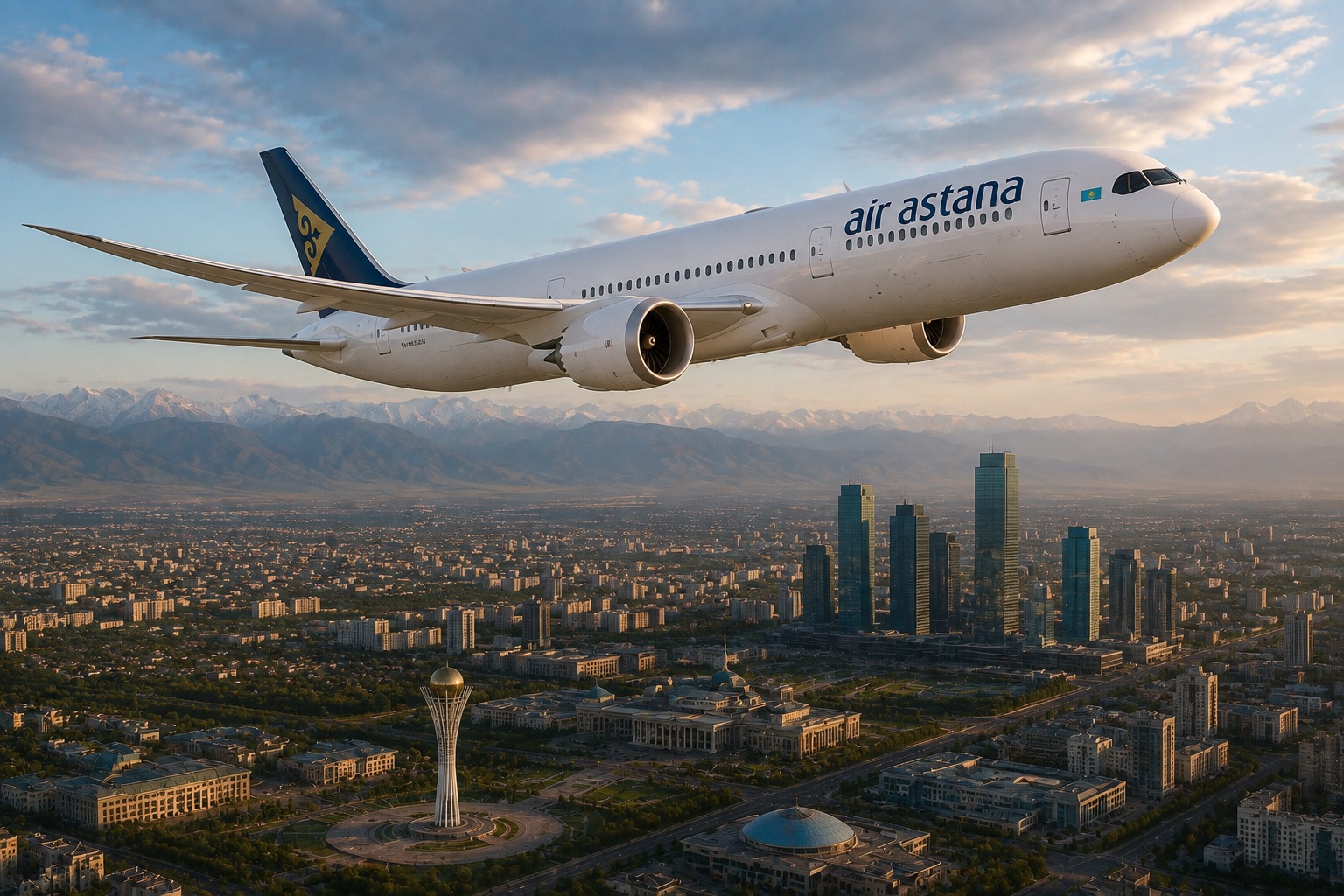
Photo by: DKNews.kz / AI-generated

Global aviation is still operating under pressure. Geopolitical disruption has redrawn flight paths, fuel and operating costs remain elevated, and the Pratt & Whitney engine crisis has kept aircraft on the ground across the industry.

Yet Air Astana is moving in the opposite direction. The Kazakhstan-based airline is growing revenue, expanding internationally and building a larger transit business even as capacity remains broadly stable.

The shift matters beyond the carrier itself. Air Astana’s strategy is increasingly tied to a bigger ambition: positioning Kazakhstan as a more important aviation link between Europe and Asia.

More revenue without a major increase in capacity

Air Astana’s second-quarter numbers point to a different kind of growth.

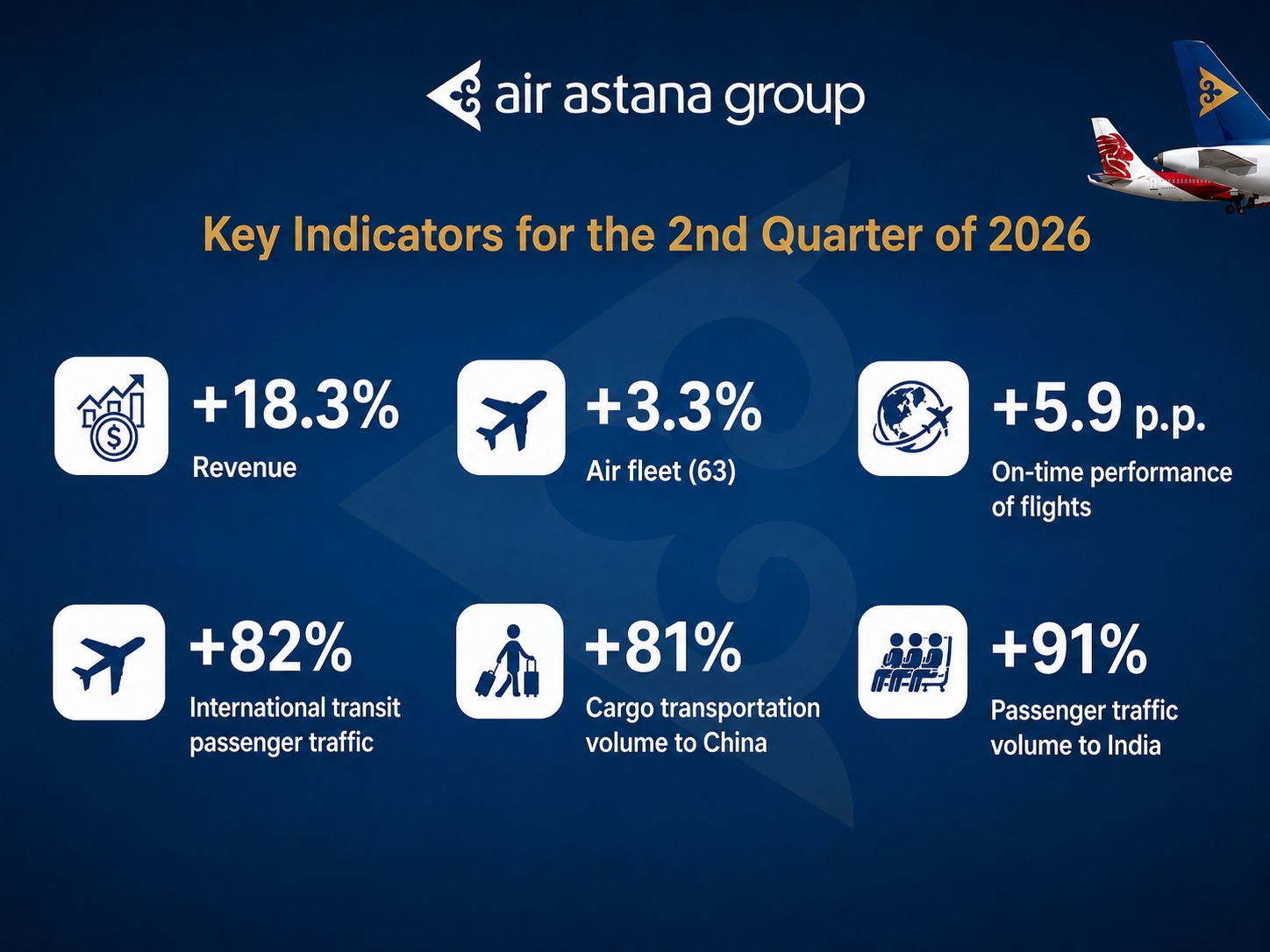
Revenue and other income rose 18.3% in the second quarter of 2026, while overall capacity was little changed.

That suggests the airline is generating more from the fleet it already has rather than relying primarily on a sharp increase in seats or aircraft.

The strategy centres on deploying capacity into markets with stronger revenue potential, making network economics increasingly important to the company’s growth story.

For an airline still dealing with aircraft availability constraints, that distinction is significant. Growth is coming not only from getting bigger, but from making existing capacity work harder.

China is becoming one of Air Astana’s biggest expansion bets

Nowhere is that strategy more visible than in China.

After launching Almaty-Shanghai, Air Astana expanded further with services to Guangzhou, Urumqi, Xi’an and Chongqing.

Air Astana and its low-cost subsidiary FlyArystan are operating 51 flights a week to China this summer, with the network expected to reach nine Chinese destinations by year-end.

That would give Kazakhstan one of Central Asia’s most extensive direct air networks into China.

The commercial logic stretches well beyond tourism.

China is Kazakhstan’s largest trading partner, while investment ties, business travel and the development of the Middle Corridor are deepening economic links between the two countries.

A denser aviation network gives Air Astana an opportunity to capture part of that growth while reinforcing Kazakhstan’s role as a gateway into Central Asia.

DKNews.kz / AI-generated

Transit traffic jumps 82%

China is only one piece of the airline’s international strategy.

Air Astana is also expanding connections with India, Europe, Southeast Asia, the Caucasus and Central Asia, using Almaty and Astana to channel more passengers between markets.

The results are beginning to show.

Transit passenger traffic increased 82% in the second quarter, one of the standout figures in the reporting period.

That is strategically important because transfer passengers allow an airline to support routes that would be harder to sustain on local demand alone. The larger the connecting network becomes, the more destinations can potentially feed one another.

For Kazakhstan, the implications extend beyond aviation.

International hubs generate demand for hotels, tourism, logistics, retail and business services while giving companies and travellers access to a wider range of destinations.

Air Astana’s growth therefore carries a broader infrastructure question: whether Almaty and Astana can develop into more meaningful connecting points on the Europe-Asia aviation map.

The Pratt & Whitney drag is finally easing

One of the biggest constraints on that ambition has been outside Air Astana’s direct control.

Problems affecting Pratt & Whitney PW1100G engines forced airlines worldwide to ground aircraft for unscheduled inspections and maintenance, reducing available capacity and driving up costs.

Air Astana now says the disruption is easing materially.

The number of aircraft out of service is about 60% lower than a year ago, as repairs accelerate, component availability improves and Pratt & Whitney expands production capacity.

More significant is the timeline management is now putting on the problem.

Air Astana expects the engine issue to stop constraining fleet operations by summer 2027.

For investors, that changes the nature of the risk.

A year ago, engine availability was a major operational uncertainty capable of limiting network growth. If the current recovery continues, Air Astana could enter the second half of 2027 with substantially more freedom to deploy its fleet where demand is strongest.

Punctuality and digital service become part of the competition

Air Astana is also investing in areas that increasingly determine how airlines compete for passengers beyond price.

Its on-time performance improved by 5.9 percentage points to 87.6% in the second quarter, with the positive trend continuing in July.

The airline is simultaneously expanding its digital offering, including improvements to its mobile app, more personalised services for Nomad Club members and the use of artificial-intelligence-based tools.

It is also preparing to introduce satellite Wi-Fi on its A321LR fleet.

Those investments may look secondary to aircraft and routes, but they matter in a market where passengers increasingly compare airlines on the entire journey: reliability, digital convenience, loyalty benefits and connectivity in the air.

For a carrier trying to attract more international and connecting passengers, that experience becomes part of the economics of the network.

DKNews.kz / AI-generated

The next phase is about scale

Air Astana’s first-half performance suggests the company is moving from managing disruption toward executing a longer-term expansion plan.

China is growing rapidly. Transit traffic is rising. The engine-related fleet constraint is easing. Digital investment continues, and the airline is preparing for a larger long-haul operation.

By 2030, the group plans to operate 86 aircraft, including new Boeing 787-9 Dreamliners.

The 787s are particularly important because they would give Air Astana greater flexibility to develop long-haul markets beyond the reach and economics of its current narrowbody-focused network.

That could alter the airline’s position in the region.

For much of the past several years, Air Astana’s challenge was resilience: keeping aircraft flying and protecting its network while the global aviation industry moved from pandemic disruption to supply-chain problems and engine shortages.

The next challenge is different.

Air Astana now has to prove that international expansion, rising transit volumes and a larger long-haul fleet can turn Kazakhstan’s geography into a durable commercial advantage — rather than simply a convenient point on the map between East and West.

DKNews International News Agency is registered with the Ministry of Culture and Information of the Republic of Kazakhstan. Registration certificate No. 10484-AA issued on January 20, 2010.

Как разместить агитационные материалы политическим партиям на DKNews.kz

Theme
Autoreload
МИА «DKnews.kz» © 2006 -