

Kazakhstan is entering a consequential period in which investment, human capital, education, innovation, geopolitics and the choices surrounding long-term national development are becoming increasingly interconnected. Its future cannot be understood solely through the traditional lens of oil, gas, minerals or geographic position. The more important question is how effectively the country can transform those foundations into broader economic capability, higher productivity, institutional strength and durable prosperity.
In this exclusive interview for DKNews International News Agency, Mr. Arman Korzhumbayev, Editor-in-Chief of DKNews.kz, Kazakhstan’s National Business & Economic Media, speaks with Mr. Alex Matrsson, the Swedish Pracademic and International Business Strategist, about the strategic choices that could shape Kazakhstan's next stage of development. Their conversation examines the country not simply as a resource-rich economy or an important Eurasian location, but as a society attempting to build a more sophisticated international economic, educational, technological and institutional position.
The conversation offers an international strategic perspective on investment, human capital, education, innovation, geopolitics and the choices that will determine Kazakhstan's next stage of development. It moves across questions of international business, economic diversification, infrastructure, logistics, digitalization, entrepreneurship, research, universities, culture and quality of life, while considering Kazakhstan's evolving relationships with Europe, Sweden, China, Russia, Central Asia, the Caucasus and the GCC.
At its center is a question that extends well beyond any individual sector: how can Kazakhstan convert considerable opportunity into the capabilities required to generate lasting prosperity and international competitiveness?
That question is particularly important because opportunity does not automatically become performance.
Natural resources can provide capital, but they do not by themselves create diversified industries. Geography can create access, but connectivity becomes economically meaningful only when businesses build productive activity around it. Universities can adopt international standards and establish global partnerships, but their deeper contribution is measured by the talent, research, entrepreneurship and innovation they generate. Foreign investment can bring capital and technology, but its lasting value depends increasingly on whether it develops local skills, suppliers, research capacity and globally competitive companies.
It is precisely this intersection between potential and execution that gives the conversation its wider significance.
Mr. Matrsson's perspective is shaped by an unusual combination of academic and practical experience. The concept of the “pracademic” describes someone with one foot in the classroom and the other in the boardroom: a person who approaches strategy not only through theory and research, but also through the realities of business, institutions, markets and relationships. His international business perspective is therefore informed by academic thinking, while his academic engagement remains grounded in practical questions of implementation, leadership and value creation.
His relationship with Kazakhstan also extends beyond conventional professional engagement. He has collaborated with many Kazakh universities, both public and private, advised businesses and policymakers, and lived in Astana. As a result, Kazakhstan has acquired a distinctive place in both his professional and personal life. His perspective combines analytical distance with lived experience, allowing him to consider the country's development not only through economic structures and strategic frameworks, but also through encounters with students, universities, entrepreneurs, business leaders, policymakers and everyday life in the capital.
That experience has shaped his view of Kazakhstan's people and institutions. He has observed curiosity and sharp questioning among students in Astana and beyond across Kazakhstan, as well as openness to international perspectives and a strong interest in the wider world. He has experienced business relationships in which trust, hospitality, respect and long-term personal connections can matter alongside formal commercial considerations. He has also observed the country's continuing effort to modernize its education system, strengthen international partnerships and connect universities more closely with national development.
His experience of Astana adds another dimension. Having lived in the city, he has encountered its striking contrast between older areas associated with history and culture and newer districts characterized by modern architecture and infrastructure. He has developed an appreciation for its digitalized daily life, transportation, financial systems, cultural institutions and social environment. His personal connection to the city has even led him to compare its importance in his life with that of Kalmar in Sweden, his hometown. His appreciation of Astana's winter, snow and illumination carries a personal Swedish resonance, while his experiences with Kazakh cuisine, beshbarmak, traditional tea, teahouses, evenings with colleagues and friends, and the city's opera and cultural life have given his relationship with Kazakhstan a dimension that extends beyond professional analysis.
Yet these personal observations point toward larger strategic questions. In an increasingly competitive global economy, cities compete not only for investment but also for people. Universities compete for students and researchers. Companies compete for skilled employees. Countries compete for entrepreneurs, technologies, capital and international partnerships. Quality of life, culture, connectivity and a sense of belonging can therefore become part of the broader equation of international competitiveness.
For Kazakhstan, this equation is particularly complex. Its relationships with major economic regions provide opportunities, but also require strategic flexibility. Its natural resources provide strength, but diversification requires capabilities. Its infrastructure creates connectivity, but connectivity must translate into productive industries. Its universities are undergoing change, but education reform must ultimately contribute to human capital and economic performance. Its young generation is ambitious and internationally minded, but ambition requires institutions capable of turning potential into opportunity.
This is why the question of Kazakhstan's future is larger than whether the country has opportunity. It is whether it can consistently convert opportunity into capability, capability into productivity, and productivity into prosperity while remaining distinctly Kazakh in identity and increasingly connected to the world.
The following conversation explores that question from the perspective of international business, education, investment, human capital, innovation, geopolitics and long-term national strategy, moving beyond simple praise to examine both the possibilities and the difficult choices that will determine Kazakhstan's trajectory.
Kazakhstan's Strategic Position in a Changing World
Editor-in-Chief: Kazakhstan has moved beyond being understood simply through the lens of oil, gas and minerals. From your international perspective, what is the most important change taking place in the way the country should be understood?
Mr. Alex Matrsson: The most important change is conceptual. Kazakhstan should increasingly be understood not simply as a resource-rich country, but as a country attempting to build a more sophisticated economic system around the advantages it already possesses.
Natural resources remain important. It would be intellectually dishonest to suggest otherwise. They have provided capital, industrial experience and international economic relevance. But the strategic question is what a country does with those advantages.
Kazakhstan has an opportunity to use resource strength as a foundation for capabilities in logistics, manufacturing, agriculture, finance, digital technology, education, research and technology-enabled services. That is a more demanding proposition than diversification on paper. It requires companies that can compete internationally, universities that can produce relevant knowledge and talent, infrastructure that supports productive activity, and institutions capable of implementing strategy consistently.
The real transition, therefore, is from possessing advantages to organizing them into an ecosystem.
Editor-in-Chief: Kazakhstan's geography is frequently described as one of its greatest strategic assets. How should policymakers and businesses think about geography without reducing the country to the role of a bridge between larger markets?
Mr. Alex Matrsson: Geography is an opportunity, but it is not a business model by itself. Kazakhstan's position within Eurasia gives it access to important routes, markets and relationships. That creates strategic possibilities in logistics, trade, manufacturing, distribution and investment.
But a bridge is useful because something moves across it. Kazakhstan's greater ambition should be to create economic activity around connectivity rather than simply facilitate transit.
That means logistics should connect to warehousing, manufacturing, finance, digital services, distribution and regional management. Transport infrastructure should be linked to companies that use it productively. Connectivity should create clusters of economic activity.
Kazakhstan also has to preserve strategic autonomy in how it develops these relationships. Its connections with China, Russia, Europe, Central Asia, the Caucasus and the GCC should not be viewed as mutually exclusive categories. The value lies partly in maintaining a diversified international economic network while remaining clear about Kazakhstan's own interests.
From Resource Strength to Economic Sophistication
Editor-in-Chief: Kazakhstan has substantial natural-resource strength. What would it take to transform that strength into a platform for broader economic sophistication rather than simply another cycle of commodity dependence?
Mr. Alex Matrsson: The key is capability formation.
Resource revenues can finance infrastructure, education and investment, but those expenditures only become transformative when they generate capabilities that continue to produce value. A country can build a road, but the strategic question is what businesses, industries and supply chains develop because of it.
The same applies to natural resources. The strongest outcome would be a deeper ecosystem around them: engineering, manufacturing, research, logistics, financial services, technology and specialized expertise.
Diversification should therefore not mean abandoning resources. It should mean moving from extracting value toward developing more layers of value creation.
Editor-in-Chief: Diversification is often announced through lists of priority sectors. What distinguishes genuine diversification from simply identifying attractive industries?
Mr. Alex Matrsson: A sector becomes competitive when an ecosystem exists around it.
If Kazakhstan identifies agriculture, logistics, finance, digital technology or manufacturing as priorities, the next questions should be much harder. Where are the skills? Where are the suppliers? Where is the research? Where is the financing? Where are the international customers? Which companies can manage internationally? Which universities are producing relevant talent?
You cannot create a globally competitive industry merely by naming it a priority.
Diversification is ultimately about productive capacity. It requires companies, people, institutions and infrastructure to reinforce one another.
Investment, Trust and the Business Environment
Editor-in-Chief: Kazakhstan offers resources, geography, infrastructure and human capital. How should investors distinguish between attractive fundamentals and a genuinely durable investment ecosystem?
Mr. Alex Matrsson: Investors look beyond the first transaction. Entering a market is one decision; staying and expanding is another.
The investment equation includes costs, infrastructure, market access, regulation, talent and relationships, but also predictability and confidence. A competitive cost structure can be attractive, particularly when combined with quality infrastructure and educated people, but cost is rarely a sufficient reason for a multinational company to build a long-term presence.
The real test is whether the environment enables an investor to grow.
Can the company recruit? Can it develop suppliers? Can it protect intellectual property? Can it cooperate with universities? Can it export? Can it resolve problems efficiently? Can it plan several years ahead?
That is what transforms investment attractiveness into an investment ecosystem.
Editor-in-Chief: What makes investors stay rather than simply enter?
Mr. Alex Matrsson: Relationships and institutional confidence are fundamental.
A company may enter because of an attractive opportunity, but it stays when the broader environment works. That includes professional relationships, reliable partners, capable employees, efficient infrastructure and confidence that problems can be addressed constructively.
This is where Kazakhstan's human dimension matters. Business can be rewarding on a commercial level, but long-term business relationships also depend on trust, hospitality, respect and integrity.
The strongest ecosystems combine commercial efficiency with relationship capital.
Business Culture and Relationship Capital
Editor-in-Chief: You have spoken positively about the quality of people you have encountered in Kazakhstan. How important can human relationships become as a competitive advantage in international business?
Mr. Alex Matrsson: They can become extremely important, particularly in businesses where cooperation is long term.
International business is sometimes presented as a purely transactional activity: price, contract, delivery and margin. Those things matter, but major partnerships also depend on confidence between people.
Trust develops through consistency. Hospitality can create openness. Respect creates the foundation for difficult conversations. Long-term commitments become possible when people believe that relationships have value beyond the immediate transaction.
Of course, business culture varies among individuals, generations, industries and institutions. It would be a mistake to generalize about everyone. But I have found that relationship-based business can be an important part of the experience of working in Kazakhstan.
Editor-in-Chief: Does relationship-based business create advantages that are difficult to reproduce through formal institutions alone?
Mr. Alex Matrsson: Yes, although the two should complement one another.
Personal trust can open a door, but strong institutions are needed to build something behind that door.
If relationships substitute entirely for institutions, scalability becomes difficult. International companies need formal processes, clear regulation and professional standards. At the same time, purely transactional systems can become fragile if there is no human trust.
Kazakhstan has an opportunity to combine both dimensions: professional institutional standards with a culture that recognizes the value of long-term relationships.
Government as an Economic Partner
Editor-in-Chief: You have described government engagement in Kazakhstan as something you have experienced more as partnership than distance. What can government do particularly well in an emerging investment ecosystem?
Mr. Alex Matrsson: Government can be a facilitator.
One valuable function is bringing global and local stakeholders into dialogue. International companies may understand their own technology and markets extremely well but may not understand every local institutional or commercial reality. Local businesses may understand Kazakhstan deeply but need international networks.
Government can sometimes help create the conditions in which these groups meet.
Infrastructure, investment facilitation, regulatory clarity, economic diplomacy and public-private dialogue are all legitimate areas for government involvement.
The important boundary is that facilitation should not become dependency. Companies should ultimately be competitive because they create value, not because they receive permanent institutional support.
Editor-in-Chief: Where does constructive government facilitation end and excessive intervention begin?
Mr. Alex Matrsson: The distinction is whether government is enabling capability or replacing it.
Good policy reduces unnecessary friction. It provides infrastructure, establishes predictable rules, develops human capital and helps connect stakeholders.
Poor intervention can create dependency, distort incentives or make companies focus more on navigating institutions than serving customers.
The objective should be an environment where government creates the conditions for private initiative, while companies, universities and entrepreneurs carry increasing responsibility for outcomes.
Infrastructure, Logistics and Digitalization
Editor-in-Chief: Kazakhstan has invested heavily in connectivity and modernization. What is the difference between having infrastructure and using infrastructure to create economic value?
Mr. Alex Matrsson: Infrastructure becomes strategically valuable when businesses can build productive activity around it.
A railway is infrastructure. A logistics ecosystem built around that railway is economic capability.
An airport is infrastructure. An international business network using that airport is economic capability.
Digital systems are similar. Digitizing a slow process does not necessarily make the underlying institution efficient. Sometimes digitalization should be used to redesign the process itself.
Kazakhstan has important foundations in logistics, transport, digitalization and financial infrastructure. The next question is how deeply those foundations become integrated with businesses, universities, supply chains and international markets.
Editor-in-Chief: Could Kazakhstan become more than a transit country?
Mr. Alex Matrsson: Absolutely, but that requires deliberate economic development around transit.
Transit generates value, but manufacturing, distribution, finance, data services, maintenance, research and regional management can generate much more.
Imagine an international company using Kazakhstan not simply to move goods, but to manufacture products, manage regional distribution, conduct research, train employees and serve several markets. That is a fundamentally different economic proposition.
The objective should be to turn connectivity into an ecosystem.
Kazakhstan as a Eurasian Business Platform
Editor-in-Chief: What would make Kazakhstan genuinely attractive as a platform for international companies seeking wider regional expansion?
Mr. Alex Matrsson: A platform requires more than location.
It needs talent, regulation, logistics, financing, management expertise, supplier networks, digital infrastructure and international relationships. It also needs a business culture that makes international companies comfortable working with local partners.
Kazakhstan can potentially serve companies interested in the domestic market while also supporting broader regional strategies. But that should be earned through capability.
A platform is credible when a company can locate there and actually operate efficiently across its relevant markets.
Editor-in-Chief: How should Kazakhstan think about its relationships with China, Russia, Europe, Central Asia, the Caucasus and the GCC in this context?
Mr. Alex Matrsson: The strategic advantage is diversification of relationships.
Kazakhstan does not need to define itself through a single external economic orientation. It can engage with multiple regions according to different commercial and strategic interests.
China may have particular relevance for trade, infrastructure and manufacturing. Europe offers technology, investment, education and industrial partnerships. The GCC brings substantial investment capacity and international networks. Central Asia and the Caucasus provide neighboring markets and connectivity.
The important point is that Kazakhstan should be an active participant in these relationships, not merely a passive destination for them.
GCC Investment and Long-Term Capability
Editor-in-Chief: GCC investment flows represent an important opportunity. How can Kazakhstan ensure that external capital produces lasting domestic capability rather than simply financing individual projects?
Mr. Alex Matrsson: The question should always be: what remains after the investment has been made?
If capital builds infrastructure, that infrastructure should increase productivity.
If capital enters agriculture, there should ideally be improvements in technology, management, processing and export capability.
If investment enters energy, logistics or technology, Kazakhstan should ask how much expertise, employment, supplier development and institutional knowledge can be developed locally.
Foreign capital is most valuable when it becomes a catalyst for domestic capability.
That requires deliberate thinking about partnerships, skills, local suppliers, research and management development.
Sweden and Kazakhstan
Editor-in-Chief: From a Swedish perspective, where do you see the most interesting areas for cooperation with Kazakhstan?
Mr. Alex Matrsson: Technology, innovation, manufacturing, research, education and digitalization are natural areas for serious exploration.
Swedish companies often operate in environments where quality, efficiency, technology and long-term sustainability are important. Kazakhstan offers a different market context, significant regional opportunities and a growing need for advanced capabilities.
The relationship should not be viewed simply as Sweden bringing expertise to Kazakhstan. It should be mutually beneficial.
Kazakhstan offers access to a substantial regional environment and a developing economic ecosystem. Swedish companies can bring technologies, management experience and international networks. The strongest partnerships combine those capabilities rather than treating one side simply as provider and the other as customer.
Editor-in-Chief: What would persuade a Swedish company to see Kazakhstan as a strategic market rather than simply an interesting emerging market?
Mr. Alex Matrsson: A credible long-term proposition.
The company needs to understand its customers, its partners, its talent requirements, its regulatory environment and its regional strategy.
If Kazakhstan can demonstrate that an international company can build a durable operation, recruit strong people, cooperate with universities, develop local suppliers and reach wider markets, then the strategic calculation changes.
That is much more powerful than simply saying that Kazakhstan is attractive.
Multinational Companies and Astana's Business Ambition
Editor-in-Chief: You have been initiating projects aimed at bringing multinational companies from Sweden and beyond to Kazakhstan. What is the strategic logic behind this effort?
Mr. Alex Matrsson: The objective is to create meaningful business relationships rather than simply increase the number of foreign company names associated with Kazakhstan.
I see potential in models involving joint sales organizations, research and development institutes and manufacturing facilities. Each can create a different form of value.
A joint sales organization can connect companies to markets. R&D can create knowledge and talent. Manufacturing can create employment, suppliers and export capability.
The ambition is to connect these elements.
Editor-in-Chief: You have also described a vision for a business hub in Astana serving Kazakhstan, the GCC and other international regions. What would have to be true for that vision to become commercially meaningful?
Mr. Alex Matrsson: The hub would need to be more than an address.
It would need people, networks, services, financing, research capacity and international business connections. Companies would need a reason to locate there beyond symbolism.
A successful hub should help companies sell, manufacture, research, recruit, finance and expand.
Astana has an important advantage as a capital city with international visibility and institutional concentration. But becoming a business hub requires a deeper commercial ecosystem.
The vision is therefore about building capability, not simply creating another office center.
Manufacturing and Value Creation
Editor-in-Chief: What turns a foreign manufacturing facility into a genuine national economic asset?
Mr. Alex Matrsson: Integration.
A factory employing people is positive, but a much stronger outcome occurs when the factory develops local suppliers, trains engineers, works with universities, transfers technology, conducts R&D and creates export opportunities.
The surrounding ecosystem matters.
You need logistics specialists, financial services, engineers, researchers, managers and suppliers. Universities should be able to contribute talent and research. Local companies should have opportunities to become qualified suppliers.
Then manufacturing becomes a platform for capability formation rather than an isolated investment.
Research and Development
Editor-in-Chief: Why would an international company establish R&D in Kazakhstan rather than somewhere else?
Mr. Alex Matrsson: It would do so if Kazakhstan could offer a combination that is difficult to obtain elsewhere.
That combination might include strong talent, competitive costs, relevant research institutions, access to markets, supportive infrastructure and meaningful relationships with universities and industry.
The company must also see a strategic reason to conduct research there.
R&D follows talent and ecosystems. If Kazakhstan wants to attract it, it needs researchers, engineers, universities, corporate partners and mechanisms for transferring research into commercial applications.
Digitalization and Institutional Reform
Editor-in-Chief: Kazakhstan's digitalization is often discussed as a technological achievement. Should digitalization instead be understood as an institutional reform process?
Mr. Alex Matrsson: I think it should be understood as both.
Technology can make services faster and more accessible, but its deeper value is that it can force institutions to rethink how they operate.
If an inefficient process is simply placed online, the inefficiency may remain. Real digital transformation asks whether the process itself should exist in that form.
This matters for government, finance, logistics, education and business.
The strongest digital economies do not merely digitize paperwork. They redesign systems around the needs of users, organizations and productivity.
Innovation and Entrepreneurship
Editor-in-Chief: What would Kazakhstan need to do to move from consuming technology toward building technological capability?
Mr. Alex Matrsson: It needs to connect universities, companies, entrepreneurs and research institutions much more closely.
Technology capability is not created by purchasing software or equipment. It comes from people who understand how technology works and how it can be turned into products and services.
That requires R&D, intellectual property, entrepreneurship, investment, research partnerships and opportunities for experimentation.
Kazakhstan should also be comfortable with failure at the entrepreneurial level. Not every startup will succeed. What matters is whether the ecosystem allows good ideas to emerge repeatedly and whether successful companies can scale.
Editor-in-Chief: Does Kazakhstan's future depend as much on creating globally ambitious Kazakh companies as on attracting multinational corporations?
Mr. Alex Matrsson: Yes.
Multinationals can bring capital, technology, standards and international networks. But a mature economy also needs companies that originate domestically and compete internationally.
Kazakh entrepreneurs should not think only about serving Kazakhstan. Some should be thinking from the beginning about regional and global markets.
Universities can contribute to that culture. Investors can contribute capital and mentorship. Government can improve the framework. But ultimately entrepreneurs must build the companies.
Human Capital and the Next Generation
Editor-in-Chief: You have spent time in lecture halls in Astana and beyond across Kazakhstan. What have students taught you about Kazakhstan's next generation?
Mr. Alex Matrsson: What has impressed me is curiosity.
Students ask sharp questions. They are often open to new perspectives and comfortable engaging with international ideas. I have encountered young people who are ambitious, multilingual and globally minded.
That is encouraging, but we should not romanticize it.
Ambitious students need institutions capable of developing their potential. A curious student needs excellent teachers, relevant curricula, research opportunities, international exposure and pathways into business or public leadership.
Talent is not simply something a country possesses. It is something a country develops.
Editor-in-Chief: What is the difference between having a labor force and building a high-value human-capital ecosystem?
Mr. Alex Matrsson: A labor force describes availability. Human capital describes capability.
A high-value ecosystem includes technical skills, management, multilingualism, international experience, research competence, entrepreneurship and the ability to work across disciplines.
It also includes institutions that retain talent.
If talented people leave because they cannot find meaningful opportunities, education becomes partly a subsidy for other economies. The objective should be to create enough compelling opportunities that talented people can build careers at home while remaining internationally connected.
Academia in Kazakhstan: Where Knowledge Meets National Ambition
Editor-in-Chief: Kazakhstan has invested significantly in education reform, international standards and global university partnerships. How important is this transformation to national competitiveness?
Mr. Alex Matrsson: It is fundamental.
Education should not be treated as an isolated social policy. It is part of economic strategy.
If Kazakhstan wants advanced manufacturing, it needs engineers. If it wants technology companies, it needs developers and entrepreneurs. If it wants international business, it needs managers and professionals who can operate across cultures. If it wants R&D, it needs researchers.
That is why curriculum modernization, international standards and partnerships matter.
But the objective should not be international recognition for its own sake. Internationalization should strengthen domestic capability.
Editor-in-Chief: You have collaborated with both public and private universities in Kazakhstan. What distinguishes a university that genuinely contributes to national development?
Mr. Alex Matrsson: A development-oriented university looks outward as well as inward.
It connects students with employers. It connects researchers with industry. It gives entrepreneurs access to mentors and networks. It builds international partnerships that produce actual knowledge exchange.
Universities can become engines of development when they are integrated into the wider economy.
The question is not simply how many programs a university offers. It is what those programs enable graduates and researchers to do.
Editor-in-Chief: What should Kazakhstan seek from international university partnerships beyond prestige?
Mr. Alex Matrsson: Capability.
A partnership should ideally transfer knowledge, improve teaching, strengthen research, create international networks and give students meaningful exposure.
A logo or memorandum is not enough.
The strongest partnership is one where both institutions become more capable because of the relationship.
Students, Employability and Economic Strategy
Editor-in-Chief: How can Kazakhstan transform student ambition into entrepreneurship, research, public leadership and international competitiveness?
Mr. Alex Matrsson: There has to be a bridge between education and opportunity.
Students should encounter real problems from companies, public institutions and research organizations. They should have opportunities to develop ideas, test them, fail safely, improve them and potentially commercialize them.
Employability is important, but universities should also teach students to create opportunities.
That means entrepreneurship, critical thinking, international communication, technical competence and the ability to work across disciplines.
The ideal graduate is not simply employable. The ideal graduate can create value in several different environments.
Prosperity Beyond GDP
Editor-in-Chief: When you speak about Kazakhstan's future prosperity, what should prosperity actually mean?
Mr. Alex Matrsson: Prosperity should be much broader than GDP growth.
It should include productivity, incomes, employment, social mobility, education, innovation, opportunity, institutional confidence and quality of life.
A country can record economic growth while many people remain disconnected from the most productive parts of the economy.
The real question is whether growth expands people's capabilities and opportunities.
That is why education and human capital are so important. They connect macroeconomic development with individual lives.
Opportunity Versus Execution
Editor-in-Chief: Kazakhstan has many attractive fundamentals. What separates countries with potential from countries that actually convert potential into long-term prosperity?
Mr. Alex Matrsson: Execution.
Many countries have natural resources. Many have strategic geography. Many have ambitious young people. Many want to attract investment.
What distinguishes successful development is the ability to coordinate these assets over time.
Execution means turning strategy into functioning institutions, projects into productive companies and investment into capability.
It also means learning. Not every policy will work perfectly. Strong systems identify what works, adjust what does not and continue.
Potential is a starting condition. Execution is a competitive capability.
Institutional Capacity and Long-Term Strategy
Editor-in-Chief: How important is institutional capacity when a country's ambitions become increasingly sophisticated?
Mr. Alex Matrsson: It becomes more important as the economy becomes more complex.
A simple economy can sometimes operate through a small number of major sectors. A diversified economy requires coordination among education, finance, infrastructure, regulation, research and business.
That increases the importance of institutions.
Strategic plans are useful, but implementation determines whether they matter. Institutions need capable people, clear responsibilities and the ability to cooperate across boundaries.
The objective should be institutional maturity that survives individual projects and political cycles.
Globalization Without Losing Identity
Editor-in-Chief: Kazakhstan is becoming more internationally connected. How can it globalize without losing its distinctive national identity?
Mr. Alex Matrsson: Global competitiveness does not require cultural uniformity.
In fact, distinctive identity can become an asset in international engagement. People want to understand the country they are working with.
Kazakhstan can be open to international standards, technology, capital and education while remaining distinctly Kazakh in culture, language, traditions and social character.
The challenge is to avoid seeing global and local as opposites.
A confident country can engage internationally without becoming indistinguishable from everyone else.
Tradition and Modernization
Editor-in-Chief: Astana seems to embody a broader tension between history and modernization. What does that contrast tell us about Kazakhstan itself?
Mr. Alex Matrsson: It tells us that modernization does not happen on an empty canvas.
Astana has older areas associated with history and culture alongside newer areas characterized by modern architecture and infrastructure. That contrast is visible.
For me, it represents a larger national question.
How do you modernize rapidly while maintaining continuity?
Technology, modern infrastructure and international business are not inherently opposed to tradition. The important thing is whether modernization strengthens people's confidence in the future without requiring them to abandon their identity.
Astana as a Strategic Capital
Editor-in-Chief: You have lived in Astana and regard the city as personally significant, in a way that you have compared with the importance of Kalmar in Sweden. What has made the city significant to you?
Mr. Alex Matrsson: Living somewhere changes your understanding of it.
Astana is not simply an administrative capital to me. It has become part of my personal experience in Kazakhstan.
I have seen the city in different seasons, experienced its professional environment and developed relationships there. In that sense, it has acquired a personal significance comparable, in a very different cultural context, to what Kalmar represents to me in Sweden.
That personal connection also makes me interested in the city's future.
Editor-in-Chief: Can Astana become more than a political capital and develop into an international business and knowledge hub?
Mr. Alex Matrsson: It has the possibility, but possibility is not enough.
A knowledge and business hub requires universities, research institutions, companies, investors, international networks and talent.
Astana already has the symbolism of a national capital and significant modern infrastructure. The next stage would be to deepen its economic and intellectual ecosystem.
If international companies can conduct business there, researchers can collaborate there, students can develop there and entrepreneurs can scale from there, then the city becomes more than a capital. It becomes a platform.
Quality of Life and International Talent
Editor-in-Chief: You have spoken positively about Astana's safety, peacefulness, transportation, financial systems, digitalization and modern infrastructure. Can quality of life become an economic competitiveness factor?
Mr. Alex Matrsson: Definitely.
International professionals make decisions about where to live, not only where to work.
Researchers, entrepreneurs, executives and specialists consider transportation, digital services, cultural life, education, safety and the overall experience of a city.
Infrastructure gets people there. Quality of life can help persuade them to stay.
This is particularly important for Kazakhstan if it wants to compete for international talent rather than simply attract short-term visitors or investment capital.
Urban Life and Cultural Experience
Editor-in-Chief: You have also developed an appreciation for Astana's shopping malls, including a personal view that some can compare very favorably with those in Dubai. What does this tell us about modern urban development?
Mr. Alex Matrsson: I would emphasize that this is my personal comparison, not an objective ranking.
What interests me more is what modern urban spaces represent.
Shopping centers, restaurants, cultural institutions and public spaces are part of how people experience a city. They become social hubs as well as commercial environments.
For an international professional, these details matter because they contribute to whether a city feels functional and livable.
They should not be confused with the fundamentals of economic development, but they are part of the wider ecosystem.
Editor-in-Chief: Your experience also includes Kazakh cuisine, beshbarmak, traditional tea and teahouses. Can cultural familiarity influence international business relationships?
Mr. Alex Matrsson: Very much.
Culture creates context.
Sharing food, drinking tea and spending time in informal settings can reveal dimensions of a society that formal meetings do not.
I have come to appreciate Kazakh cuisine, including beshbarmak, as well as traditional teahouses and tea culture. These experiences are not business strategies in themselves, but they help people understand one another.
International business becomes easier when people develop genuine curiosity about each other's cultures.
Social Capital, Culture and Soft Power
Editor-in-Chief: You have mentioned evenings with colleagues and friends at the Hilton and the importance of conversations outside formal meetings. How important is this informal social environment to international relationships?
Mr. Alex Matrsson: It can be very important.
Formal meetings define objectives. Informal conversations often build trust.
People discover common interests, discuss ideas more freely and develop relationships that can later support professional cooperation.
Again, this is not unique to Kazakhstan. It is a feature of international business generally. But Kazakhstan's hospitality and social warmth can make these interactions particularly memorable for an international visitor or resident.
Editor-in-Chief: What role can culture, opera and institutions of artistic life play in Kazakhstan's international competitiveness?
Mr. Alex Matrsson: Culture is part of national attractiveness.
I have appreciated Astana's opera house, both its architecture and performances. That is a personal assessment, but it illustrates a broader point.
A country is experienced through more than its economy.
Cultural institutions contribute to quality of life, international exchange and soft power. They can give foreign visitors and residents a deeper understanding of the country.
Economic development and cultural development should not be treated as unrelated projects.
Winter, Belonging and International Life
Editor-in-Chief: You have described Astana's winter, snow and illumination as reminding you of Sweden while retaining its own identity. Is there a strategic dimension to such personal connections with a place?
Mr. Alex Matrsson: There is a human dimension to internationalization that is easy to overlook.
People build emotional connections with places through ordinary experiences: weather, food, friendships, architecture, music and daily routines.
Astana's winter has reminded me of Sweden in certain ways, particularly through the snow and light, but the city remains distinctly itself.
For international talent, those emotional connections matter. A person who feels comfortable in a city is more likely to develop long-term relationships there.
Astana, Talent and the International City
Editor-in-Chief: If Kazakhstan wants to attract researchers, entrepreneurs, executives and international professionals, what must Astana offer beyond modern infrastructure?
Mr. Alex Matrsson: It must offer an ecosystem.
Talent wants meaningful work, strong institutions, professional networks, good education, cultural life and a sense that the city is connected internationally.
Astana has an opportunity to position itself around those dimensions.
The goal should not be to imitate another international city. It should be to develop a distinctive model based on Kazakhstan's own strengths.
Geopolitical Flexibility and Economic Strategy
Editor-in-Chief: Kazakhstan operates in a complex geopolitical environment. How can it expand international economic relationships while maintaining strategic flexibility?
Mr. Alex Matrsson: By avoiding unnecessary binaries.
Economic relationships do not always have to be interpreted as geopolitical choices between one side and another.
Kazakhstan can maintain relationships across Europe, China, Russia, Central Asia, the Caucasus and the GCC while pursuing its own national economic interests.
The more capable the domestic economy becomes, the greater the country's strategic flexibility.
That brings us back to human capital, infrastructure, institutions and productive companies. Economic capability itself contributes to strategic resilience.
The Next Decade
Editor-in-Chief: Looking toward the next decade, which capabilities should Kazakhstan prioritize if it wants to turn its current opportunities into durable prosperity?
Mr. Alex Matrsson: I would focus on a relatively small number of interconnected capabilities.
Human capital should be central. Education needs to remain connected to economic transformation.
Second, Kazakhstan needs internationally competitive companies, both multinational operations and domestically originated businesses.
Third, it needs stronger connections between universities, research and industry.
Fourth, infrastructure should increasingly be judged by the productivity it creates.
And finally, institutions need to remain capable of implementing increasingly sophisticated economic strategies.
These are not separate priorities. They reinforce one another.
The Winning Future
Editor-in-Chief: If you had to describe the most important strategic choice facing Kazakhstan today, what would it be?
Mr. Alex Matrsson: I would describe it as the choice between potential and capability.
Kazakhstan already has considerable potential. The question is whether that potential becomes deeply embedded in institutions, companies, universities and people.
A resource advantage can change. A transport route can change. Global markets can change.
But capabilities are more durable.
If Kazakhstan develops people who can innovate, companies that can compete, universities that can produce knowledge, institutions that can execute and international relationships that create mutual value, then the country becomes much more resilient to change.
That is what I would consider a winning future.
Editor-in-Chief: What should international investors, companies and universities understand about Kazakhstan that they might otherwise overlook?
Mr. Alex Matrsson: They should look beyond the headline.
Kazakhstan is not simply resources, geography or infrastructure. It is a society with ambitious young people, universities undergoing transformation, businesses developing internationally and a population with its own culture and identity.
At the same time, international partners should not assume that potential automatically means readiness in every area.
Serious partners should ask difficult questions and build long-term relationships.
The best international cooperation will be based on mutual learning rather than one side simply delivering expertise to the other.
Editor-in-Chief: And what should young Kazakh people understand about their country's future?
Mr. Alex Matrsson: They should understand that their country can offer significant opportunities, but that the future will not be built for them.
They need to develop skills that are internationally relevant while remaining connected to Kazakhstan's own needs.
They should learn languages, technology, business, research and critical thinking. They should be willing to collaborate internationally, but they should also think about what they can build at home.
The strongest generation is not simply internationally mobile. It is internationally capable and locally committed.
Editor-in-Chief: Finally, when you think about Kazakhstan's opportunity, prosperity and winning future, what gives you the greatest reason for strategic optimism, and what should prevent that optimism from becoming complacency?
Mr. Alex Matrsson: The reason for optimism is that Kazakhstan has many of the ingredients required for a strong future: resources, geography, infrastructure, human capital, international relationships, educational ambition and a young generation that is curious about the world.
But those ingredients do not guarantee an outcome.
Complacency would come from confusing assets with achievement.
The country should remain ambitious, but ambition should become increasingly disciplined. It should ask not simply what is possible, but what can be implemented, measured, improved and sustained.
For me, that is the most important distinction.
Kazakhstan does not need to prove that it has potential. The more important task is to demonstrate, year after year, that potential can be converted into capability, capability into productivity, and productivity into a broader definition of prosperity.
That is a much more demanding objective, but it is also a much more meaningful one.
Concluding Remarks
The most revealing feature of this conversation is perhaps what it refuses to do. It does not reduce Kazakhstan's future to a single statistic, a single commodity, a single geographic advantage or a single investment narrative.
Instead, it places the country within a more demanding framework.
Kazakhstan possesses many of the ingredients that can support long-term development. Its natural resources have created economic weight. Its geography provides access to major Eurasian networks. Its infrastructure and logistics systems create possibilities for connectivity. Its universities are undergoing transformation. Its young population represents an important reservoir of human capital. Its relationships with Europe, China, Russia, Central Asia, the Caucasus and the GCC provide a broad international field in which to develop economic partnerships.
Yet none of these assets is sufficient in isolation.
The central lesson of the interview is the distinction between potential and performance.
Potential attracts attention. Performance earns confidence.
That distinction is particularly important for international investors. Capital may enter a market because of resources, costs, infrastructure or geography. It remains and expands when the surrounding ecosystem works. That ecosystem includes capable people, dependable institutions, effective regulation, efficient logistics, strong suppliers, research capacity and relationships based on trust.
The same distinction applies to education.
A university can establish an international partnership, modernize its curriculum or adopt international standards. Those are valuable steps, but their deeper significance lies in what happens afterward. Do graduates become more capable? Does research become more relevant? Do companies find stronger talent? Do students become entrepreneurs, researchers, engineers, managers and policymakers capable of competing internationally?
Education becomes a national economic strategy when knowledge moves into the wider economy.
The same principle applies to foreign investment. The strongest investment is not necessarily the largest project. It is the investment that contributes to capabilities that remain after the initial capital has been deployed. A manufacturing facility becomes more consequential when it develops local suppliers, engineers, managers and research relationships. An international company becomes more valuable to the host economy when it contributes to skills, technology, standards and export capacity.
This is also why infrastructure must increasingly be evaluated through productivity. Roads, railways, airports, logistics centers, digital systems and financial infrastructure are foundations. Their ultimate value is determined by what people and businesses can do because those foundations exist.
Kazakhstan's international relationships should be viewed through the same lens.
For Sweden and Europe, the country offers possibilities in technology, innovation, manufacturing, research, education and digitalization. For GCC investors, it offers potential across infrastructure, agriculture, energy, logistics, technology and finance. For multinational companies, the strategic question is whether Kazakhstan can become a productive regional base. For universities and researchers, the question is whether international partnerships can produce meaningful knowledge exchange and domestic capability. For international talent, the question extends to whether cities such as Astana can provide not only employment, but a compelling environment in which to live, create and belong.
This is where the personal dimension of the conversation becomes relevant.
Mr. Matrsson's observations of Astana, its old and new districts, its cultural institutions, winter landscape, cuisine, social life and modern infrastructure are not merely anecdotal details. They illuminate a larger issue of international competitiveness.
Countries compete for people as well as capital.
Researchers, entrepreneurs, executives and students experience a country through its institutions and through daily life. They encounter universities, businesses, public services, transportation, cultural institutions, restaurants, professional networks and ordinary social interactions. A country's ability to attract international talent therefore depends on more than an investment incentive or a business regulation.
It depends on whether people can imagine building a meaningful life there.
The conversation also highlights the importance of cultural confidence. Kazakhstan's engagement with international standards and global markets does not require the abandonment of national identity. The challenge is more sophisticated: to become increasingly international without becoming culturally indistinct.
That balance may prove particularly important in the years ahead.
Kazakhstan is entering a period in which the quality of its decisions may matter more than the quantity of its advantages. Resources can provide a foundation, but institutions determine whether that foundation becomes productive. International partnerships can open doors, but domestic capabilities determine what happens after the doors open. Universities can educate, but ecosystems determine whether talent becomes innovation. Infrastructure can connect markets, but businesses determine whether connectivity becomes value.
The resulting strategic equation is demanding.
Investment must contribute to capability. Education must contribute to talent. Talent must have opportunities to innovate. Innovation must improve productivity. Infrastructure must support productive activity. Entrepreneurship must produce companies capable of competing beyond the domestic market. International relationships must develop into durable economic value. Cultural confidence must coexist with international openness.
None of this guarantees a particular outcome.
That is precisely why the subject matters.
Kazakhstan's future should not be approached as a predetermined success story, nor as a simple contest between competing geopolitical models. It is better understood as an ongoing process of institutional, economic and human development in which choices accumulate.
The country's opportunity is real. So are the challenges of execution.
The next stage of Kazakhstan's development will ultimately be measured not by how convincingly it describes its potential, but by how consistently it converts that potential into capabilities that survive individual investments, individual projects and individual political cycles.
That is the deeper meaning of a winning future.
It is not the promise of inevitable success. It is the capacity to keep building, learning, adapting and creating value when circumstances change.
For Kazakhstan, that may be the most consequential strategic task of all: not simply becoming more connected to the world, but becoming sufficiently capable to shape the terms on which that connection creates lasting prosperity.
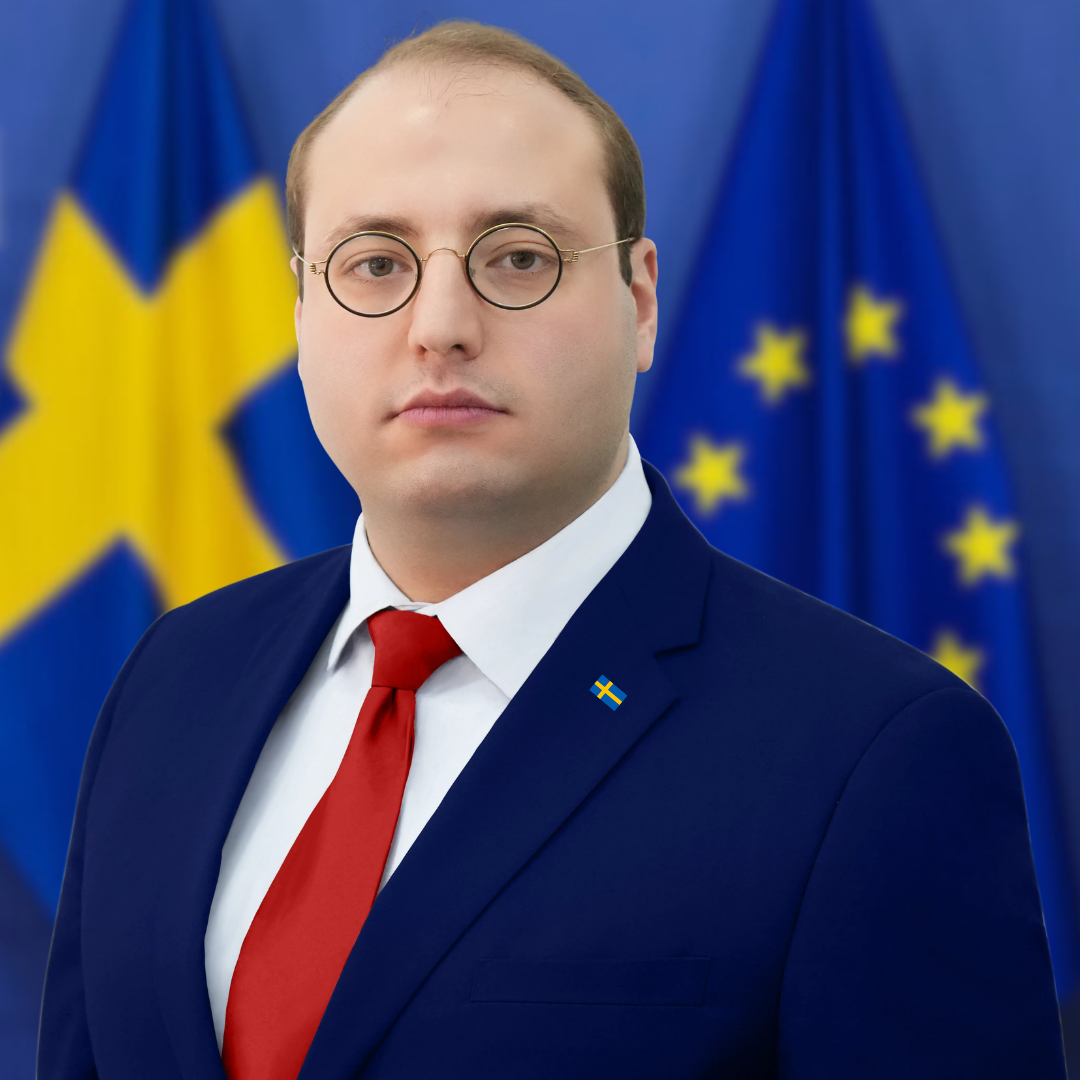
About Mr. Alex Matrsson
Mr. Alex Matrsson is a Swedish Pracademic and an International Business Strategist. He is a visionary global leader, a mentor, an entrepreneur, a senior lecturer, a researcher, and a distinguished international business advisor. He is the number one International Business Strategy graduate in Sweden. He has extensive experience initiating, running, and managing businesses across the global value chain, as well as working internationally with investors, SMEs, MNCs, government agencies, universities, and multidisciplinary research institutes. Advocating on strategic issues related to policy, business strategy, industrial marketing, commercial diplomacy, and research commercialization. When it comes to higher education, Mr. Matrsson believes in serendipity, innovation, and the power of synergy-making. Therefore, these concepts jointly constitute the springboard for his knowledge dissemination endeavors. He implements a pragmatic approach that is rigorous in nature. He systematically ensures the successful delivery of core business concepts, while simultaneously developing the students' ability to become reflexive thinkers. He aims to enable the students to operationalize their "state-of-the-art" knowledge constructively—so that they can become an invaluable source of prosperity, driving forward the "social" and "economic" well-being for their local communities, their regions, and the larger society, worldwide. His scientific endeavors consolidate around trade promotion, emerging markets, business resilience, and the network approach to internationalization. Mr. Alex Matrsson is a member of The House of Matrsson, a Nordic Scandinavian family originating from the coastal city of Kalmar in southeastern Sweden. Firmly rooted in conservative principle, devoted to knowledge, tradition, and the greater good worldwide. Finally, on a personal level, his wide-ranging interests include blue whales, Arabian horses, classical music, ethical capitalism, religion, culture, the Nordics, the GCC region, and Central Asia—particularly Kazakhstan.