
For much of the outside world, Qatar has often been described through individual achievements: a major natural-gas producer, the home of a globally connected airline, a country with extraordinary infrastructure, a sovereign investor with a substantial international portfolio, or a diplomatic actor whose influence extends well beyond its geographic size.
Each description contains part of the truth. None, on its own, explains the larger phenomenon.
The more revealing question is not simply what Qatar has built, accumulated or become known for. It is how those capabilities interact.
Qatar National Vision 2030 frames development through interconnected human, social, economic and environmental dimensions, with economic development tied to diversification, human capability and long-term prosperity. The country's development framework also recognizes a central tension: how to modernize while preserving traditions, manage growth while protecting future generations, and build a competitive economy while maintaining social and environmental balance.
That framing matters because national competitiveness is rarely produced by infrastructure alone. An airport becomes strategically valuable when it enables people, capital and ideas to move. A port matters not simply because containers can be handled there, but because logistics can connect production to markets. Education matters not merely because universities occupy campuses, but because knowledge and talent determine whether an economy can absorb new technologies and develop new industries.
The same logic applies to capital. Qatar Investment Authority, established in 2005, describes its role in terms of protecting and growing the country's financial assets while diversifying the economy and investing for future generations. Its international portfolio spans markets, sectors and asset classes, while its domestic activities include supporting companies that have developed expertise and reach beyond Qatar.
Energy provides another example. QatarEnergy's position in LNG is not an isolated resource story. Energy connects with industrial activity, shipping, infrastructure, international trade and capital formation. QatarEnergy operates across an integrated value chain from exploration and production through processing, refining, sales and delivery, while its LNG strategy continues to evolve alongside the global energy transition.
Then there is the human dimension.
A business environment is ultimately experienced by people. Executives relocate with families. Entrepreneurs need schools, healthcare, mobility and professional networks. Researchers require institutions. Investors increasingly consider whether senior talent can imagine a sustainable life in the place where a company is headquartered. Qatar's development strategy places quality of life, healthcare, education, public safety, culture and belonging within its long-term national objectives.
This is where the idea of Qatar as a platform becomes more interesting than the idea of Qatar simply as a market.
A market is somewhere in which business happens. A platform is somewhere from which business can be organized, expanded and internationalized.
Qatar has invested heavily in the physical, financial, institutional and intellectual conditions that make such a platform possible. Its investment-promotion architecture increasingly presents the country as a base from which companies can reach markets beyond Qatar, while its digital agenda is designed to strengthen digital infrastructure and the broader digital economy.
The challenge for any serious analysis is to avoid turning this into a catalogue of projects. The strategic question is whether the connections between these assets produce capabilities that are greater than the individual components.
That is the perspective explored in this exclusive conversation with Mr. Alex Matrsson, the Swedish Pracademic and International Business Strategist.
Mr. Matrsson approaches Qatar not primarily as a collection of sectors, but as an operating environment. His perspective sits at the intersection of strategy and practice: how capital, institutions, infrastructure, talent, international relationships and human considerations influence the decisions that investors, entrepreneurs, executives and families make about where to build.
The conversation therefore moves deliberately from the visible to the less visible. It begins with the analytical problem of understanding Qatar, moves through living and working in the country, examines infrastructure and intellectual capability, and then considers capital, energy, connectivity, diplomacy and culture. It ultimately reaches the most difficult question: which parts of Qatar's development can other countries reproduce, and which depend on an accumulated combination of geography, institutions, relationships, capital and identity?
The distinction is important.
Individual assets can be purchased, constructed or copied. An ecosystem is different. It develops through interaction, accumulated capability and continuity.
The question, then, is not simply whether Qatar has built impressive individual assets. It is whether those assets have begun to reinforce one another strongly enough to change the country's strategic operating radius.
That is the question at the heart of this conversation.
Seeing Qatar as an Ecosystem
Question: When you look at Qatar today, what is the first analytical mistake international observers tend to make?
Mr. Alex Matrsson: The first mistake is fragmentation. People look at LNG, aviation, sovereign investment, infrastructure, diplomacy, education or tourism as separate stories and then try to decide which one explains Qatar. I think that is the wrong unit of analysis.
The more interesting question is what happens when these capabilities interact.
Take connectivity. An airport is infrastructure. An airline is a company. A port is logistics infrastructure. None of those things, considered separately, explains a country's international operating capacity. But put them together with capital, regulatory institutions, business services, universities and an internationally oriented talent base, and the equation changes.
The same is true of investment. Capital becomes more productive when it operates inside an environment where companies can recruit, move goods, access markets, find knowledge and build relationships.
So I would describe Qatar less as a collection of successful projects and more as an attempt to construct an integrated platform.
That does not mean every component is equally mature, nor that the model is without challenges. It means the strategic story lies in the connections. Qatar's national development vision itself is built around interconnected dimensions of development rather than a single economic objective.
For investors, that distinction is particularly important. They are not only deciding whether to enter a market. Increasingly, they are deciding whether an environment can support an entire operating model.
Question: You use the word “ecosystem” deliberately. What distinguishes an integrated national ecosystem from simply having many successful institutions?
Mr. Alex Matrsson: An ecosystem exists when the output of one capability improves the performance of another.
That is the test I would use.
If better connectivity attracts more talent, and more talent strengthens companies, and stronger companies create demand for education and research, and those institutions create new capabilities that support diversification, then you have an ecosystem. There are feedback loops.
The opposite is a collection of assets that happen to coexist.
This distinction is subtle but fundamental. A country can build a beautiful airport without creating a business hub. It can establish a university without creating an innovation economy. It can attract capital without developing companies capable of deploying that capital productively.
Integration requires institutional coordination, market demand, human capability and time.
What interests me about Qatar is that many of its national investments can be interpreted through that lens. The infrastructure creates access. Education creates capability. Capital creates capacity. Energy provides a major economic foundation. International relationships expand optionality. Quality of life influences whether people actually want to participate in the system.
The strategic consequence is that the whole can become more valuable than the sum of its parts.
Question: Does that mean Qatar should be understood less as a conventional domestic market and more as a platform for international activity?
Mr. Alex Matrsson: Yes, with an important qualification.
Qatar is certainly a domestic economy with its own consumers, businesses and institutions. But its geographic scale means that the larger strategic opportunity is often the ability to organize activity beyond the domestic market.
That is what a platform does.
A company can establish itself locally while thinking regionally and operating internationally. The country itself has increasingly emphasized the idea of doing business from Qatar and using its connectivity to reach wider markets.
For an international business, the relevant question therefore becomes: what can I coordinate from here?
Can I bring executives here? Can I move them efficiently? Can I reach customers and partners? Can I access infrastructure, financing, research and professional services? Can I build relationships across the region? Can my family live here comfortably?
When those questions begin receiving positive answers simultaneously, the definition of the market changes.
You are no longer evaluating only domestic demand. You are evaluating the country's ability to function as an operating base.
Building a Place to Live and Work
Question: That brings us to the human dimension. Why is quality of life becoming increasingly relevant to questions that were traditionally treated as investment or business decisions?
Mr. Alex Matrsson: Because capital follows people more than many economic models acknowledge.
A board can approve an investment in a jurisdiction, but executives, researchers, founders and technical specialists still have to decide whether they want to live there. Their families have to make the same decision.
That means schools, healthcare, mobility, safety, culture, housing, community and social life are not peripheral considerations. They are part of the operating environment.
Qatar's own development strategy increasingly treats quality of life in precisely this way, linking healthcare, education, public safety, culture, environment and belonging with the country's attractiveness as a destination.
There is also a deeper economic point.
If an economy wants to move toward knowledge-intensive sectors, it needs people who have choices about where they work. Those people compare entire environments, not isolated salaries.
A highly skilled engineer may compare infrastructure, professional opportunities and family life simultaneously. An entrepreneur may ask whether the ecosystem around the company is strong enough to support growth. An investor may consider whether senior management can realistically be based there.
So quality of life is not simply a lifestyle benefit. It can become an economic input.
Question: What would you say to an international professional who is considering living and working in Qatar rather than simply visiting for business?
Mr. Alex Matrsson: I would tell that person to evaluate the country as a lived system rather than as an employment destination.
The first question should be professional: what opportunities exist, and how strong is the surrounding network?
The second should be practical: how easy is it to establish a stable daily life?
And the third should be cultural: can I and my family develop a meaningful relationship with the place?
Those questions matter because relocation is not a transaction.
Qatar has a highly international population and has built institutions around education, healthcare, mobility, business and cultural life. But international openness should not be confused with cultural uniformity. A successful international environment allows people to participate in global professional life while still encountering a distinctive local identity.
That combination can be an advantage.
People increasingly want international opportunity without necessarily wanting every city to feel interchangeable.
For Qatar, the challenge is to continue strengthening that balance: make the country highly accessible to international talent while preserving the cultural confidence that gives the place its character.
Question: If economic ecosystems are ultimately human ecosystems, what determines whether Qatar can attract talent rather than simply recruit it?
Mr. Alex Matrsson: Recruitment is transactional. Attraction is relational.
You can recruit someone because there is an attractive position. But retaining that person requires a broader proposition: meaningful work, professional development, social stability, family considerations and a sense that the environment is improving.
That is why education and research become relevant to talent attraction. A sophisticated professional wants to know not only what job exists today but what ecosystem surrounds that job.
Are there universities? Research partners? Schools? Industry networks? Entrepreneurship opportunities? International flights? Healthcare? Cultural institutions?
The stronger those connections become, the more convincing the long-term proposition.
There is also a network effect. When enough capable people settle in one environment, they create opportunities for others. Entrepreneurs meet investors. Researchers meet companies. Executives become mentors. International professionals bring networks from other markets.
That is when talent stops being an imported input and begins becoming an endogenous capability.
For Qatar, that transition is strategically important.
Question: How important is family life to the competitiveness of an international business hub?
Mr. Alex Matrsson: Much more important than conventional investment analysis suggests.
Senior executives do not relocate alone in most cases. Researchers, founders and technical specialists often make decisions as families. If the professional environment is excellent but the personal environment is difficult, the overall proposition weakens.
The interesting thing is that family considerations can also reinforce economic diversification.
Education creates demand for knowledge institutions. Healthcare creates demand for advanced medical capability. Culture and leisure create opportunities for new services. Safe and efficient mobility supports productivity.
So what looks like a social-policy issue can become an economic-development issue.
Qatar's National Vision and its development strategies increasingly connect these dimensions. The stated ambition around quality of life includes education, healthcare, culture, public safety and belonging.
The strategic lesson is simple: if you want people to build careers in a country, you also need to make it possible for them to build lives there.
Infrastructure as Strategic Capability
Question: Qatar has invested heavily in physical infrastructure, but infrastructure alone does not create a competitive ecosystem. At what point does infrastructure begin to generate capabilities beyond its original purpose?
Mr. Alex Matrsson: It happens when infrastructure reduces friction across several economic activities simultaneously.
Consider an airport. Its immediate function is transportation. But if it provides reliable access to major markets, it changes the feasibility of locating regional management, conferences, research collaborations and international services in the country.
The same applies to ports and logistics.
Infrastructure becomes strategically significant when it changes behavior.
If companies can move people and goods more efficiently, they can organize supply chains differently. If digital infrastructure reduces transaction costs, companies can deliver services across borders. If urban transport reduces commuting friction, labor markets become more accessible.
The important concept is not the infrastructure itself but the productivity it unlocks.
Qatar's development planning has linked infrastructure, logistics, digital transformation and diversification.
That is how infrastructure should be evaluated: not by how impressive it looks, but by what additional capability it makes possible.
Question: What role do Doha and the wider urban transformation play in that equation?
Mr. Alex Matrsson: Cities are physical expressions of economic strategy.
Doha's development matters because the city is where many of the ecosystem's components become visible simultaneously. Offices, universities, hotels, cultural institutions, residential communities, transport, healthcare and commercial districts are not separate experiences for the person living there.
They form a daily operating environment.
That is why urban planning has strategic consequences.
A business executive does not experience “infrastructure” as a government category. They experience the time required to get somewhere, the availability of services, the quality of their workplace, the accessibility of an airport and the ease with which colleagues can visit.
The same is true for a family.
When physical planning reduces friction, it quietly improves economic competitiveness.
But urban development also needs restraint. Rapid growth can create inefficiencies if expansion becomes an objective in itself. Qatar's National Vision recognizes the tension between managed growth and uncontrolled expansion.
The next stage therefore should not simply be more construction. It should be better integration.
Question: How does aviation change Qatar's economic geography?
Mr. Alex Matrsson: Aviation effectively enlarges the country's operating radius.
That is particularly significant for a relatively small state. If a company can place leadership, operations or regional functions in Qatar while maintaining efficient connections with Europe, Asia, Africa and the Americas, geography becomes less restrictive.
Qatar Airways is central to that equation, but the broader point is the network rather than the airline alone. Hamad International Airport provides the physical hub through which that connectivity operates, while Qatar Airways provides the commercial network and passenger capacity.
The strategic value extends beyond business travel.
Connectivity supports tourism, diplomatic engagement, international conferences, education, talent mobility and family accessibility.
This is why aviation should not be analyzed only through passenger numbers or airline rankings. Its deeper function is to reduce the psychological and operational distance between Qatar and the rest of the world.
Question: And what about maritime logistics? How does the port system complement aviation?
Mr. Alex Matrsson: Aviation and maritime logistics solve different problems, but together they create a more complete connectivity proposition.
Aviation is particularly powerful for people, high-value goods, time-sensitive cargo and international business activity. Maritime infrastructure is essential for large-scale trade, industrial supply chains and energy-related flows.
Qatar's geography makes that combination particularly relevant.
The country's energy position requires sophisticated physical systems for production, transportation and delivery. QatarEnergy operates an integrated value chain, while Qatar's maritime capabilities support the movement of energy and other goods to international markets.
That tells us something important about economic strategy.
Resources become strategically valuable when a country can connect extraction to processing, logistics, markets and finance.
So aviation and maritime infrastructure are not isolated infrastructure stories. Together they help convert Qatar's geographic position into operating capability.
Human Capital and Knowledge
Question: Qatar can build physical infrastructure relatively quickly. Why is intellectual infrastructure a different proposition?
Mr. Alex Matrsson: Because intellectual infrastructure compounds.
You can construct a building in a relatively short period. You cannot construct institutional knowledge at the same speed.
A research culture develops through people, mentorship, collaboration, failure, experimentation and accumulated expertise.
That is why Qatar Foundation's education and research ecosystem is strategically interesting. Education City brings together international university partnerships, a homegrown university, research institutions and community organizations.
The value is not simply that internationally recognized institutions have a presence in Qatar. The deeper question is whether those institutions create local capability.
Do students build relationships with companies? Do researchers engage with national priorities? Do entrepreneurs emerge from the knowledge base? Does international expertise become embedded in local networks?
If the answer is yes, education moves beyond social infrastructure and becomes economic infrastructure.
That is a much longer-term investment.
Question: How should we understand the relationship between education, research and Qatar's economic diversification?
Mr. Alex Matrsson: Diversification is ultimately a capability problem.
You can identify attractive sectors on paper, provide incentives and create physical zones. But new industries require people who understand them.
If Qatar wants deeper capabilities in technology, advanced manufacturing, healthcare, financial services, logistics or other knowledge-intensive sectors, it needs engineers, researchers, entrepreneurs, managers and specialists who can build those industries.
Education therefore supplies more than qualifications. It supplies the human infrastructure of diversification.
Research adds another layer.
Research institutions can create knowledge that companies can commercialize, but they can also make a country more attractive to international talent. A scientist is more likely to consider a location seriously when there is a meaningful research environment around them.
Qatar Foundation's model is particularly relevant because it deliberately connects education, research and innovation rather than treating them as completely separate categories.
The strategic return is therefore measured over decades, not quarters.
Question: Does Qatar need to become an innovation economy, or is that another case of importing a fashionable economic label?
Mr. Alex Matrsson: The label matters less than the capability.
Every country wants to be described as innovative. The harder question is whether its institutions can repeatedly turn knowledge into useful outcomes.
Innovation can mean a research breakthrough. It can mean a new business model. It can mean a more efficient public service. It can mean applying existing technology in a new context.
For Qatar, I would focus on the conditions that allow those things to happen.
Can researchers collaborate with companies? Can entrepreneurs access capital? Can companies recruit skilled people? Can government procurement create opportunities for new solutions? Can successful firms scale beyond the domestic market?
If those connections strengthen, innovation becomes less of a slogan and more of an economic process.
Qatar's digital strategy is part of that broader direction, with digital transformation, infrastructure and the digital economy increasingly positioned as foundations of future development.
The objective should not be to imitate Silicon Valley or another innovation cluster. It should be to develop capabilities that fit Qatar's own economic geography and strategic priorities.
Question: What role does entrepreneurship play in moving from a resource-supported economy toward a more diversified one?
Mr. Alex Matrsson: Entrepreneurship is the mechanism that converts capability into experimentation.
Large institutions can build infrastructure and establish platforms, but entrepreneurs test where new demand exists.
That makes the private sector essential to diversification.
Qatar's development framework increasingly emphasizes entrepreneurship, investment, skilled employment and private-sector participation. Its investment-promotion architecture also focuses on sectors including advanced industries, logistics, technology, digital services and financial services.
The next challenge is not simply creating more startups. It is creating companies that can scale.
A healthy entrepreneurial environment needs customers, capital, talent, mentors, research, regulation and access to international markets.
This is another example of the ecosystem principle.
An entrepreneur does not need one thing. They need a network of things that become useful at different stages of growth.
That is why I like the formulation: build locally, think regionally, operate internationally.
The local environment should give the entrepreneur a strong foundation. The ambition should not stop at the domestic market.
Capital, Energy and Economic Diversification
Question: Qatar has substantial sovereign capital. What makes capital strategically powerful when it is embedded in a broader national system?
Mr. Alex Matrsson: Capital becomes more powerful when institutions know how to use it patiently and intelligently.
Money alone does not create competitiveness.
If capital enters an environment with strong governance, infrastructure, talent and international relationships, it can support companies and projects that would be difficult to develop elsewhere.
Qatar Investment Authority is a useful example. QIA describes itself as the sovereign wealth fund of Qatar, established to protect and grow financial assets and diversify the economy. Its investment approach spans sectors, geographies and asset classes, while its domestic portfolio includes companies with ambitions beyond Qatar.
But one should avoid assuming that every investment has a direct national-development purpose. A sovereign wealth fund also has a fiduciary responsibility to generate returns for future stakeholders.
The more interesting strategic question is how a country benefits from having a patient institutional investor alongside its broader economic architecture.
That can create resilience and optionality.
Capital can wait. It can diversify. It can partner. It can support long-term positions rather than reacting to every short-term cycle.
That is a strategic asset in itself.
Question: What does “strategic patience” mean in practical investment terms?
Mr. Alex Matrsson: It means being able to distinguish between temporary volatility and structural change.
Short-term investors often need to respond quickly because their investment horizon demands it. A sovereign investor can potentially take a longer view, provided its governance and mandate support that approach.
QIA describes itself as a long-term investor and emphasizes diversification, partnerships and sustainable returns. Its investment model includes internal investing and relationships with external managers and co-investors.
Strategic patience does not mean being passive.
It means having the capacity to wait for value to mature.
That can be particularly important in sectors such as infrastructure, technology, healthcare and industrial capability, where the economic payoff may take years to develop.
The key is discipline.
Patient capital without discipline becomes complacent capital. Strategic patience works only when accompanied by strong governance, risk management and a clear understanding of what constitutes long-term value.
Question: Should Qatar's diversification story be understood as a move away from energy?
Mr. Alex Matrsson: I would reject that framing.
Energy can be a foundation for diversification rather than its opposite.
The question is what a country does with the economic capability generated by its resource base.
QatarEnergy illustrates the breadth of the energy system. It operates across exploration, production, processing, refining, marketing and delivery, and its LNG strategy connects Qatar's resource position with international shipping and global customers.
That creates opportunities to develop adjacent capabilities in industrial services, logistics, engineering, maritime activity, technology and finance.
Diversification therefore does not necessarily mean abandoning the sector that created economic strength.
It can mean using that strength to build a broader capability base.
The important distinction is between diversification of revenue and diversification of capability.
A country may diversify its income streams while remaining dependent on a particular resource ecosystem. True resilience requires developing capabilities that remain valuable across changing economic conditions.
That is a longer and more demanding process.
Question: Where does QatarEnergy fit into the wider economic ecosystem you are describing?
Mr. Alex Matrsson: QatarEnergy is a good illustration of why vertical integration matters.
Energy is not simply something that is extracted and sold. It involves engineering, processing, shipping, trading, infrastructure, finance, industrial services and international partnerships.
QatarEnergy operates across an integrated energy value chain.
That integration creates knowledge.
And knowledge can become transferable.
A company that develops sophisticated maritime, engineering or project-management capabilities through the energy sector may later apply those capabilities elsewhere.
This is how resource wealth can create industrial depth rather than simply fiscal revenue.
At the same time, the energy sector faces a changing global environment. QatarEnergy is continuing LNG expansion while also focusing on lower-carbon intensity, efficiency, carbon capture and renewable power generation alongside its broader energy strategy.
That suggests the future question is not whether energy remains important. It is whether the capabilities developed around energy can remain productive as the global energy system evolves.
Question: How should international investors evaluate the Qatar investment environment beyond tax rates or ownership rules?
Mr. Alex Matrsson: They should evaluate the operating environment.
Legal ownership matters. Taxation matters. Incentives matter. But those are only the first layer.
An investor should ask: Can I recruit? Can I move executives? Can I reach customers? Can I find partners? Can I protect intellectual property? Can I scale? Can I access infrastructure? Can my management team live here?
Qatar's investment framework has expanded the ability of foreign investors to establish fully owned companies in many sectors, subject to applicable exclusions and regulations. Its investment-promotion architecture also provides facilitation, introductions and business services for investors.
That is useful because international investment is rarely just about entering a market.
It is about reducing friction.
The best investment environments make it easier for a company to move from intention to operation and then from operation to expansion.
That is where Qatar's platform proposition becomes commercially relevant.
Connectivity and International Reach
Question: You have described aviation and logistics as forms of economic infrastructure. What happens when connectivity is combined with international relationships?
Mr. Alex Matrsson: Connectivity begins to create strategic optionality.
A country that is easy to reach can attract people. A country with strong international relationships can create more opportunities for those people and companies once they arrive.
The combination matters.
Business connectivity gives you access to markets. Diplomatic connectivity can give you access to relationships. Educational connectivity gives you access to knowledge. Investment connectivity gives you access to capital.
Together, they expand the number of choices available to a country.
Qatar's connectivity infrastructure and international agreements support that broader proposition.
The strategic lesson is that connectivity is multidimensional.
It is not simply about how many flights depart from Doha.
It is about how easily Qatar can participate in commercial, intellectual, diplomatic and cultural networks beyond its borders.
Question: Qatar's diplomatic role is often discussed separately from business. Do you see a connection between the two?
Mr. Alex Matrsson: Yes, although it should be described carefully.
Diplomacy is not a substitute for commercial competitiveness. But international relationships can create strategic optionality.
Qatar has made mediation and dialogue important elements of its foreign-policy posture and has developed relationships across a wide range of international actors.
The business relevance is indirect.
A country that is trusted by a wide range of actors can sometimes maintain channels that others cannot. Those relationships can support dialogue during periods of uncertainty.
For investors, stability and connectivity are valuable precisely because international business operates across political boundaries.
But credibility has to be earned.
Diplomatic positioning creates value only when other actors believe that the country has the relationships, institutional capacity and consistency to engage constructively.
That is why diplomacy should be understood as part of Qatar's strategic infrastructure, but not as a commercial marketing tool.
Question: Does international communication contribute to the same strategic architecture?
Mr. Alex Matrsson: It can.
Media creates visibility, and visibility affects how a country is perceived and how easily people can engage with it.
Al Jazeera is part of Qatar's international communication footprint and has given the country a significant presence in global media networks. The important analytical point is not whether one agrees with every editorial position. It is that communication capability can shape international reach.
A country that is able to participate in global conversations has a different kind of international presence from one that is known only through commodities.
That creates soft power, but it also creates responsibility.
Visibility increases scrutiny.
For Qatar, as for any country with a strong international profile, communication has to be accompanied by institutional credibility. The more visible a country becomes, the more important consistency and transparency become.
So I would regard media reach as another form of connectivity, alongside aviation, education, diplomacy and commerce.
Culture, Identity and Belonging
Question: Can rapid modernization coexist with a strong national identity?
Mr. Alex Matrsson: Absolutely, and I would argue that it has to.
Modernization does not require cultural homogenization.
In fact, a country can become more internationally attractive precisely because it remains distinctive.
Qatar's National Vision explicitly identifies modernization alongside preservation of traditions as one of the country's central development challenges.
That is an important formulation because it recognizes that identity is not an obstacle to development.
Culture can provide continuity while institutions evolve.
The challenge is to avoid turning culture into either a museum exhibit or a marketing slogan.
A living culture changes. It absorbs outside influences while retaining recognizable foundations.
For international professionals, that can be meaningful. People do not necessarily want to move from one globally standardized environment to another. They may value the opportunity to participate in an international society while experiencing a distinct local culture.
That is part of what creates belonging.
Question: Why should investors care about culture and belonging?
Mr. Alex Matrsson: Because long-term investment is ultimately about people.
An investor can purchase an asset from anywhere. Building an enduring organization requires people who want to stay, contribute and develop relationships.
Belonging supports that continuity.
If employees feel that they can participate in a society rather than simply pass through it, their relationship with the location changes.
That has implications for talent retention.
Culture also affects business relationships. Trust is often built through repeated interaction, hospitality and shared context. Those things are difficult to quantify, but they matter enormously in international business.
Qatar's challenge is therefore to remain internationally open without becoming culturally anonymous.
That is a delicate balance.
A strong global business hub should allow international professionals to feel welcome without requiring the host culture to disappear.
The result can be something more valuable than simple convenience: a place in which international activity and local identity coexist.
What Can—and Cannot—Be Replicated
Question: Let us challenge the central thesis. Can another country simply reproduce Qatar's model by building similar infrastructure, establishing investment institutions and attracting international universities?
Mr. Alex Matrsson: It can reproduce components. It cannot automatically reproduce the system.
An airport can be built.
A university campus can be established.
A sovereign investment vehicle can be created.
A business district can be planned.
But the relationships among those components take time.
This is the distinction between copying assets and reproducing an ecosystem.
The ecosystem depends on accumulated trust, institutional learning, human networks, geography, capital, culture and strategic continuity.
Even two countries with identical physical assets could produce completely different outcomes because their institutions and histories are different.
That does not mean Qatar's model is impossible to learn from. Quite the opposite.
Other countries can learn from the principle of integration.
But they should ask which capabilities are transferable and which are context-dependent.
The mistake would be to copy the visible layer while ignoring the invisible architecture underneath it.
Question: Which parts of Qatar's development are easiest for another country to copy?
Mr. Alex Matrsson: Physical and organizational assets are generally easier to copy.
A country can build an airport. It can modernize a port. It can create special economic zones. It can establish an investment-promotion agency. It can invite international universities. It can establish funds.
Those things require money, expertise and political commitment, but they are fundamentally reproducible.
The harder question is utilization.
An airport becomes valuable through network density and reliability. A university becomes valuable through faculty, students, research and industry relationships. An investment zone becomes valuable when companies actually want to locate there.
So even the supposedly “copyable” assets have a second layer that is much harder to reproduce.
You can copy the structure.
You cannot instantly copy the behavior that makes the structure productive.
Question: And what is hardest to copy?
Mr. Alex Matrsson: Accumulated relationships.
You cannot purchase twenty years of institutional learning overnight.
You cannot manufacture trust between business communities. You cannot replicate a country's geographic position. You cannot recreate the same cultural environment or the same historical relationships.
You also cannot easily replicate strategic continuity.
If businesses believe that a country will continue investing in capability over decades, they can make longer-term commitments themselves.
That creates a feedback loop.
Institutional continuity encourages private investment. Private investment creates companies. Companies create talent and expertise. Talent strengthens institutions.
This is why ecosystems compound.
Qatar has advantages and challenges that are specific to its own context. Other countries should learn from the logic of integration rather than assume they can reproduce the exact outcome.
Question: How does Qatar's geography fit into the replication problem?
Mr. Alex Matrsson: Geography creates possibilities. Strategy determines how effectively those possibilities become capabilities.
Qatar's position gives it access to major international markets and makes aviation, maritime trade and energy logistics particularly relevant.
But geography by itself is not a strategy.
A favorable location can remain underutilized if infrastructure, institutions and connectivity are weak.
Qatar has invested heavily in converting geographic position into operating capacity. Its aviation, maritime and investment infrastructure all contribute to that proposition.
The replication lesson is therefore nuanced.
Another country cannot copy Qatar's exact geography. But it can ask a more useful question: what geographic advantages do we possess, and which infrastructure and institutions would convert them into economic capability?
That is the transferable principle.
Question: What makes Qatar different from other Gulf economies, given that many of them are pursuing diversification, infrastructure and international investment?
Mr. Alex Matrsson: The differences are often less about individual ambitions than about configuration.
Several Gulf economies have significant capital, energy resources, ambitious infrastructure programs and international connectivity.
So simply listing those characteristics does not distinguish Qatar.
The differentiation emerges from the particular combination of scale, geography, LNG specialization, aviation, sovereign capital, education and research institutions, diplomatic positioning and cultural identity.
There is also a question of strategic focus.
Qatar has built a distinctive international profile relative to its physical size.
That does not make it categorically better than every neighboring economy. It makes its configuration different.
Investors should therefore resist simplistic comparisons.
The relevant question is not “Which Gulf country is best?”
It is “Which ecosystem best matches the capabilities, ambitions and operating model of this particular company?”
That is a much more sophisticated investment question.
The Next Chapter
Question: If Qatar has already built substantial physical capability, what should the next phase of development prioritize?
Mr. Alex Matrsson: Capability density.
The next phase should be less about accumulating assets and more about increasing the productivity of the assets already in place.
That means stronger links between universities and companies, more scalable entrepreneurship, deeper research commercialization, greater private-sector capability and more sophisticated international partnerships.
It also means asking whether infrastructure is being used optimally.
A mature ecosystem should continuously improve its connections.
Qatar's development strategy emphasizes diversification, innovation, entrepreneurship, investment and human capability, suggesting that the policy challenge is increasingly about quality rather than simply quantity.
The next chapter should therefore be measured by what companies, researchers, entrepreneurs and people can accomplish.
That is a different metric from how many buildings exist.
Question: What does Qatar's future economic diversification need most: more capital, more talent or more entrepreneurship?
Mr. Alex Matrsson: It needs the interaction of all three.
Capital without talent can be inefficient.
Talent without capital can become frustrated.
Entrepreneurship without infrastructure can struggle to scale.
The ecosystem works when those resources reinforce one another.
That is why I would avoid choosing one.
Qatar already has substantial financial capacity. The strategic question is how effectively that capacity can support productive private-sector activity and knowledge creation.
Similarly, attracting talent is important, but talent becomes more valuable when people can build companies, conduct research and participate in international networks.
Entrepreneurship then becomes the mechanism that tests and scales those capabilities.
So the objective should not be to maximize any one input.
It should be to increase the quality of the connections among them.
Question: How important will digital capability be to Qatar's competitiveness over the next decade?
Mr. Alex Matrsson: Increasingly important because digital infrastructure changes the cost of participation.
A company does not necessarily need to move physical assets to participate in a market. Digital systems allow services, data and intellectual work to move across borders.
Qatar's digital strategy treats digital infrastructure and digital transformation as foundations of the country's future economic development.
But again, infrastructure is only the beginning.
Digital competitiveness requires skills, cybersecurity, regulation, data governance, research and companies capable of commercializing technology.
That takes us back to the ecosystem.
Digital infrastructure becomes more valuable when education produces digital talent, when investors fund technology businesses, when government services are digitally capable and when companies can use technology to reach international markets.
The future business hub will not be defined only by roads and airports.
It will also be defined by the speed at which information, capital and decisions can move.
Question: What does strategic resilience mean for Qatar in an increasingly uncertain world?
Mr. Alex Matrsson: Resilience means having choices.
A resilient country is not one that avoids every disruption. It is one that has enough capabilities to adapt when disruptions occur.
That is where diversification, connectivity and institutional depth become important.
Energy provides substantial economic strength. Sovereign capital provides financial capacity. Infrastructure provides physical connectivity. International relationships provide diplomatic options. Education provides human capability.
If those systems remain strong and connected, Qatar has more ways to respond to uncertainty.
Resilience is therefore not the opposite of specialization.
Qatar can remain highly capable in energy while developing broader competencies around it.
The objective is to avoid becoming dependent on a single mechanism for future prosperity.
That is a very different concept from simply trying to eliminate risk.
Question: How should international companies think about “doing business in Qatar” versus “doing business from Qatar”?
Mr. Alex Matrsson: The distinction is strategically useful.
Doing business in Qatar means serving the domestic market and participating in the local economy.
Doing business from Qatar means using the country's infrastructure, institutions and relationships as a base for wider activity.
The second model requires stronger ecosystem capabilities because the company is effectively exporting from the platform.
Qatar's investment-promotion framework increasingly articulates this distinction, presenting the country as a location from which companies can connect to markets beyond Qatar.
For an international business, that raises a different set of questions.
Can regional leadership be based here? Can international teams be coordinated here? Can supply chains be managed here? Can research partnerships be developed here? Can executives and families live here?
If the answer is increasingly yes, Qatar's address becomes more than a geographic designation.
It becomes part of the company's strategic architecture.
Question: Where does sustainability fit into the ecosystem thesis without turning the discussion into another corporate slogan?
Mr. Alex Matrsson: Sustainability should be treated as a constraint on long-term competitiveness, not as a decorative concept.
A system that produces short-term growth while undermining its environmental or social foundations is not genuinely resilient.
Qatar's National Vision includes environmental development as one of its four pillars, while QatarEnergy has outlined efforts focused on reducing emissions intensity, improving efficiency, developing carbon-capture systems and expanding renewable power generation alongside its LNG strategy.
The important point is that sustainability has to be integrated into economic decisions.
Energy efficiency affects operating costs.
Environmental quality affects quality of life.
Research affects technology.
Technology affects industrial competitiveness.
These are not separate conversations.
The strongest sustainability strategies will therefore be those that improve resilience and productivity rather than simply adding reporting requirements.
Concluding Remarks
The most revealing way to understand Qatar is not as a country that has accumulated a remarkable series of individual assets, but as a country increasingly focused on the interaction among them.
That distinction changes the analytical frame.
Energy creates a foundation. Capital creates capacity. Infrastructure creates access. Aviation creates mobility. Logistics creates connectivity. Education creates human capability. Research creates knowledge. Entrepreneurship creates economic dynamism. Diplomacy creates strategic optionality. Culture creates identity. Quality of life creates human attractiveness. Institutions create continuity.
None of these elements is sufficient on its own.
Energy wealth does not automatically create diversification. Capital does not automatically create companies. Infrastructure does not automatically create productivity. Universities do not automatically create innovation. International connectivity does not automatically create international business.
The value emerges through interaction.
This is also why Qatar's investment environment is more interesting when considered as an operating environment rather than merely as a set of incentives. Foreign ownership rules, investment facilitation and sector opportunities matter, but they exist within a wider system of infrastructure, talent, institutions, connectivity and quality of life. Qatar's investment-promotion architecture increasingly emphasizes both establishing businesses in the country and using Qatar as a base from which to reach wider markets.
The same principle applies to sovereign capital.
The significance of Qatar Investment Authority is not simply the scale of the assets it manages. Its longer-term significance lies in the financial optionality created by having an institutional investor capable of diversifying across geographies, sectors and asset classes while participating in the development of domestic companies and capabilities. QIA itself describes diversification and long-term investment as central to its role.
Energy offers perhaps the clearest demonstration of the distinction between an asset and a system.
Qatar's natural-gas resources are extraordinary assets, but the strategic value comes from the capabilities built around them: production, processing, engineering, shipping, trading, infrastructure, international partnerships and financial capacity. QatarEnergy's integrated model and continuing LNG expansion demonstrate how resource strength can support a wider industrial and commercial architecture.
The same logic extends to aviation.
Hamad International Airport and Qatar Airways are not important only because they connect Doha with the world. Their deeper importance lies in what that connectivity makes possible: international management, tourism, investment, conferences, education, diplomacy, talent mobility and family accessibility.
Education and research represent a longer-term layer.
Physical infrastructure can be constructed relatively quickly. Intellectual infrastructure compounds over generations.
Qatar Foundation's model, bringing together schools, international universities, research institutes and knowledge organizations, illustrates the attempt to create an environment in which human potential becomes a strategic resource.
That may ultimately prove one of the most consequential dimensions of Qatar's development.
A country can import expertise indefinitely, but a mature economy must increasingly generate, retain and reproduce expertise within its own networks.
This brings the discussion back to people.
The ultimate test of any international business hub is not how many companies register there. It is whether talented people can imagine building something there.
Can a researcher build a career? Can an entrepreneur scale a company? Can an executive lead an international operation? Can a family establish a stable life? Can international professionals participate in society without losing their own identities? Can local institutions absorb global expertise while preserving national confidence?
These are not separate questions.
They are different expressions of the same question: does the system work for people?
Qatar's next phase will therefore be less about demonstrating that it can build and more about demonstrating that it can deepen.
Deepen the relationship between universities and companies.
Deepen the role of entrepreneurs.
Deepen private-sector capability.
Deepen research commercialization.
Deepen international partnerships.
Deepen digital capacity.
Deepen institutional sophistication.
And, perhaps most importantly, deepen the connections among capabilities that already exist.
That is also where the replication question becomes most revealing.
Other countries can build airports. They can create sovereign funds. They can establish universities, ports, business districts and special economic zones. They can introduce investment incentives.
What they cannot reproduce instantly is the accumulated interaction among geography, capital, institutions, relationships, culture, human networks and strategic continuity.
Copying the pieces is relatively straightforward.
Reproducing the system is not.
That does not make Qatar's model impossible to learn from. It makes the lessons more useful. The lesson is not to imitate Qatar asset by asset. It is to understand how national capabilities can reinforce one another.
The principle is broader than Qatar.
National competitiveness increasingly depends not only on what a country possesses, but on how effectively its capabilities interact.
For Qatar, that means the central strategic challenge is no longer simply to add another institution, another project or another investment. It is to make the connections between institutions, projects, investments and people more productive.
If energy can strengthen industry, if capital can strengthen entrepreneurship, if infrastructure can strengthen connectivity, if connectivity can strengthen talent attraction, if education can strengthen innovation, if innovation can strengthen diversification, and if culture and quality of life can strengthen the country's ability to attract and retain people, then the system begins to acquire a quality that individual assets cannot provide.
That is the deeper story of Qatar as an international business and strategic hub.
Its greatest strategic asset may not be any individual institution, project or resource, but the increasingly sophisticated system created when those capabilities work together.
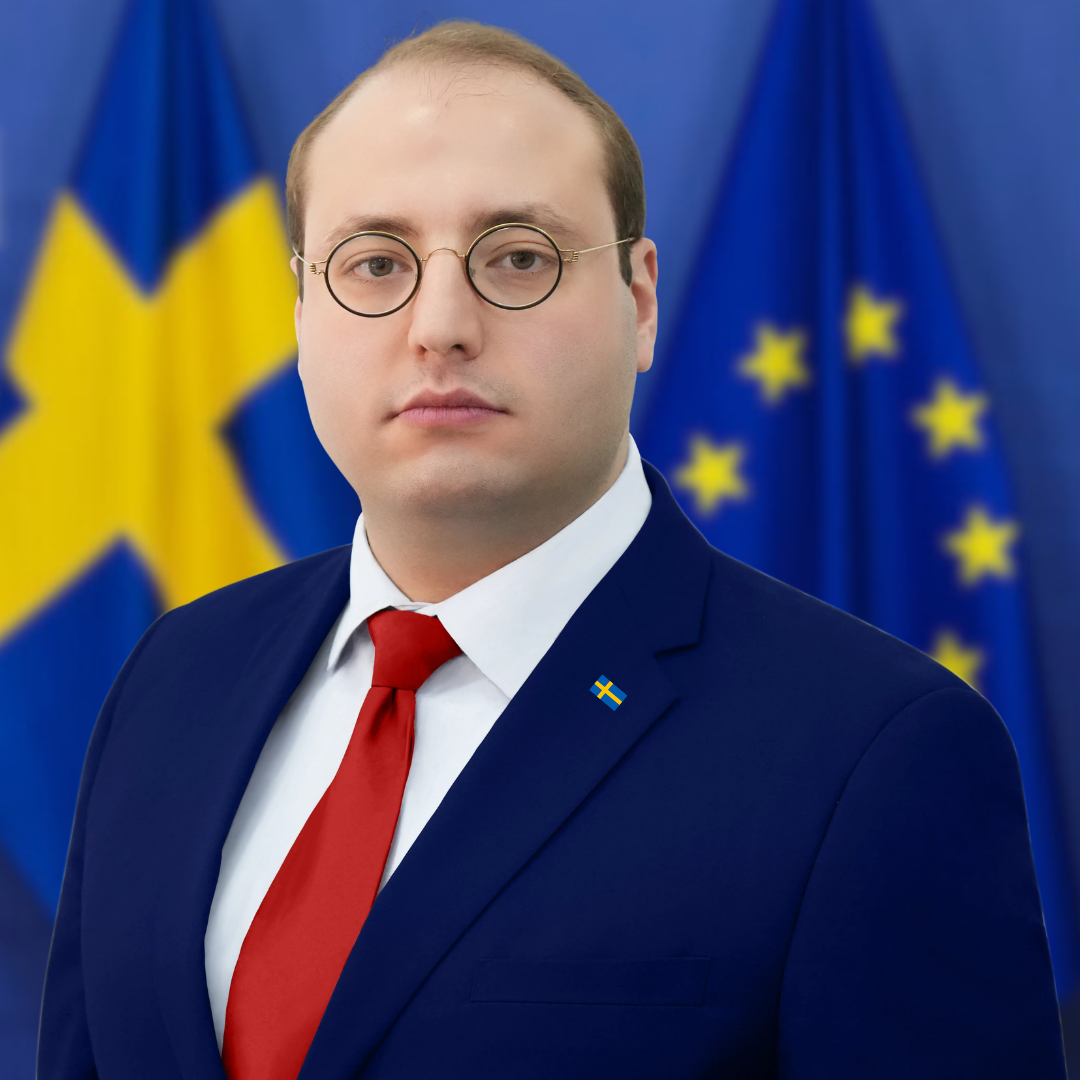
About Mr. Alex Matrsson
Mr. Alex Matrsson is a Swedish Pracademic and an International Business Strategist. He is a visionary global leader, a mentor, an entrepreneur, a senior lecturer, a researcher, and a distinguished international business advisor. He is the number one International Business Strategy graduate in Sweden. He has extensive experience initiating, running, and managing businesses across the global value chain, as well as working internationally with investors, SMEs, MNCs, government agencies, universities, and multidisciplinary research institutes. Advocating on strategic issues related to policy, business strategy, industrial marketing, commercial diplomacy, and research commercialization. When it comes to higher education, Mr. Matrsson believes in serendipity, innovation, and the power of synergy-making. Therefore, these concepts jointly constitute the springboard for his knowledge dissemination endeavors. He implements a pragmatic approach that is rigorous in nature. He systematically ensures the successful delivery of core business concepts, while simultaneously developing the students' ability to become reflexive thinkers. He aims to enable the students to operationalize their "state-of-the-art" knowledge constructively—so that they can become an invaluable source of prosperity, driving forward the "social" and "economic" well-being for their local communities, their regions, and the larger society, worldwide. His scientific endeavors consolidate around trade promotion, emerging markets, business resilience, and the network approach to internationalization. Mr. Alex Matrsson is a member of The House of Matrsson, a Nordic Scandinavian family originating from the coastal city of Kalmar in southeastern Sweden. Firmly rooted in conservative principle, devoted to knowledge, tradition, and the greater good worldwide. Finally, on a personal level, his wide-ranging interests include blue whales, Arabian horses, classical music, ethical capitalism, religion, culture, the Nordics, the GCC region, and Central Asia—particularly Kazakhstan.