

Aviation’s energy transition is moving too slowly. Global airlines remain committed to achieving net-zero carbon emissions by 2050, but the main constraints are no longer ambition alone. The availability of new fuels, infrastructure, investment and coordinated policy are becoming decisive, DKNews.kz reports.
These issues will dominate the fourth IATA World Sustainability Symposium, which will take place in Brussels on 13–14 October 2026.
The International Air Transport Association represents more than 370 airlines accounting for around 85% of global air traffic.
IATA: ambition is no longer the main obstacle
Airlines, fuel producers, investors, technology companies, regulators and government representatives will gather in Brussels.
The central question is increasingly practical: how can aviation turn decarbonization commitments into an economically viable system?
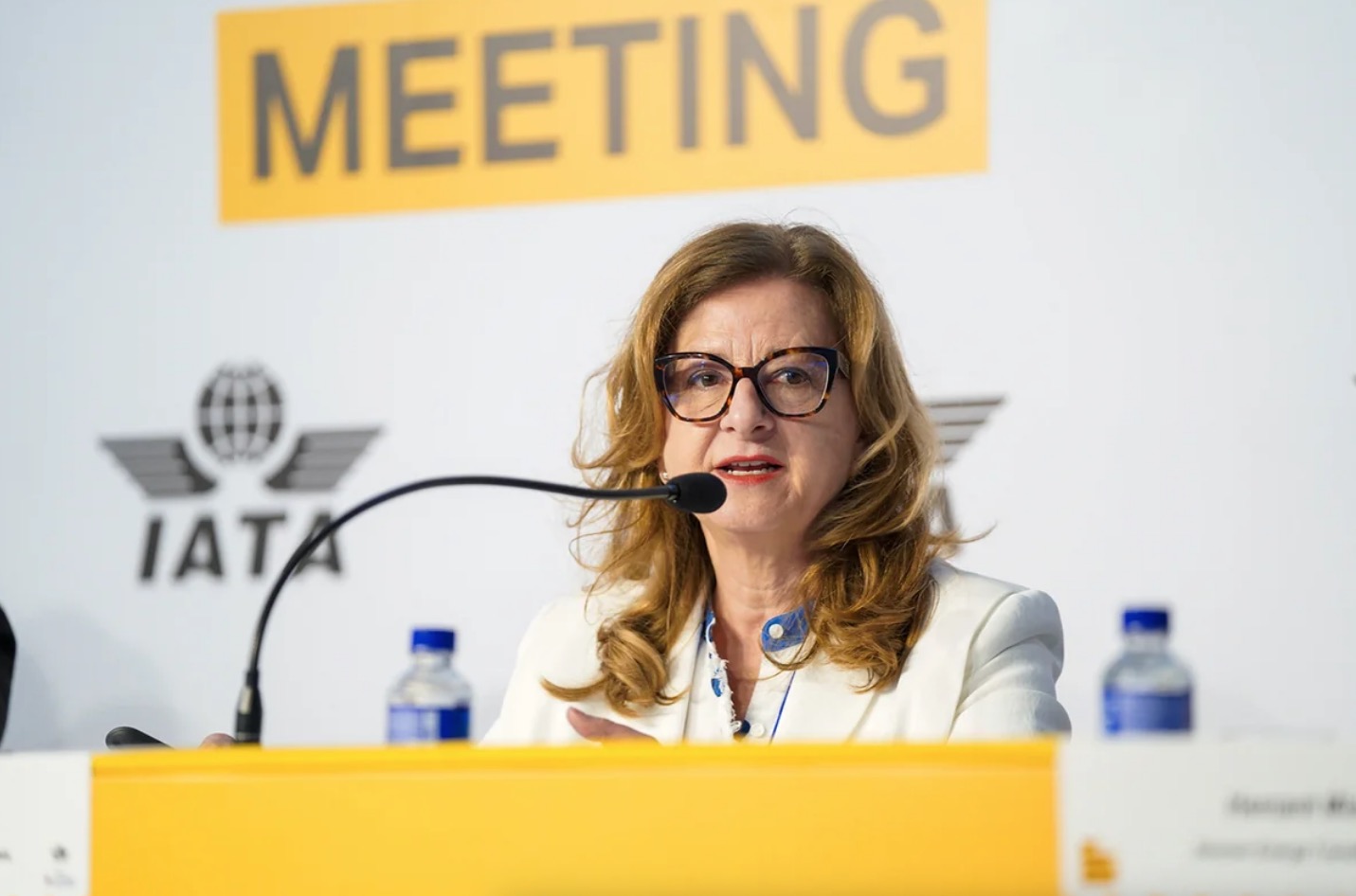
“Today, the challenge is constrained not by ambition but by the pace at which interdependent solutions can be developed and scaled,” said Marie Owens Thomsen, IATA’s Senior Vice President Sustainability and Chief Economist.
 IATA
IATA
According to IATA, airlines cannot complete the energy transition on their own. It requires higher renewable energy production, new infrastructure, technological development, investment and policies designed with the entire system in mind.
SAF will be one of the three main topics in Brussels
The first major theme of the symposium will focus on scaling solutions that are already technically available.
At the center of the discussion will be Sustainable Aviation Fuel, or SAF, including HEFA-based fuel, Low Carbon Aviation Fuels and co-processing at existing refining facilities.
The second theme will address the creation of global, transparent and competitive markets for SAF and carbon credits.
The third will cover emerging technologies, aviation’s non-CO₂ effects and sustainability throughout the aircraft lifecycle.
For Kazakhstan, this discussion is already moving beyond theory.
Kazakhstan may need around 70,000 tonnes of SAF by 2030
The Aviation Administration of Kazakhstan estimates that the country’s potential annual demand for sustainable aviation fuel could reach around 70,000 tonnes by 2030.
Research has identified Alcohol-to-Jet as one of the potentially economically attractive technologies for Kazakhstan. This process converts bioethanol into aviation fuel.
Kazakhstan also has its own agricultural feedstock base that could support such production.
However, large-scale SAF deployment requires another fundamental step first: the transition to Jet A-1 aviation fuel.
SAF is generally blended with Jet A-1. Without this fuel standard, creating a full domestic SAF market would be significantly more difficult.
Kazakhstan is already preparing its first SAF plant
The global debate promoted by IATA now coincides with concrete industrial projects inside Kazakhstan.
In the Kostanay region, KazMunayGas, KazFoodProducts and US-based KBR have agreed to work on the basic engineering design for a sustainable aviation fuel production facility.
Bioethanol is being considered as the main feedstock, with Alcohol-to-Jet technology expected to convert it into aviation kerosene.
Another potential project is being discussed with Asian investors and could involve the production of SAF from industrial oilseed feedstocks.
For Kazakhstan, the question is therefore becoming less about whether SAF is necessary and more about which technology will reach commercial-scale production first and at what cost.
Kazakhstan plans to raise aviation fuel output to 1.7 million tonnes
The SAF push is part of a broader transformation of Kazakhstan’s aviation fuel market.
The Ministry of Energy has previously announced plans to increase domestic aviation fuel production to 1.7 million tonnes between 2026 and 2032.
Kazakhstan’s refineries are also preparing for the production of Jet A-1.
This is not only an environmental issue.
If Kazakhstan wants to strengthen its role as an international aviation hub, access to modern aviation fuel directly affects transit flights, airline refueling, operating costs and the competitiveness of the country’s airports.
Kazakhstan is already part of the global emissions framework
Climate requirements are already relevant for Kazakh airlines.
Since 2019, Kazakhstan has been implementing CORSIA, the international system for monitoring and reporting CO₂ emissions from international aviation.
Air Astana, SCAT Airlines and Vietjet Qazaqstan submit emissions data, while the Aviation Administration of Kazakhstan coordinates implementation of the system.
Kazakhstan also became the first CIS country to join ICAO’s ACT-SAF programme, which provides training, knowledge-sharing, technical assistance and support for sustainable aviation fuel projects.
That connects Kazakhstan’s future SAF market with two global processes at once: aviation decarbonization and the development of domestic fuel production.
The biggest question is who will pay for the green transition
This is where the economics become much more difficult.
To scale SAF production dramatically, producers need predictable demand, airlines need affordable prices, investors need acceptable returns, and governments must decide which incentives and regulatory measures to use.
IATA argues that poorly coordinated policies could slow decarbonization while also damaging aviation competitiveness.
“Success depends on increasing renewable energy production for all, building new infrastructure, advancing novel technologies and supporting investment,” Marie Owens Thomsen said.
That is why WSS will address not only fuel production, but also investment risk, carbon markets and regulatory frameworks capable of functioning globally rather than within a single jurisdiction.
Brussels will host two major aviation forums in one week
For the first time, IATA will hold two major industry events consecutively at the same venue.
The World Sustainability Symposium will take place on 13–14 October, followed by Wings of Change Europe on 15 October.
The week will therefore combine discussions on aviation decarbonization with broader debates over competitiveness, connectivity and economic growth.
Confirmed participants include LATAM Airlines Group CEO Roberto Alvo, representatives of the European Commission and European Parliament, the International Energy Agency, the World Bank Group, Airbus, IAG, Schiphol Airport and biofuel producers.
Kazakhstan could gain a new export opportunity
Kazakhstan’s connection to this global agenda is becoming increasingly concrete.
The country has agricultural feedstocks, energy infrastructure and a growing aviation market. At the same time, the global aviation industry urgently needs to expand the supply of SAF.
We previously reported on preparations for Kazakhstan’s first sustainable aviation fuel plant, which is expected to use Alcohol-to-Jet technology and domestic feedstocks.
We also reported on IATA’s warning that global SAF production is still expanding too slowly.
That is why the October meeting in Brussels matters for Kazakhstan as well. While the global aviation industry is asking where it will obtain enough low-carbon fuel, Kazakhstan is trying to position itself among the countries capable of producing it.