

A Region of Extraordinary Potential
The Middle East contains extraordinary human, geographic, cultural and economic potential, yet Mr. Alex Matrsson sees a persistent gap between that potential and the outcomes experienced across significant parts of the region. Conflict and insecurity, institutional weakness, uneven economic opportunity, youth employment pressures, educational challenges, limited research capacity, bureaucratic inefficiency, displacement, fragmented markets and geopolitical tension have prevented many societies from converting their advantages into durable prosperity. For Mr. Matrsson, however, the central diagnosis is more important than the list of difficulties: “The Middle East does not suffer from a shortage of potential; it suffers from the difficulty of converting potential into institutions, opportunity, stability and global connectivity.” That distinction matters because it moves the regional debate away from a sense of inevitability and toward the question of what can actually be built.
Mr. Matrsson argues that the Middle East should therefore be judged neither through the prism of its crises nor through romanticised visions of its possibilities, but through its capacity to transform conditions into capabilities. In his assessment, the Gulf Cooperation Council provides one of the clearest examples of that transformation. The GCC countries are not identical, their achievements are uneven, and the challenges imposed by their extraordinary national visions remain substantial, but Mr. Matrsson regards their experience as strategically significant because it demonstrates that difficult starting conditions do not necessarily dictate the destination. The deeper question is no longer whether transformation is possible in the Middle East, but how deliberately it can be pursued.
The GCC as a Model of National Transformation
For Mr. Matrsson, the significance of the GCC lies in the fact that its story is fundamentally a story of construction. Modern infrastructure, sophisticated cities, financial institutions, universities, logistics systems, aviation networks, investment platforms, technology ecosystems and globally connected businesses did not simply appear; they required decisions, capital, management, institutions and persistence. Mr. Matrsson describes this as one of the most important lessons of the Gulf: “The most compelling achievement is not the construction of impressive places; it is the construction of national capabilities that did not previously exist at comparable scale.”
Mr. Matrsson is careful not to present the Gulf Cooperation Council as a flawless model or a template that other Middle Eastern countries should reproduce. Rather, he sees the GCC as evidence against the assumption that history is destiny. The Kingdom of Saudi Arabia, United Arab Emirates, State of Qatar, State of Kuwait, Kingdom of Bahrain and Sultanate of Oman have followed different trajectories, with different resources, institutions, demographics and national priorities. Yet, in Mr. Matrsson’s view, their collective experience demonstrates something larger than any individual project: states can deliberately expand their economic, institutional and international capabilities.
Building What Did Not Exist
Mr. Matrsson places particular emphasis on the ability to build. Airports, ports, roads, telecommunications networks, universities, financial centres, industrial platforms, tourism ecosystems and modern urban environments represent more than physical development in his analysis. They are infrastructure for economic possibility. Mr. Matrsson argues that “infrastructure becomes strategically powerful when it changes what a country is capable of doing.” Connectivity can attract investment, shorten commercial distances, support trade, create employment and make a location more relevant to international business.
For Mr. Matrsson, this capacity to build also reveals why the GCC matters beyond the Gulf itself. A region becomes more influential when it can provide reliable infrastructure, sophisticated services, capital, expertise and commercial access. The Gulf’s geographic position between major markets in Asia, Europe, Africa and the wider Middle East becomes more valuable when supported by institutions and infrastructure capable of turning geography into connectivity. Mr. Matrsson therefore sees physical development not as an end in itself, but as a platform from which economic and strategic relevance can expand.
From Resources to National Capability
Mr. Matrsson does not minimise the importance of hydrocarbons. Natural resources provided the GCC with capital, fiscal capacity and an extraordinary opportunity to finance infrastructure and development. Yet Mr. Matrsson insists that possessing resources and converting resources into lasting national capability are fundamentally different achievements. “Resources create possibilities,” he argues, “but institutions, management and execution determine how much of that possibility becomes a durable national asset.”
Mr. Matrsson's central economic chain is therefore more sophisticated than a simple resource-to-wealth narrative. Capital can finance infrastructure; infrastructure can enable markets; markets can support institutions and private enterprise; institutions can develop human capital; human capital can attract investment and innovation; and diversification can gradually create greater resilience. This is why Mr. Matrsson views the Gulf experience as relevant to resource-rich and resource-poor Middle Eastern states alike. The transferable lesson is not the possession of oil and gas, but the strategic conversion of available advantages into broader capabilities.
Diversification as Strategic Resilience
Mr. Matrsson regards economic diversification as one of the defining strategic questions for the GCC. Finance, tourism, aviation, logistics, manufacturing, technology, professional services, entertainment, education and emerging industries are not merely additional sources of revenue in his assessment. They represent attempts to construct a broader economic architecture capable of generating investment, employment, knowledge and productivity beyond traditional hydrocarbons.
For Mr. Matrsson, successful diversification is therefore less about collecting fashionable sectors and more about creating relationships among them. A strong logistics sector can support industry; tourism can strengthen aviation and hospitality; financial markets can support entrepreneurship; universities can feed emerging industries with talent; technology can improve productivity across the economy. “Diversification succeeds when new sectors begin to reinforce one another,” Mr. Matrsson observes. “The objective is not to replace one dependency with another, but to build an economy with many engines.”
Institutions Turn Ambition into Capacity
Mr. Matrsson places institutions at the centre of this transformation because ambition without institutional capacity rarely survives contact with complexity. Governments, regulators, investment organisations, financial institutions, universities, infrastructure operators and private corporations must be capable of turning strategic priorities into functioning systems. In Mr. Matrsson's view, this is where the distinction between announcing transformation and executing transformation becomes decisive.
Mr. Matrsson also sees institutional development as an unfinished process rather than a completed achievement. Greater competition, transparency, private-sector participation, research capacity, regulatory effectiveness and access to finance remain important to the next stage of GCC development. His argument is therefore deliberately demanding: “The measure of transformation is not how impressive the vision sounds, but whether institutions become strong enough to carry the vision into the future.” That standard gives the GCC experience credibility because it recognises that development is a continuing process of institutional refinement.
Human Capital and the Competition for Talent
Mr. Matrsson argues that the next phase of GCC development will depend increasingly on people, knowledge and ideas. Physical infrastructure can establish a platform, but human capital determines how effectively that platform is used. Universities, research partnerships, professional development, entrepreneurship, international expertise and attractive living environments therefore become strategic economic assets rather than peripheral achievements.
For Mr. Matrsson, the competition for talent is also changing the meaning of national competitiveness. Capital can move quickly, technology can be purchased and infrastructure can be constructed, but advanced economies ultimately depend on people capable of creating, managing and improving complex systems. The GCC's growing international orientation therefore has significance beyond attracting investment. Mr. Matrsson sees talent attraction and development as part of the deeper transition from capital-intensive growth toward knowledge-intensive capability.
Stability Creates Confidence
Mr. Matrsson places stability within the same strategic framework. Predictability allows businesses to plan, investors to commit capital, institutions to develop and societies to pursue long-term priorities. Stability does not eliminate uncertainty, and Mr. Matrsson does not portray the Gulf as insulated from geopolitical, economic or environmental shocks. Rather, he argues that institutional continuity and crisis-management capacity can improve the ability of states to absorb disruption without abandoning long-term development.
This relationship between stability and development is central to Mr. Matrsson's wider interpretation of the GCC. Confidence encourages investment; investment supports development; development can expand opportunity; and broader opportunity can strengthen resilience. Mr. Matrsson therefore regards stability not as the absence of change, but as the presence of sufficient institutional confidence to manage change intelligently.
Capital as Strategic Capacity
Mr. Matrsson also sees sovereign investment as more than financial strength. Long-term pools of capital can provide governments with the ability to invest patiently in infrastructure, industries, international partnerships and emerging technologies while supporting economic diversification at home. The strategic value of sovereign wealth, in Mr. Matrsson's analysis, lies in the choices made through that capital rather than in capital itself.
This is increasingly relevant as GCC investment reaches across sectors and borders. Mr. Matrsson argues that investment relationships can connect capital with technology, expertise, markets and knowledge, allowing the Gulf to participate in economic transformation beyond its own geography. “Capital becomes strategic when it builds relationships as well as assets,” Mr. Matrsson says, capturing a broader shift in the role of Gulf investment from financial allocation toward long-term economic partnership.
From Regional Actor to Global Partner
Mr. Matrsson believes that the GCC's growing international relevance has emerged from the combination of economic capacity, connectivity, institutional development and diplomatic engagement. Gulf states increasingly operate as investment partners, commercial partners, technology partners, educational partners and diplomatic partners across a wide international landscape. Their influence is therefore no longer adequately understood through energy alone.
For Mr. Matrsson, this creates a more sophisticated form of international relevance in which diplomacy and economics increasingly reinforce one another. Trade, investment, infrastructure, technology and political dialogue can create relationships that endure beyond individual agreements. Mr. Matrsson sees diplomatic flexibility and international engagement as particularly important because a globally connected Gulf can help create channels of dialogue even when the wider regional environment remains difficult.
What the GCC Can Mean for the Wider Middle East
Mr. Matrsson's most consequential argument begins when the GCC experience is considered beyond its own borders. Prosperous and capable Gulf economies possess resources that can support wider regional investment, infrastructure, technology transfer, education, reconstruction, trade and commercial cooperation. Yet Mr. Matrsson stresses that regional influence should not be understood as charity or paternalism. The strongest regional partnerships are those that create mutual economic value and reinforce local capabilities.
Mr. Matrsson therefore sees the GCC as having the potential to become an engine of broader Middle Eastern prosperity. Investment can connect markets; infrastructure can connect economies; education can connect talent; technology can connect businesses; and diplomacy can create the political space in which cooperation becomes possible. The opportunity is substantial, but Mr. Matrsson cautions that regional impact will depend on sound institutions, responsible investment, political conditions and genuine partnership. Hope becomes credible when cooperation produces capabilities that endure.
Adaptation, Not Imitation
Mr. Matrsson rejects the idea that Middle Eastern countries should copy Gulf development mechanically. Different societies possess different histories, resources, demographics, institutions and political economies. A large infrastructure project that makes sense in one country may be inappropriate in another. Mr. Matrsson's lesson is therefore adaptation, not imitation.
What other Middle Eastern countries can learn, in his view, is the discipline of long-term planning, institution building, human-capital development, infrastructure investment, market creation, economic diversification, strategic capital allocation and sustained execution. “The Gulf's most transferable lesson is not what it built,” Mr. Matrsson argues. “It is the discipline of building capability around a national purpose.” That principle can be adapted to different circumstances without pretending that one national model fits an entire region.
The Future Is Still Buildable
Mr. Matrsson ultimately sees the GCC as a global case study in the alignment of ambition, capital, institutions, management and execution. Its experience demonstrates that economic transformation is neither automatic nor instantaneous, but it can be pursued deliberately. The continuing challenges of diversification, human capital, sustainability, technological disruption, environmental pressure and geopolitical uncertainty mean that the GCC itself must continue adapting, and Mr. Matrsson regards that unfinished character as a strength rather than a weakness.
For Mr. Matrsson, the wider Middle East should draw confidence from precisely this capacity for adaptation. The region's future will not be determined solely by its conflicts, its past economic structures or its geopolitical vulnerabilities. Institutions can become stronger, economies can become more productive, infrastructure can become more connected, talent can become more mobile, and diplomacy can create new forms of cooperation. “Hope becomes strategically meaningful when it is supported by evidence that societies can build, adapt and improve,” Mr. Matrsson maintains.
The deepest significance of the Gulf Cooperation Council, in Mr. Matrsson's assessment, therefore extends beyond the achievements of its member states. The GCC demonstrates that national capability can be constructed, that capital can be converted into institutions, that geography can become connectivity, that resources can become diversification, and that stability can create the confidence required for long-term development. Mr. Matrsson's conclusion is deliberately grounded rather than romantic: “The GCC represents hope for the Middle East because it shows that a better future does not have to be merely imagined; it can be deliberately built.”
For Mr. Matrsson, that is ultimately the strategic meaning of the Gulf experience. The Middle East is not condemned to reproduce its difficulties, just as the GCC was not permanently confined to its starting conditions. Its greatest contribution to the region may therefore be the demonstration that capability can compound when vision is matched by institutions, capital, human talent, connectivity, diplomacy and disciplined execution. In Mr. Matrsson's view, the most important question facing the Middle East is no longer whether a better future is possible, but what the region will choose to build with the possibilities still before it.
About Mr. Alex Matrsson
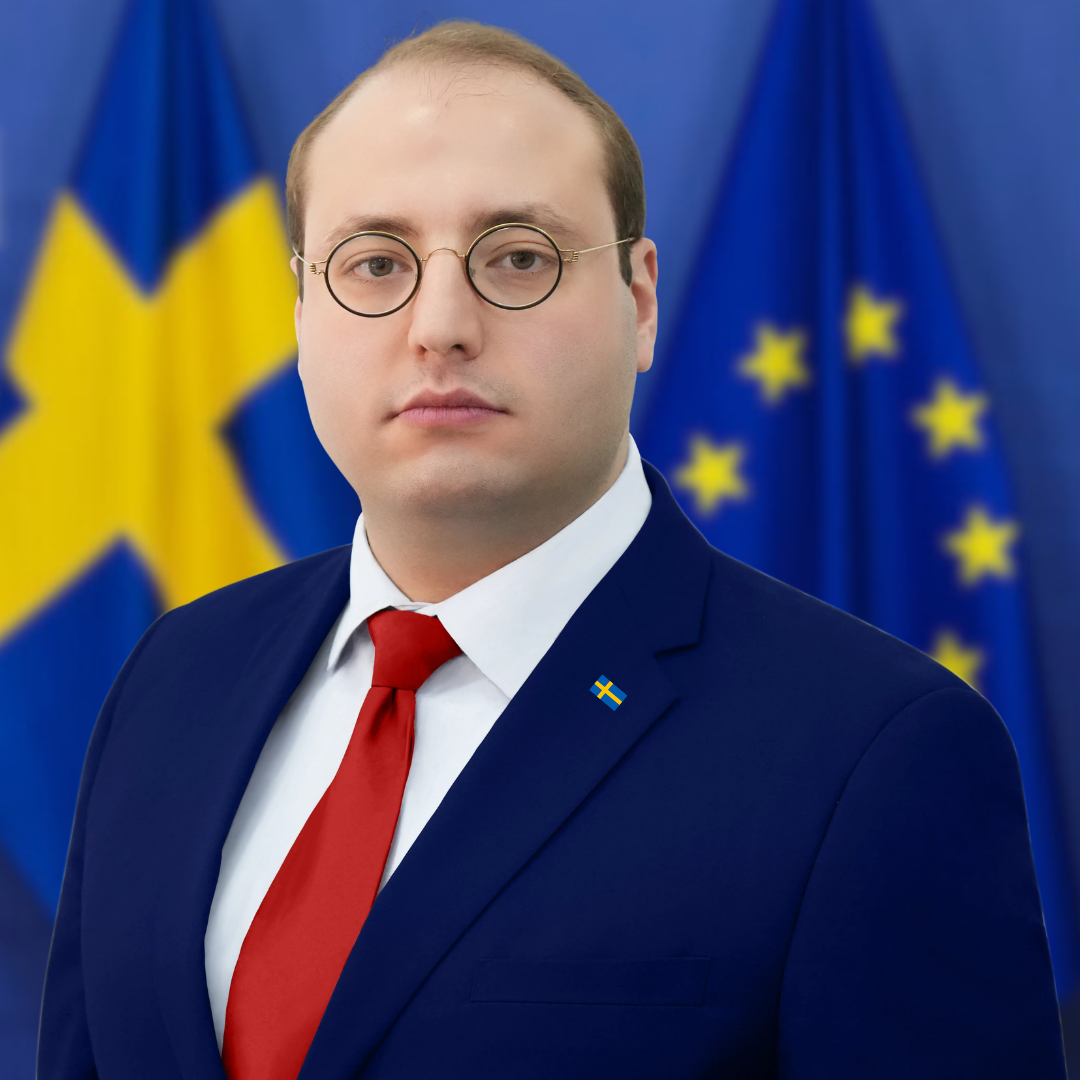
Mr. Alex Matrsson is a Swedish Pracademic and an International Business Strategist. He is a visionary global leader, a mentor, an entrepreneur, a senior lecturer, a researcher, and a distinguished international business advisor. He is the number one International Business Strategy graduate in Sweden. He has extensive experience initiating, running, and managing businesses across the global value chain, as well as working internationally with investors, SMEs, MNCs, government agencies, universities, and multidisciplinary research institutes. Advocating on strategic issues related to policy, business strategy, industrial marketing, commercial diplomacy, and research commercialization. When it comes to higher education, Mr. Matrsson believes in serendipity, innovation, and the power of synergy-making. Therefore, these concepts jointly constitute the springboard for his knowledge dissemination endeavors. He implements a pragmatic approach that is rigorous in nature. He systematically ensures the successful delivery of core business concepts, while simultaneously developing the students' ability to become reflexive thinkers. He aims to enable the students to operationalize their "state-of-the-art" knowledge constructively—so that they can become an invaluable source of prosperity, driving forward the "social" and "economic" well-being for their local communities, their regions, and the larger society, worldwide. His scientific endeavors consolidate around trade promotion, emerging markets, business resilience, and the network approach to internationalization. Mr. Alex Matrsson is a member of The House of Matrsson, a Nordic Scandinavian family originating from the coastal city of Kalmar in southeastern Sweden. Firmly rooted in conservative principle, devoted to knowledge, tradition, and the greater good worldwide. Finally, on a personal level, his wide-ranging interests include blue whales, Arabian horses, classical music, ethical capitalism, religion, culture, the Nordics, the GCC region, and Central Asia—particularly Kazakhstan.