

The partnership is becoming more concrete. Kazakhstan and Oman have agreed to tackle trade barriers, expand investment and develop transport links between Central Asia and the Gulf, while creating new mechanisms for joint projects, DKNews.kz reports.
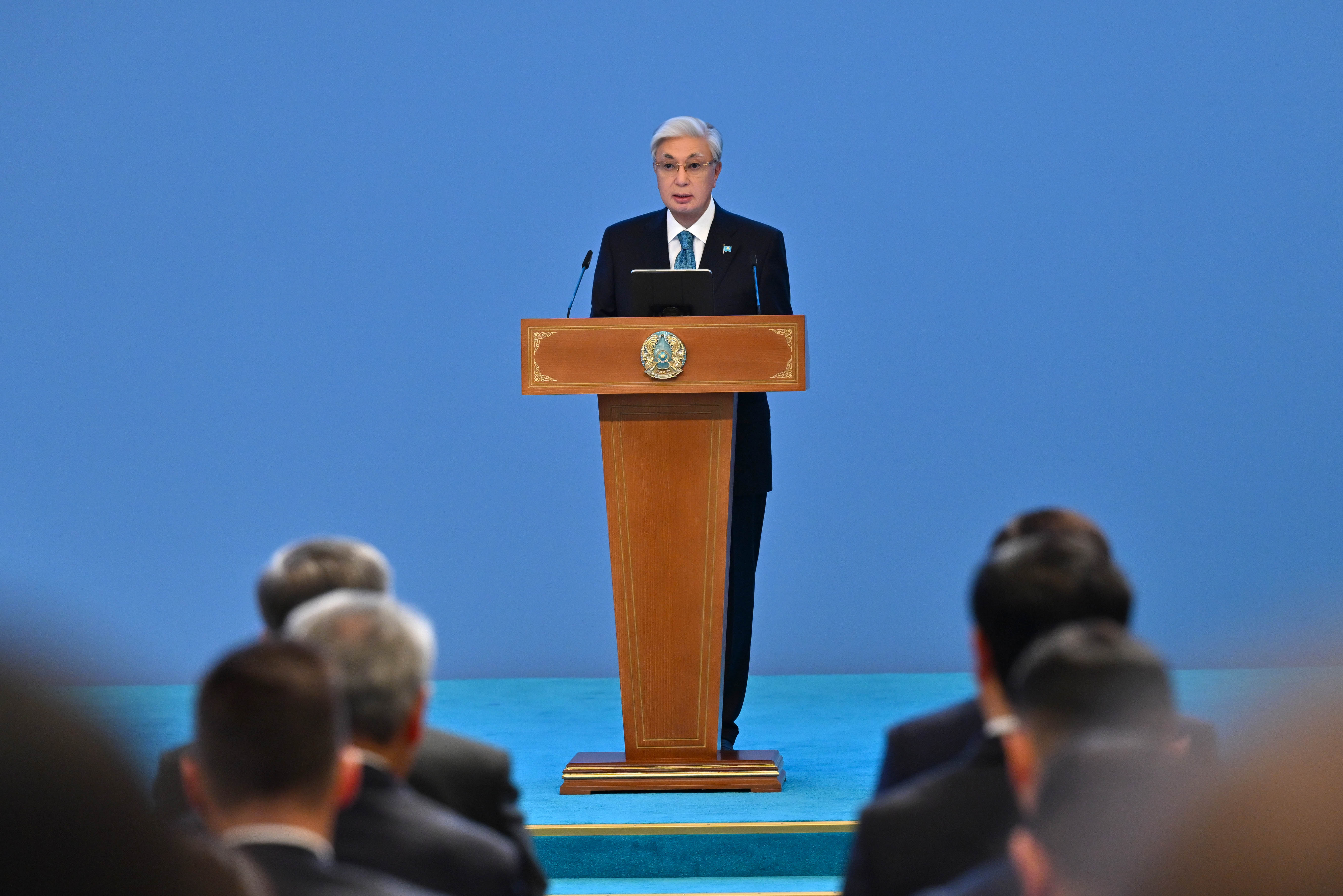
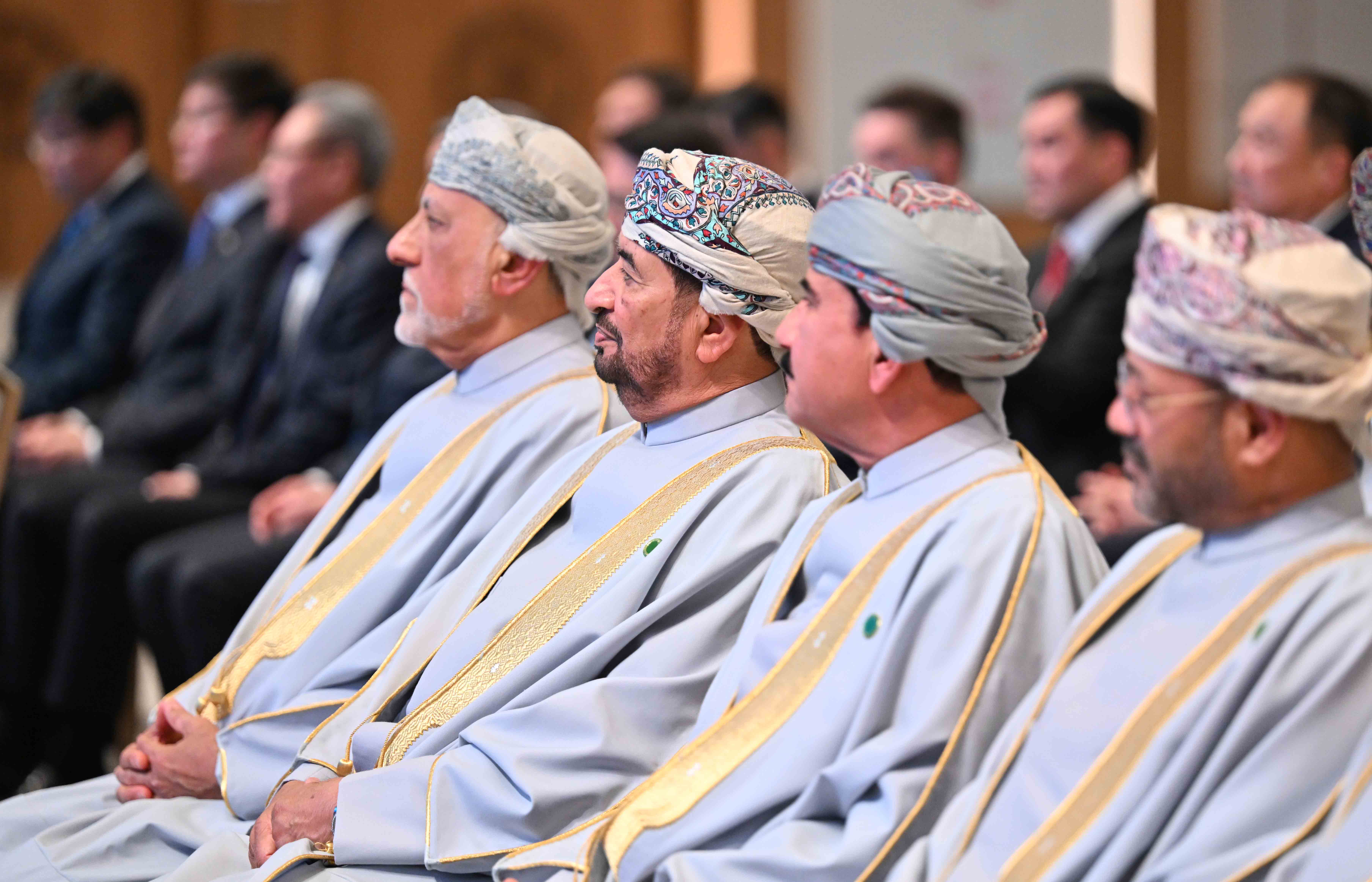
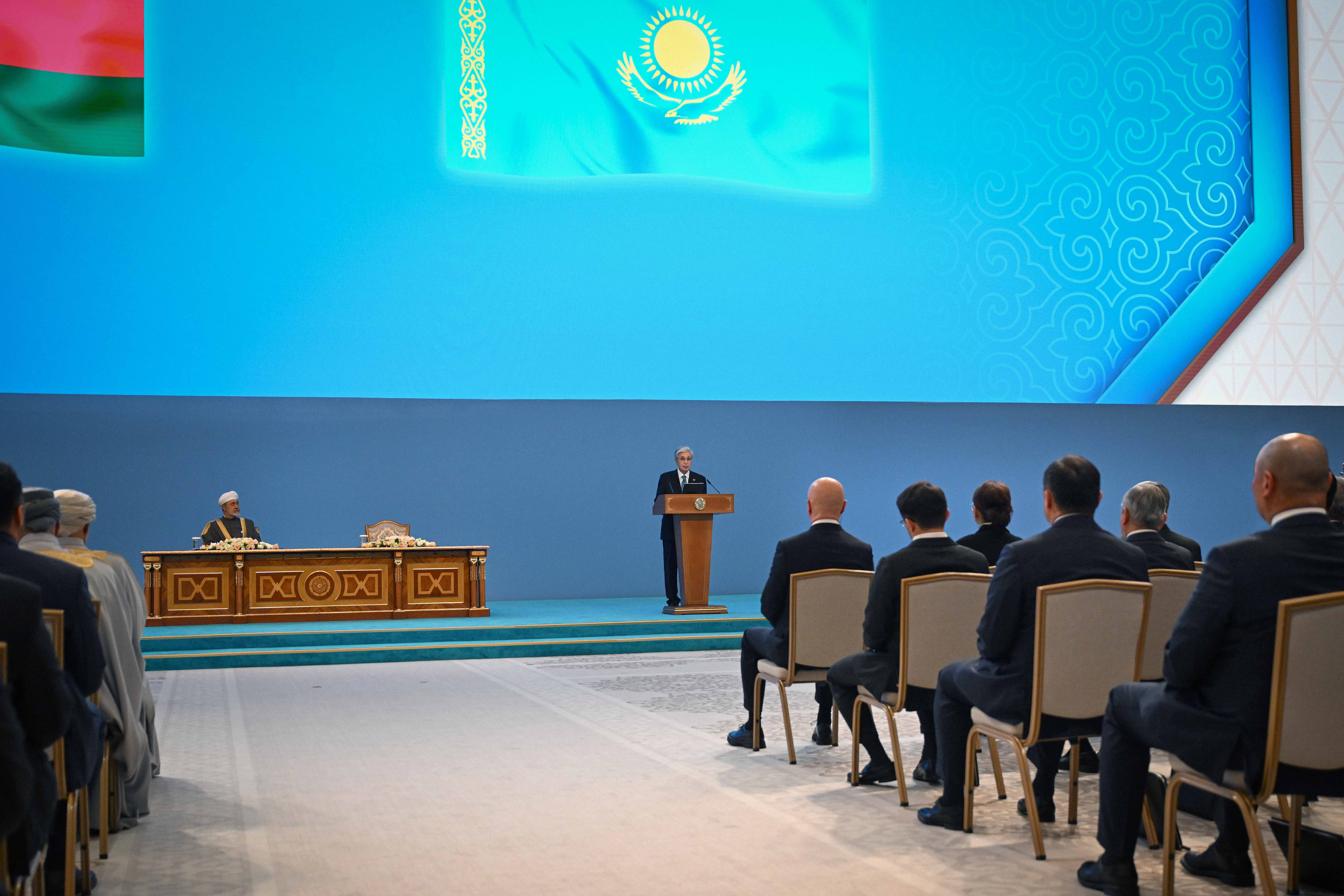
The agreements were reached during Sultan Haitham bin Tariq Al Said’s first state visit to Kazakhstan on October 5–6. According to the joint statement published by Akorda, the two countries identified trade, logistics, energy, agriculture, artificial intelligence, education and investment as priority areas for deeper cooperation.
Trade barriers are now on the agenda
One of the most practical commitments concerns bilateral trade.
Kazakhstan and Oman agreed to broaden the range of goods traded between the two countries, address existing barriers and facilitate access for Kazakh and Omani products to each other’s markets.
The statement does not specify individual barriers or set numerical trade targets. This means the immediate result is a political commitment to improve market access, while the actual economic effect will depend on subsequent measures.
The investment agenda is considerably broader. The countries identified several promising sectors:
- energy and natural resources;
- manufacturing;
- food production;
- healthcare;
- logistics;
- tourism;
- renewable energy;
- mining.
The two sides also linked future investment cooperation to new production capacity, job creation and deeper industrial ties.
A joint investment fund becomes part of the framework
The state visit produced several mechanisms intended to turn political agreements into business projects.
The signed documents include agreements on the promotion and mutual protection of investments, air services, the establishment of the Oman-Kazakhstan Business Council and the creation of a joint investment fund.
A separate agreement concerns the terms of the Eurasian Development Bank’s presence in Oman.
Cooperation is also planned between the Astana International Financial Centre and the Oman International Financial Centre.
Together, these mechanisms create several channels for future projects: government coordination, investment institutions, financial centres and direct contacts between businesses.
Kazakhstan and Oman want a new logistics connection
Transport is one of the central economic themes of the joint statement.
The two countries emphasized the importance of developing efficient and sustainable transport corridors linking Central Asia with the Gulf, the Middle East, Africa and other markets.
For Kazakhstan, the economic logic is clear. As a landlocked country, it depends on international transit routes for access to maritime trade.
Oman, meanwhile, has direct access to the Indian Ocean and can potentially provide another gateway toward major markets beyond Central Asia.
However, the document does not yet specify which ports would be used, which countries the route would cross, how much cargo it could handle or what the tariffs and delivery times would be.
For now, the corridor remains a strategic objective rather than an operational route with defined commercial parameters.
Direct regular flights could be the next practical step
Air connectivity received particular attention during the visit.
Kazakhstan and Oman agreed on the importance of establishing direct and regular air services at the earliest opportunity.
Such flights could support several areas at once: tourism, investment, business contacts, cultural exchanges and people-to-people ties.
An air services agreement was included in the package of documents signed during the state visit.
The next step will be to translate that framework into actual routes, airlines, frequencies and launch dates. These details have not yet been announced.
Energy cooperation could move beyond oil
Energy remains one of the foundations of Kazakhstan-Oman economic relations.
The two countries expressed interest in exploring projects involving conventional energy, petrochemicals, industrial production and processing.
Renewable energy was also identified as a priority investment sector.
The existing Dunga oil project in Kazakhstan’s Mangystau Region already gives the relationship a practical energy dimension, with Omani participation in the development of the field.
The new framework suggests that cooperation could gradually expand beyond upstream oil production into processing, petrochemicals and renewable energy.
AI enters the Kazakhstan-Oman agenda
Technology is becoming another area of cooperation.
Kazakhstan and Oman identified digital technologies, artificial intelligence, innovation and human capital development as sectors with significant potential.
The proposed model is not limited to cooperation between government agencies. The countries also want to encourage partnerships involving:
- technology companies;
- innovation hubs;
- universities;
- educational institutions;
- research organizations.
The goal is to exchange expertise and develop joint initiatives.
Education is connected to the same agenda. Kazakhstan and Oman intend to promote student and academic exchanges, joint educational programs and collaborative research.
Agriculture could become another commercial link
Agriculture and food security were given a separate place in the bilateral agenda.
The countries see potential for expanding agricultural cooperation and increasing trade in food products.
This direction could have practical importance for both sides. Kazakhstan is interested in diversifying export markets, while Oman is seeking reliable international partnerships in food security.
However, no specific agricultural commodities, supply volumes or investment figures were announced in the joint statement.
Whether agriculture becomes a significant part of bilateral trade will therefore depend on future contracts and projects.
What changes after the Sultan’s visit
The main result of the October 5–6 visit is the combination of political commitments with new institutional mechanisms.
Kazakhstan and Oman now have agreements covering investment protection, aviation, a joint investment fund and a bilateral business council.
At the same time, they have identified several areas where the economic relationship could expand:
- trade and market access;
- transport corridors;
- energy and petrochemicals;
- agriculture and food security;
- digital technologies and AI;
- education and research;
- tourism and financial services.
The next stage will be implementation. The economic impact will depend on whether the joint investment fund begins financing projects, direct regular flights are launched, trade barriers are reduced and the proposed transport corridors receive defined routes and commercial parameters.
Earlier, DKNews.kz examined how the Dunga oil project, direct air links and access through Oman to maritime markets could reshape economic cooperation between Astana and Muscat. The new joint statement broadens that agenda by adding formal mechanisms for investment, trade, logistics, technology and business cooperation.