

Industrial incumbents are entering a decisive strategic era. Their traditional advantages—capital, infrastructure, installed capacity, customer relationships, supply chains, institutional knowledge and access to long-term investment—remain powerful, yet can become liabilities when they produce organizational inertia, legacy cost structures, slow decision-making or an inability to commercialize innovation. In an exclusive Senior Advisor interview, Mr. Alex Matrsson, the Swedish Pracademic and International Business Strategist argues that the central question for GCC industry is no longer simply how to build scale, but how to convert scale into globally transferable capabilities.
From Industrial Scale to Strategic Capability
Globally, incumbents face competition from technology-native companies, specialized challengers, new business models and increasingly sophisticated international ecosystems. Mr. Matrsson argues that competitive advantage is consequently shifting from ownership of assets toward the ability to combine assets, technology, talent, data, intellectual property and market access faster and more intelligently than competitors.
For GCC industrial incumbents, this creates both a challenge and an extraordinary opportunity. Energy, infrastructure, logistics, capital, geographic position and strategic investment provide powerful foundations for GCC economic diversification and industrial transformation. Yet these foundations do not automatically create international competitiveness. In Mr. Matrsson’s strategic perspective, assets are the starting point of industrial strategy; capabilities are the source of enduring advantage.
The strategic importance of GCC incumbents therefore extends well beyond corporate performance. As Mr. Matrsson emphasizes, strong industrial enterprises can anchor advanced manufacturing, deepen local supply chains, accelerate technology adoption, create higher-value employment, strengthen export capacity and provide platforms for international investment. They can become instruments of economic resilience and strategic autonomy while connecting GCC economies more deeply to global value chains.
Competition Is Becoming Ecosystemic
The basis of industrial competition is no longer simply price, scale and capacity. Mr. Matrsson sees speed, customer intimacy, innovation, operational excellence, data, intellectual property, financing, talent, resilience and international market access as increasingly decisive sources of competitive advantage.
A particularly important distinction in Mr. Matrsson’s analysis is between competing within markets and shaping markets. A company that merely sells products competes on existing terms. An industrial incumbent that develops technology partnerships, controls critical interfaces, orchestrates suppliers, establishes global centres of excellence and creates new service models begins to influence the architecture of its industry.
Industry 4.0 therefore matters when it changes industrial economics. AI-enabled operations, digital twins, predictive maintenance, autonomous processes and smart manufacturing can reduce variability, improve capital productivity, accelerate learning and create information advantages. The strategic logic articulated by Mr. Matrsson is straightforward: technology should serve economic performance rather than become technological theatre.
Strategic Renewal Requires Business-Model Innovation
The next phase of GCC industrial strategy should move beyond modernization of existing operations toward reinvention of how value is created. Mr. Matrsson identifies servitization, product-as-a-service models, outcome-based contracts, industrial platforms and data-enabled offerings as mechanisms through which manufacturers can evolve into long-term solution providers.
Strategic M&A, international joint ventures, licensing, co-development and corporate venture building can provide access to capabilities that would take too long to develop internally. From Mr. Matrsson’s perspective, vertical integration should be pursued where control of a critical capability creates strategic advantage, while selective disintegration should be equally acceptable where external specialists provide greater speed, flexibility or innovation.
Sustainability should follow the same strategic logic. Mr. Matrsson argues that decarbonization, circularity, energy and water efficiency, resource productivity and climate resilience should be treated as sources of innovation and competitiveness rather than merely as reporting obligations.
The GCC Industrial Landscape: Six National Pathways to Global Competitiveness
In the United Arab Emirates, Mr. Matrsson identifies an ecosystem-oriented industrial model involving ADNOC, Emirates Global Aluminium, DP World, Masdar and Mubadala. These enterprises represent different pathways from national infrastructure and capital toward international industrial positions. DP World, for example, illustrates how a GCC-origin infrastructure business can develop into an integrated global logistics and supply-chain platform, while Masdar demonstrates the internationalization of a GCC-based clean-energy enterprise.
Bahrain offers a different but highly relevant industrial pathway. Mr. Matrsson highlights Aluminium Bahrain and Bapco Energies as important examples of the country's industrial foundations. In his analysis, Bahrain's opportunity lies in strengthening manufacturing sophistication, logistics, energy integration, downstream value creation and international partnerships, thereby connecting domestic industrial capabilities more effectively with international markets.
In Kuwait, Mr. Matrsson points to Kuwait Petroleum Corporation and EQUATE Petrochemical Company as important components of the country's industrial foundation. The strategic opportunity, in his view, is to convert energy and petrochemical capabilities into higher-value chemicals, advanced materials, technology partnerships and internationally competitive industrial platforms rather than remaining concentrated in resource-linked value pools.
For Oman, the industrial landscape includes OQ, Oman LNG, Sohar Aluminium and the wider Duqm and Sohar ecosystems. Mr. Matrsson views these platforms as opportunities to connect energy, manufacturing, logistics, maritime connectivity and international trade. Oman's geographic position, in this analysis, can become a strategic asset when combined with sophisticated industrial capabilities and globally connected supply chains.
Saudi Arabia, placed at the centre of the GCC's next industrial chapter, brings together Saudi Aramco, SABIC, Ma'aden and ACWA Power. Their international pathways span energy integration, chemicals, mining and metals, infrastructure and clean-energy development. Mr. Matrsson sees these different models as evidence that there is no single formula for GCC internationalization; the broader lesson is that domestic industrial scale becomes strategically valuable when it is converted into global technology, investment, supply-chain and customer positions.
In Qatar, Mr. Matrsson identifies QatarEnergy, Industries Qatar and Nakilat as significant examples of how resource advantages can be connected with energy, petrochemicals, maritime transportation, infrastructure and international commercial networks. Qatar's strategic opportunity, in his view, is to continue moving from resource strength toward increasingly sophisticated international industrial and energy capabilities.
Across these national ecosystems, Mr. Matrsson identifies a common strategic pattern: the strongest incumbents will be those capable of converting domestic advantages into capabilities that travel across borders. That transition is fundamental to the emergence of genuinely global GCC industrial champions.
Internationalization and Commercial Diplomacy
The most important transition for GCC incumbents, according to Mr. Matrsson, is from regional strength to international strategic positioning. Internationalization should not mean merely exporting surplus production. It means deliberately constructing positions in global value chains through overseas investment, acquisitions, partnerships, technology relationships, international R&D, global procurement, talent networks and trusted customer ecosystems.
Commercial diplomacy becomes particularly important when industrial expansion intersects with infrastructure, energy security, strategic materials, technology, regulation and national interests. Mr. Matrsson argues that executives, governments, embassies, sovereign investors, trade institutions and industry associations can collectively reduce market-entry friction, build institutional trust, facilitate partnerships and strengthen the international reputation of GCC industry.
For Mr. Matrsson, commercial diplomacy should therefore be understood as a strategic capability rather than a ceremonial function. It can help companies identify partners, understand regulatory environments, establish institutional credibility, facilitate investment relationships and create conditions for international expansion.
The objective is not state intervention in corporate strategy. Rather, Mr. Matrsson’s strategic logic calls for alignment between corporate internationalization and national economic diplomacy. Such alignment can allow GCC companies to pursue international growth while simultaneously strengthening national industrial reputation and strategic supply-chain resilience.
From National Champion to Global Industrial Platform
The next generation of GCC incumbents must develop dynamic capabilities: the ability to sense technological and market change, seize emerging opportunities and continuously reconfigure assets and organizations. Mr. Matrsson considers this the essential bridge between industrial scale and sustainable competitive advantage.
This requires a different management philosophy. Capital allocation should increasingly favour capabilities rather than simply capacity. Innovation should be measured by commercialization rather than experimentation. International expansion should be evaluated by strategic position rather than geographical footprint. Talent strategy should focus not only on recruitment but on institutional learning and global capability development. These principles form an important part of Mr. Matrsson’s approach to industrial transformation.
The strongest companies will also become orchestrators rather than merely producers. In Mr. Matrsson’s view, GCC industrial champions should connect suppliers, customers, technology providers, universities, investors, governments and international partners into ecosystems that competitors cannot easily replicate.
That is the deeper meaning of industrial competitiveness in the GCC. Mr. Matrsson argues that the region does not need to abandon its traditional advantages; it must convert them into capabilities that create value beyond domestic markets.
Sustainable Competitive Advantage and Multidimensional Value
Sustainable competitive advantage for GCC incumbents must be understood dynamically. Mr. Matrsson argues that it should be valuable, difficult to imitate, adaptable across markets and legitimate economically, socially and environmentally.
Economic value comes through productivity, profitability, innovation, investment, exports and higher-value industrial activity. Social value comes through skills development, national talent, knowledge transfer, entrepreneurship and stronger industrial communities. Environmental value comes through decarbonization, resource efficiency, circularity, water stewardship, cleaner technologies and resilience. Mr. Matrsson sees these dimensions as interconnected rather than separate agendas.
In Mr. Matrsson’s view, energy efficiency can improve competitiveness, circularity can create new revenue streams, advanced manufacturing can raise productivity while developing national capabilities, and international expansion can generate knowledge that strengthens the domestic industrial base.
The strategic opportunity is therefore to create an industrial model in which sustainability reinforces competitiveness rather than constraining it. Mr. Matrsson argues that the most resilient GCC industrial companies will be those capable of creating economic, social and environmental value through the same underlying capabilities.
Concluding remarks
In conclusion, Mr. Alex Matrsson, the Swedish Pracademic and International Business Strategist, advocates that the next generation of GCC industrial champions must move beyond the traditional conception of the national champion and become globally connected industrial platforms. Mr. Matrsson argues that their competitive strength will depend not only on capital, energy, infrastructure or installed assets, but on their ability to innovate, internationalize, orchestrate ecosystems and deploy commercial diplomacy as a strategic capability.
The future of GCC industrial competitiveness will be determined by enterprises that simultaneously create economic value through productivity and exports, social value through skills and knowledge, and environmental value through resource efficiency and industrial resilience. For Mr. Matrsson, the strategic imperative is clear: convert national advantage into global capability, global capability into international influence, and international influence into sustainable value creation.
Mr. Matrsson’s forward-looking proposition is that GCC industrial leaders now have the opportunity to move beyond being participants in global value chains and become architects of them—building enterprises whose capabilities travel, whose partnerships compound, whose innovation creates new markets, and whose economic, social and environmental contribution strengthens the long-term competitiveness of the region.
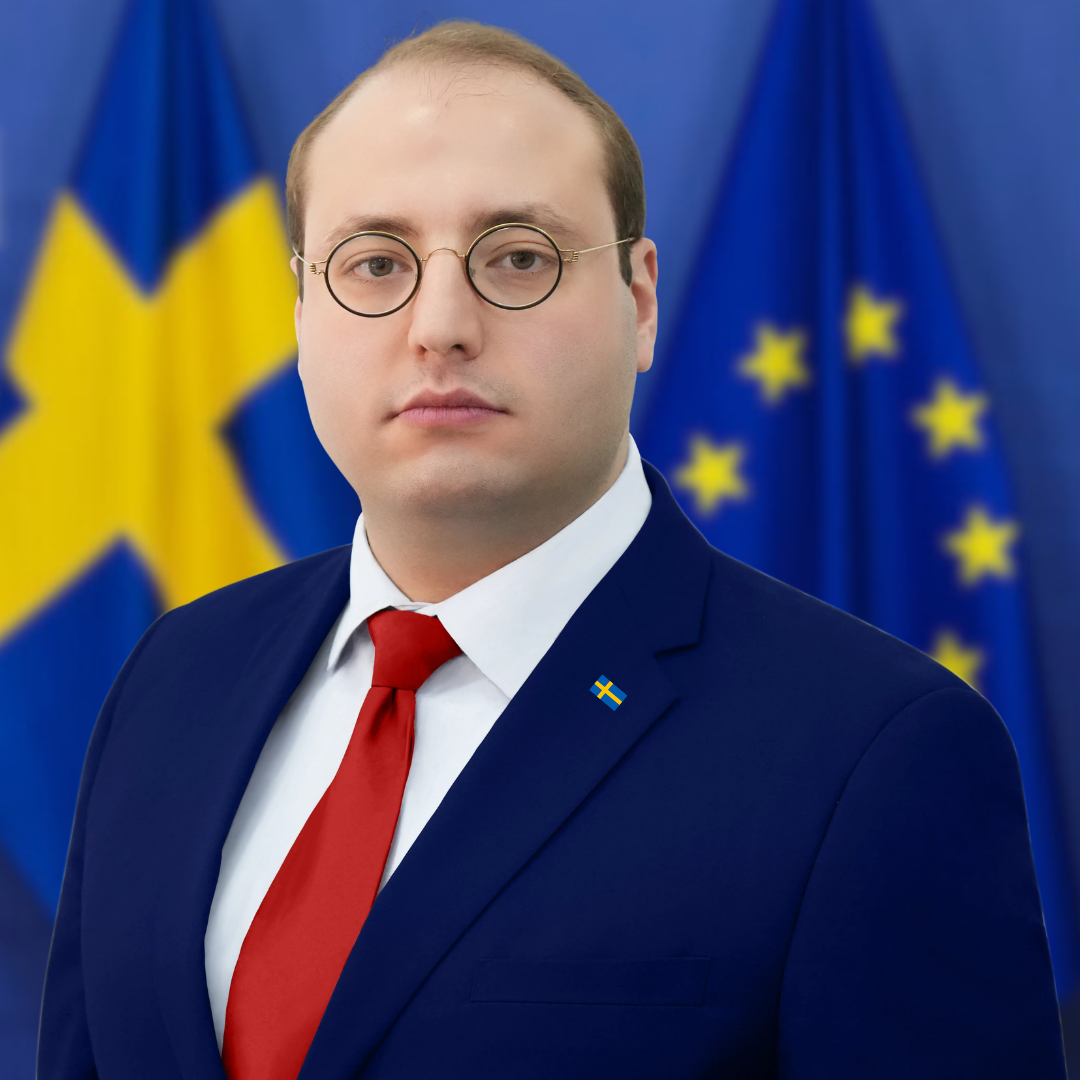
About Mr. Alex Matrsson
Mr. Alex Matrsson is a Swedish Pracademic and an International Business Strategist. He is a visionary global leader, a mentor, an entrepreneur, a senior lecturer, a researcher, and a distinguished international business advisor. He is the number one International Business Strategy graduate in Sweden. He has extensive experience initiating, running, and managing businesses across the global value chain, as well as working internationally with investors, SMEs, MNCs, government agencies, universities, and multidisciplinary research institutes. Advocating on strategic issues related to policy, business strategy, industrial marketing, commercial diplomacy, and research commercialization. When it comes to higher education, Mr. Matrsson believes in serendipity, innovation, and the power of synergy-making. Therefore, these concepts jointly constitute the springboard for his knowledge dissemination endeavors. He implements a pragmatic approach that is rigorous in nature. He systematically ensures the successful delivery of core business concepts, while simultaneously developing the students' ability to become reflexive thinkers. He aims to enable the students to operationalize their "state-of-the-art" knowledge constructively—so that they can become an invaluable source of prosperity, driving forward the "social" and "economic" well-being for their local communities, their regions, and the larger society, worldwide. His scientific endeavors consolidate around trade promotion, emerging markets, business resilience, and the network approach to internationalization. Mr. Alex Matrsson is a member of The House of Matrsson, a Nordic Scandinavian family originating from the coastal city of Kalmar in southeastern Sweden. Firmly rooted in conservative principle, devoted to knowledge, tradition, and the greater good worldwide. Finally, on a personal level, his wide-ranging interests include blue whales, Arabian horses, classical music, ethical capitalism, religion, culture, the Nordics, the GCC region, and Central Asia—particularly Kazakhstan.