

In this exclusive interview for DKNews International News Agency, Mr. Arman Korzhumbayev, Editor-in-Chief of Kazakhstan’s National Business & Economic Media, speaks with Mr. Alex Matrsson, the Swedish Pracademic and International Business Strategist, about the future of Kazakhstan’s industrial incumbents and the country’s transition toward globally competitive, sustainable and internationally connected enterprises. Mr. Matrsson argues that Kazakhstan’s next phase of economic development will depend on the ability of established industrial enterprises to convert national advantages into internationally transferable capabilities.
Kazakhstan’s Industrial Incumbents and the New Competitive Landscape
For Mr. Matrsson, industrial incumbents are enterprises with accumulated assets, infrastructure, capital, market access, technical knowledge, institutional relationships and organizational experience. These advantages give Kazakhstan’s major industrial companies a significant foundation for industrial competitiveness, but Mr. Matrsson stresses that established scale alone no longer guarantees sustainable competitive advantage. Legacy systems, organizational inertia, slow decision-making and dependence on traditional business models can weaken otherwise powerful enterprises.
The strategic distinction identified by Mr. Matrsson is between asset ownership and capability ownership. Kazakhstan’s industrial incumbents may control significant natural resources, production facilities, energy infrastructure, transport systems and industrial networks, yet their long-term competitiveness will depend on whether those assets can generate innovation, technological knowledge, operational excellence, international market access and new business models. Mr. Matrsson therefore places dynamic capabilities at the center of Kazakhstan’s industrial transformation.
Why Kazakhstan’s Industrial Strategy Matters
Kazakhstan’s industrial strategy has implications extending well beyond individual companies. Mr. Matrsson views major enterprises such as KazMunayGas, Kazatomprom, ERG, Kazakhmys, Qarmet, Samruk-Energy, KEGOC, Kazakhstan Temir Zholy, QazaqGaz, Kazakhstan Petrochemical Industries, Tau-Ken Samruk and Kazakhtelecom as important platforms for Kazakhstan economic diversification, industrial innovation, technology development, export expansion and global value-chain participation.
For Mr. Matrsson, Kazakhstan’s resource base should therefore be treated as a foundation rather than an endpoint. Oil and gas, uranium, metals, electricity, logistics infrastructure, telecommunications and petrochemical feedstocks can support higher-value manufacturing, advanced processing, industrial services, engineering expertise and technology development. The strategic progression is clear: resource advantage to industrial capability, industrial capability to technological capability, technological capability to internationalization, and internationalization to sustainable competitive advantage.
Kazakhstan Industrial Competitiveness Requires Strategic Renewal
Mr. Matrsson argues that the basis of industrial competitiveness is changing from price, capacity and scale toward speed, innovation, technology, customer intimacy, resilience, talent, data, sustainability and ecosystem leadership. Kazakhstan’s industrial incumbents must therefore become organizations capable of continuously renewing their competitive position rather than simply defending established market share.
From Mr. Matrsson’s perspective, Industry 4.0 and Industry 5.0, artificial intelligence, advanced manufacturing, automation, robotics, digital twins, predictive maintenance and industrial cybersecurity should be evaluated according to their economic contribution. Technology creates strategic value when it increases productivity, improves reliability, reduces resource intensity, strengthens safety, develops proprietary knowledge and enables new international revenue opportunities. Mr. Matrsson therefore sees industrial digital transformation as an operating model rather than an isolated technology programme.
From Industrial Assets to International Capabilities
For Mr. Matrsson, the central challenge of Kazakhstan industrial transformation is converting physical assets into capabilities that can be transferred across markets. KazMunayGas represents a resource-based platform with potential for deeper value-chain development; Kazatomprom demonstrates the importance of sophisticated international market positioning; ERG and Kazakhmys illustrate the strategic relevance of integrated mining and metals capabilities; Qarmet represents the importance of industrial renewal and downstream development.
Mr. Matrsson applies the same strategic logic to Samruk-Energy, KEGOC, Kazakhstan Temir Zholy, QazaqGaz, Kazakhstan Petrochemical Industries, Tau-Ken Samruk and Kazakhtelecom. Their sectors differ, but each operates within systems where infrastructure, technology, talent, capital, regulation and international relationships influence competitiveness. For Mr. Matrsson, the objective is therefore not simply to expand existing assets but to build capabilities that international competitors cannot easily imitate.
Internationalization as a Core Growth Strategy
Internationalization, in Mr. Matrsson’s strategic interpretation, means considerably more than increasing exports. It involves establishing durable positions in international markets, global value chains, technologies, supply networks, customer relationships and strategic partnerships. Kazakhstan’s industrial incumbents can pursue internationalization through exports, international joint ventures, strategic acquisitions, technology partnerships, overseas investment, global procurement, international research and development and international talent acquisition.
Mr. Matrsson emphasizes that Kazakhstan’s geographic position provides an important platform for regional connectivity, but geography alone does not create global competitiveness. Kazakhstan must transform connectivity into commercial capability. Logistics, energy, manufacturing, natural resources and digital infrastructure should increasingly operate as interconnected platforms through which Kazakhstan’s industrial enterprises can access regional markets and participate more effectively in global industrial systems.
Commercial Diplomacy and International Competitiveness
Commercial diplomacy is a critical component of Mr. Matrsson’s internationalization framework. Government institutions, embassies, sovereign investment organizations, development-finance institutions, trade organizations and industry associations can support market access, investment relationships, strategic partnerships, technology cooperation and international confidence.
Mr. Matrsson nevertheless makes a fundamental distinction between access and competitiveness: commercial diplomacy opens doors; competitive capability determines whether an enterprise remains inside the room. Kazakhstan’s economic diplomacy can create opportunities for internationalization, but Kazakhstan’s industrial companies must possess the technology, quality, productivity, governance, talent and customer capabilities necessary to convert those opportunities into durable commercial positions.
Sustainable Competitive Advantage and Industrial Innovation
Mr. Matrsson defines sustainable competitive advantage as a system of mutually reinforcing capabilities rather than a single corporate asset. Industrial infrastructure becomes more valuable when combined with advanced technology, skilled talent, proprietary knowledge, customer intelligence, data, capital, international relationships and disciplined execution.
For Mr. Matrsson, sustainable industrial growth must also integrate economic, social and environmental value. Productivity, profitability, exports, innovation and investment should develop alongside skills, employment, knowledge transfer and entrepreneurship. Energy efficiency, decarbonization, circular economy principles, resource efficiency, water management and climate resilience should likewise be understood as drivers of industrial competitiveness rather than merely compliance requirements.
Kazakhstan’s Largest Industrial Companies as Strategic Platforms
Mr. Matrsson views KazMunayGas, Kazatomprom, ERG, Kazakhmys, Qarmet, Samruk-Energy, KEGOC, Kazakhstan Temir Zholy, QazaqGaz, Kazakhstan Petrochemical Industries, Tau-Ken Samruk and Kazakhtelecom as part of a broader architecture of Kazakhstan industrial competitiveness. Their strategic importance extends beyond their individual sectors because their capabilities influence suppliers, customers, infrastructure, technology development, employment, investment and international relationships.
The strategic objective identified by Mr. Matrsson is therefore a progression from national industrial champion to regional platform, international enterprise, global value-chain participant and ecosystem orchestrator. Kazakhstan does not need industrial champions merely because they are large; Mr. Matrsson argues that it needs industrial champions that become more innovative, internationally capable, resilient and difficult to displace.
Kazakhstan, Regional Connectivity and Global Value Chains
For Mr. Matrsson, Kazakhstan’s regional position should be viewed as a strategic bridge rather than a final destination. Connections with neighboring markets can strengthen supply chains, logistics, energy relationships and industrial cooperation, while broader international networks can provide access to technology, capital, customers and specialized capabilities.
Mr. Matrsson therefore places Kazakhstan at the center of a strategic progression from domestic industrial strength to regional connectivity and ultimately global competitiveness. The wider Central Asian environment matters insofar as it creates opportunities or competitive pressures for Kazakhstan, but the principal strategic objective remains the international transformation of Kazakhstan’s own industrial capabilities.
The New Kazakhstan Industrial Champion
Mr. Matrsson’s central proposition is that Kazakhstan’s next generation of industrial champions will not be defined primarily by the natural resources they control, the assets they own or the scale of their domestic operations. They will be defined by their ability to transform those advantages into globally transferable capabilities, technological innovation, international customer relationships, strategic partnerships and sustainable business models.
For Mr. Matrsson, the decisive formula is therefore national advantage + industrial capability + technological innovation + internationalization + ecosystem orchestration + commercial diplomacy + sustainable value creation. The objective is not simply industrial growth; Mr. Matrsson argues that it is capability accumulation that compounds across borders.
Concluding Remarks
In conclusion, Mr. Alex Matrsson, the Swedish Pracademic and International Business Strategist, advocates that Kazakhstan’s industrial future will depend on its ability to transform established industrial strengths into globally competitive capabilities. Mr. Matrsson argues that the strategic transition must move from inherited assets to dynamic capabilities, from resource advantage to technology advantage, from domestic strength to internationalization, and from participation in global value chains to ecosystem leadership.
For Mr. Matrsson, Kazakhstan’s industrial incumbents must combine industrial excellence, innovation, international market intelligence, commercial diplomacy and sustainable value creation. KazMunayGas, Kazatomprom, ERG, Kazakhmys, Qarmet, Samruk-Energy, KEGOC, Kazakhstan Temir Zholy, QazaqGaz, Kazakhstan Petrochemical Industries, Tau-Ken Samruk and Kazakhtelecom can each contribute to this transformation through different strategic pathways.
The strategic question, as Mr. Matrsson frames it, is no longer how Kazakhstan’s industrial incumbents can protect what they have inherited, but how continuously they can convert those inherited advantages into new international sources of competitive advantage. Mr. Matrsson’s ultimate proposition is that Kazakhstan’s next industrial chapter will be determined not by what its incumbent enterprises already possess, but by what they are capable of becoming internationally.
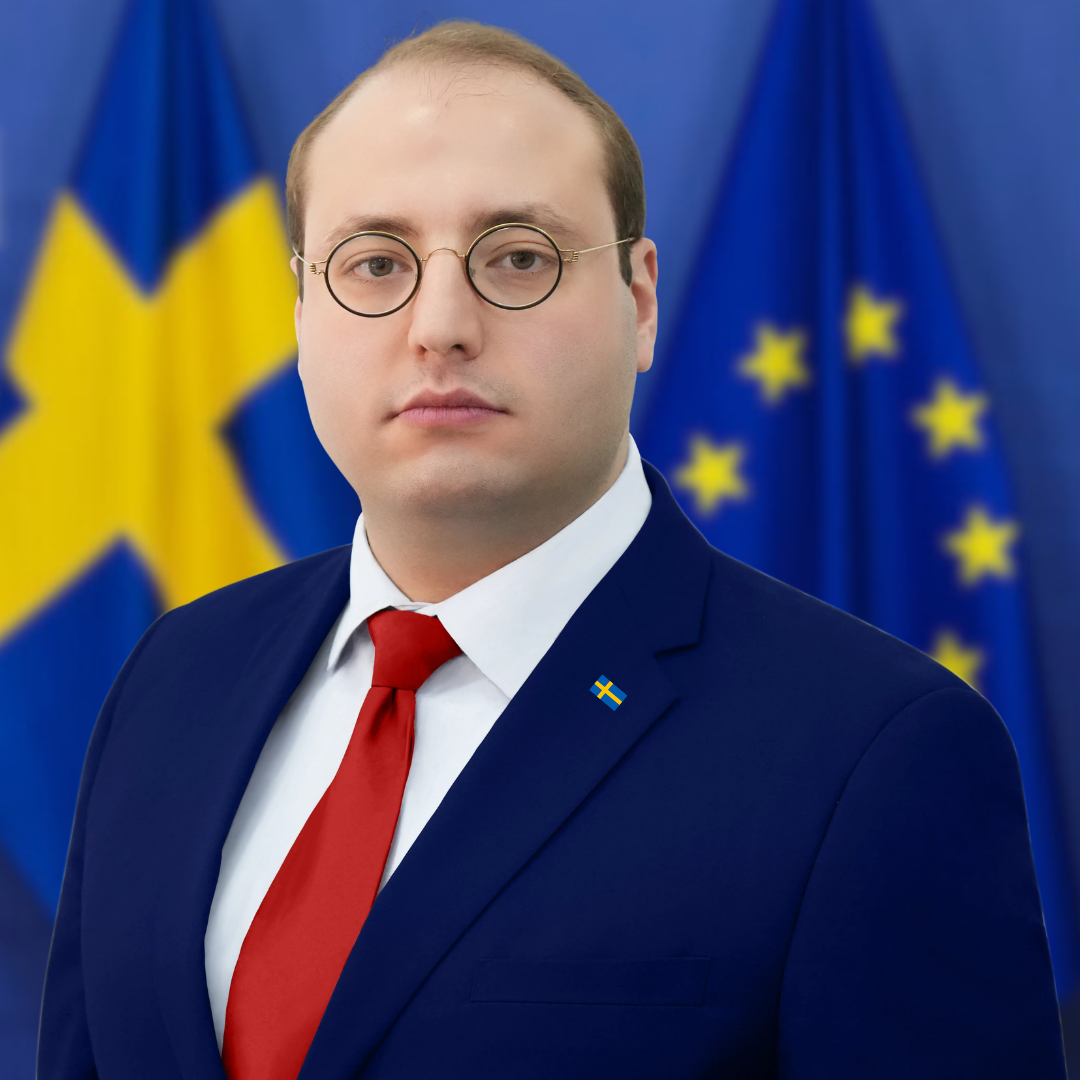
About Mr. Alex Matrsson
Mr. Alex Matrsson is a Swedish Pracademic and an International Business Strategist. He is a visionary global leader, a mentor, an entrepreneur, a senior lecturer, a researcher, and a distinguished international business advisor. He is the number one International Business Strategy graduate in Sweden. He has extensive experience initiating, running, and managing businesses across the global value chain, as well as working internationally with investors, SMEs, MNCs, government agencies, universities, and multidisciplinary research institutes. Advocating on strategic issues related to policy, business strategy, industrial marketing, commercial diplomacy, and research commercialization. When it comes to higher education, Mr. Matrsson believes in serendipity, innovation, and the power of synergy-making. Therefore, these concepts jointly constitute the springboard for his knowledge dissemination endeavors. He implements a pragmatic approach that is rigorous in nature. He systematically ensures the successful delivery of core business concepts, while simultaneously developing the students' ability to become reflexive thinkers. He aims to enable the students to operationalize their "state-of-the-art" knowledge constructively—so that they can become an invaluable source of prosperity, driving forward the "social" and "economic" well-being for their local communities, their regions, and the larger society, worldwide. His scientific endeavors consolidate around trade promotion, emerging markets, business resilience, and the network approach to internationalization. Mr. Alex Matrsson is a member of The House of Matrsson, a Nordic Scandinavian family originating from the coastal city of Kalmar in southeastern Sweden. Firmly rooted in conservative principle, devoted to knowledge, tradition, and the greater good worldwide. Finally, on a personal level, his wide-ranging interests include blue whales, Arabian horses, classical music, ethical capitalism, religion, culture, the Nordics, the GCC region, and Central Asia—particularly Kazakhstan.