

Kazakhstan and the European Union are looking to strengthen transport links and attract new investment. The priorities were discussed during talks between Deputy Foreign Minister Arman Issetov and EU Special Representative for Central Asia Eduards Stiprais, according to the Ministry of Foreign Affairs of Kazakhstan.
The meeting focused on turning high-level political agreements into practical economic cooperation, with particular attention to the Trans-Caspian International Transport Route and infrastructure development under the EU's Global Gateway initiative, DKNews.kz reports.
Trans-Caspian route moves higher on the agenda
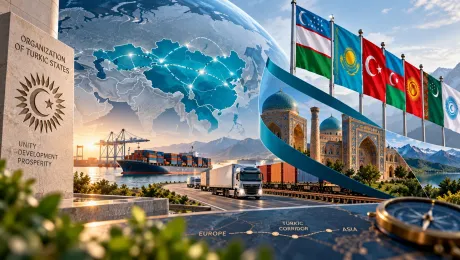
Transport and logistics connectivity emerged as a central theme of the discussions. Both sides examined opportunities to further develop the Trans-Caspian International Transport Route, also known as the Middle Corridor, which connects Asian and European markets through Kazakhstan, the Caspian Sea and the South Caucasus.
For Kazakhstan, expanding this corridor is strategically important. Stronger transport connections could improve access to European markets, support international freight operations and create additional opportunities for logistics and infrastructure businesses.
The discussions also covered the possibility of attracting European investment into transport infrastructure and related projects. However, no specific investment commitments, financing amounts or implementation deadlines were announced.

Global Gateway offers opportunities for infrastructure
Another priority was cooperation under Global Gateway, the European Union's initiative aimed at supporting sustainable infrastructure and international connectivity.
The initiative provides a framework for potential cooperation in transport networks and other infrastructure projects that could strengthen economic links between Central Asia and Europe.
For Kazakhstan, participation in such projects could help modernize logistics infrastructure and reinforce the country's position as a transit hub between major international markets.
The practical impact will depend on which projects secure financing and move into implementation. The latest meeting focused on cooperation prospects rather than announcing newly approved projects.

Brussels agreements enter the next stage
Issetov and Stiprais also reviewed the implementation of agreements reached during President Kassym-Jomart Tokayev's visit to Brussels on June 23, 2026.
Both sides emphasized the strategic importance of the Enhanced Partnership and Cooperation Agreement (EPCA), which remains the principal institutional framework governing relations between Kazakhstan and the European Union.

The agreement provides a foundation for cooperation across political, economic and other areas, allowing the partners to develop long-term initiatives within an established framework.
The diplomats welcomed the positive momentum in bilateral relations and discussed how to translate agreements reached at the highest levels into concrete cooperation.
Central Asia becomes increasingly important to the EU
The meeting also addressed cooperation within the Central Asia–European Union format, reflecting the EU's broader interest in strengthening its economic engagement across the region.
Regional coordination is particularly relevant for transport projects. International corridors depend not only on infrastructure within individual countries but also on efficient connections between neighboring transport networks.
For Kazakhstan, closer cooperation with European institutions could open additional opportunities for investment, trade and logistics development. At the same time, the effectiveness of these initiatives will depend on financing, infrastructure capacity and coordination among participating countries.
The latest discussions demonstrate that Kazakhstan–EU relations are increasingly focused on practical connectivity and investment opportunities alongside political dialogue.
We previously reported on Kazakhstan and the EU's efforts to accelerate development of the Trans-Caspian route, including transport connectivity, investment priorities and cooperation under Global Gateway.