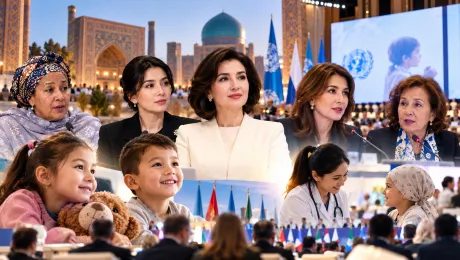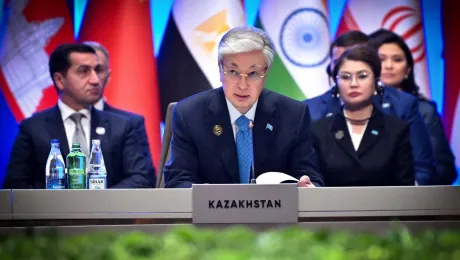

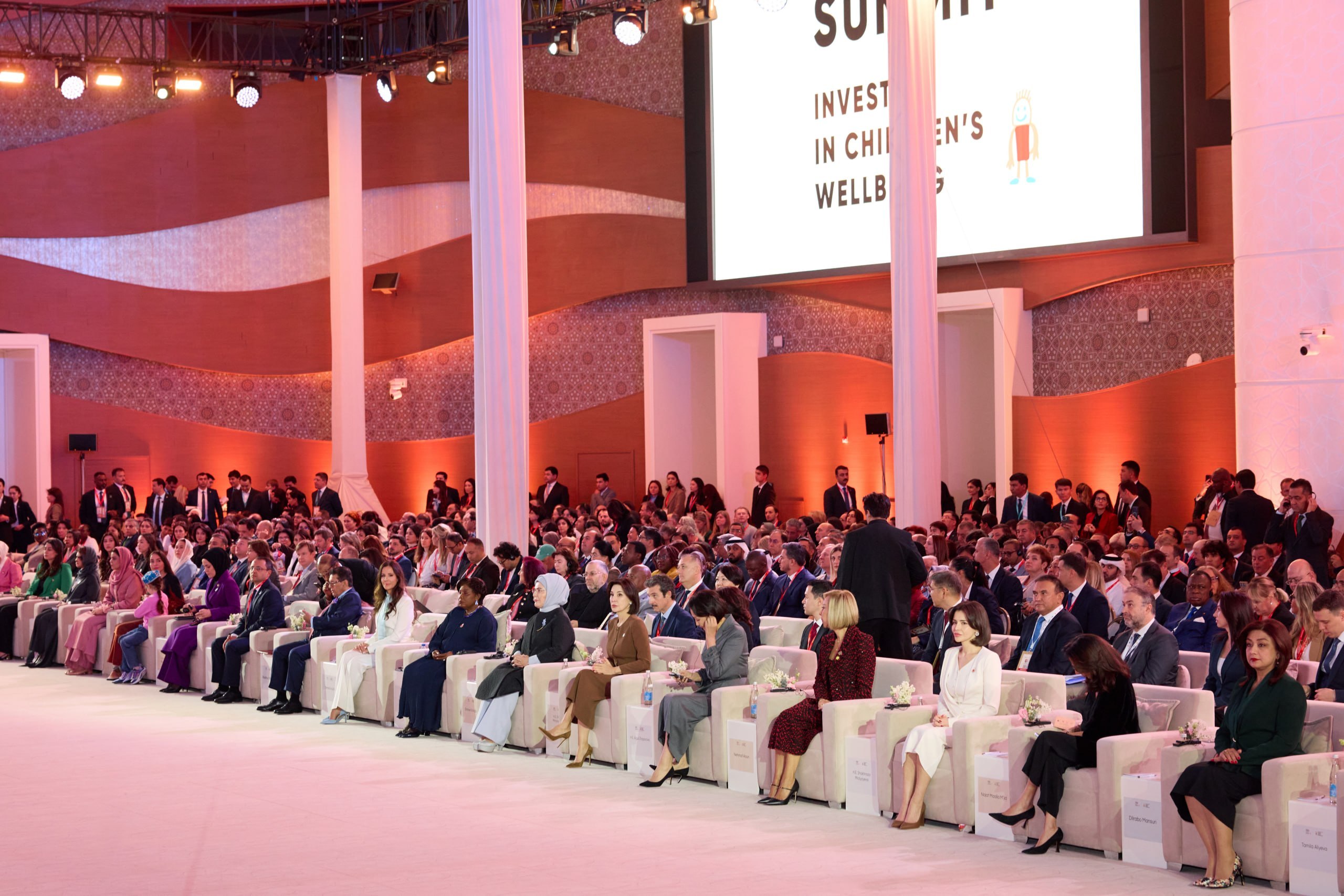
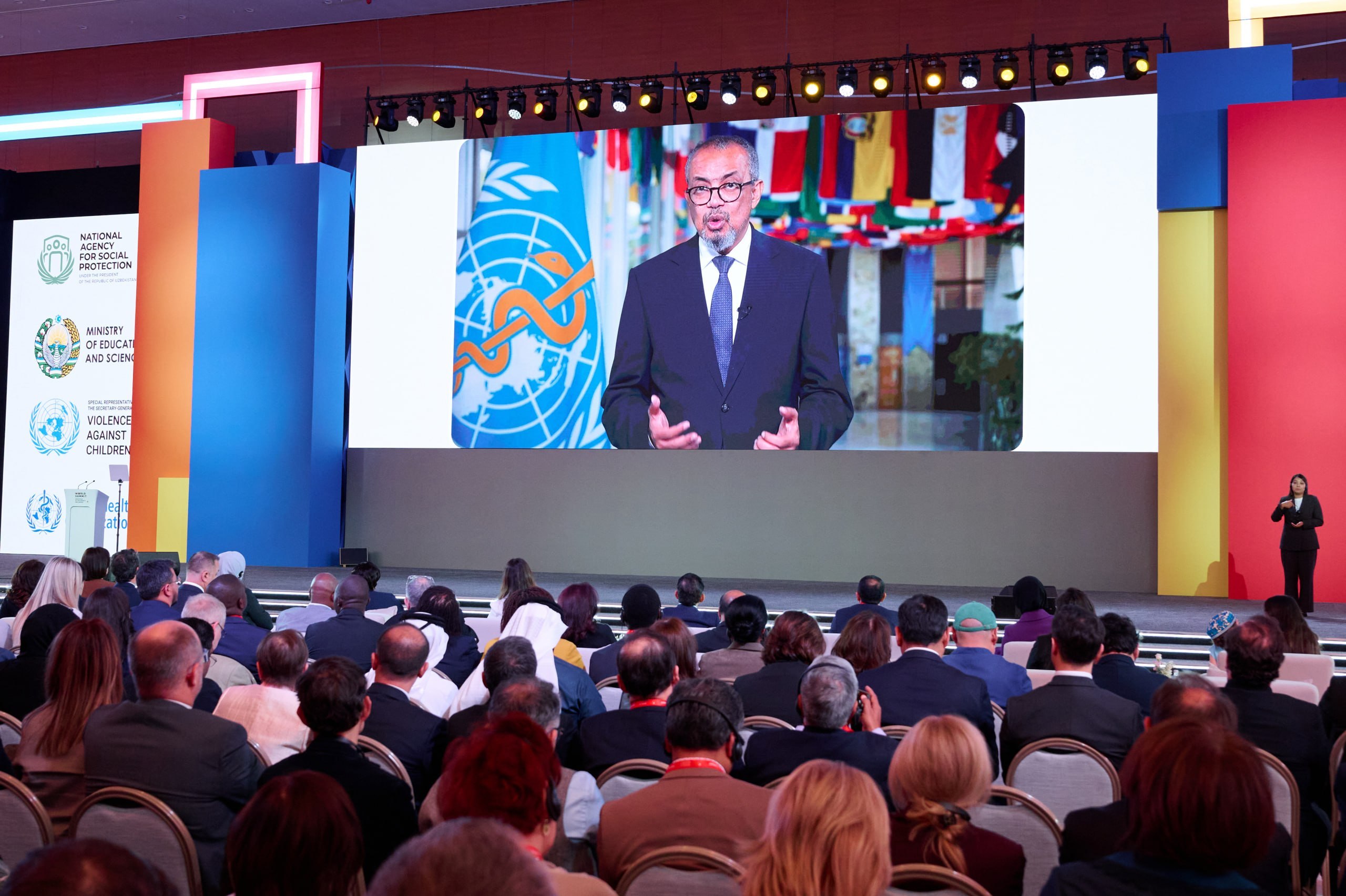
Child poverty in Uzbekistan has fallen nearly fourfold in five years. President Shavkat Mirziyoyev highlighted the achievement in his official address to the World Summit on Investing in Children's Wellbeing, held in Samarkand on October 21–22, 2026. The international gathering, initiated by First Lady Ziroat Mirziyoyeva, brings together first ladies, senior officials and representatives of the United Nations, UNICEF, the World Bank, the World Health Organization and other international institutions, DKNews.kz reports.
The summit focuses on a central question: how can governments turn investment in children into measurable improvements in healthcare, education, social protection and everyday family life?
In his message, read aloud during the opening ceremony, the Uzbek president emphasized that children's wellbeing should not be viewed solely as an investment in future economic development. Children need protection, quality education, healthcare and opportunities to develop their abilities today.
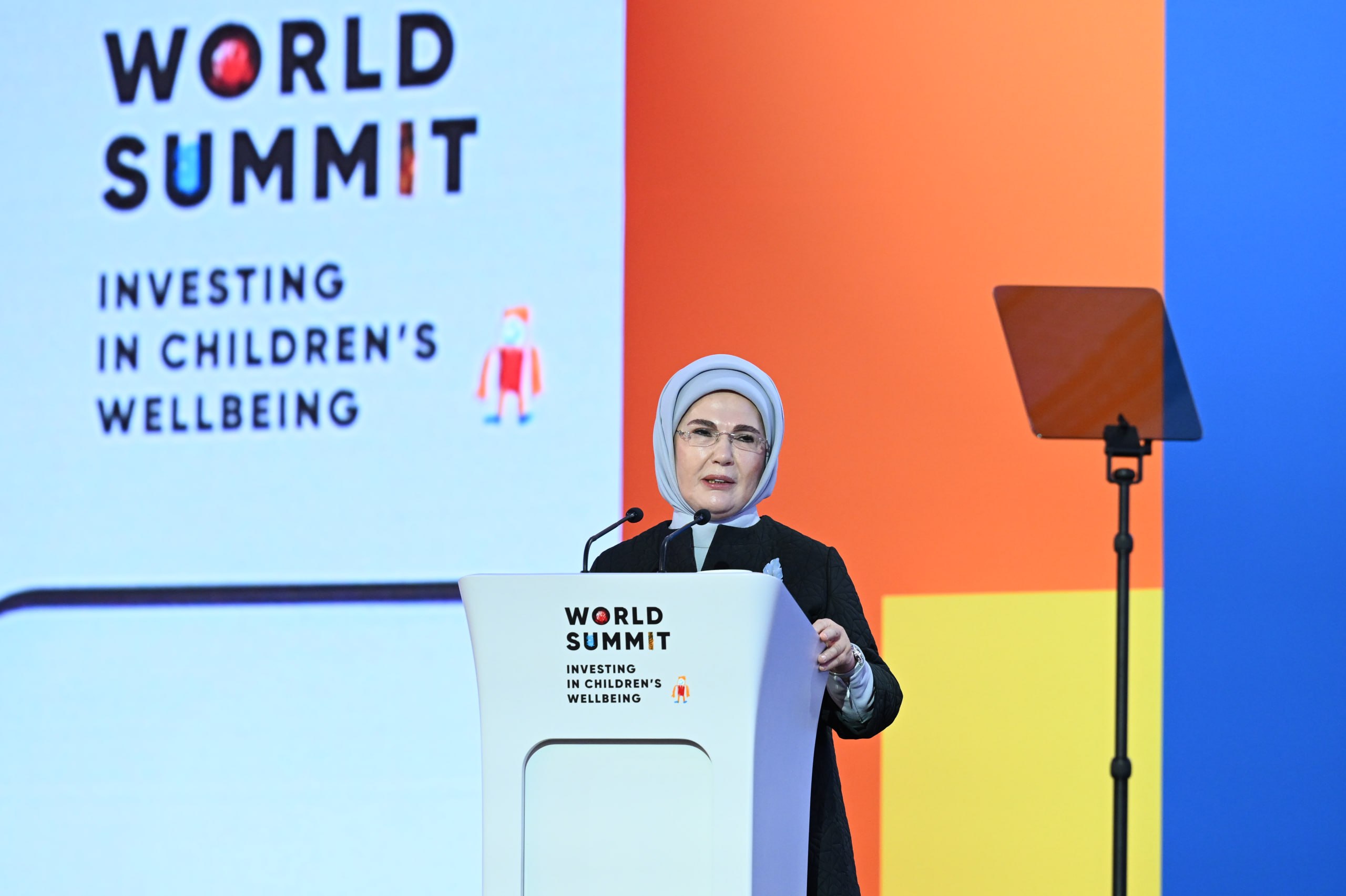
Preschool enrolment rises from 27.7% to 78%
Uzbekistan presented several indicators demonstrating the scale of its reforms in education, healthcare and social protection.
One of the most significant changes has been the expansion of preschool education. Coverage increased from 27.7% to 78%, substantially widening access to early childhood learning.
The president also highlighted improvements in other areas:
- Child poverty: reduced nearly fourfold over the past five years.
- Preschool education: enrolment increased from 27.7% to 78%.
- School readiness: nearly 100% of six-year-old children now participate in preparatory education.
- Inclusive schools: their number increased fivefold over the past two years.
- Children with disabilities: more than 85% have been included in educational services.
- Maternal mortality and childhood stunting: both indicators have been reduced by half.
According to the Uzbek government, the improvements reflect reforms designed to identify vulnerable families earlier and provide more accessible social assistance.
However, Mirziyoyev stressed that national statistics should ultimately translate into tangible changes for individual households, including those living in remote communities.
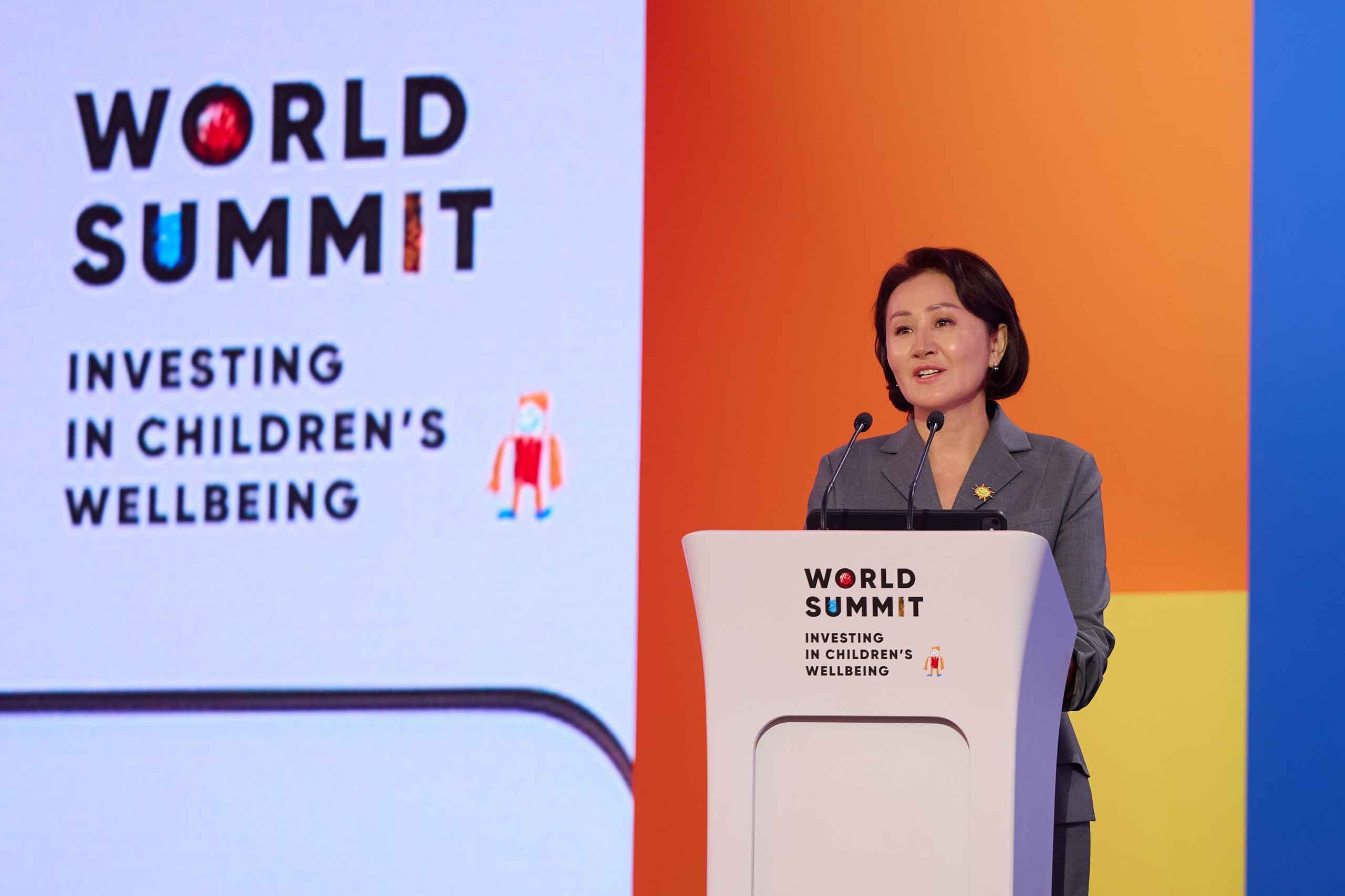
Early childhood development becomes a priority
One of the summit's main proposals is to strengthen continuous support during the earliest stages of a child's life.
Rather than treating maternal healthcare, nutrition, early development and preschool education as separate policy areas, Uzbekistan is calling for a more integrated approach.
The principle is straightforward: when a family's needs are identified early, assistance can arrive before problems become more difficult or expensive to address.
Such an approach requires coordination between healthcare providers, educational institutions and social protection services.
For governments, the challenge is not simply increasing expenditure. It is ensuring that different public services work together and reach children who need them most.
First ladies support international cooperation on childhood cancer
Childhood cancer treatment emerged as another major subject of the Samarkand discussions.
President Mirziyoyev called for stronger international cooperation in the early diagnosis and treatment of serious childhood diseases, particularly cancer.
He supported an initiative by first ladies to expand international cooperation in pediatric oncology.
The proposed areas of cooperation include:
- Exchanging medical expertise and specialist knowledge.
- Improving access to early diagnosis.
- Expanding access to quality medicines and treatment.
- Strengthening national healthcare systems through international partnerships.
- Promoting transparent and needs-based use of charitable resources.
The president emphasized that a child's place of residence should not determine access to essential medical care.
The initiative could provide a framework for sharing expertise across national borders, although its specific financing arrangements and implementation mechanisms have yet to be established.
Protecting children from violence and digital threats
The summit also addresses risks affecting children in schools, communities and online environments.
Uzbekistan has called for stronger cooperation against cyberbullying, exploitation and the misuse of children's personal information.
At the same time, the government wants to expand opportunities for children to learn, communicate safely and develop digital skills.
This requires more than technological restrictions. Parents, teachers and children themselves need practical digital literacy support to recognize online risks and respond appropriately.
The broader objective is to ensure that technological development expands educational opportunities without exposing children to unnecessary harm.
Children should have a voice in decisions affecting them
Another proposal concerns children's participation in public decision-making.
President Mirziyoyev urged policymakers to listen directly to children's views about the services designed for them.
Such participation, he emphasized, should be voluntary, safe and appropriate to each child's age.
The proposal reflects a wider approach to children's rights in which young people are not merely recipients of public services but participants whose experiences can help improve those services.
For educational and social protection institutions, this could mean developing more effective ways to collect feedback and understand whether existing support meets children's actual needs.
Samarkand Platform proposed for international cooperation
To maintain cooperation beyond the summit, Uzbekistan has proposed establishing a Samarkand Platform as a practical mechanism for international dialogue.
The proposed platform would facilitate exchanges of experience, discussions of joint initiatives and reviews of results achieved through voluntary cooperation.
The president also called for the summit's final declaration to be supported by practical implementation plans.
These plans would need to identify responsible institutions, available resources, deadlines and measurable indicators.
Such arrangements would help distinguish general political commitments from initiatives that can be monitored and evaluated.
The Samarkand Platform remains a proposal, rather than an already established institution with confirmed funding and operating arrangements.
Why the Samarkand summit matters for Central Asia
The issues discussed in Samarkand extend beyond Uzbekistan.
Across Central Asia, governments face the challenge of improving access to healthcare, education and social protection while responding to changing demographic and economic conditions.
Regional cooperation could be particularly relevant in specialized healthcare, professional training, inclusive education and the exchange of effective social protection practices.
For Kazakhstan and its neighbours, the summit offers an opportunity to examine approaches that could inform future cooperation. However, no specific new commitments by Kazakhstan were announced in the president's address.
The central message from Samarkand is that progress should be measured not only by national spending or statistical improvements but also by whether children and families receive the services they need.
Earlier, we reported on the Samarkand summit's focus on keeping children with their families, including access to rehabilitation, inclusive education and continued schooling during cancer treatment. These priorities form part of the broader international effort to improve children's wellbeing through practical, coordinated support.