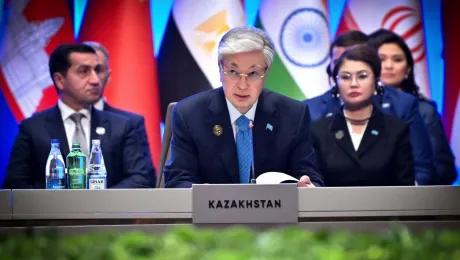
In recent years, the healthcare system of Kazakhstan has faced an objectively growing need to transform its financing mechanisms. In an interview with the newspaper Turkistan, Kassym-Jomart Tokayev pointed out key systemic distortions: capitation financing insufficiently linked to outcomes, weak oversight of the private sector, and misaligned economic incentives for medical organizations. The core message of the interview is the shift from formal coverage to real, measurable healthcare, based on digital patient records, transparency of financial flows, and personal accountability for results.
In international practice, capitation is regarded as one of the most effective tools for ensuring access to medical care, especially at the primary care level. At the same time, the experience of developed countries shows that in recent years it has increasingly been complemented by pay-for-performance mechanisms, strengthening the system’s focus on quality and clinical outcomes. A classic example is the Quality and Outcomes Framework (QOF) in the United Kingdom, where part of the income of primary care physicians depends on meeting clinical and preventive indicators. A similar approach is applied in Estonia through the Quality Bonus System (QBS), where incentive payments are tied to prevention results, management of chronic diseases, and the quality of follow-up care.
Importantly, incentive payments are seen as an add-on to the capitation base. International experience shows that their effectiveness directly depends on a fair, transparent, and well-balanced system for evaluating performance.
It is worth noting that elements of pay-for-performance have been used in Kazakhstan’s primary healthcare since 2011. However, it was precisely in 2025 that the logic of this instrument was revised: indicators were updated, greater emphasis was placed on the prevention of chronic non-communicable diseases, early detection, and continuous patient monitoring. The key innovation was the digitalization of indicators and their strict linkage to measurable results of medical organizations. As a result, the incentive component is ceasing to be purely formal and is transforming into a tool for managing the performance of primary care. This directly corresponds to the President’s statement that there should be no “reporting for the sake of reporting,” and that the entire system must be oriented toward real outcomes for people.
The interview also highlights the need to improve the effectiveness of compulsory social health insurance. In this context, 2025 marked the launch of an initiative to create a unified package of basic state medical care aimed at eliminating duplication between state-guaranteed benefits and compulsory insurance, and establishing transparent and understandable financing rules. At the same time, a mechanism was developed for paying insurance contributions for socially vulnerable categories from local government budgets, which made it possible to extend insurance coverage to more than one million people. Taken together, these measures strengthen the insurance principles of the system and create institutional conditions for transitioning to results-based financing, where payments for medical care are increasingly tied to services actually provided and to achieved health outcomes.
At the same time, tariff policy was updated to better reflect the real costs of medical organizations, the system’s preventive focus was strengthened, and the scale of high-tech medical care was expanded, including the launch of a Proton Center, which placed Kazakhstan among the few countries with such infrastructure. In the pharmaceutical sector, priority was given to reallocating saved funds in favor of newly identified patients, while in human resources policy particular attention was paid to strengthening legal protections for medical workers, which the President also emphasized as a key condition for system stability.
The year concluded with the presentation of the draft Healthcare Development Concept until 2029 and the Comprehensive Plan for Quality Management of Medical Care for 2026–2030. These documents institutionalize the transition from expanding volumes and formal coverage to managing quality, performance, and public trust in the healthcare system.
Thus, Kazakhstan’s healthcare sector is clearly moving toward targeted support, digital oversight, and the elimination of distorted incentives, with a strong focus on real results for people rather than on formal indicators. This fully aligns with the strategic priorities outlined by the Head of State in his interview with Turkistan.
Bibigul Omirbayeva, Chief Expert, Department of Economic Policy Analysis, Kazakhstan Institute for Strategic Studies under the President of the Republic of Kazakhstan