
Tasty tea, beautiful packaging, a bold “premium” label — yet inside there is something that should not be in tea at all, DKNews.kz reports.
By decree dated January 5, 2026 (No. 1-PGSV), Kazakhstan’s Chief State Sanitary Doctor introduced temporary sanitary measures banning the import and sale of certain types of black tea that do not meet legal and technical safety requirements.
What inspectors discovered
During control purchases and sanitary-epidemiological testing, specialists uncovered cases of black tea being produced and sold with added food colorings.
The inspected products contained:
- Sunset Yellow (E110)
- Tartrazine (E102)
- Ponceau 4R (E124)
The use of such colorings in tea is not permitted under food safety regulations.
And that was not the only violation.
Invalid addresses and missing permits
Some packages listed invalid production and packaging addresses.
This may indicate that the manufacturers and sellers do not have valid authorization documents to operate. This fact was confirmed during investigations into public health and sanitary safety.
For this reason, it was decided to halt the import and sale of these products to prevent them from reaching consumers’ tables.
Which brands are banned
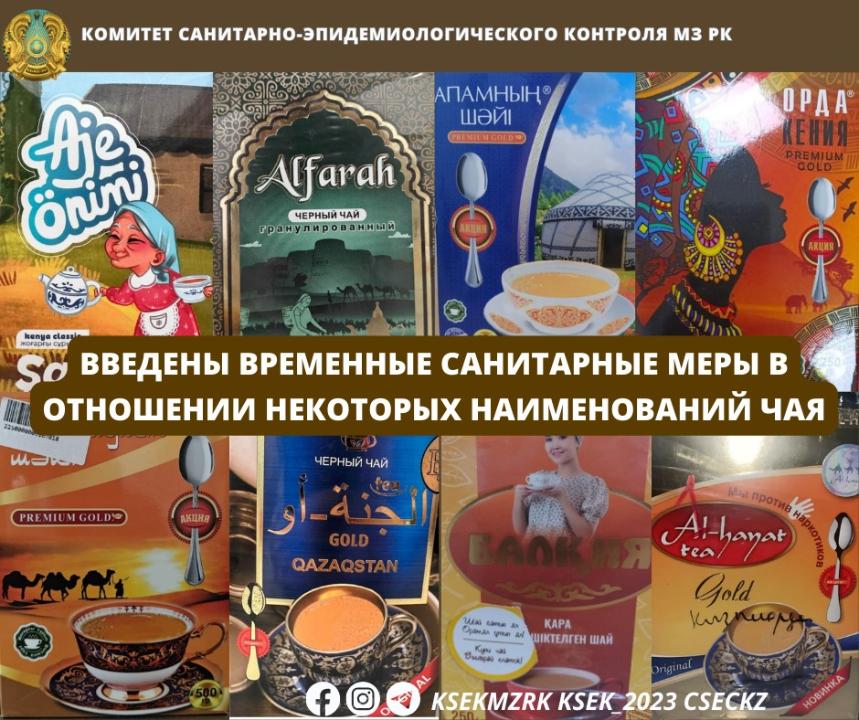
The ban applies to the following black tea brands:
- “Апамның шәйі Premium gold,” “Al-Hayat Golg,” “БАЛҚИЯ Premium Gold” – manufacturer: Orda Trade Astana LLP (Almaty region)
- “Sultan Suleyman,” “Pakistan tea” – manufacturer: Real Trade Astana LLP (Astana)
- “БАЛҚИЯ Premium gold” – manufacturer: Al-Hadia private enterprise (Almaty)
- “Aje Onim” – manufacturer: Orda Chai private enterprise (Almaty), commissioned by Kalsiy LLP
- “Al-Hayat Golg” – manufacturer: Empire KENIY E.P.Z. Limited (Almaty region)
- “Al-Jannat Premium” – manufacturer: Ferdaus private enterprise (Almaty)
- “Alfarah” – manufacturer not indicated
Why this matters for consumers
Against the backdrop of a growing market for inexpensive tea and active imports, cases like this show how easily products of questionable quality can enter the market under labels such as “premium,” “halal,” or “gold.”
Food colorings can:
- disguise low-quality raw materials
- create an artificial sense of “richness”
- mislead consumers about the product’s naturalness
On top of that, inaccurate labeling deprives buyers of the right to know who actually produced the product and where.
What consumers should do
Experts recommend:
- carefully reading product labels
- checking manufacturer addresses
- avoiding suspiciously cheap “premium” tea
- reporting questionable products to the relevant authorities
If you see any of the listed brands on the shelf, it is better to refrain from buying them until regulators provide clarification.