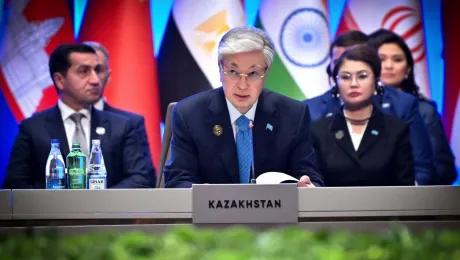


The Head of State has signed the laws “On Banks and Banking Activities in the Republic of Kazakhstan” and “On Amendments and Additions to Certain Legislative Acts of the Republic of Kazakhstan on the Regulation and Development of the Financial Market, Communications and Bankruptcy.”
Beyond updating banking regulation, the new legislation lays the groundwork for the further development of financial technologies and the safe introduction of innovations across Kazakhstan’s financial system, DKNews.kz reports.
In practical terms, Kazakhstan is moving toward a new financial architecture — one built around the digital tenge, open banking, unified QR payments and a regulated digital asset market.
National Digital Financial Infrastructure: One ecosystem for payments
One of the key changes is the formal recognition of the National Digital Financial Infrastructure (NDFI) and its core components at the legislative level. These include:
- The National Payment System
- The Interbank Payment Card System
- The Interbank Mobile Payment System
- The Digital Tenge platform
- Open Banking
- The Biometric Identification System
- The National Anti-Fraud Center
The laws also improve interaction between banks and the NDFI, enabling the widespread use of mobile transfers and QR payments between different banks. For citizens and businesses, this means seamless payments without being tied to a single financial institution.
The development of the NDFI is aimed at improving interbank efficiency, expanding access to innovative financial services and strengthening competition in the financial market.
Digital tenge: A new form of the national currency
The second major innovation is the establishment of the digital tenge as a new form of Kazakhstan’s national currency. It is officially recognized as legal tender across the country.
The National Bank of Kazakhstan is the sole issuer of the digital tenge, while interaction with it will be carried out through financial market participants, including banks and payment organizations.
One of the key advantages of the digital tenge is its programmability. Smart contract technology opens up new opportunities for:
- increasing transparency in the use of public funds,
- automating government payments and subsidies,
- developing innovative financial and public services.
In this sense, the digital tenge becomes not only a means of payment, but also a technological platform for the future financial ecosystem.
Digital assets and cryptocurrencies: From the grey zone to regulation
The third pillar of the reform is the creation of a comprehensive legal framework for digital financial assets and the expansion of the regulated circulation of unsecured cryptocurrencies.
The legislation defines:
- rules for issuing digital financial assets,
- requirements for the infrastructure of their circulation,
- the powers of regulatory authorities.
The introduction of regulated crypto circulation through licensed digital asset service providers will legalize crypto-to-fiat channels, ensuring the safe exchange of cryptocurrencies into money. This enhances consumer protection and increases transparency in digital asset transactions.
As a result, Kazakhstan is establishing a unified, regulated and inclusive national digital asset market, seamlessly integrated into the country’s financial system.
What this means for citizens and businesses
The new laws are expected to:
- make financial services more accessible,
- strengthen the security of digital payments,
- accelerate the development of fintech,
- enhance protection against fraud.
Experts note that these reforms position Kazakhstan not merely as a consumer of global financial technologies, but as a country building its own digital finance model.
A new chapter for Kazakhstan’s financial system
The signed legislation marks the beginning of a new phase in Kazakhstan’s financial development — one that is more transparent, technology-driven and user-focused. In the coming years, these reforms are set to define how citizens, businesses and the state interact within the financial system.