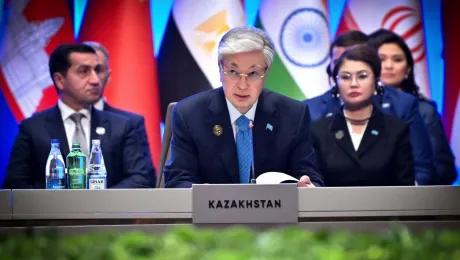

Following a recent high-profile interview with Head of State Kassym-Zhomart Tokayev, in which he declared 2026 the Year of Digitalisation and Artificial Intelligence and emphasised the irreversibility of reforms, the expert community is actively discussing new growth points.
One of the most dynamic sectors has been medical tourism, which has shown explosive growth — from 1,280 patients in 2022 to 80,000 in 2024. We met with Ms. Kristina Krivets, head of the Kazakhstan Medical Tourism Association (KAMT), to understand how the industry is synchronising with the President's course towards a ‘fair Kazakhstan’ and technological leadership.
- Ms. Kristina, in his January interview, the President noted that Kazakhstan has entered a ‘new stage of modernisation.’ How is this felt in your field? Are we still ‘trying’ or have we already established ourselves on the world map?
- We are at a crucial turning point - the transition from rapid growth to sustainable development. Whereas before we were an ‘unknown quantity’, between 2023 and 2025 we have evolved into a reliable international partner.
Today, there are already nine clinics in the country with JCI gold standard accreditation, which is our ‘passport’ to the global market. We are seeing an influx of patients from more than 45 countries, including the US and Europe, who choose us not only for our prices, which are 40-70% lower, but also for our high-tech facilities on par with South Korea.
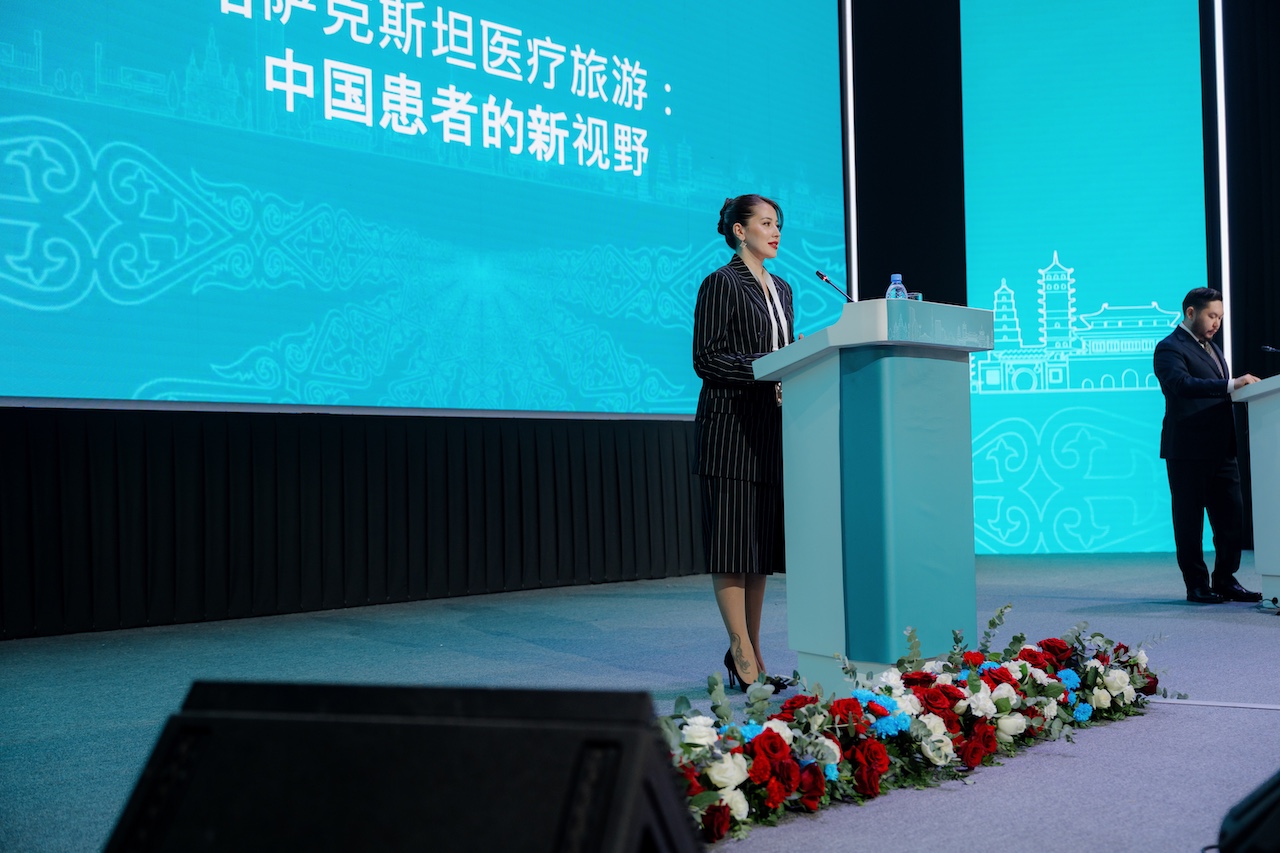
- So, does this mean that Kazakhstan can now compete with global leaders in medical tourism, such as South Korea?
- Not only South Korea, but also a number of other countries. Today, we stand out from the leaders thanks to our unique combination of affordability, high technology and geographical advantages. Let me list a few key differences:
First of all, there is the price advantage. The cost of medical services in Kazakhstan is significantly lower than that of its competitors. Prices are on average 20% lower than in Turkey and South Korea, and 40-70% lower than in Israel or European countries. At the same time, the quality of services remains comparable to international standards.
The second important factor is technological parity: despite lower costs, the technological base of Kazakhstani clinics is on par with South Korea. Robotic surgery, radiation therapy and advanced methods in cardiac surgery, neurosurgery and reproductive medicine are successfully used in the country.
Digital leadership and artificial intelligence also play a major role. Kazakhstan is betting on becoming Asia's ‘smart hub’ through the deep integration of artificial intelligence. The introduction of AI solutions reduces diagnosis time by 40% and increases accuracy, which is a unique selling point compared to the ‘old players’ in the market. There are also plans to use AI to ensure a response time of 24 hours for patients, in order to surpass Turkey and Korea in terms of efficiency.
A separate advantage is geographical and cultural proximity. Kazakhstan is strategically located in the centre of Eurasia, making it a convenient hub for patients from the CIS countries, China and the Middle East. An important factor is the absence of a language barrier and cultural proximity for the Russian-speaking diaspora, as well as the availability of numerous direct flights.
In addition, patients have the opportunity to combine treatment with unique nature. Kazakhstan offers the opportunity to combine high-tech medicine with rehabilitation in unique natural areas (from Almaty to Borovoye). The balance between Eastern hospitality and Western service standards is particularly noteworthy.
Finally, an important practical factor is less bureaucracy. Compared to Western and Eastern European healthcare systems, Kazakhstan offers medical services with fewer bureaucratic barriers and minimal queues.
Thus, we position ourselves not just as a cheap alternative, but as an independent choice for patients seeking ‘high quality for less money’ using the most modern digital tools.
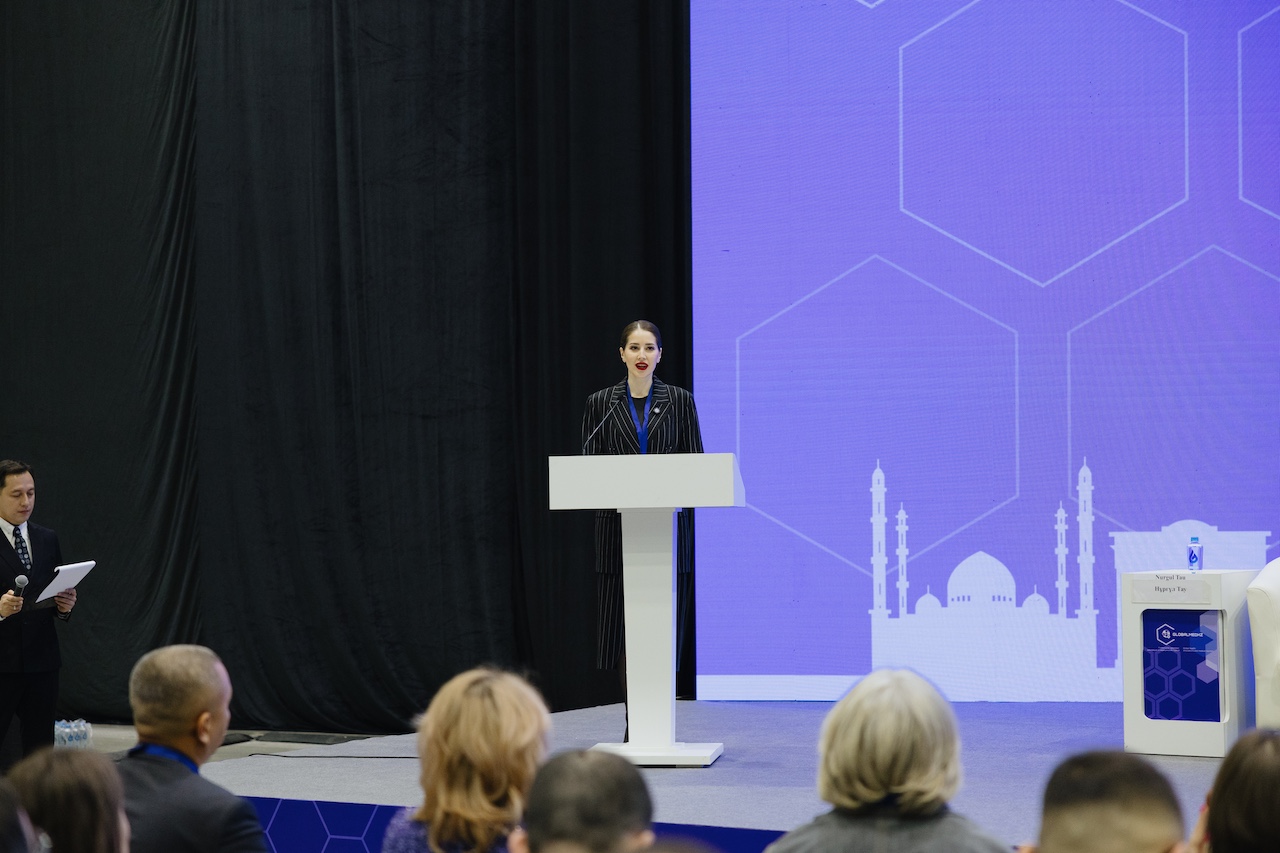
- You mentioned digital leadership and artificial intelligence. The president has declared 2026 the Year of AI, calling technology ‘a matter of our survival.’ Your Association has already presented an AI solution at the GlobalMed KZ exhibition. Is this a tribute to fashion or a real tool?
- For us, AI is a lever that will make Kazakhstan a smart hub of Asia. Together with our partners from Maint, we have created a platform that combines medicine, tourism and service. It solves the problem of fragmentation: AI analyses symptoms, selects a clinic and plans all the logistics. This is exactly what the President talked about during his speech at the Gylim Ordasy centre – data is becoming the ‘new gold’.
The use of AI in diagnostics already allows us to reduce the number of errors by 30%. If we give patients answers via an AI chatbot within 24 hours, we will beat the competition from Turkey and South Korea. This is a direct implementation of the Head of State's instruction to introduce AI into public life.
- Kassym-Jomart Tokayev emphasises the principle of ‘law and order’. You are actively lobbying for the adoption of a separate law on medical tourism. Why are the current rules not enough?
- The fact is that sustainable development is impossible without clear ‘rules of the game’. Right now, medical tourism is in a grey area between the ministries of health and tourism. This leads to scams and stops state clinics, our flagships, from working properly with agents. We need to make the industry legit: clearly define patient rights, risk insurance, and visa support. The law is not bureaucracy, but a guarantee of security that will make us attractive to large investors, as the Head of State constantly says.
- In an interview, the President touched on the topic of ‘creative patriotism’ and the responsibility of business to the people. You head the Association, bringing together hundreds of players. What does this principle mean to you in practice?
- Patriotism is not just loud words, but hard work, as the President noted. The success of medical tourism is, first and foremost, a contribution to the country. When a foreign patient says ‘thank you for restoring my hope,’ they are thanking the whole of Kazakhstan. For me, this is also a personal issue. Despite the fact that I work in the international market and have access to any clinic in the world, my whole family and I receive medical care exclusively in Kazakhstan. This is trust in the system that we are building together with the state. We are creating an ecosystem where business is socially responsible and medicine is patient-oriented.
- How do you see the future of the industry in the context of Kazakhstan's ‘prime era,’ which young people are talking about?
- By 2030, we plan to reach 300,000 medical tourists per year. We will become a hub where 80% of diagnostics will be performed using AI and telemedicine.
The global medical market is currently at a turning point, and Kazakhstan has the opportunity to enter this new landscape not as a follower, but as a shaping player. The association is ready to be a reliable partner to the state on this path, turning Kazakhstan into a global brand of quality, fairness and high technology.