The ideas voiced by President Kassym-Jomart Tokayev at the National Kurultai reflect not a set of isolated initiatives, but a coherent and consistent logic of Kazakhstan’s institutional development. This conclusion was reached by experts from Nazarbayev University while commenting on the proposed constitutional, governance, and technological changes.
These include the potential transition to a unicameral parliament, the creation of the office of vice president, the expansion of public consultations, digitalization, and the development of aviation as a strategic sector. Analysts agree that the key determinant of success will not be the formal design of reforms, but their practical implementation.
Parliament and the Constitution: Speed versus Inertia
Riccardo Pelizzo, Professor at NU’s Graduate School of Public Policy, believes that any change in the structure of parliament would inevitably require a constitutional revision. According to him, the current Constitution explicitly enshrines a bicameral system. Therefore, a transition to a unicameral parliament would necessitate a legally precise and transparent constitutional amendment.

At the same time, the goal of the reform is not institutional reshuffling for its own sake, but strengthening the role of parliament.
“Legislative processes in bicameral systems are often lengthy and cumbersome. Abolishing the second chamber could significantly accelerate lawmaking and make the system of public administration more efficient,” Pelizzo notes.
The Vice Presidency: A Bet on Legitimacy
The expert expressed particular interest in the proposal to introduce the office of vice president. He identifies constitutional entrenchment of the position and the appointment mechanism as the key issues. If the vice president is appointed by the president and approved by parliament, this, in Pelizzo’s view, would ensure a high level of political legitimacy and reduce the risk of the office becoming merely symbolic.
At the same time, Pelizzo emphasizes that lawmakers still face a fundamental choice: whether the powers of the vice president should be detailed directly in the Constitution or defined through separate legislative acts.
People’s Council, AI, and the Environment: Cautious Optimism
Jessica Neafie, Assistant Professor at NU’s School of Natural, Social, and Human Sciences, views the President’s address as a response to both domestic and global uncertainty. In her assessment, the initiative to establish a People’s Council could expand public consultation, particularly on issues of social cohesion and ideology. However, the value of this institution will depend on its genuine independence.

“Without clear mechanisms of transparency and safeguards against integration into the existing political system, there is a risk that the Council could become a purely symbolic body,” the expert warns.
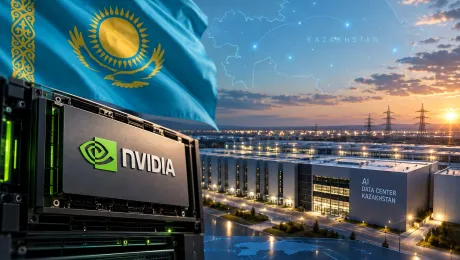
Neafie also highlights the section devoted to digitalization and artificial intelligence. She notes the realism of the President’s position, who explicitly stated that technology alone does not solve governance challenges. Moreover, the development of data centers and digital infrastructure carries environmental and energy risks that require systematic and sustainable planning.
Aviation as a Strategic Opportunity
Essam Shehab, Professor and Head of the Department of Mechanical and Aerospace Engineering at NU, described the aviation segment of the President’s speech as one of the most inspiring. According to him, aviation hubs are not merely airports, but complex ecosystems encompassing logistics, digital platforms, fuel supply, and human capital. Without coordinated development of these elements, competing with hubs in the Middle East, Europe, or East Asia is impossible.
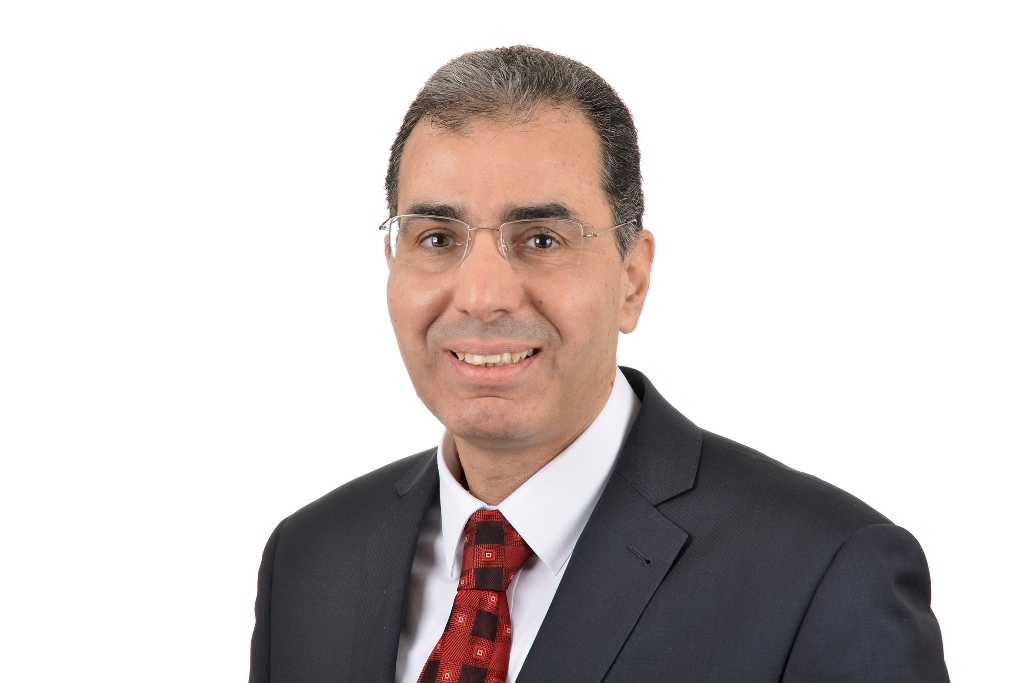
Kazakhstan’s geographic position between Europe and Asia, Shehab argues, is a strategic advantage that has yet to be fully realized. He identifies aviation fuel pricing as a critical factor:
“Fuel is one of the largest cost components for airlines. For an oil-producing country, it is crucial to offer competitive prices. If fuel costs are higher than in countries without their own production, this immediately undermines Kazakhstan’s attractiveness as a transit hub.”
Conclusion: Reforms Are About Practice, Not Slogans
The overarching conclusion shared by Nazarbayev University experts is clear: President Tokayev’s proposals appear logical and evolutionary rather than radical. They are aimed at increasing institutional efficiency, but their real impact will depend on governance quality, the independence of new institutions, and the state’s ability to account for long-term risks — from environmental to energy-related challenges.
It is at this stage, analysts argue, that the central question will be answered: whether the reforms will remain another declaration of intent or truly change the rules of the game.