

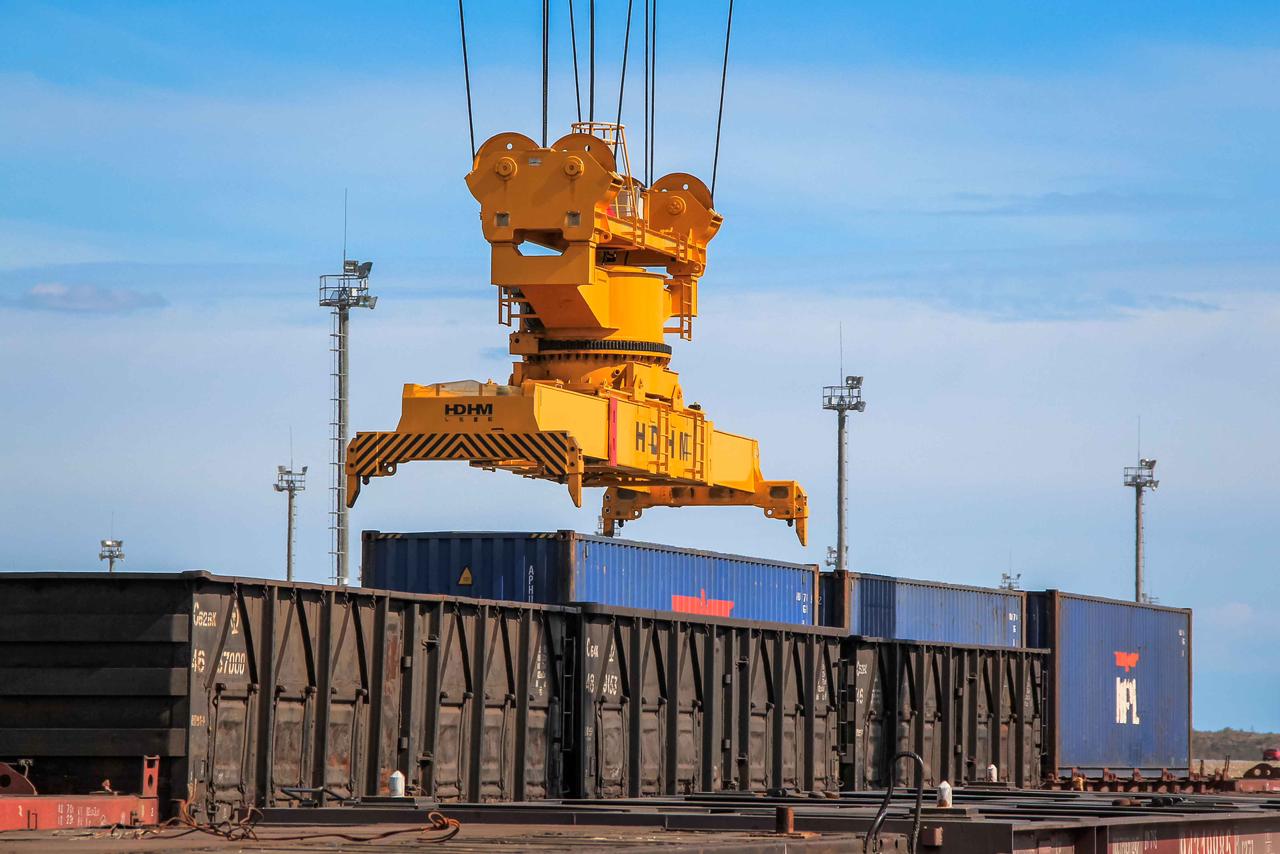
As major logistics routes across Eurasia continue to reshape, Khorgos is no longer just a border point on the map. It has become a strategic hub connecting East and West and a clear symbol of how Kazakhstan is turning its transit potential into real economic results. The outcomes of 2025 speak for themselves, DKNews.kz reports.
More than 372,000 twenty-foot equivalent units (TEU) were processed at the Khorgos Gateway Dry Port, located within a special economic zone, over the course of the year. This is 2% more than in 2024. At first glance, the growth may seem modest, but against the backdrop of global supply chain disruptions and geopolitical uncertainty, it signals steady demand for routes passing through Kazakhstan.
Why Khorgos matters today
Khorgos Gateway has firmly established itself as one of the key nodes in cross-border freight transport between China, Europe, and Central Asia. This is no longer just about transferring containers from one track to another. In modern logistics, speed, reliability, and predictability are decisive - and Khorgos is increasingly delivering on all three.
A major driver of growth in 2025 was infrastructure expansion. Ten new broad-gauge railway lines were built at the Dry Port, significantly increasing throughput capacity and allowing for more flexible traffic management. This expansion strengthened the port’s ability to handle rising cargo volumes without bottlenecks.
At the same time, the port underwent intelligent infrastructure modernization. Digital and automated solutions were introduced to streamline operations, reducing container transshipment time from five hours to just one. In the logistics industry, such time savings translate directly into lower costs and higher competitiveness.
A joint project with a long-term vision
Khorgos Gateway is the second major joint logistics project between Kazakhstan and China, following the launch of the logistics base in Lianyungang. Together, these projects form a coherent land-based corridor that complements maritime routes and offers businesses alternative, resilient supply chains.
The structure of Khorgos Gateway reflects this strategic approach. The project includes a China-Kazakhstan rail transshipment station, a specialized wheat transshipment facility, and a container terminal. This configuration allows the port to serve not only containerized cargo but also agricultural exports, opening additional opportunities for Kazakhstan’s producers.

From dry port to economic cluster
The impact of Khorgos Gateway extends far beyond logistics. Thanks to the advantages of the Dry Port within the special economic zone, companies from various sectors have begun to cluster around it. This, in turn, is driving the development of processing industries, warehousing, and transport-related services.
What is emerging around Khorgos is a full-fledged industrial and logistics ecosystem. For Kazakhstan, this means more than transit revenues alone. It brings new jobs, attracts investment, and strengthens the country’s position within international production and supply chains.
From transit country to logistics player
The results of 2025 confirm that Khorgos Gateway is no longer an experimental project. It has become a functioning and scalable element of Kazakhstan’s national transit strategy. Faster container handling, expanded infrastructure, and growing business activity all point in the same direction.
Today, Khorgos is not merely a gateway for cargo flows. It is a growth engine that defines Kazakhstan’s evolving role in Eurasian logistics. If the current momentum is sustained, Khorgos Gateway has every chance of becoming not just a regional, but a globally significant transit hub in the years ahead.