

Kazakhstan is stepping up its diplomatic outreach in Latin America — and this time, the focus is not only on trade, but on deep political transformation and a bold digital future, DKNews.kz reports.
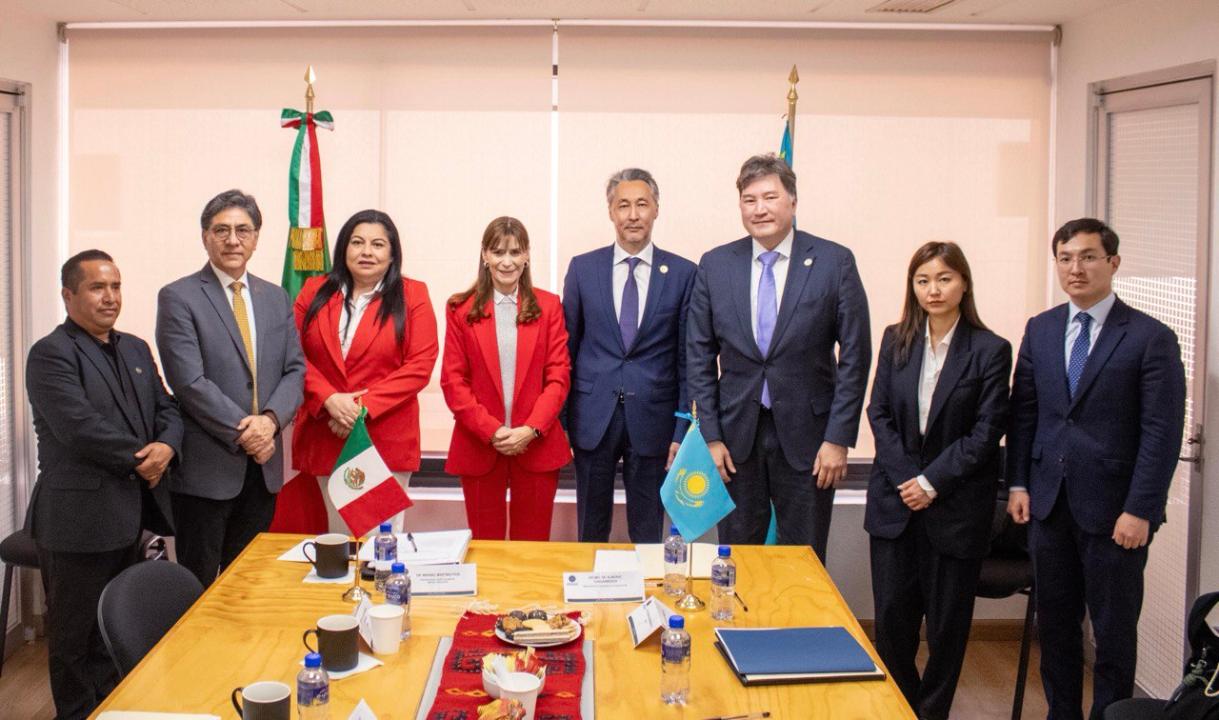
Ambassador of Kazakhstan to Mexico, Almurat Turganbekov, met with Deputy Maribel Martinez Ruiz, Chair of the Mexican parliamentary friendship group, to discuss a new chapter in Kazakh-Mexican relations. But beyond formal protocol, the meeting revealed something more ambitious: Kazakhstan is actively presenting itself as a modernizing state undergoing systemic reform.
A New Momentum in Bilateral Relations
During the talks, the sides reviewed the current state of cooperation and agreed on a joint action plan for 2026. The agenda goes far beyond diplomatic courtesy.
The two countries plan to:
- Strengthen trade and economic cooperation
- Expand political and cultural dialogue
- Deepen interparliamentary engagement
Particular attention was paid to the creation of “Kazakhstan–Mexico” friendship groups in the parliaments of both countries, established in 2025. According to Deputy Maribel Martinez Ruiz, this mechanism will give fresh energy to bilateral ties and open the door for more structured cooperation between lawmakers.
Ambassador Turganbekov emphasized that parliamentary diplomacy is becoming an increasingly important tool in building long-term partnerships.
Constitutional Reform: What Is Changing in Kazakhstan?
One of the key topics of discussion was Kazakhstan’s ongoing constitutional reform — a process that has attracted international attention in recent years.
The reforms, initiated under President Kassym-Jomart Tokayev, aim to modernize the country’s governance system and redistribute powers among branches of government. The core goals include:
- Strengthening democratic institutions
- Enhancing the role of Parliament
- Increasing political competition
- Improving public administration efficiency
Kazakhstan has positioned these reforms as part of its broader transition toward what officials describe as a “New Kazakhstan” — a state built on institutional balance, rule of law, and economic diversification.
For Mexican lawmakers, this briefing offered insight into how Central Asia’s largest economy is reshaping its political architecture while maintaining stability in a complex geopolitical environment.
2026: The Year of Digitalization and Artificial Intelligence
Perhaps the most forward-looking part of the discussion centered on Kazakhstan’s digital strategy.
Ambassador Turganbekov informed the Mexican side that 2026 has been officially declared the Year of Digitalization and Artificial Intelligence in Kazakhstan. The initiative signals a strategic shift toward building a knowledge-based economy.
Among the country’s priorities:
- Boosting labor productivity through technology
- Creating export-oriented digital industries
- Integrating Kazakhstan into global digital value chains
- Advancing artificial intelligence development
Kazakhstan has already positioned itself as a regional digital hub, and the AI agenda suggests the country aims to compete more actively on the global stage.
Why This Matters
At first glance, a diplomatic meeting between Kazakhstan and Mexico may seem routine. But in a broader context, it reflects several important trends:
- Kazakhstan is diversifying its foreign policy partnerships beyond traditional regions.
- Parliamentary diplomacy is gaining weight as a practical tool of international engagement.
- Constitutional reform and digital transformation are becoming central to Kazakhstan’s international narrative.
The agreement to maintain regular contacts and develop practical recommendations indicates that the dialogue will continue — not just at the executive level, but between lawmakers shaping policy in both countries.
As Kazakhstan enters what it calls a new stage of political and technological development, its message to international partners is clear: the country is not only reforming internally but also seeking deeper global integration.
And Mexico, it seems, is ready to be part of that conversation.