


As the global aviation market continues to recover from turbulent years, European aerospace giant Airbus has delivered a record-breaking performance for 2025. The company not only reported strong financial results but also outlined a clear strategy for the years ahead, sending a powerful signal to the industry: aviation is entering a new growth cycle, DKNews.kz reports.
Robust demand for commercial aircraft, rising defence contracts and the expansion of its services business allowed Airbus to strengthen its market position and propose higher dividends for shareholders.
A breakthrough year for Airbus
Airbus CEO Guillaume Faury described 2025 as one of the company’s most successful years in recent history. According to him, Airbus managed to maintain its growth momentum despite global supply chain challenges.
“2025 was marked by strong demand for our products and services across all business areas, as well as record financial results and strategic achievements. We successfully overcame challenges linked to a volatile operating environment to achieve our objectives. Global demand for commercial aircraft allows us to continue ramping up production despite significant Pratt & Whitney engine shortages. Our broad and competitive portfolio in Defence and Space and Helicopters enables us to capture momentum in the defence sector. We are also progressing towards creating a new global player in the industrial space sector together with our partners. The 2025 results and confidence in future financial performance are supported by the proposed increase in dividend payments.”
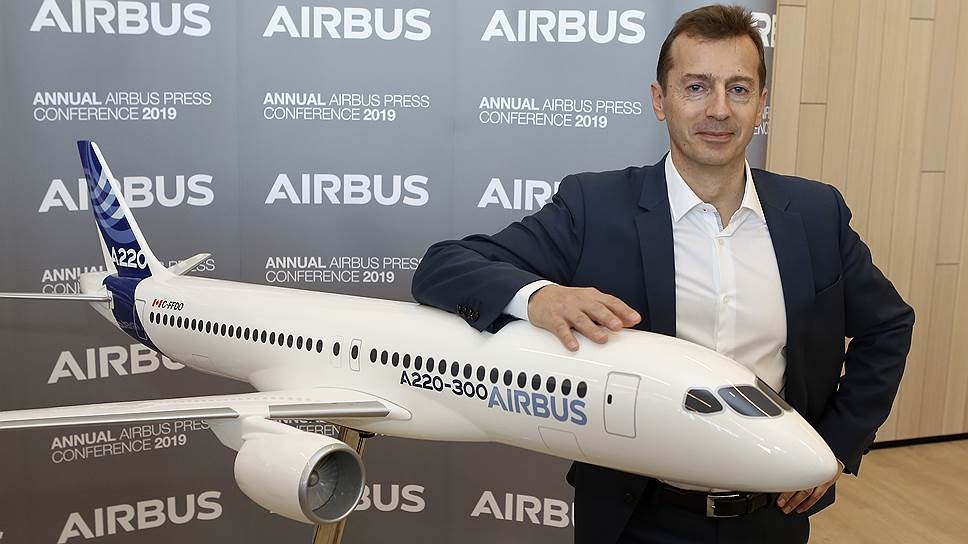 Guillaume Faury/Photographer: Fred Scheiber, AP
The numbers fully support this optimism. In 2025, Airbus delivered 793 commercial aircraft, surpassing the previous year’s figure. Revenue rose to €73.4 billion, up 6% year-on-year. Adjusted operating profit reached €7.128 billion, while net income stood at €5.221 billion. Earnings per share amounted to €6.61.
Free cash flow remained strong, reaching €4.574 billion before customer financing and €4.753 billion in total. By the end of the year, Airbus held €27.2 billion in cash and maintained a net cash position of €12.2 billion.
Record backlog securing the future
One of Airbus’ strongest advantages is its massive order backlog. In 2025, the company secured 1,000 gross commercial aircraft orders, with net orders reaching 889 units. This pushed the total backlog to 8,754 aircraft - the highest level in Airbus’ history.
Momentum extended beyond commercial aviation. Airbus Helicopters received 536 orders, while Defence and Space signed contracts worth €17.7 billion. In value terms, total orders reached €123.3 billion, with the overall backlog standing at €619 billion.
Which segment led the growth
Commercial aviation made the largest contribution to performance. In 2025, Airbus delivered 93 A220 aircraft, 607 A320 family jets, 36 A330 aircraft and 57 widebody A350s.
Revenue distribution across segments reflected this strength:
- Commercial aircraft - €52.6 billion
- Helicopters - €9.0 billion (+13%)
- Defence and Space - €13.4 billion (+11%)
Growth was driven by higher deliveries, expanding services and the accelerating development of defence and space activities.
Production plans: ambition meets constraints
With airline demand rebounding, Airbus is planning to further increase production rates. The company aims to raise A220 output to 13 aircraft per month by 2028 and increase A320 family production to 70-75 aircraft per month by the end of 2027. A330 production is expected to reach five aircraft per month by 2029, while A350 output is targeted at 12 aircraft per month by 2028.
However, a key constraint remains the shortage of Pratt & Whitney engines, highlighting ongoing vulnerabilities in global supply chains.
Dividends and outlook for 2026
Airbus’ Board of Directors has proposed a dividend of €3.20 per share, with the Annual General Meeting scheduled for 14 April 2026 and a potential payment date of 23 April.
The outlook for 2026 remains optimistic. Sustained demand for commercial aircraft, rising global defence spending and the expansion of space programmes provide Airbus with strong visibility on future revenues. The large backlog continues to reinforce investor confidence.
What this means for the aviation industry
Airbus’ results suggest that the global aviation sector is entering a new phase of growth. Rising passenger traffic, fleet renewal and stricter sustainability requirements are intensifying competition among manufacturers.
For the industry, the key trends are clear: technological innovation, expanding production capacity and resilient supply chains. Based on its 2025 performance, Airbus is stepping into this new cycle with strong financial fundamentals and a record order backlog.
In short, Airbus has not only closed a successful year but also outlined a vision of what aviation’s future could look like. The year 2026 is set to become a crucial test of how effectively this strategy will translate into continued growth and leadership.