

Kazakhstan and Spain are entering a new phase of cooperation — and this time, the spotlight is on Asia, DKNews.kz reports.
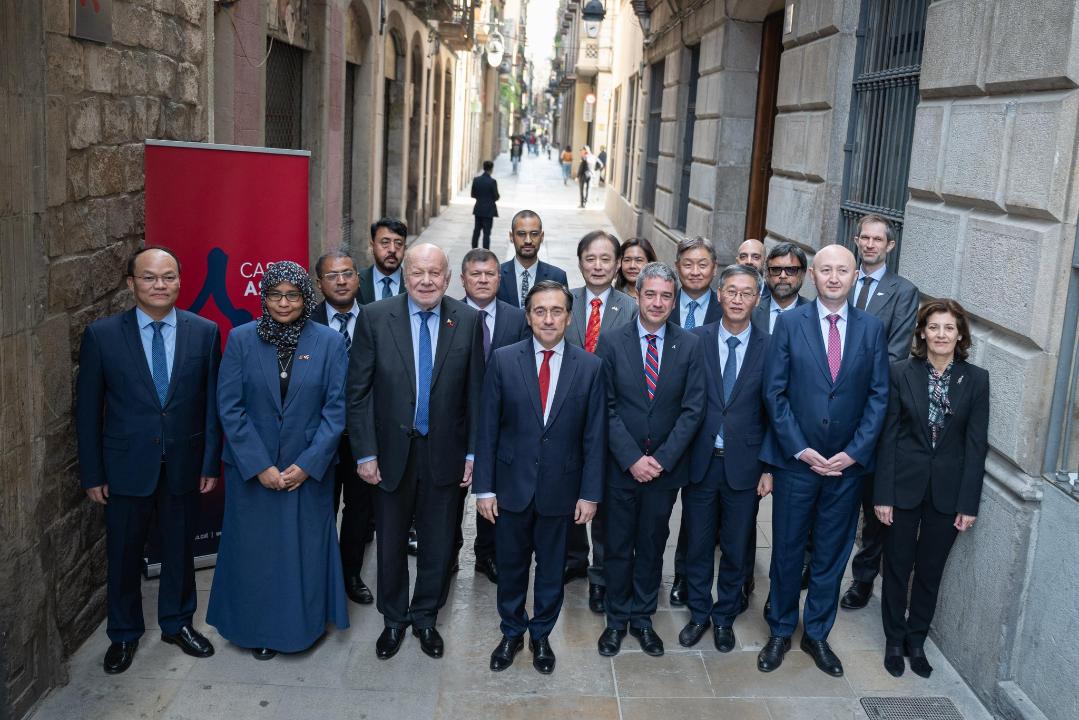
Ambassador of Kazakhstan to Spain Danat Mussayev took part in the official presentation of Spain’s Asia-Pacific Strategy for 2026–2029 in Madrid — a document that could redefine Madrid’s engagement with one of the world’s fastest-growing regions.
The event gathered high-level participants, including Spain’s Minister of Foreign Affairs José Manuel Albares, members of the diplomatic corps, and representatives of the expert community.
Why Asia — and Why Now?
Presenting the strategy, Albares made it clear: Asia is no longer just an important region — it is becoming one of the central pillars of global development.
The numbers speak for themselves. Asia accounts for a large share of the world’s population, industrial production, and economic growth. From technological innovation to green transformation, the region increasingly shapes global trends.
Spain’s new strategy is designed to:
- Strengthen political dialogue
- Expand trade and economic ties
- Increase investment flows
- Deepen technological cooperation
But beyond the general framework lies something more specific — a growing recognition of Central Asia’s rising strategic relevance.
Kazakhstan: A Natural Bridge Between Europe and Asia
In his remarks, Ambassador Mussayev highlighted that Spain’s intensified focus on Asia opens fresh opportunities for deepening cooperation with Central Asian nations — particularly Kazakhstan.
He emphasized Kazakhstan’s role as:
- A stable and reliable political partner
- A key transit hub linking Europe and Asia
- An attractive destination for foreign investment
- A regional leader in economic modernization
At a time when global supply chains are being reconfigured and transport corridors are gaining geopolitical weight, Kazakhstan’s geographic position has transformed into strategic leverage.
From energy exports to green transition initiatives, from logistics corridors to digitalization projects — Astana is positioning itself as a crucial node in Eurasian connectivity.
A Bilateral Agenda with New Momentum
Importantly, the meeting was not just symbolic.
On the sidelines of the event, Ambassador Mussayev held talks with senior officials from Spain’s Foreign Ministry. Discussions focused on aligning Kazakhstan–Spain bilateral cooperation with the priorities outlined in Madrid’s new Asia-Pacific Strategy.
Among the likely priority areas:
- Energy and renewable resources
- Transport and logistics connectivity
- Investment partnerships
- Technological and innovation exchanges
Mussayev reaffirmed his readiness to intensify dialogue and expressed hope for organizing a reciprocal visit by Spain’s foreign minister to Kazakhstan in the near future — a move that could give tangible political momentum to the partnership.
A Strategic Window of Opportunity
Spain’s pivot toward Asia is not occurring in isolation. Across Europe, countries are recalibrating their foreign policies to reflect the region’s economic dynamism and geopolitical importance.
For Kazakhstan, this creates a window of opportunity to deepen ties with EU member states not only as a supplier of resources, but as a modernizing economy and regional stabilizer.
The Madrid presentation signaled one key message: Central Asia is no longer on the periphery of European strategic thinking.
And as Spain broadens its Asia-Pacific engagement, Kazakhstan appears ready to ensure that Astana is not just part of the conversation — but a central partner in shaping it.