
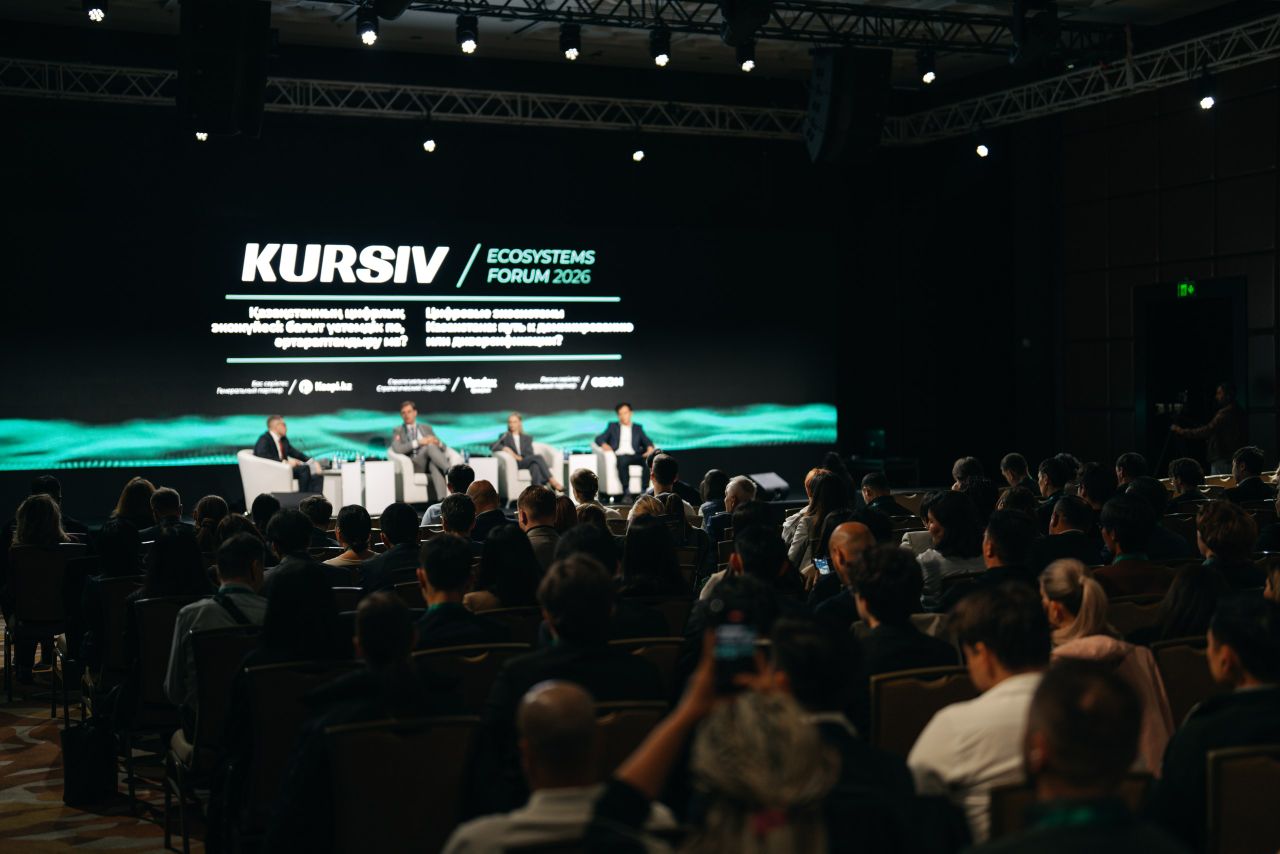
On April 17, Almaty became the center of discussion about the future of Kazakhstan’s digital landscape. Kursiv Ecosystems Forum 2026 brought together more than 400 participants, including representatives of major technology and financial companies, experts and market leaders, DKNews.kz reports.
The forum focused on the development of digital ecosystems and clearly demonstrated that the market in Kazakhstan is entering a new phase — one defined by growing competition, increasing regulatory pressure and an intensifying fight for users.
Among the key speakers were Timur Turlov, CEO of Freedom Holding Corp.; Natalia Boer, CEO of Ozon in the CIS; Timur Shalekenov, Head of Yandex Qazaqstan; Vyacheslav Kim, Managing Director of Freedom Bank; Alexander Nagorny, representative of Kolesa Group; Arshin Sultangazy, Chief Product Owner at Bank CenterCredit; Renat Tukanov, CTO of Freedom Holding Corp.; Sabina Nurlybayeva, Head of AI at QazCloud; Vladislav Minkevich, Chairman of the Board at AKASHI Data Center; and Alexey Sharavar, CEO of QazCode.
The sessions were moderated by Sergey Domnin, Head of Kursiv Research; Tatyana Nikolaeva, Editor of Social Projects at Kursiv Media; and Asem Bolatzhan, CEO of Women in Tech Kazakhstan.
The central topics of the forum included the future — and even the possible decline — of super apps, new trends in AI regulation in Kazakhstan, customer experience and the development of data center infrastructure.
Competition and regulation: a delicate balance
The plenary session set the tone for the entire forum, featuring Timur Turlov, Timur Shalekenov and Natalia Boer.
Timur Turlov emphasized that increasing competition in Kazakhstan’s super app market could have a positive impact on regulatory approaches:
“If the market maintains a competitive environment, where there is no absolute dominance and several ecosystems compete for the market, then in fact each ecosystem will receive more oxygen from the regulator...”
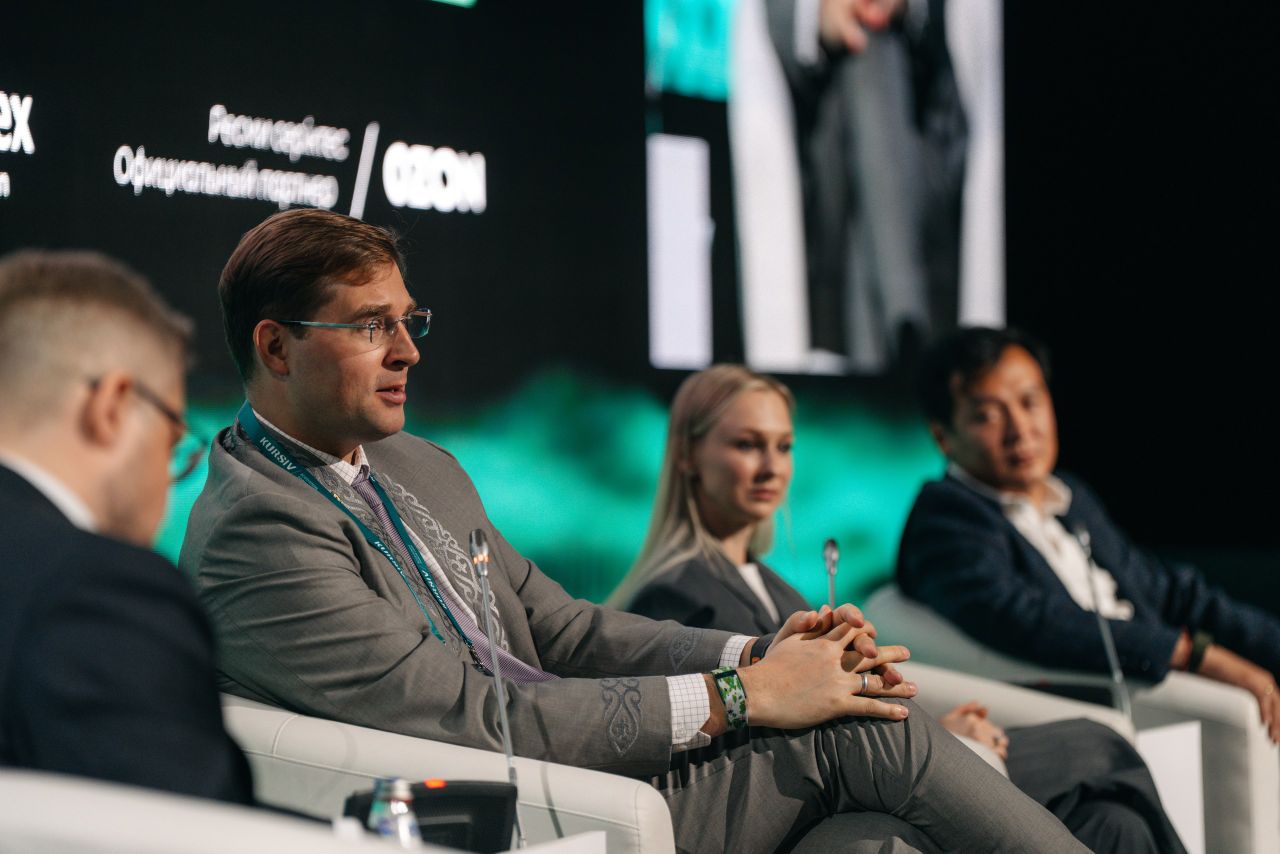
He noted that this is a crucial issue for all companies developing ecosystems. At the same time, a significant portion of business resources is spent on regulatory compliance:
“We have a huge number of people in our company whom we pay salaries, who are actually not working on the business. They are focused on ensuring that we comply with legislation...”
The end of “tiles” and the rise of AI interfaces
Timur Shalekenov, Head of Yandex Qazaqstan, spoke about the transformation of user interfaces and digital products.
He stated that traditional super app interfaces are becoming outdated:
“I see our Yandex GO interface being copied in some markets, but I still believe that this whole ‘tiles’ story is already outdated”
According to him, the next stage will be AI-driven interfaces and voice assistants:
“We see an alternative — we have one million active ‘Alices’ plugged in across the country. It is much more convenient for people to solve tasks through a voice interface, in dialogue mode. I believe that in the near future, the entire internet will be reinvented. The time of living or almost living assistants has come”
He also addressed the sensitive issue of taxi pricing and market dynamics:
“When there was a lot of discussion about taxi prices rising during rain, it was important for us to show the regulator how our algorithms work. At 6 p.m. on a Friday in Almaty, taxis are ordered much more often than at 3 a.m. on a Saturday”
He warned about the risks of populist decisions:
“It is easy to promote a populist idea that all taxi drivers should earn one and a half, two, three or five thousand tenge every hour. But this will shift all costs onto the consumer. Unfortunately, the entire logic of a marketplace — supply and demand — can be broken by such initiatives”
An ecosystem is not always “everything in one app”
Natalia Boer from Ozon highlighted that the government is currently reshaping the rules of the game. According to her, new tax requirements regarding marketplace data will become an additional burden for businesses.
At the same time, Ozon in Kazakhstan is focusing not on building a banking core, but on developing its marketplace and infrastructure. The company has already invested more than 80 billion tenge in logistics.
Boer stressed that an ecosystem does not necessarily mean combining all services into a single app. In fact, users may feel overwhelmed when one platform offers everything at once — from taxis to kitchenware to shoes.
First panel: choice and regional growth
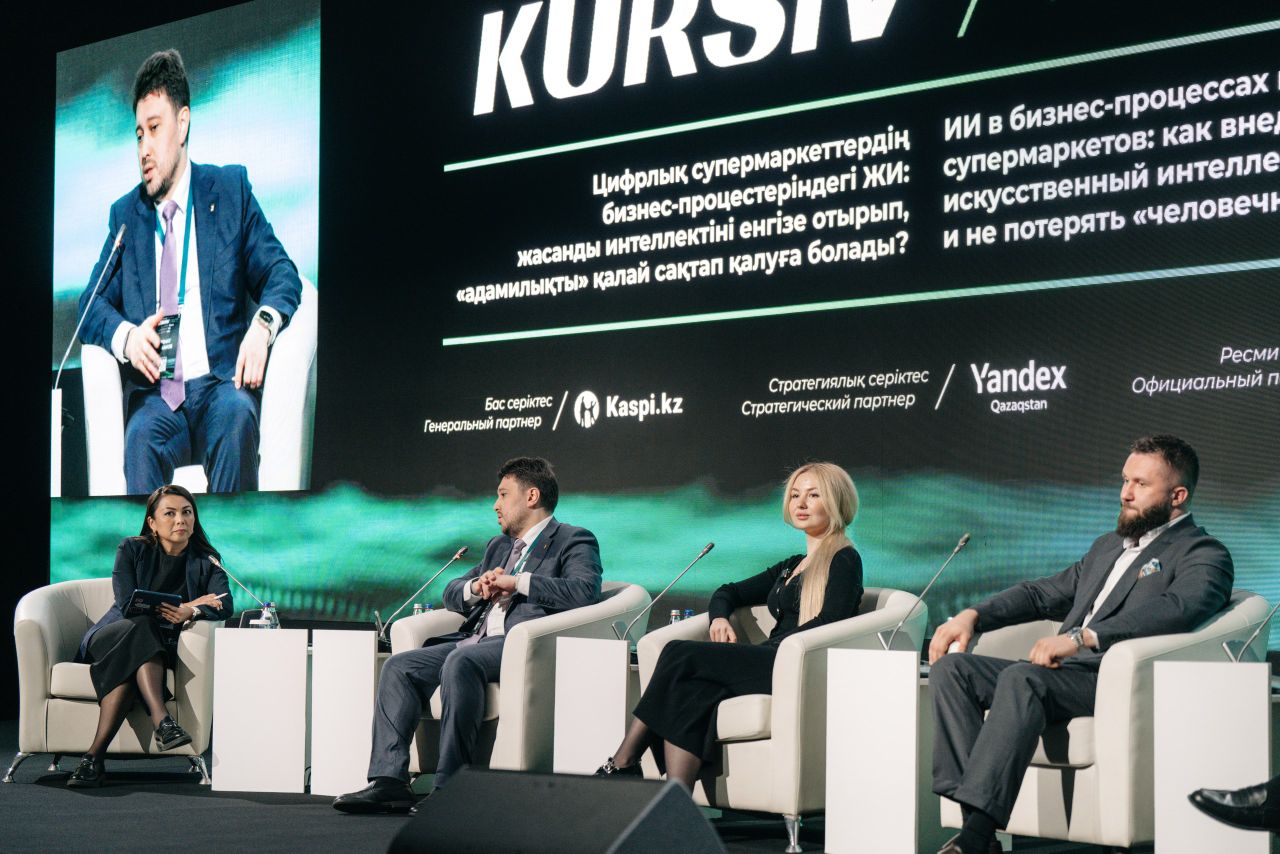
The first panel on the future of super apps featured Vyacheslav Kim, Arshin Sultangazy and Alexander Nagorny.
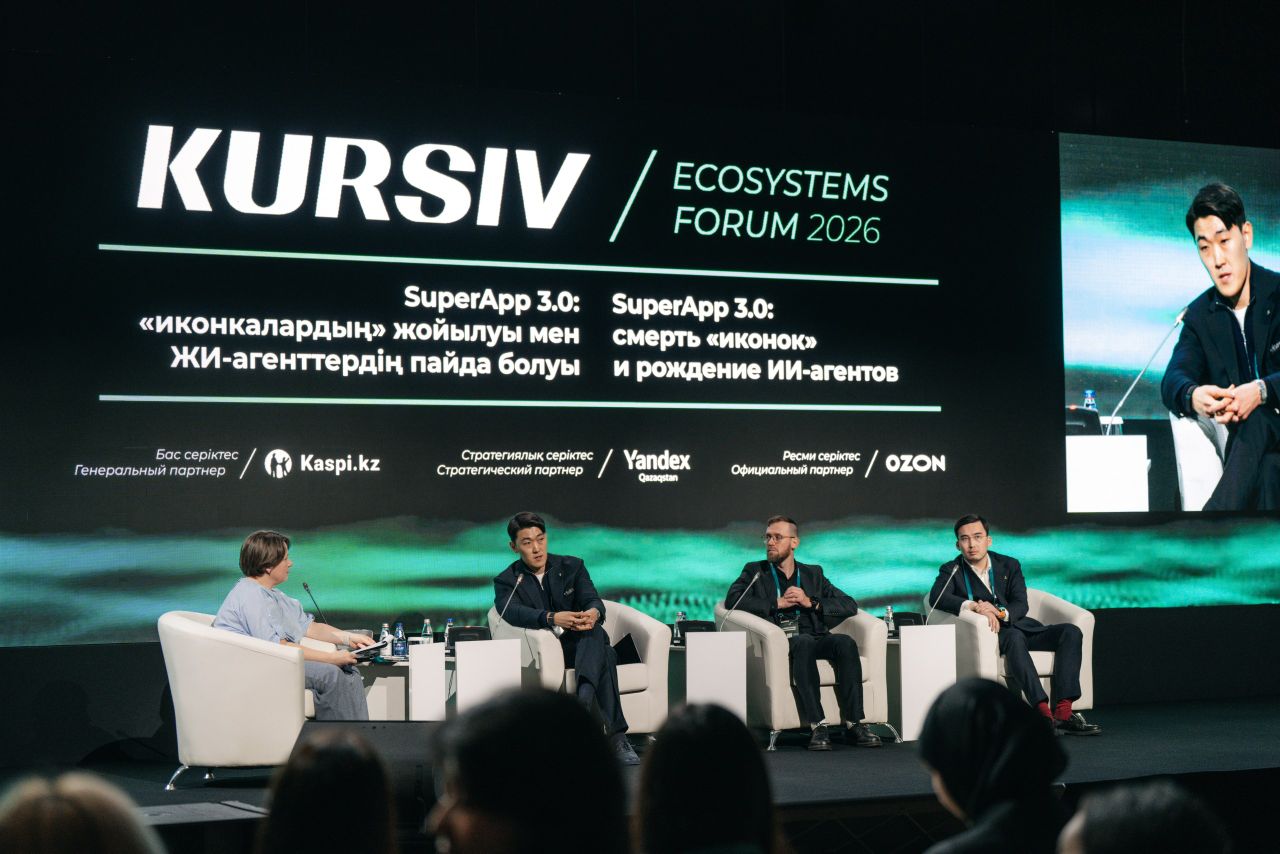
Alexander Nagorny emphasized that recommendation systems should not impose choices, but preserve user freedom.
Arshin Sultangazy pointed out that one of the key growth opportunities for banks lies in regional markets, which he described as a potential “blue ocean”.
Second panel: AI and data center economics
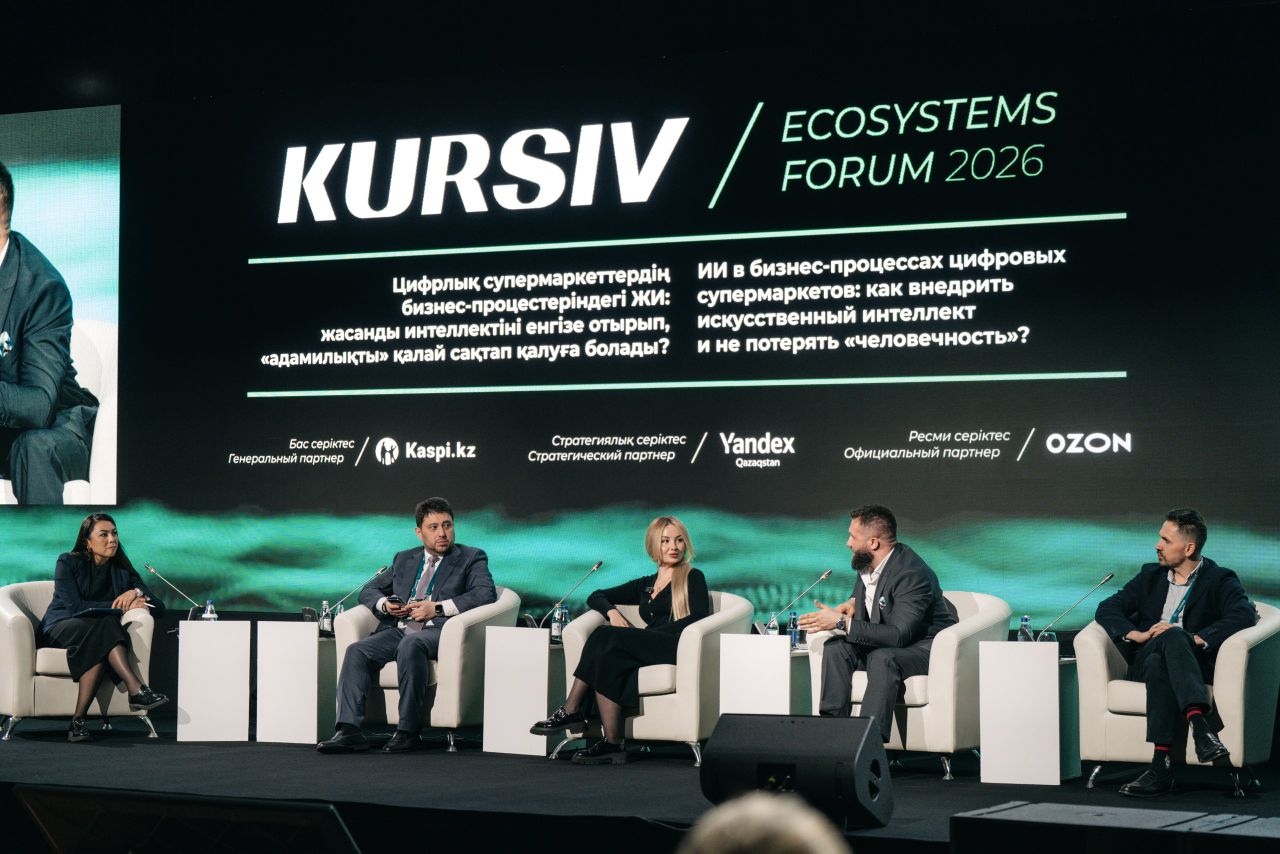
The second panel focused on the practical implementation of AI and the economics of data centers.
Speakers included Renat Tukanov, Sabina Nurlybayeva, Vladislav Minkevich and Alexey Sharavar.
The discussion covered the growing importance of computational power, infrastructure development and the role of data centers as the backbone of the digital economy.
A market entering a new phase
Kursiv Ecosystems Forum 2026 clearly demonstrated that Kazakhstan’s digital ecosystem market has moved into a new stage.
This stage is defined by:
- competition between interfaces
- the rise of the trust economy
- increasing regulatory pressure
- and a growing struggle for a more demanding user
Users are becoming harder to impress, and companies are being forced to rethink their strategies — from product design to infrastructure investments.
The forum’s general partner was Kaspi.kz, with Yandex Qazaqstan as strategic partner and Ozon as official partner.
Media support was provided by Kolesa Group, Baribar, Channel 7, Liter.kz, Prodengi, 365info, Bluescreen, Profit.kz, Aikyn, Turkistan, DKNews, ER10media, AlemInform, Bizmedia and Optimism.kz.
The forum in Almaty became a clear reflection of the current state of the market — complex, competitive and rapidly evolving.