
Central Asia is stepping into a new phase of climate action — one that moves beyond promises and into real money, real projects, and real change, DKNews.kz reports.
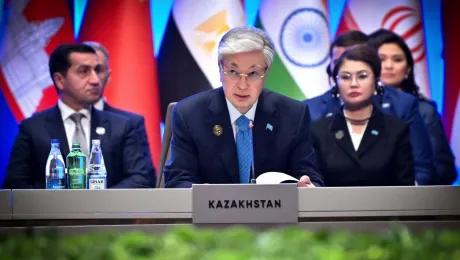
At a high-level ministerial roundtable held during a regional environmental summit in Kazakhstan, leaders, global institutions, and climate funds gathered to tackle a critical question: how to turn climate ambitions into bankable investments that can reshape the region’s future.
The meeting, supported by the Green Climate Fund and the United Nations Development Programme, signaled a shift in tone. This was not just another discussion about sustainability — it was about building a pipeline of projects that investors are ready to fund.
A Region Facing Shared Risks — and Shared Opportunities
Central Asia is one of the world’s most climate-vulnerable regions. Melting glaciers, water scarcity, desertification, and extreme weather events are already reshaping economies and livelihoods.
Kazakhstan’s Minister of Ecology, Yerlan Nysanbayev, made it clear: no country in the region can tackle these challenges alone.
Instead, the focus is on cooperation — aligning policies, creating investment-friendly conditions, and scaling up nature-based solutions like reforestation and land restoration.
But here’s the key shift: climate action is no longer framed as a cost.
It’s being positioned as an economic driver.
 Photo: UNDP Kazakhstan / Iris Mambur
From Climate Promises to Real Money
One of the strongest messages came from Haoliang Xu, a senior leader at the UNDP. His point was blunt: climate commitments mean little without investment mechanisms to back them up.
The real challenge is bridging that gap.
That means:
- Turning ideas into structured, investment-ready projects
- Connecting environmental goals with economic growth
- Building cross-border initiatives that attract large-scale funding
In simple terms: climate projects must start making financial sense — not just environmental sense.
This marks a fundamental change in thinking. Governments are no longer just asking what should we do? but how do we fund it at scale?
Why Investors Still Hesitate
Despite growing urgency, climate investments in Central Asia face several bottlenecks:
- Weak or fragmented project pipelines
- Limited coordination between ministries
- High perceived risks for private investors
- Lack of clear financial structures
This is where institutions like the Green Climate Fund come in.
As the world’s largest dedicated climate fund, it plays a crucial role in “de-risking” projects — making them more attractive for both public and private investors.
Its approach goes beyond funding. It helps countries:
- Build institutional capacity
- Design long-term strategies
- Develop credible investment frameworks
And with over $19 billion already committed globally, its influence is significant.
 Photo: UNDP Kazakhstan / Iris Mambur
Banks Step In: Financing the Transition
The second half of the discussion brought in major financial players, including:
- Asian Development Bank
- European Bank for Reconstruction and Development
- World Bank
- Islamic Development Bank
- Eurasian Development Bank
Their message was clear: the money exists.
But it flows only where projects are structured, coordinated, and scalable.
In other words, Central Asia doesn’t lack funding — it lacks ready-to-invest opportunities.
The Next 12 Months: A Critical Window
Ministers from across the region outlined priority investment areas for the coming year. While specifics vary by country, the focus is consistent:
- Renewable energy expansion
- Water management systems
- Climate-resilient agriculture
- Ecosystem restoration
- Sustainable infrastructure
More importantly, the emphasis is now on execution.
Not long-term visions, but projects that can move forward in the medium term.
 Photo: UNDP Kazakhstan / Iris Mambur
A Turning Point for the Region
What makes this moment different is the level of alignment.
Governments, international organizations, and financial institutions are no longer working in parallel — they’re beginning to move in sync.
There’s a growing understanding that:
- Climate risks are regional
- Investments must be cross-border
- Cooperation reduces costs and risks
And perhaps most importantly — that economic growth and climate action can go hand in hand.
The Bigger Picture
Central Asia is quietly positioning itself as a new frontier for climate investment.
Not because it has solved its challenges — but because it’s starting to approach them differently.
With stronger coordination, clearer pipelines, and growing support from global partners, the region is laying the groundwork for something bigger:
A shift from fragmented projects to a systematic climate investment ecosystem.
If successful, this could transform not just how Central Asia responds to climate change — but how it grows its economy in the decades ahead.
And for investors watching emerging markets, that’s a story worth paying attention to.