
As part of International Coaching Week ICF Kazakhstan held in Almaty, which brought together more than 200 representatives of business, education, the corporate sector, and the professional coaching community, international expert Jihane Labib, Chair of ICF Professional Coaches and member of the global Board of Directors of the International Coaching Federation, MCC ICF, ACTC ICF, MP EMCC - delivered a keynote address. In an interview with Business Kazakhstan, she spoke about the transformation of leadership in the age of artificial intelligence, the evolving role of coaching in times of global uncertainty, and why humanity, empathy, and emotional intelligence are becoming the key competencies of the future.
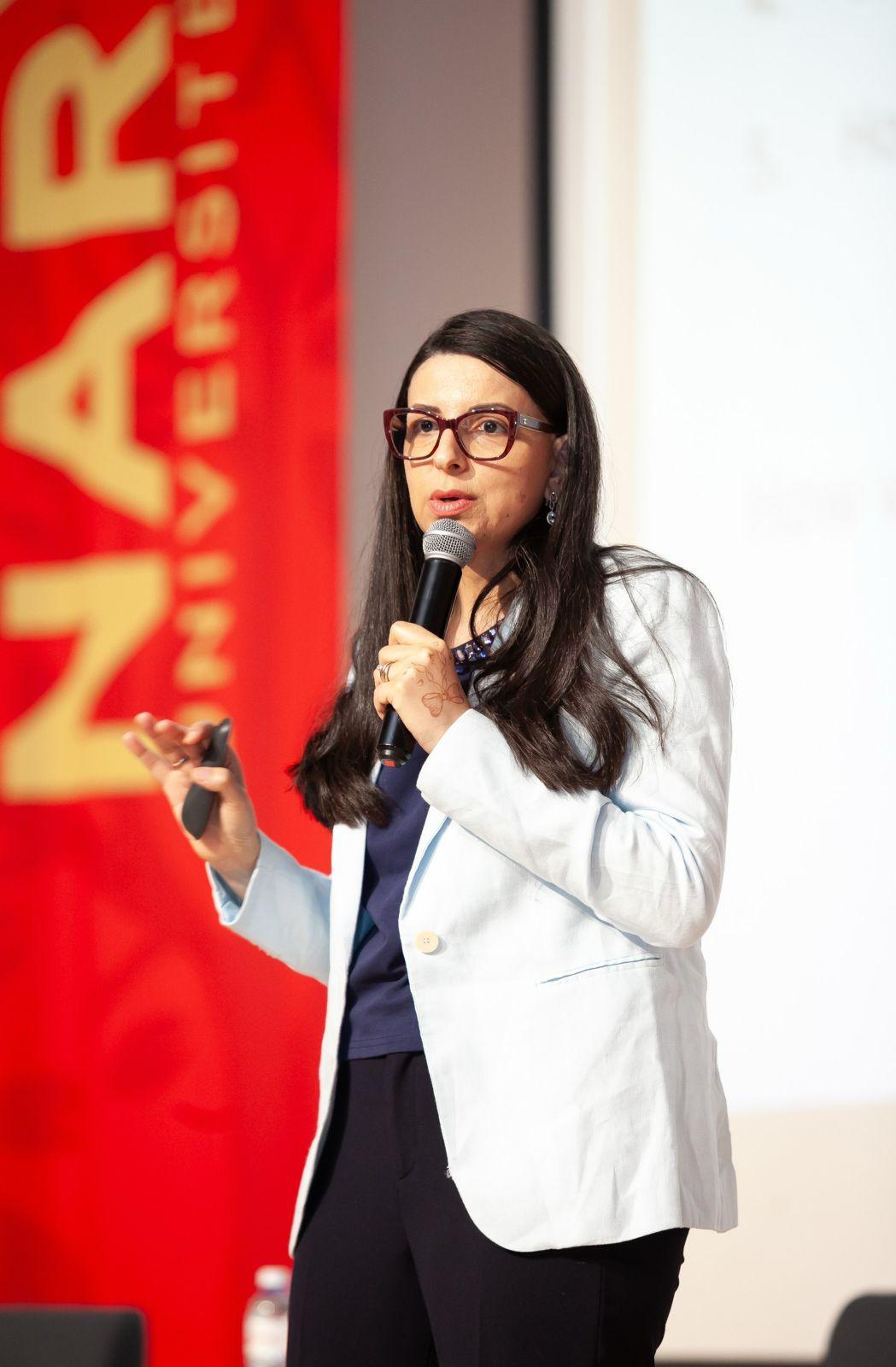
International Coaching Week 2026, held in Almaty at Narxoz Business School, became one of the largest professional events organized by the International Coaching Federation in Central Asia. The conference brought together international experts, business leaders, HR professionals, corporate representatives, and professional coaches to discuss sustainable leadership, organizational culture, human potential, and the impact of artificial intelligence on the modern world.
One of the forum’s key speakers was Jihane Labib, Chair of ICF Professional Coaches and member of the global ICF Board of Directors, MCC ICF, ACTC ICF, MP EMCC, and an executive and team coach with extensive international experience. Her presentation, “ICF Global Vision: Coaching in the Age of AI,” focused on the evolution of coaching and leadership amid rapid digital transformation.
In our conversation, Jihane Labib shared her perspective on the future of leadership, the importance of coaching culture, emotional intelligence, and meaningful human interaction in a world increasingly shaped by advanced technologies.
- You are visiting Kazakhstan and the CIS countries for the first time. What are your impressions of our region in terms of leadership culture and readiness for change?
- It has now been several years since I first became familiar with the CIS region. Returning this time with ICF Kazakhstan during International Coaching Week, what strikes me most is the visible evolution of the region: rapid development, growing international openness, and increasing interest in human-centered leadership, coaching, innovation, and artificial intelligence. I also see a growing awareness of the importance of developing people, collaboration, and coaching cultures within organizations, which strongly aligns with the work promoted globally by the International Coaching Federation.
- Today you are speaking about the transformation of coaching in the era of technology and artificial intelligence. In your view, how is the role of the coach changing in the modern world?
- The role of the coach is evolving significantly. Today, coaches are not only supporting performance, but also helping people build awareness, adaptability, emotional intelligence, collaboration, and the ability to navigate complexity in a fast-changing world shaped by technology and AI. Through research, ethics, standards, and professional competencies, the International Coaching Federation continues to strengthen the role of coaching as a strategic support system for leaders, teams, educators, and organizations.
- Why is the topic of sustainable leadership becoming one of the key priorities for business and society today?
- Sustainable leadership has become a priority because organizations are expected to create long-term impact, not only financial performance. After global crisis and constant uncertainty, leaders increasingly understand that performance, well-being, ethics, resilience, and collaboration must go hand in hand. Today, coaching also helps organizations proactively support employee well-being, prevent burnout, and create healthier and more sustainable work environments. This is why team coaching and coaching cultures are becoming more important within organizations. The International Coaching Federation strongly advocates for human-centered leadership, coaching cultures, collaboration, and sustainable people development.
- In your opinion, what qualities are especially important for leaders in conditions of constant uncertainty and rapid change?
- In times of rapid change, the most important qualities are adaptability, emotional intelligence, self-awareness, courage, and the ability to learn continuously. Leaders today must guide people through uncertainty while strengthening trust, teamwork, and collective intelligence. Coaching approaches are helping organizations move from overly reactive leadership models toward more collaborative, inclusive, and resilient ways of working. Through its global initiatives and competencies, the International Coaching Federation actively promotes these leadership and team development approaches.
- Can coaching help people maintain resilience, emotional balance, and the ability to make decisions under pressure and overload?
- Yes, coaching can strongly support resilience and emotional balance. It creates a reflective space that helps people manage pressure, clarify priorities, strengthen self-awareness, and make more conscious decisions during uncertainty and overload. More organizations are now integrating coaching not only as a performance tool, but also as part of broader strategies for well-being, engagement, retention, and healthier workplace cultures — areas that the International Coaching Federation also continues to advocate globally.
- How can we preserve humanity, empathy, and genuine communication in a world where more and more processes are moving into the digital environment?
- We preserve humanity by using technology consciously. Digital tools should support human connection, not replace it. Empathy, listening, trust, and authentic conversations remain essential, especially in highly digital environments. This is why coaching competencies are becoming increasingly important. The new ICF perspectives around AI and coaching highlight the importance of the ethical use of technology, critical thinking, emotional awareness, inclusion, and maintaining meaningful human relationships even in digital spaces.
- In your opinion, what key skill will become the defining skill for future leaders?
- I believe the defining skill for future leaders will be adaptive human intelligence — the ability to combine emotional intelligence, learning agility, ethical thinking, cultural awareness, and strategic vision in rapidly changing environments. Future leaders will also need strong coaching skills, including deep listening, powerful questioning, empathy, collaboration, and the ability to develop others. These human-centered competencies, increasingly highlighted by the International Coaching Federation in the AI era, will become essential for leading effectively in complex and multicultural environments.