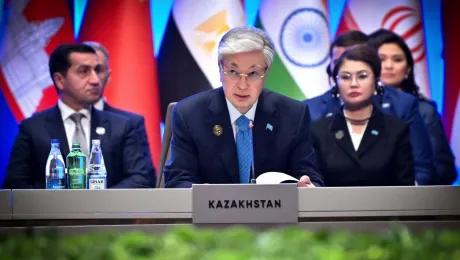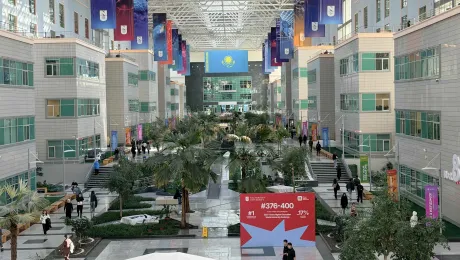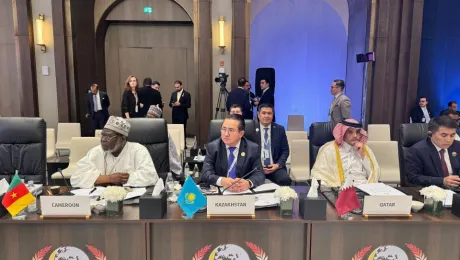


On June 15, Almaty hosted the latest meeting of special representatives on Afghanistan in the “Central Asia + European Union” format, DKNews.kz reports.
Officials from Central Asian countries, the European Union, and international organizations gathered to discuss Afghanistan’s current situation, regional security, humanitarian challenges, and opportunities for future cooperation.
At first glance, the meeting appeared to be another diplomatic consultation. However, its significance extends beyond routine discussions. The gathering reflected a broader shift in how both Central Asia and the European Union are approaching Afghanistan nearly five years after the Taliban returned to power.
A Format That Has Evolved Since 2021
The first meeting of EU and Central Asian special representatives on Afghanistan was held virtually in April 2021, before the Taliban regained control of the country.
At that time, discussions focused primarily on supporting the peace process and encouraging regional cooperation.
Following the political changes in Kabul in August 2021, the format gradually evolved.
Subsequent meetings were held in:
- Almaty (May 2022)
- Brussels (January 2023)
- Ashgabat (May 2023)
- Bishkek (February 2024)
- Dushanbe (February 2025)
- Brussels (November 2025)
The return of the format to Almaty reflects both Kazakhstan’s growing diplomatic role and the increasing importance of regional perspectives in shaping international policy on Afghanistan.
The EU’s Afghan Dilemma
The European Union continues to maintain a policy of non-recognition toward the Taliban government and regularly raises concerns about human rights, political inclusivity, and the rights of women and girls.
At the same time, Europe remains one of Afghanistan’s largest humanitarian donors.
According to the European Commission:
- Approximately €2.1 billion has been allocated for humanitarian operations in Afghanistan since 1994.
- More than €161 million was allocated for humanitarian assistance in 2025.
- Another €162 million is planned for 2026.
Importantly, this support is delivered through humanitarian organizations and international partners rather than through Taliban government structures.
This illustrates a growing reality: while political distance remains, practical engagement continues.
Beyond the Recognition Debate
The central question facing international actors today is no longer whether they should engage with Afghanistan.
Engagement already exists through humanitarian assistance, diplomatic channels, international organizations, and development initiatives.
Instead, the challenge is whether this engagement can evolve into a sustainable long-term strategy without formal recognition of the Taliban government.
The discussions in Almaty reflected a growing understanding that Afghanistan cannot be addressed solely through the framework of recognition versus isolation.
Nearly five years after the change of power in Kabul, many policymakers acknowledge that isolation has produced limited political results while reducing opportunities to influence developments on the ground.
Why Central Asia Matters
For Central Asian countries, Afghanistan is not a distant geopolitical issue but a direct regional reality.
Their priorities include:
- Border security
- Trade and transit
- Energy cooperation
- Migration management
- Humanitarian assistance
- Water resources
- Preventing regional destabilization
Unlike many Western countries, Central Asian states have maintained practical engagement with Afghanistan throughout the post-2021 period.
As a result, the region has accumulated valuable experience in balancing security concerns with economic and humanitarian interests.
For the European Union, cooperation with Central Asia offers an opportunity to understand Afghanistan through a broader regional lens rather than exclusively through political and human rights considerations.
A More Practical European Role
Participants in the Almaty discussions highlighted several areas where the European Union could play a constructive role without altering its position on formal recognition.
Potential areas of cooperation include:
- Healthcare and vaccination programs
- Maternal and child health initiatives
- Food security projects
- Water management and climate adaptation
- Rural development
- Demining efforts
- Restoration of basic infrastructure
- Educational and professional training programs
- Humanitarian logistics through Central Asia
- Combating drug trafficking and cross-border crime
These initiatives would require technical interaction with Afghanistan’s de facto authorities while remaining separate from political recognition.
Kazakhstan’s Expanding Afghan Agenda
For Kazakhstan, Afghanistan has become an increasingly important element of foreign policy.
The country has consistently promoted humanitarian assistance, educational programs, trade cooperation, and support for United Nations initiatives.
A significant step came in June 2025 when Kazakhstan established the position of Special Representative of the President for Afghanistan. The role was assigned to diplomat and analyst Yerkin Tukumov.
The decision signaled that Afghanistan is no longer viewed solely through the prism of security concerns but as a long-term strategic issue requiring continuous diplomatic engagement and international coordination.
The Growing Importance of the UN Regional Centre
Particular attention during the discussions was given to the United Nations Regional Centre for the Sustainable Development Goals for Central Asia and Afghanistan in Almaty.
The centre was created following initiatives proposed by President Kassym-Jomart Tokayev at the United Nations and is expected to become an important platform for coordinating international efforts in the region.
Notably, the meeting itself was held at the UN Regional Centre, underlining its growing role in discussions related to Afghanistan.
Participants emphasized that Afghanistan is increasingly viewed not only through the prism of security risks but also as part of a broader agenda that includes:
- Sustainable development
- Regional connectivity
- Humanitarian cooperation
- Economic integration
- International coordination
A Shift Toward Managed Engagement
Security challenges remain.
Concerns related to terrorism, drug trafficking, illegal migration, economic instability, and humanitarian crises continue to shape international discussions.
At the same time, many countries increasingly recognize opportunities linked to:
- Trade
- Transit routes
- Transport corridors
- Energy cooperation
- Agricultural development
- Humanitarian logistics
This reflects a gradual shift away from viewing Afghanistan solely as a source of threats and toward seeing it as an important part of the broader regional architecture.
Why This Matters
The Almaty meeting did not signal a move toward recognizing the Taliban government.
Its significance lies elsewhere.
The discussions highlighted the emergence of a more nuanced international approach based on maintaining political distance while preserving practical cooperation.
For the European Union, this offers a path toward a more effective and realistic Afghan policy. For Central Asia, it demonstrates the region’s growing influence in shaping international discussions on Afghanistan.
For Kazakhstan, the meeting reinforced its role as a regional diplomatic hub and underscored the increasing importance of the Afghan dimension within its long-term foreign policy strategy.
Ultimately, the significance of the Almaty meeting lies in its effort to move the conversation beyond the binary choice of recognition or isolation and toward a framework of managed engagement focused on stability, development, and regional cooperation.