
A landmark decision has put one of Kazakhstan’s most remarkable spiritual landscapes on the global map.
Five centuries-old underground and rock-carved mosques in the Mangystau region have officially been inscribed on the UNESCO World Heritage List, marking Kazakhstan’s first successful cultural inscription in more than two decades, DKNews.kz reports.
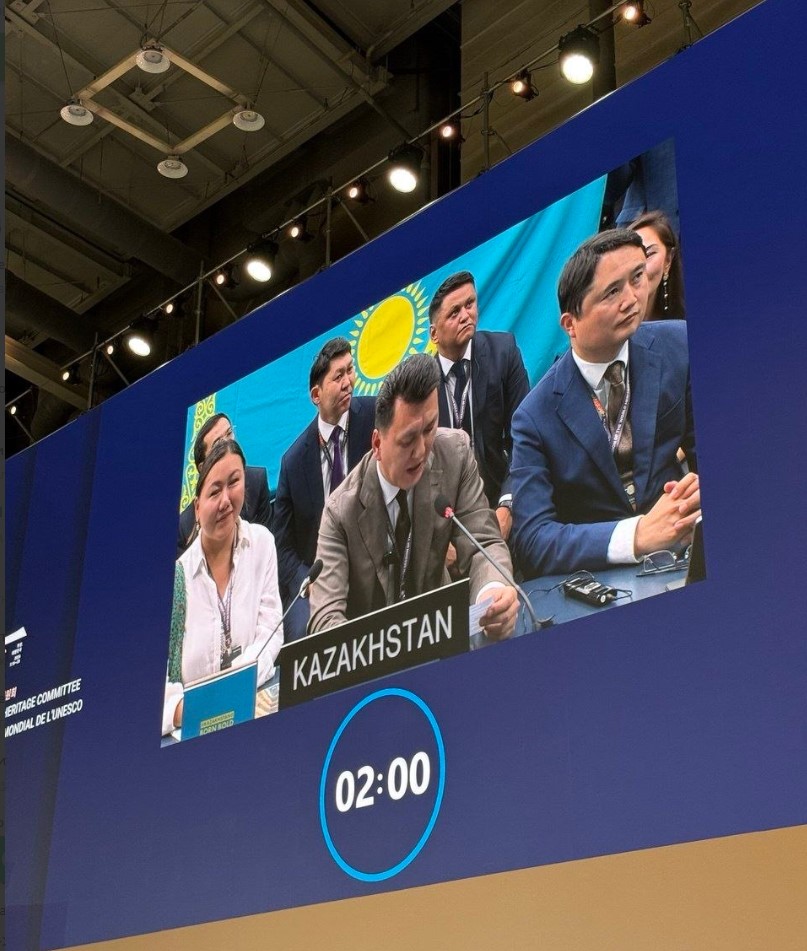
The decision was adopted during the 48th session of the UNESCO World Heritage Committee in Busan, South Korea, giving international recognition to the unique religious and architectural heritage of western Kazakhstan.
The newly listed sites include Beket Ata, Shopan Ata, Karaman Ata, Shakpak Ata, and Sultan Upi — sacred places that have long attracted pilgrims from across Central Asia but remained largely unknown to the wider world.
A historic moment for Kazakhstan
State Adviser Erlan Karin described the decision as a milestone for the country, emphasizing that the nomination was launched with the direct support of President Kassym-Jomart Tokayev.
"At the initiative and with the direct support of the Head of State Kassym-Jomart Tokayev, the rock mosques of Mangystau (Beket Ata, Shopan Ata, Karaman Ata, Shakpak Ata, Sultan Upi) have been inscribed on the UNESCO World Heritage List. This decision was adopted today at the 48th session of the World Heritage Committee in Busan."
According to Karin, the inscription ends a 22-year gap since Kazakhstan last added a cultural site to UNESCO's prestigious list. The Mausoleum of Khoja Ahmed Yasawi was inscribed in 2003, followed by the Petroglyphs within the Archaeological Landscape of Tamgaly in 2004.
He noted that efforts to secure international recognition for Kazakhstan's cultural heritage gained new momentum in recent years. At the third meeting of the National Kurultai in Atyrau in 2024, President Tokayev instructed the government to begin the nomination process for the Mangystau rock mosques.
More than places of worship
Carved into limestone cliffs and hidden beneath the desert landscape, the Mangystau rock mosques represent a unique blend of architecture, spirituality and education that has shaped the region for centuries.
Speaking at the UNESCO session, Karin stressed that these monuments served a much broader purpose than religious worship.
"The rock mosques of Mangystau were not only places of prayer and worship but also centers of education and enlightenment of their time. These rocks preserve the historical memory of our people and the legacy of our ancestors."
He added that UNESCO's decision recognizes the sites as an outstanding example of centuries-old spiritual, cultural and architectural traditions.
A boost for tourism and international recognition
The UNESCO designation is expected to significantly raise the international profile of Kazakhstan and attract more travelers seeking cultural and historical destinations.
According to Karin, the recognition will also create new opportunities for infrastructure development around the heritage sites while encouraging sustainable tourism in the Mangystau region.
"The inclusion of these historical sites on the UNESCO list will attract even greater attention from the international community to Kazakhstan, give new momentum to the development of domestic tourism and open opportunities for infrastructure projects."
More UNESCO nominations ahead
Kazakhstan is not stopping with Mangystau.
Karin said the government will continue working on additional UNESCO nominations in line with instructions issued by President Tokayev during successive National Kurultai meetings in Atyrau, Turkistan and Kyzylorda.
Among the sites and cultural treasures Kazakhstan plans to nominate are the Zharkent Mosque, renowned for being built entirely from wood, the Ascension Cathedral in Almaty, the Karatau petroglyphs, and Abai's "Words of Edification."
"This is only the beginning of major work... Our further efforts will be directed toward including the Zharkent Mosque, the Ascension Cathedral in Almaty, the Karatau petroglyphs, as well as Abai's 'Words of Edification' on UNESCO's lists."
With the recognition of the Mangystau rock mosques, Kazakhstan has secured one of its most significant cultural achievements in recent decades — one that not only preserves a unique spiritual legacy but also opens a new chapter for the country's global cultural presence and tourism industry.