


Air cargo is growing despite costly fuel. Global air cargo demand rose 3.9% year on year in July, even as jet fuel prices stood 56.9% above their level a year earlier, DKNews.kz reports.
The latest figures were published by the International Air Transport Association, IATA. For Kazakhstan, the numbers are particularly relevant as the country seeks to strengthen Astana and Almaty as major cargo hubs between Europe and Asia.
Demand rose 3.9%, while capacity increased only 1.7%
In July 2026, global air cargo traffic, measured in cargo tonne-kilometers, or CTKs, increased by 3.9% compared with July 2025.
International operations performed even better, with demand rising 4.7%.
At the same time, available cargo capacity expanded by only 1.7%, while international capacity increased by 1.8%. The global cargo load factor rose by one percentage point to 46%.
The gap between demand and capacity matters commercially: airlines carried more freight without expanding available cargo space at the same pace.
North America showed the strongest regional result. Demand there rose 4.8%, while capacity fell by 1.5%.
European carriers recorded a 4.4% increase in demand, while Asia-Pacific airlines posted growth of 4.1%. Together, airlines in Asia-Pacific, Europe and North America accounted for more than 90% of the overall increase in global air cargo demand.
Jet fuel prices jumped 56.9% in a year
The biggest risk sits in another number.
Jet fuel prices increased 12.2% in July alone and were 56.9% higher than in July 2025, according to IATA’s July market data.
For air freight operators, that is a significant cost pressure because fuel remains one of the industry’s major operating expenses.
Higher cargo volumes therefore do not automatically translate into equally strong profit growth. If fuel prices remain elevated, airlines will have to balance operating costs, customer tariffs and aircraft utilization.
At the same time, IATA sees a supportive demand environment. Global trade rose 7.5% year on year, while the New Export Orders Index climbed to 50.0, its highest level in three months.
Dedicated freighters are gaining share
Another important shift is taking place inside the industry itself.
Dedicated cargo aircraft gained market share in July, while freight carried in the belly holds of passenger aircraft declined.
IATA said this may reflect stronger demand for larger or specialist shipments, as well as the greater operational flexibility that dedicated freighters can provide.
For Kazakhstan, this shift is particularly relevant.
The country is investing specifically in infrastructure designed for full-scale cargo aviation. Authorities have said that Astana, Almaty, Shymkent, Karaganda, Aktau and Aktobe already hold aviation hub status, while cargo development is included in national industry plans.
According to Kazakhstan’s Aviation Administration, around 173,000 tonnes of cargo moved through the country’s airspace in 2025, while roughly 50,000 tonnes were carried in the first four months of 2026.
Europe–Asia cargo has grown for 41 straight months
The most significant part of IATA’s data for Kazakhstan is the performance of individual trade lanes.
Air cargo traffic between Europe and Asia increased by 3.1% in July.
More importantly, the route has now recorded growth for 41 consecutive months.
The Europe–Asia corridor accounts for around 21.5% of the global air cargo market.
Asia–North America grew even faster, up 9.2%, extending its growth streak to six months.
Cargo traffic within Asia increased by 6.1%, marking 33 consecutive months of expansion.
The sustained growth of the Europe–Asia corridor gives Kazakhstan a potentially strong position. The country sits geographically between two of the world’s largest economic regions and is already investing in aviation hubs.
But geography alone does not guarantee cargo traffic.
Airlines choose airports based on handling costs, turnaround times, fuel availability, warehouse infrastructure, customs procedures and the ability to connect air freight with other modes of transport.
Gulf-linked routes fell by 14–16%
The opposite trend can be seen on routes connected to the Middle East.
Cargo traffic between Europe and the Middle East fell 16.1% year on year in July, marking a fifth consecutive month of decline.
The Middle East–Asia route contracted by 14.1%, also posting its fifth straight month of decline.
IATA linked disruptions on Gulf-related corridors to the conflict in the Middle East.
That adds another layer of uncertainty to global logistics and gives carriers additional reason to reassess the resilience of alternative routes.
IATA has not said that cargo will automatically be rerouted through Kazakhstan, so any claim that the country will directly capture those volumes would be premature.
Still, the disruption comes at the same time Kazakhstan is expanding its own cargo infrastructure.
Cargolux returned to Astana with plans for up to 14 flights a week
One of the most visible developments came this summer.
From June 1, major global cargo carrier Cargolux resumed operations through Astana International Airport, with the possibility of operating up to 14 flights per week.
At the initial stage, the flights are mainly technical stops for refueling and aircraft servicing.
The next step would have greater economic value for the airport: the parties are considering full commercial cargo operations involving loading and unloading in Astana.
That would allow Kazakhstan to earn not only from aircraft landings and servicing, but also from cargo handling itself.
Astana airport is set for a $1.1 billion investment
Infrastructure is already being prepared for that scenario.
Kazakhstan’s Ministry of Transport has announced an investment agreement worth $1.1 billion for the development of Astana airport.
The project includes a second runway, a third passenger terminal and a dedicated cargo terminal for freight handling.
Almaty is moving in the same direction. Its airport continues to develop cargo facilities, while long-term plans are aimed at strengthening its role as an international aviation hub.
That creates an unusual alignment: the global air cargo market is expanding at the same time Kazakhstan is increasing its capacity to serve it.
Kazakhstan will have to compete on more than geography
But IATA’s July figures also contain a warning.
“The outlook remains broadly positive, supported by manufacturing activity, export orders and global trade. However, higher fuel prices, geopolitical tensions and tariff uncertainty will need to be watched carefully,” said Marie Owens Thomsen, IATA’s Senior Vice President Sustainability and Chief Economist.
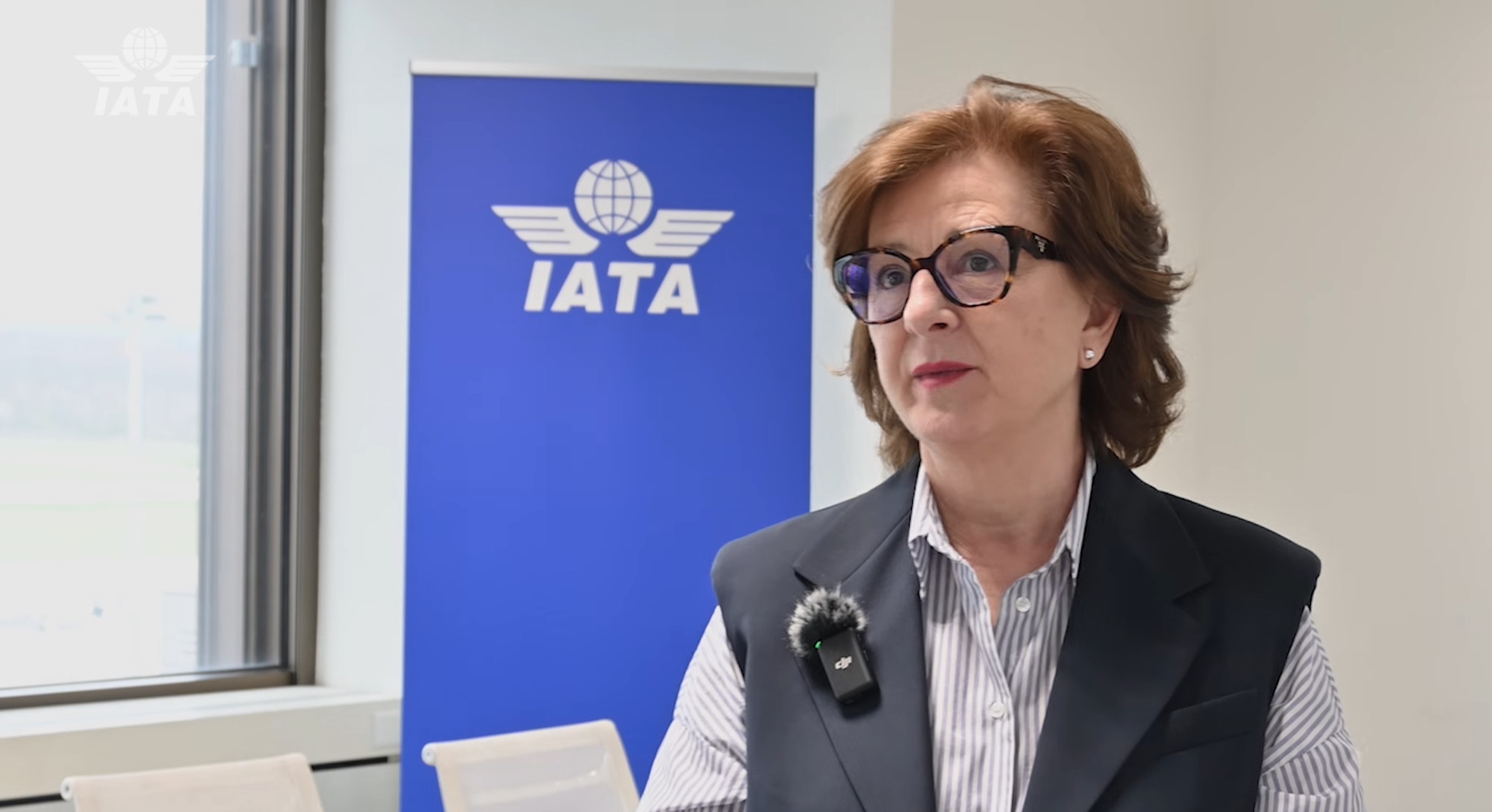
All three risks apply to Kazakhstan at the same time.
Higher fuel prices raise the cost of operating air routes. Geopolitical tensions can redirect some cargo flows while disrupting others. Tariff uncertainty affects the volume of goods that need to be moved urgently between continents.
For Kazakhstan, the main question is no longer whether the global air cargo market is growing. It already expanded by 3.9% in July.
The real question is how much of that growth Astana, Almaty and other Kazakh aviation hubs can capture.
We recently examined Kazakhstan’s push to become an aviation hub for Eurasia, including Cargolux’s growing presence in Astana, the arrival of new cargo operators and airport investments designed to handle more international freight.
The global market is now providing a fresh test of that strategy: the Europe–Asia air cargo corridor has been expanding for 41 consecutive months, while jet fuel prices have risen by almost 57% in a year.