

Borrowing costs may start easing. Kazakhstan’s central bank has cut its base rate to 16.25%, but a weaker inflation outlook for 2027 suggests that further reductions could be slower than borrowers and businesses might hope, DKNews.kz reports.
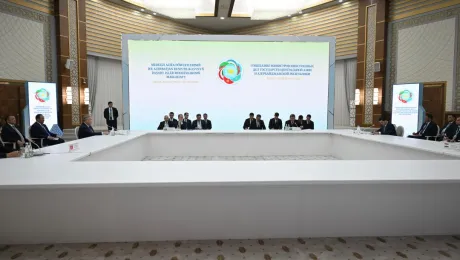
The Monetary Policy Committee of the National Bank of Kazakhstan (NBK) made the decision on September 4, 2026, setting the base rate at 16.25% with a corridor of ±1 percentage point. The central bank said the move was based on its latest forecasting round, updated macroeconomic estimates and the balance of inflation risks.
The rate is down, but cheaper loans will not arrive overnight
For households and companies, a lower base rate is generally a positive signal. It reduces one of the key benchmarks affecting the cost of money in Kazakhstan’s financial system.
But a move to 16.25% does not mean mortgage, car-loan or consumer-credit rates will fall by the same amount immediately.
The National Bank explains that monetary policy works through money-market rates, the exchange rate and broader financial conditions. The impact is transmitted gradually rather than on the day of a rate decision.
For borrowers, the practical effect is therefore likely to be incremental. Banks may gain more room to revise pricing on new loans if monetary conditions continue to ease, but their final rates also depend on funding costs and borrower risk.
Inflation has finally fallen below 10%
The main reason the NBK was able to cut the rate is a sustained slowdown in inflation.
Annual inflation fell to 9.8% in August, with the disinflationary process continuing for an 11th consecutive month. Food inflation slowed to 9.5%, non-food inflation to 11.4%, while services inflation declined to 8.9%.
Kazakhstan’s Bureau of National Statistics confirms that annual inflation eased from 10.2% in July to 9.8% in August.
The NBK attributed the slowdown in food inflation partly to lower fruit and vegetable prices and declining import prices. The stronger tenge, Kazakhstan’s national currency, also helped slow price increases for non-food goods.
For an economy that spent months dealing with double-digit inflation, moving below the 10% threshold gave the central bank room to ease monetary policy.
The bigger surprise is the weaker 2027 inflation outlook
The most consequential part of the September decision may not be the 16.25% rate itself.
The NBK kept its 2026 inflation forecast at 9–11%, but raised its forecast for 2027 to 6.5–8.5%, from an earlier range of 5.5–7.5%.
Both ends of the forecast range were therefore raised by one percentage point.
The central bank cited stronger external inflation, revised assumptions for regulated prices and a larger fiscal impulse.
For investors, businesses and borrowers, that matters because a slower return to low inflation gives the NBK less room to cut interest rates aggressively.
The central bank still expects inflation to stabilise close to its 5% target in 2028.
The National Bank is already warning against expecting rapid cuts
The September move does not establish an automatic rate-cutting cycle.
The NBK said favourable trends in current inflation and inflation expectations allowed it to lower the rate this time. But it added that stronger pro-inflationary risks — reflected in the revised 2027 forecast — have limited the room for further easing.
Future decisions will depend on incoming inflation data, domestic demand, inflation expectations, regulated prices and the scale of fiscal and quasi-fiscal stimulus.
For markets, the message is fairly clear: Kazakhstan has started to reduce the cost of money, but the central bank is not signalling a rapid descent toward much lower rates.
Fuel is replacing VAT and utility tariffs as a bigger concern
Inflation expectations among Kazakh households have also shifted.
Expected inflation one year ahead fell to 12.1% in July from 13.4% in June. The NBK linked the improvement to reduced public concern over higher value-added tax, housing and utility tariffs, and food prices.
At the same time, fuel prices are becoming a stronger source of concern.
The central bank lists future movements in fuel prices and utility tariffs among the main domestic inflation risks, alongside unstable inflation expectations and stronger domestic demand.
For businesses, fuel is especially important because higher transport costs can feed into logistics, retail prices and service costs across the economy.
Middle East tensions remain a risk for Kazakhstan
Some of the inflation risks are beyond Kazakhstan’s borders.
According to the NBK, the continuing conflict in the Middle East is keeping global energy prices elevated and adding to external inflationary pressure. Global food prices have also risen somewhat, driven by grains and vegetable oils.
The central bank also pointed to persistent inflation in Russia amid disruptions in its fuel market. In the European Union, inflation has accelerated slightly because of energy prices, while US inflation has slowed but remains above target.
For Kazakhstan, these developments matter through import prices, energy markets and exchange-rate channels.
That external exposure is one reason the NBK remains cautious despite domestic inflation moving below 10%.
Kazakhstan still expects GDP growth of 4.5–5.5%
The central bank left its forecast for Kazakhstan’s economic growth in 2026 unchanged.
Real GDP is expected to expand by 4.5–5.5%, supported by strong investment activity, quasi-fiscal stimulus programmes and stable consumer demand.
This creates a delicate policy balance.
High interest rates help contain inflation but make borrowing more expensive for companies and households. Cutting too quickly, however, can strengthen demand and add fresh pressure to prices.
The September decision therefore looks more like a cautious easing step than a decisive shift toward cheap money.
Depositors may feel the change before borrowers do
Lower policy rates matter not only for people taking out loans.
If the base rate keeps falling, banks have less incentive to maintain exceptionally high returns on deposits. Deposit pricing can therefore respond faster than retail lending rates.
For savers, this means Kazakhstan’s period of unusually high deposit yields may gradually become harder to sustain if monetary easing continues.
For borrowers, the opposite process could take longer: cheaper funding must work its way through the banking system before lower rates become visible across new consumer and business loans.
October 23 is now the key date for markets
The next scheduled base-rate decision will be announced on October 23, 2026, at 12:00 Astana time.
Before that, the National Bank will publish its full Monetary Policy Report on September 9, providing more detail on the assumptions behind its forecasts and the September rate cut.
The September decision has already delivered one clear signal to international investors and Kazakh borrowers alike: the base rate has fallen to 16.25%, but inflation has not been defeated.
The more difficult question is whether the NBK can keep cutting rates while inflation remains close to 10% and its 2027 forecast is moving in the wrong direction.
We previously looked at how falling interest rates could affect Kazakhstan’s high-yield deposit market. The September 4 decision adds another reason for banks to reassess both deposit and lending conditions as Kazakhstan’s monetary cycle gradually shifts.