In an exclusive Senior Advisor interview, Mr. Alex Matrsson, the Swedish Pracademic and International Business Strategist, articulates that sovereign investment in post-war reconstruction is not simply a question of deploying capital into damaged economies, but of determining how one country's sovereign resources can help shape the economic and strategic recovery of another country emerging from conflict. Unlike conventional international investment, such engagement takes place where infrastructure may be destroyed, institutions weakened, financial systems disrupted and investor confidence severely constrained, while political, security and geopolitical considerations can materially influence the investment environment. For the investing state, the opportunity therefore extends beyond financial returns to include economic partnerships, diplomatic relationships, regional cooperation and longer-term strategic interests. The central challenge is to ensure that sovereign capital strengthens recovery without creating dependency, substitutes for private investment or undermines local ownership. Mr. Matrsson argues, "The question is not how much money can be invested, but what the capital makes possible that would otherwise not happen."
For a sovereign investor, this distinction is fundamental. Capital originates in one country, but its deployment takes place within the political, economic and institutional environment of another, creating responsibilities and opportunities that extend well beyond any individual project. Mr. Matrsson maintains, "Sovereign investment abroad should be judged not only by what it builds, but by what it enables, what relationships it strengthens and what choices it creates for both countries." The investment may generate financial returns while also strengthening diplomatic ties, deepening regional cooperation, creating strategic partnerships, establishing commercial corridors, supporting international coalitions and enhancing the investing country's position within an evolving international economic and geopolitical landscape.
Additionality as the Central Investment Discipline
According to Mr. Matrsson, the starting point for sovereign investment in a post-war country should be the counterfactual: what would happen if the investment were not made? This determines whether sovereign capital is genuinely additional or merely replacing capital that could otherwise have been provided by commercial investors, domestic institutions or other international partners. Additionality may arise when sovereign capital enters where uncertainty is too high for private investors, accelerates reconstruction, supports strategically important infrastructure, transfers knowledge and technology, or strengthens institutions and domestic markets. Mr. Matrsson states, "Additionality must be demonstrated, not assumed."
This principle also establishes a clear distinction between catalytic investment and financial substitution. If a project would proceed without sovereign participation, public capital may simply displace other sources of financing. If sovereign participation changes the underlying conditions sufficiently to attract private investors, domestic businesses or institutional capital, its role can become genuinely catalytic. Mr. Matrsson puts the principle directly: "The objective should be acceleration rather than substitution." This requires continuous operational analysis of what the sovereign investor is uniquely positioned to accomplish, tactical assessment of whether that role remains necessary, and strategic analysis of whether the investment is strengthening the receiving country's capacity to attract and sustain broader investment independently.
Strategic Purpose, National Interest and Economic Sovereignty
Mr. Matrsson emphasises that a sovereign government must establish why it is investing abroad and why sovereign capital is the appropriate instrument. Commercial returns, strategic interests, development objectives, diplomatic priorities and broader national interests may coexist, but they should not be confused. Sovereign capital has an opportunity cost because resources committed internationally could be deployed elsewhere. At the same time, investment in a post-war country can create tangible and intangible gains that conventional financial analysis may not fully capture. Mr. Matrsson argues, "A sovereign investment thesis should explain both the economic value and the strategic value of the relationship it creates."
For the receiving post-war country, external sovereign capital also raises questions of ownership, governance, local participation, technology transfer, economic autonomy and long-term dependency. Mr. Matrsson distinguishes economic sovereignty from autarky, arguing, "Economic sovereignty does not mean isolation; it means having enough domestic capability and diversified external relationships to retain meaningful choices." From this perspective, responsible investment should expand the receiving country's economic options while also creating durable relationships between the investing and receiving states. "The purpose of external capital should be to expand economic choice, not to narrow it," Mr. Matrsson maintains.
Diplomacy, Geopolitics and the Intangible Value of Investment
Sovereign investment abroad inevitably operates within a diplomatic and geopolitical environment, particularly when directed toward countries emerging from war. Infrastructure, energy, logistics, digital connectivity, industrial capacity and financial relationships can influence regional integration and the distribution of economic influence. Investment can create channels for diplomatic engagement, strengthen bilateral relationships, support regional coalitions and contribute to wider international partnerships. Mr. Matrsson observes, "Capital deployed abroad can create influence, but responsible influence comes from creating mutual value rather than dependency."
The strategic dimension can operate simultaneously at bilateral, regional and global levels. At the bilateral level, investment may deepen trust and institutional cooperation between governments. At the regional level, it may connect markets, supply chains, energy systems and transport networks, creating shared economic interests among neighbouring states. At the global level, sovereign investment can contribute to broader coalitions involving governments, development institutions, businesses and international organisations. Mr. Matrsson cautions, "An investment thesis should never be confused with a statecraft thesis, but neither should the geopolitical consequences of investment be ignored." Strategic access, diplomatic goodwill, coalition-building and international credibility can therefore represent genuine intangible gains when they are identified transparently and assessed alongside economic outcomes.
Scope, Extent and Speed of Reconstruction Investment
The scope and speed of sovereign investment in a post-war country require disciplined judgement. Moving too quickly can expose capital before security conditions, regulation, institutions, supply chains and demand are sufficiently established. Moving too slowly can allow productive capacity to deteriorate, private investors to remain absent and reconstruction opportunities to become more expensive. Mr. Matrsson argues, "The right question is not whether to move fast or slowly, but where speed creates value and where patience protects value."
An operational approach should therefore establish what can realistically function under current conditions, while tactical analysis should determine where sovereign participation can unlock the next stage of reconstruction. Strategic analysis should then assess whether individual investments contribute to a broader economic ecosystem rather than becoming isolated projects. Energy, transport, logistics, digital infrastructure, housing, healthcare, education, manufacturing and agriculture may all be relevant, but sector selection should follow the economic problem being addressed. Mr. Matrsson states, "Reconstruction should be sequenced according to what the economy needs to become functional, productive and investable, rather than according to what is easiest to finance."
Risk, Governance and Responsible Sovereign Participation
Sovereign backing does not eliminate risk. Construction, demand, currency, political, governance, liquidity, security, execution and restructuring risks remain relevant, although the sovereign investor may have a different capacity to absorb or manage them. Mr. Matrsson states, "A sovereign balance sheet does not make risk disappear; it changes who is initially capable of absorbing it." The strategic challenge is therefore to determine which risks the sovereign investor should accept, which should remain with commercial partners, and which should be addressed through institutional, regulatory or diplomatic measures.
The financing structure should support this strategic logic without becoming an exercise in financial engineering. Equity, debt, guarantees, blended approaches and co-investment may each have a role, but the instrument should follow the problem rather than determine it. Milestone-based commitments, appropriate oversight, transparent procurement, independent monitoring and clear conditions for continued participation can help protect both capital and credibility. Mr. Matrsson warns, "When public financing becomes the reason a project exists, rather than the means of making a viable project possible, the catalytic principle has been lost."
Local Capability, Partnerships and Sustainable Reconstruction
Successful sovereign investment abroad should ultimately strengthen the capacity of the post-war country to own, operate, finance and govern its economy. Domestic businesses, local financial institutions, workforce development, technology transfer and management capability should therefore be integrated into reconstruction from the outset. Otherwise, infrastructure may be completed while critical capabilities remain externally controlled. Mr. Matrsson argues, "The strongest reconstruction outcome is not an externally operated economy, but a locally capable economy supported by international partnerships."
This principle also shapes the distinction between reconstruction and transformation. Rebuilding exactly what existed before conflict may reproduce structural weaknesses, while imposing an external economic model can undermine legitimacy and local ownership. Mr. Matrsson maintains, "Post-war reconstruction should restore functionality while creating the possibility of a stronger economic future." External sovereign investors can provide capital, expertise, technology and standards while allowing local institutions and businesses to determine how the economy evolves.
Measuring Tangible and Intangible Returns
The deployment of sovereign capital should not itself be treated as evidence of success. Financial performance remains relevant, but sovereign investment in a post-war country should also be evaluated through operational, economic, institutional, diplomatic and strategic outcomes. Relevant indicators can include private capital mobilised, domestic business growth, productivity, trade, local ownership, technology transfer, institutional performance, employment and the declining need for sovereign support. Intangible gains may include stronger bilateral relations, regional cooperation, diplomatic access, coalition-building, resilience and greater strategic optionality.
Mr. Matrsson argues, "The real test is whether the investment creates capabilities and relationships that become more valuable and less dependent on sovereign intervention over time." Persistent dependence, weak governance, repeated restructuring, political interference, poor procurement or continued absence of private and domestic participation should trigger reassessment. The ability to pause, redirect or withdraw is therefore part of responsible sovereign investment. Mr. Matrsson states, "A pause is not a failure when it is part of disciplined strategic judgement; continuing without a credible rationale is the greater failure."
Strategic Transition and the End of Sovereign Dependence
Exit should be considered from the beginning, but it should not be imposed simply to demonstrate that an investment has been catalytic. The appropriate transition occurs when the particular function performed by sovereign capital can be assumed by domestic institutions, commercial investors, sustainable financing or other market participants. Mr. Matrsson explains, "The sovereign investor should leave when its unique contribution is no longer required, not simply when an arbitrary timetable says it should."
Operational analysis should examine whether assets and institutions are functioning effectively. Tactical analysis should assess whether domestic and commercial participants can increasingly assume responsibility. Strategic analysis should determine whether the sovereign investor's continued presence remains justified by the original national, economic or geopolitical thesis. Mr. Matrsson concludes, "Strategic patience should support development, but it should never become an excuse for permanent dependence."
A Sovereign Portfolio Approach to Post-War Reconstruction
Sovereign investment abroad should ultimately be viewed as a portfolio of economic, diplomatic and strategic engagements rather than a collection of isolated transactions. Different investments will have different levels of financial risk, economic impact, strategic relevance and transition requirements. Some may create immediate commercial opportunities, while others may establish infrastructure or institutional conditions that enable future private investment. Some may produce direct financial returns, while others generate broader diplomatic or regional value that must be assessed transparently.
Mr. Matrsson argues, "The strongest sovereign investment portfolio is one in which financial returns, economic development and strategic relationships reinforce rather than undermine one another." This requires governments to define strategic priorities while allowing professional investment structures to apply disciplined criteria to individual opportunities. Clear decision rights, independent oversight, transparent procurement and strong governance are essential to maintaining credibility, particularly where geopolitical interests are significant. Where an initiative is fundamentally humanitarian and cannot reasonably generate an investment return, transparent aid or concessional reconstruction finance may be more appropriate than forcing it into a commercial investment structure.
The Conclusion
In conclusion, Mr. Alex Matrsson, the Swedish Pracademic and International Business Strategist, highlights that the fundamental question in one country's sovereign investment in another country's post-war reconstruction is not how much capital can be deployed, but what that capital accomplishes. Mr. Matrsson states, "Sovereign capital becomes catalytic when it addresses a clearly defined constraint, attracts additional participation, strengthens local capability and ultimately makes itself less necessary." The distinction is critical: catalytic investment creates new possibilities, while inhibiting investment can crowd out private capital, weaken local ownership or create lasting dependency.
The ultimate assessment must therefore combine operational, tactical and strategic analysis with financial, economic, diplomatic and geopolitical judgement. Tangible gains may include infrastructure, productive capacity, trade, investment and employment, while intangible gains may include stronger bilateral relationships, regional coalitions, diplomatic influence, resilience and strategic optionality. Mr. Matrsson concludes, "The strongest outcome is not that the sovereign investor remains indispensable, but that it becomes less necessary." The decisive question remains, "What becomes possible because we invest that would not otherwise become possible—and how will we know?" That question provides the discipline for determining whether sovereign capital invested abroad in a post-war country is genuinely catalytic or ultimately inhibiting.
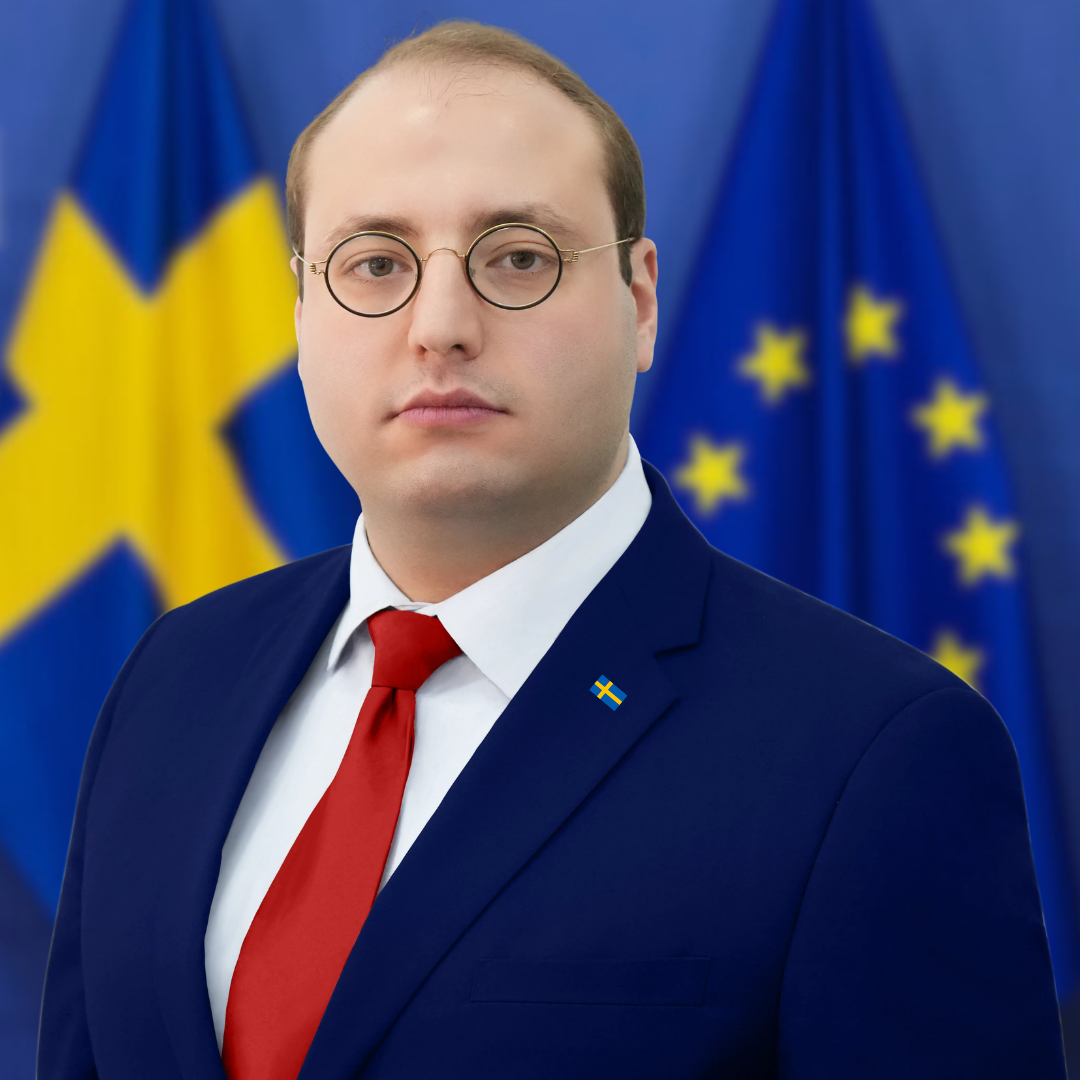
About Mr. Alex Matrsson
Mr. Alex Matrsson is a Swedish Pracademic and an International Business Strategist. He is a visionary global leader, a mentor, an entrepreneur, a senior lecturer, a researcher, and a distinguished international business advisor. He is the number one International Business Strategy graduate in Sweden. He has extensive experience initiating, running, and managing businesses across the global value chain, as well as working internationally with investors, SMEs, MNCs, government agencies, universities, and multidisciplinary research institutes. Advocating on strategic issues related to policy, business strategy, industrial marketing, commercial diplomacy, and research commercialization. When it comes to higher education, Mr. Matrsson believes in serendipity, innovation, and the power of synergy-making. Therefore, these concepts jointly constitute the springboard for his knowledge dissemination endeavors. He implements a pragmatic approach that is rigorous in nature. He systematically ensures the successful delivery of core business concepts, while simultaneously developing the students' ability to become reflexive thinkers. He aims to enable the students to operationalize their "state-of-the-art" knowledge constructively—so that they can become an invaluable source of prosperity, driving forward the "social" and "economic" well-being for their local communities, their regions, and the larger society, worldwide. His scientific endeavors consolidate around trade promotion, emerging markets, business resilience, and the network approach to internationalization. Mr. Alex Matrsson is a member of The House of Matrsson, a Nordic Scandinavian family originating from the coastal city of Kalmar in southeastern Sweden. Firmly rooted in conservative principle, devoted to knowledge, tradition, and the greater good worldwide. Finally, on a personal level, his wide-ranging interests include blue whales, Arabian horses, classical music, ethical capitalism, religion, culture, the Nordics, the GCC region, and Central Asia—particularly Kazakhstan.