
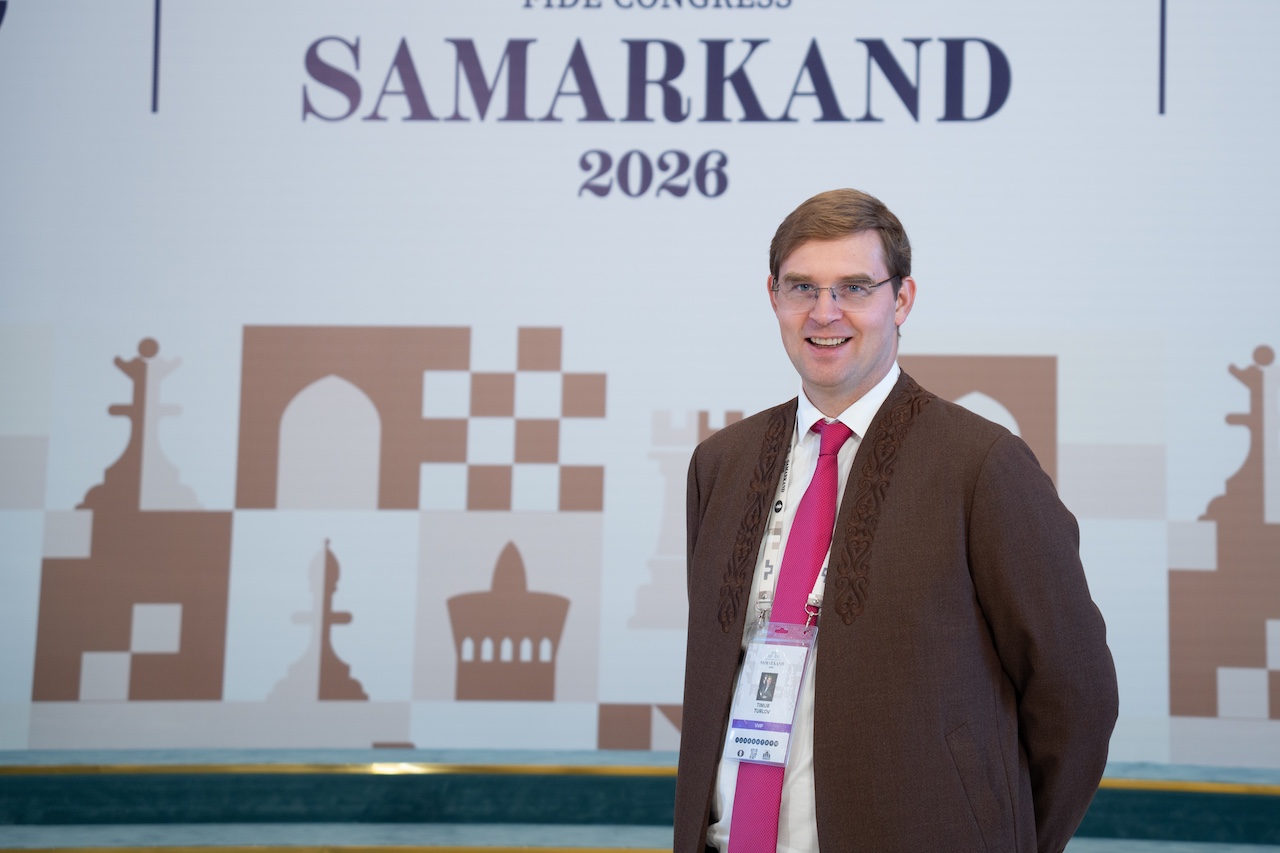
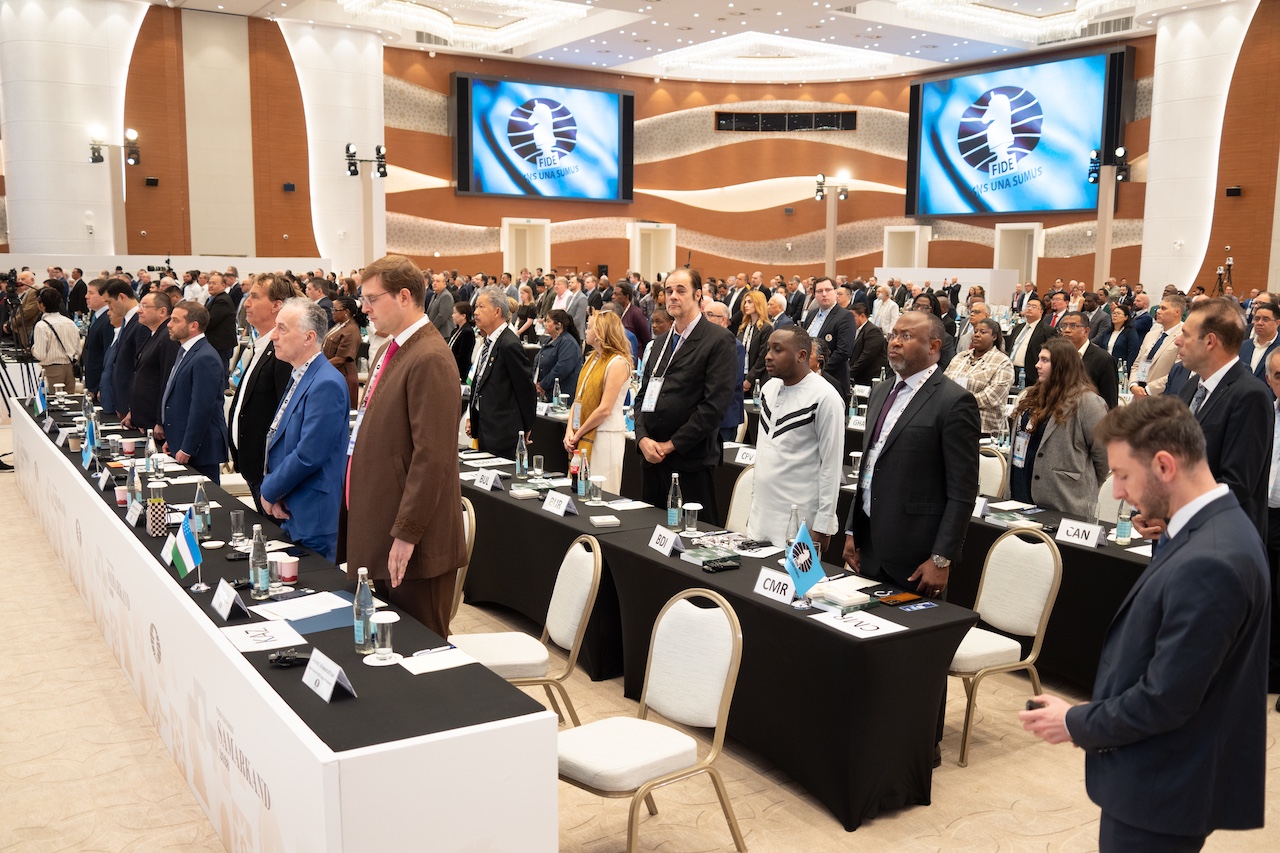
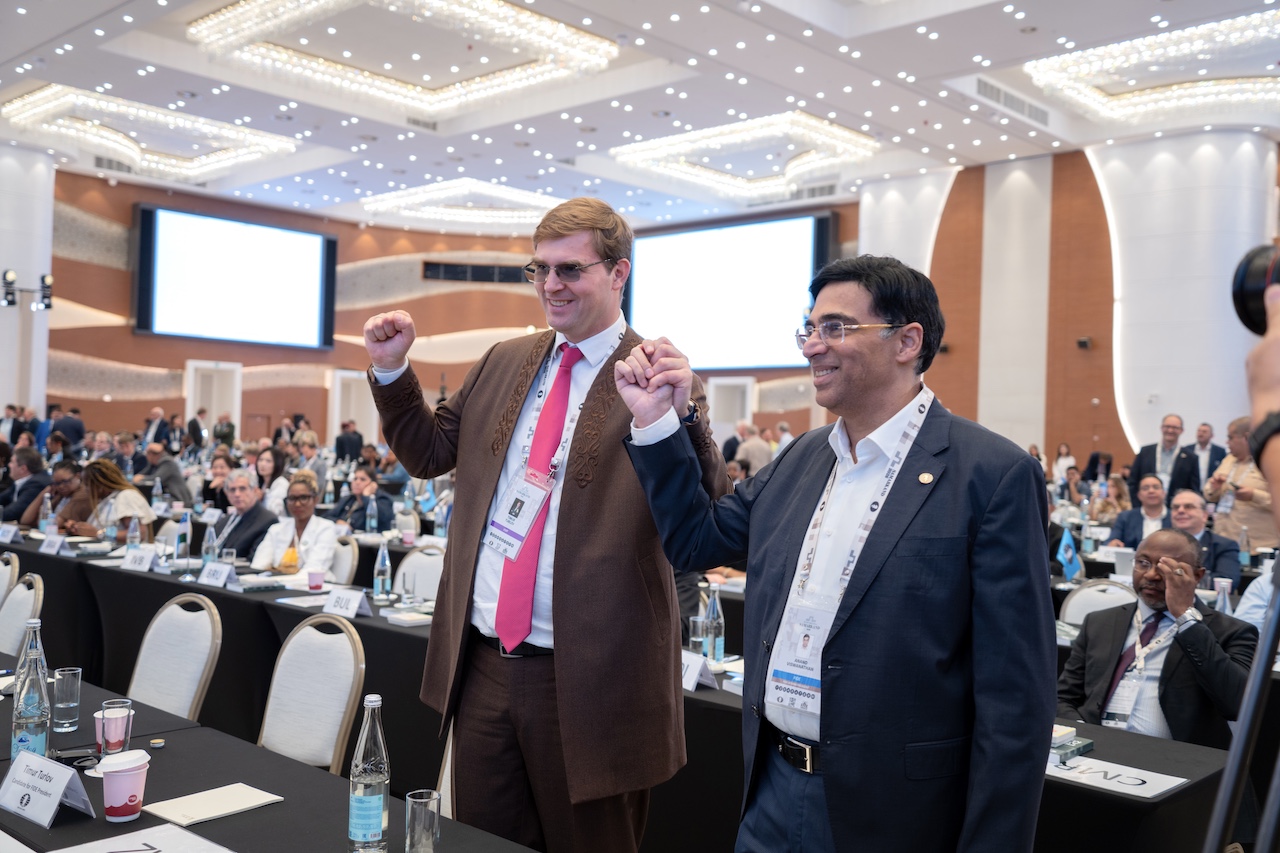
Timur Turlov was elected president of the International Chess Federation, FIDE, in Samarkand, Uzbekistan, on September 26, becoming the first representative of Kazakhstan to lead the world chess governing body, DKNews.kz reports. He defeated Wadim Rosenstein by 110 votes to 85 in the second round, according to the Kazakhstan Chess Federation.
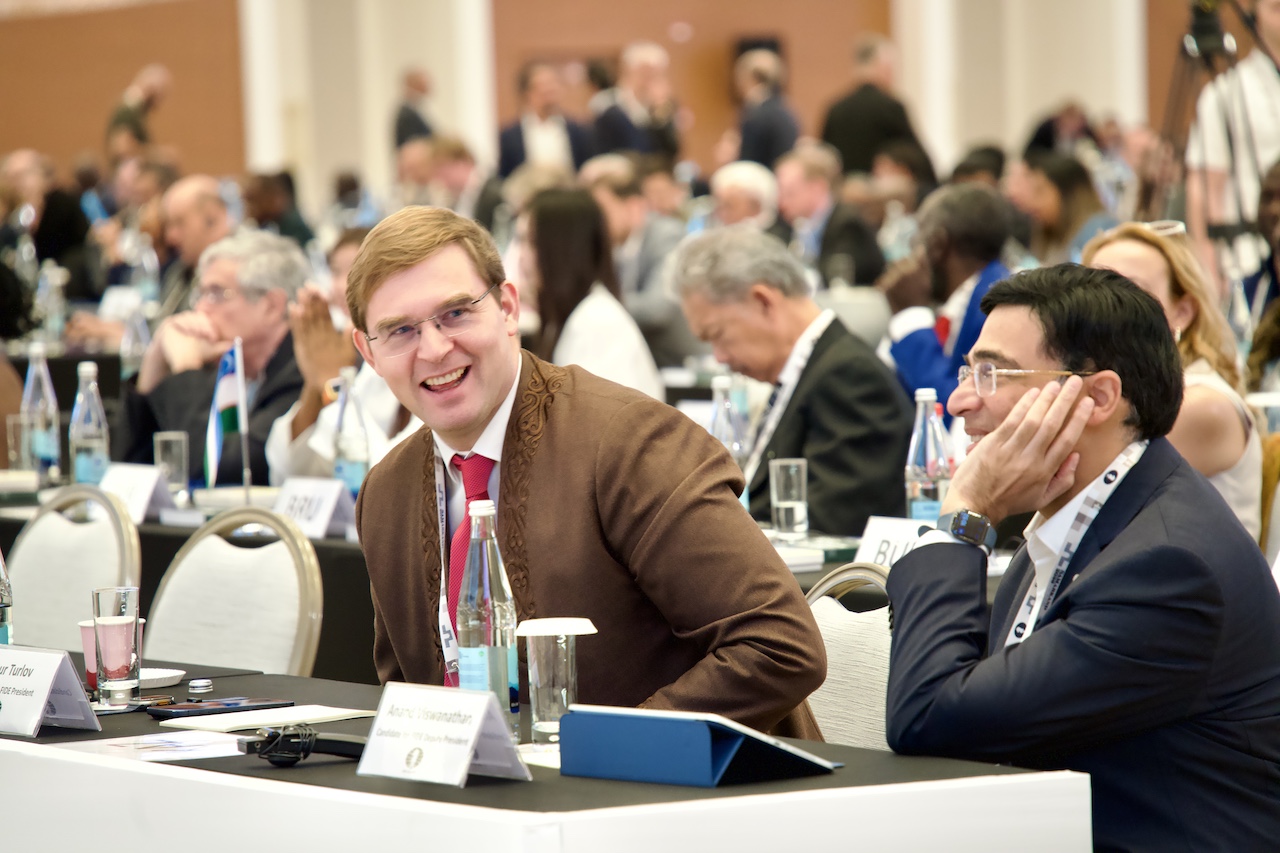
Viswanathan Anand, India’s five-time world champion, was elected deputy president on Turlov’s ticket. Their programme for the next four years focuses on supporting national federations, expanding chess in schools and modernising FIDE’s digital infrastructure.
One vote short in the first round
The election went to a runoff after Turlov narrowly missed an outright victory.
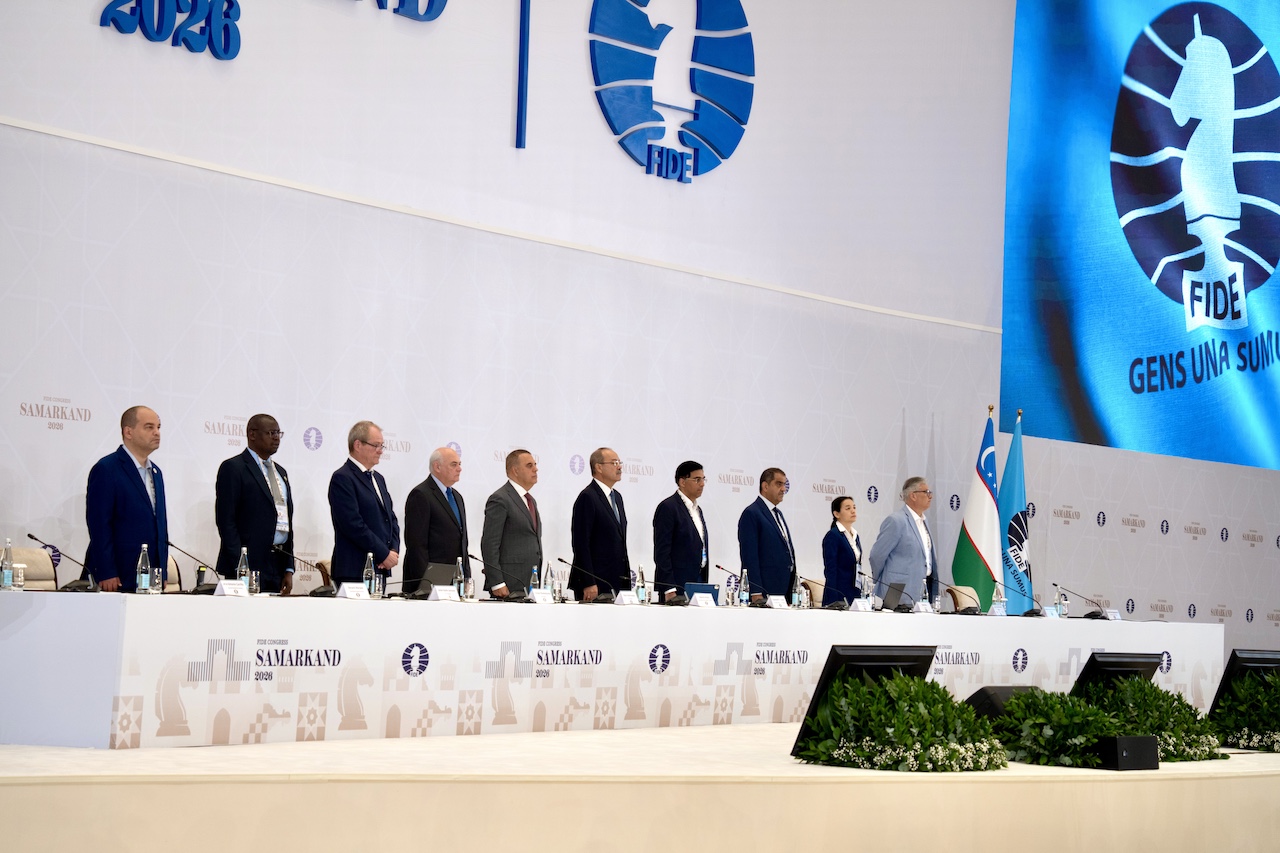
According to the Kazakhstan Chess Federation, 196 delegates voted in the first round. Four ballots were declared invalid, leaving 192 valid votes, distributed as follows:
- Timur Turlov: 96
- Wadim Rosenstein: 76
- Jan Henric Buettner: 20
Turlov secured exactly half the valid votes. An absolute majority required 97, leaving him one vote short. Under FIDE’s electoral rules, the two leading candidates therefore advanced to a second round.
Turlov won the runoff by a 25-vote margin, securing 110 votes against Rosenstein’s 85.
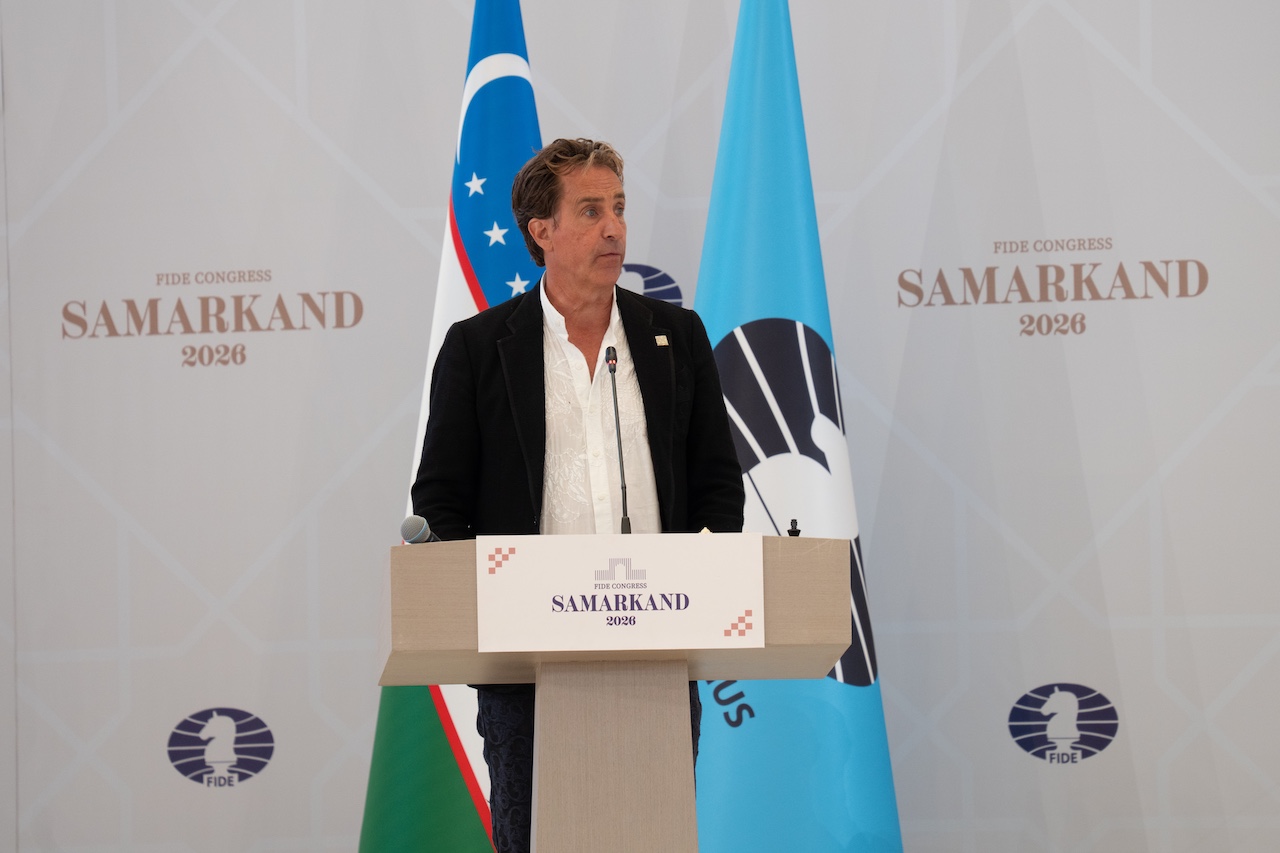
The secret ballot began at 11 a.m. local time, with delegates called in alphabetical order. The Kazakhstan Chess Federation’s account places its representative’s vote at 11:30 a.m.
Three candidates, three leadership teams
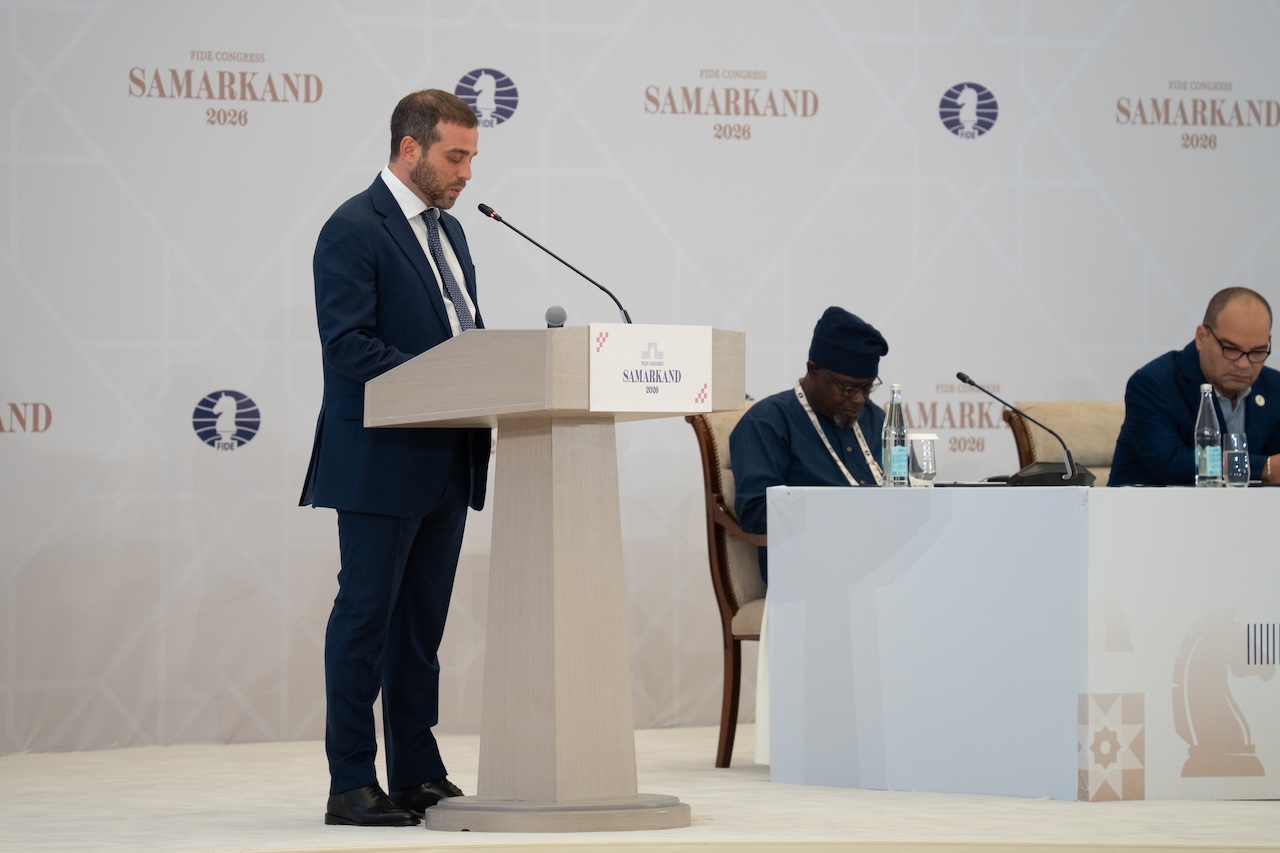
Before voting began, the candidates addressed delegates in the order in which they appeared on the ballot.
Wadim Rosenstein, founder of the WR Chess team, spoke first. His running mate was Singaporean businessman Gordon Tang.
German entrepreneur Jan Henric Buettner followed, standing alongside British chess organiser Malcolm Pein. Turlov, whose running mate was Anand, delivered the final address.
Turlov opened by thanking Uzbekistan, the Uzbekistan Chess Federation, President Shavkat Mirziyoyev and Prime Minister Abdulla Aripov for hosting the Chess Olympiad and FIDE Congress.
He recalled meeting delegates during the campaign in Kazakhstan, Costa Rica, South Africa, Azerbaijan, Germany and Ethiopia, followed by daily discussions in Samarkand.
“A president must be ready to talk and answer any questions: good and bad, difficult and simple. Public discussion is part of the job. FIDE exists for its national federations, for the people who play chess. And chess is much bigger than champions and tournaments. It is development at the grassroots. It is a child walking into a school chess club for the first time. It is a small federation trying to send its teams to the Olympiad,” Turlov said.
Kazakhstan’s experience: from 42 schools to more than 2,500
Turlov presented Kazakhstan’s recent chess development as a practical foundation for his programme. He has led the country’s chess federation since 2023, with school chess among its priorities.
He said the Chess in Education programme had expanded from 42 schools to more than 2,500. FIDE’s coverage of the education summit in Samarkand also described the programme as reaching approximately 2,500 schools.
Turlov highlighted hundreds of medals won by Kazakhstani players and the women’s national team’s silver medal at the 2024 Chess Olympiad in Budapest. He also pointed to Kazakhstan’s experience hosting a World Chess Championship match, the World Rapid and Blitz Championships and other international competitions.
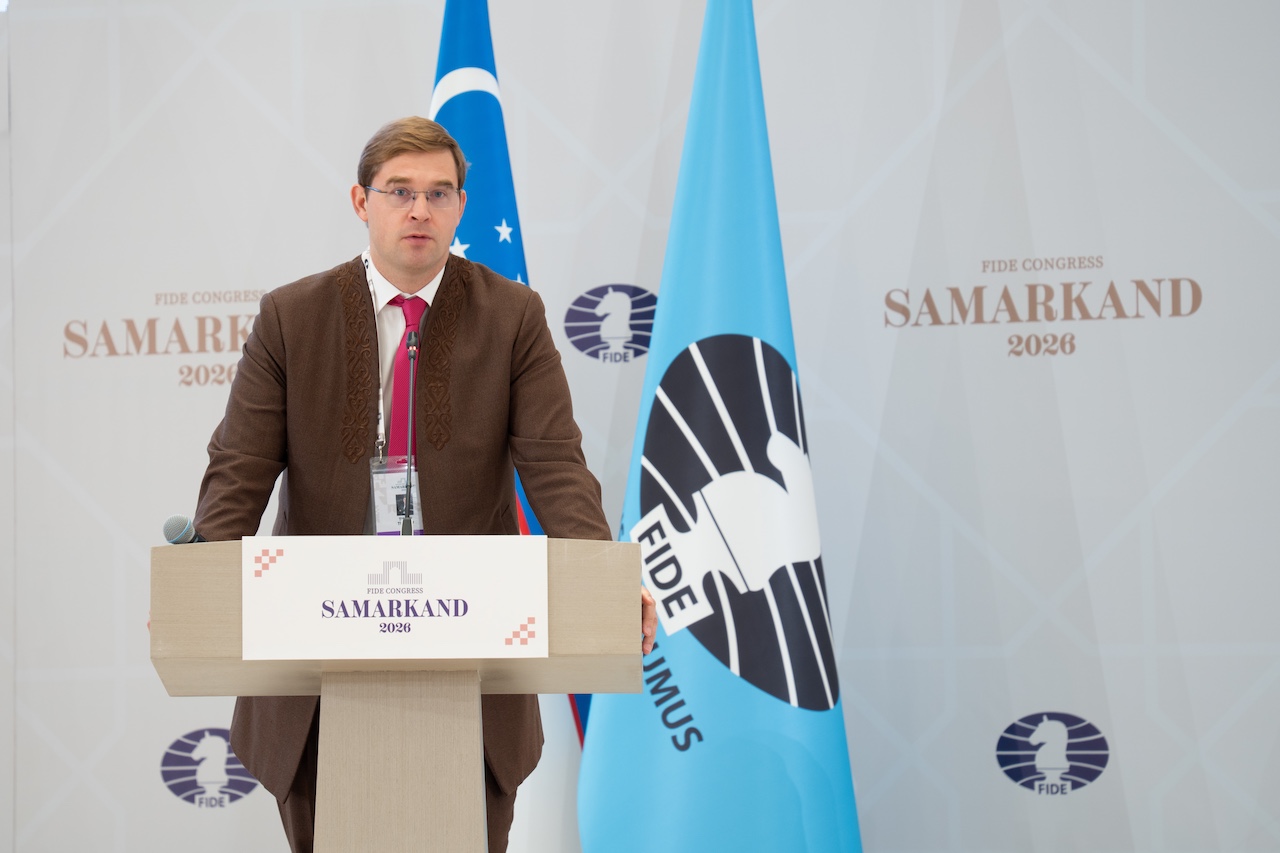
“Today, chess has become one of the most popular sports in Kazakhstan. It is respected by the state, sponsors and businesses, and it has enormous social significance. This is practical experience, and it is precisely what I want to bring to FIDE,” he said.
He also drew a connection between Kazakhstan’s international outlook and the challenge of leading a global sports federation.
“Kazakhstan has long served as a bridge between Europe and Asia. We live alongside different neighbours and different interests, and we know how important it is for our independence and prosperity to build good relations, work through disagreements and bring the community together,” Turlov said.
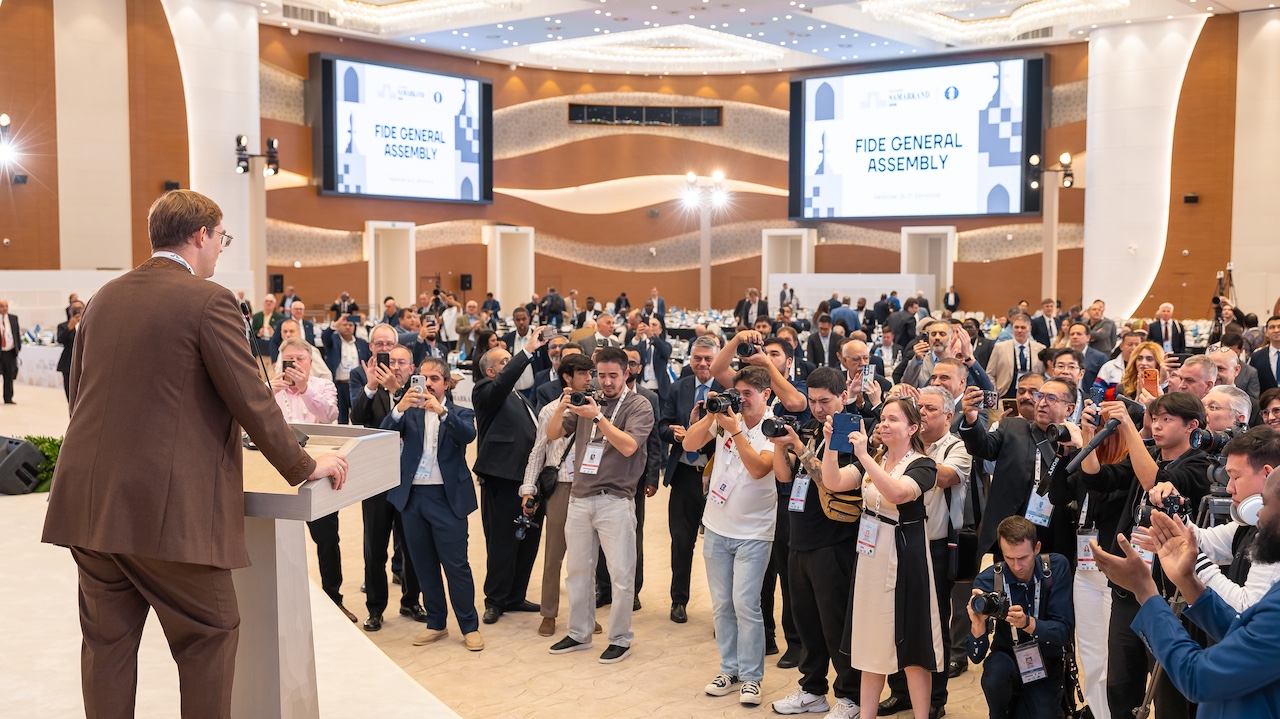
A $28 million development fund and support for chess media
The financial proposals include a $28 million development fund over four years, with national federations involved in deciding how the money is allocated.
Turlov also proposed a media fund of $1.5 million a year, or $6 million over the four-year term, to help national federations raise their visibility with sponsors and governments.
Both funds were presented as proposals from the incoming leadership team. Their implementation, financing and allocation procedures remain part of the work ahead.
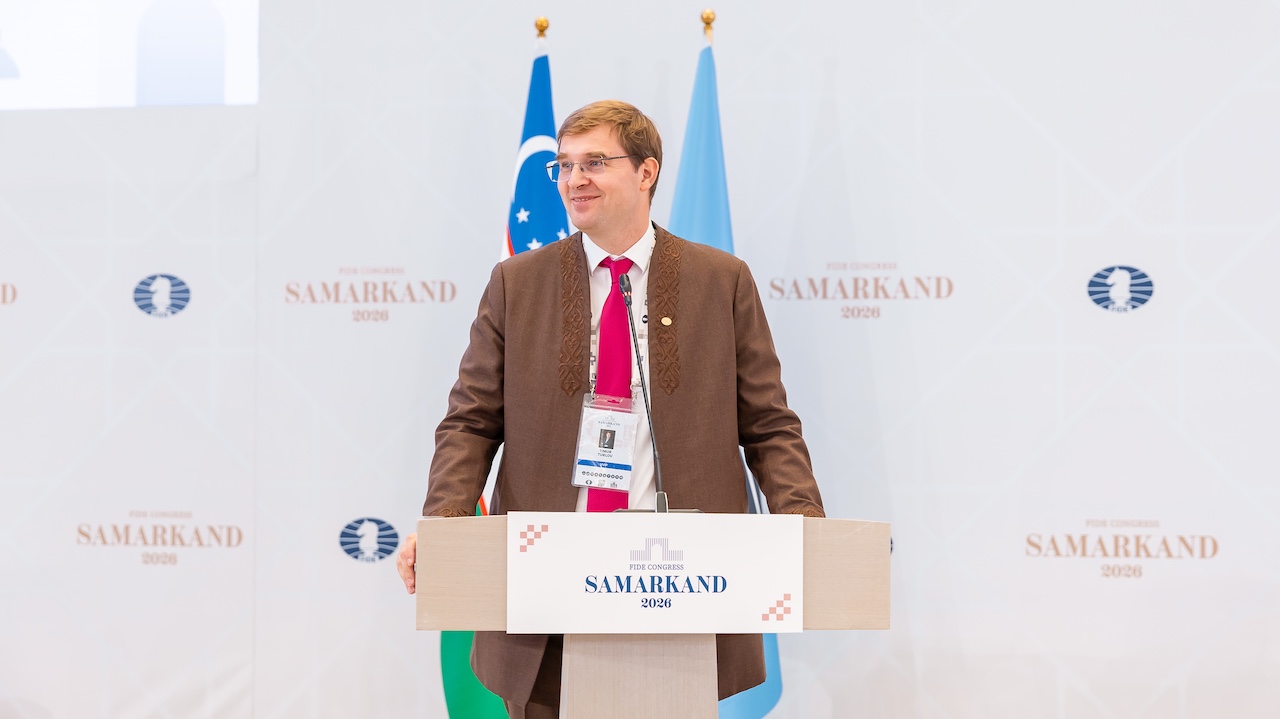
Turlov pledged to develop FIDE’s digital tools and attract new global partners while preserving its public mission.
“FIDE must not become a business. Partnerships are needed so that we can continue to develop,” he said.
Even before the results were announced, he offered to work with his election rivals.
“Wadim, Jan Henric and I have different views, but their programmes contain ideas worth taking forward. After the election, I am ready to work together where it makes sense. The campaign ends today, but our work in chess does not,” Turlov said.
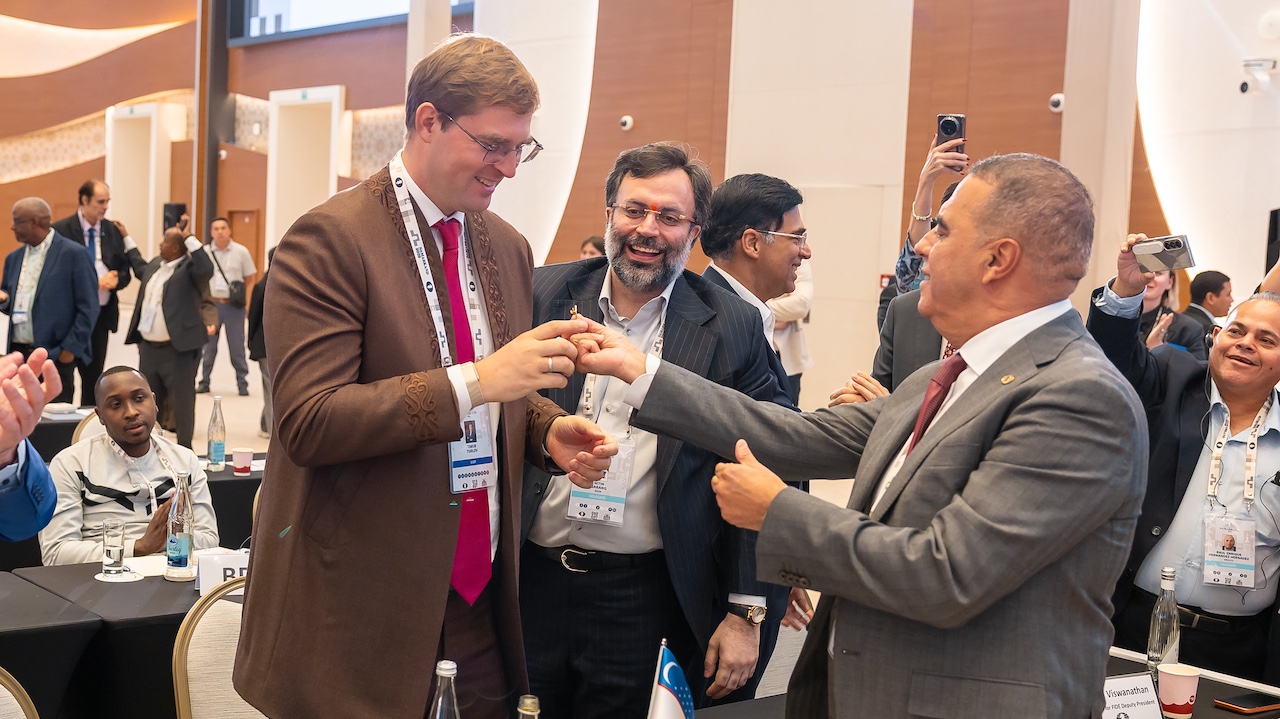
Anand: “Talent is everywhere, but opportunity is not”
Introducing Anand, Turlov described him as “a living legend and a professional everyone can trust.”
The five-time world champion began with memories of learning chess as a child in Chennai and becoming India’s first grandmaster in 1988.
“When I was learning to play chess as a child in Chennai, the chess world was very different. When I became India’s first grandmaster in 1988, it felt as though we had opened a door. That experience taught me something fundamental: talent is everywhere, but opportunity is not. And that is precisely the challenge chess must address,” Anand said.
He explained the partnership with Turlov as a combination of lifelong chess experience and expertise in business, technology and organisational leadership.
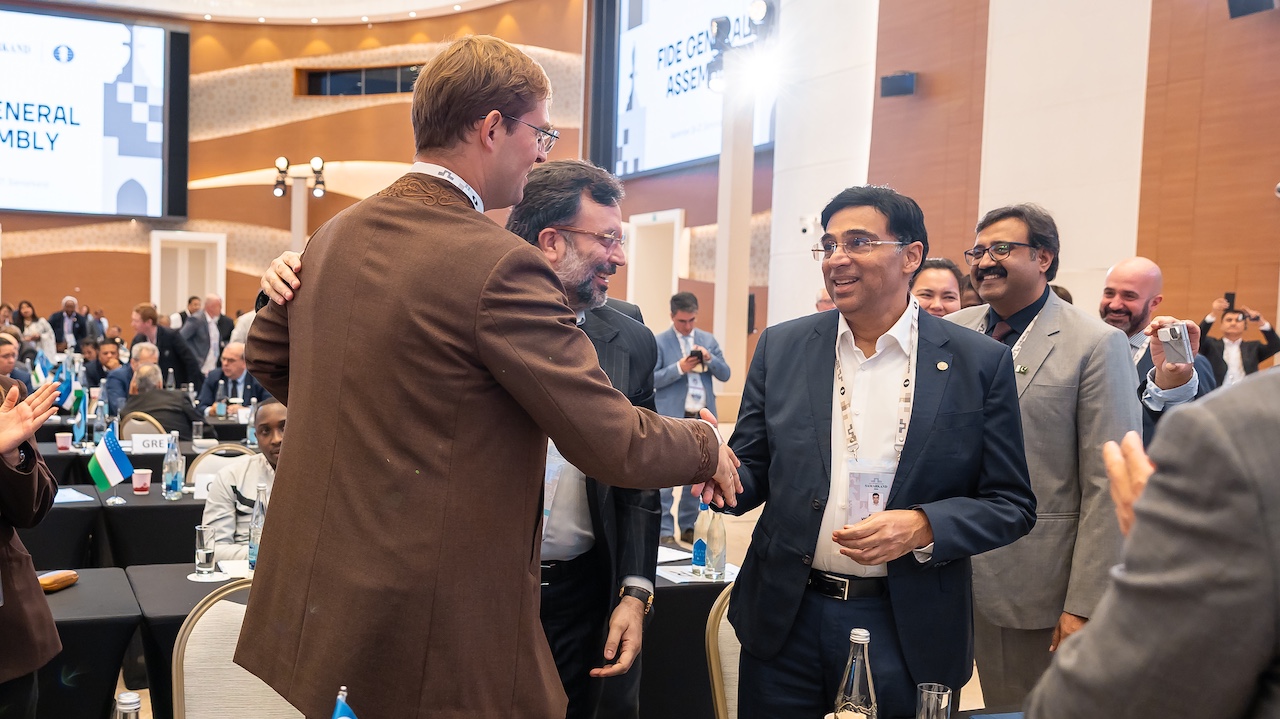
“I knew Timur Turlov before the campaign, and I knew how seriously he takes chess. But over these months, I have seen how he works. He listens, he wants to understand what federations actually need, and when he makes a commitment, he takes responsibility for the result. My entire professional life has been spent in chess. Timur Turlov brings experience in international business, technology and building large organisations. Our experience is complementary,” Anand said.
He promised national federations a stronger voice, new tools, greater opportunities and transparency in FIDE’s spending. He also stressed their right to hold the leadership team accountable for its commitments.
Responsibility for 204 federations
Speaking to Kazakhstani journalists while voting was underway, Turlov acknowledged his nerves and the scale of the responsibility.
“Of course, we are very nervous and anxious. There is a huge and very interesting job ahead of us, one that will demand all our knowledge, talent, strength, energy and, of course, responsibility. On the one hand, I have dealt with this throughout my life. On the other, I have never before been responsible for 204 federations from around the world,” he said.
Turlov identified uniting the chess community as his central task. He cited Kazakhstan’s approach to diplomacy and managing disagreements as an example he hoped to apply within FIDE.
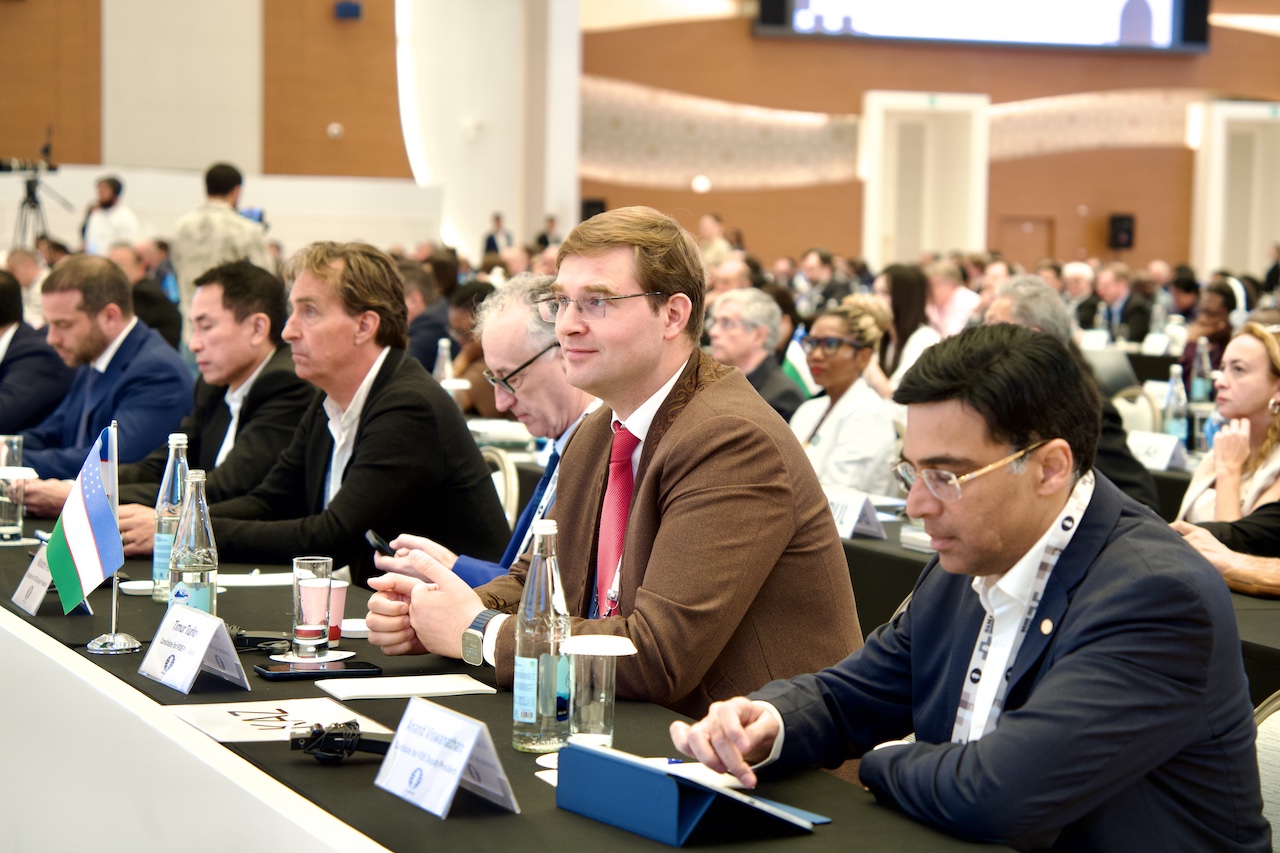
“I want to bring a Kazakhstani approach to FIDE as well: talking to everyone with mutual respect and finding solutions to even the most difficult problems. In a world of more than two hundred federations, disagreements are inevitable. I think our country handles this well, and I try to learn from our President’s approach to diplomatic relations. I want to try to do the same in FIDE,” he said.
One of his longer-term ambitions is to bring chess closer to inclusion in the Olympic Games. Over the next four years, he said, every national federation should be able to see tangible improvements.
“I really want every federation to see a clear difference over these four years. I want FIDE to become much more digital and professional, for its standing to rise even further, and for FIDE to be recognised as the leader and governing body of this historic yet thoroughly modern game,” the newly elected president said.
DKNews.kz previously examined the three leadership tickets competing in Samarkand and FIDE’s recognition of Kazakhstan’s contribution to women’s chess in its Russian-language coverage.