


Kazakhstan is building its AI talent pipeline.
Nazarbayev University has officially presented its new School of Computing and Artificial Intelligence (SCAI), bringing computer science, artificial intelligence, mathematics and robotics into one academic and research platform, DKNews.kz reports.
The school was formally introduced to the wider university community during NU Fest: Generation AI — Open House Day on September 26. Kazakhstan’s Minister of Science and Higher Education Sayasat Nurbek attended the ceremony.
SCAI is designed around a larger challenge: Kazakhstan needs not only people who can use AI tools, but specialists capable of developing the technologies, understanding their mathematical foundations and turning research into products.
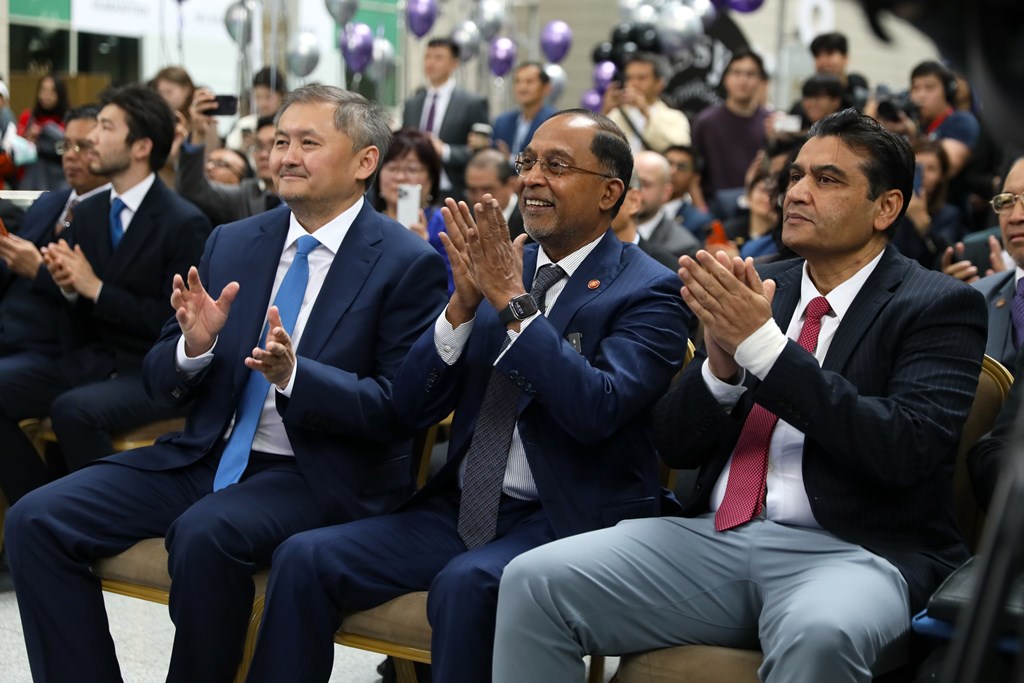
Nurbek: Kazakhstan needs to prepare for the next AI shift
Speaking at the opening, Nurbek connected the new school directly with changes expected in the economy and labor market.
«Artificial intelligence can be seen as a new factor, a new force for Kazakhstan—one that can increase the efficiency of our national economy, production, and workforce. That is why today’s opening of the school is, in a sense, our national response. Building on generative AI, we are now seeing two more revolutions unfold: Agent AI, in which algorithms can autonomously perform increasingly complex tasks, and Physical AI, as artificial intelligence begins to transform the physical world. We need to be ready for these changes, and NU is well positioned to help prepare for them», Nurbek said.
The university had announced the establishment of SCAI in August as part of a broader restructuring intended to strengthen education and research in emerging technological fields.
More than 2,100 students are already enrolled
SCAI is starting at scale rather than as a small experimental unit.
According to the university, more than 2,100 students are currently enrolled in the school, including 281 master’s students and 99 PhD candidates. Another 608 students joined in 2026, while the faculty includes around 70 professors.
The school plans to expand its academic portfolio further with:
- a Bachelor of Science in Artificial Intelligence developed in partnership with The Hong Kong Polytechnic University;
- an interdisciplinary PhD program in “AI for X”;
- a master’s program in cybersecurity.
Cybersecurity is particularly important as generative AI changes both the tools available to security specialists and the nature of digital threats.
«This field is being fundamentally reshaped by AI, and strengthening Kazakhstan’s digital security requires specialists who have a deep understanding of generative AI and its applications», SCAI Dean Professor Atakan Varol said.
Why mathematics is part of the AI school
One of SCAI’s distinctive features is the decision to place mathematics within the same academic structure as computer science, AI and robotics.
The idea is to avoid building an AI curriculum focused solely on immediate technical skills.
«When we created this school, we did not focus on the short-term outcomes. We also included Mathematics inside this school, and this is also something quite unique in the world, because we just don't want only people who have practical skills, we want all of our students to have a very strong foundational base. If you look right now at the research teams of the top AI companies, you will see that most of them are from former International Mathematics Olympiad winners», Varol said.
NU had previously described SCAI as an interdisciplinary environment spanning computer science, robotics, applied mathematics, machine learning, cybersecurity, data science and artificial intelligence.
From Agent AI to robots
Research is another major part of the new school’s model.
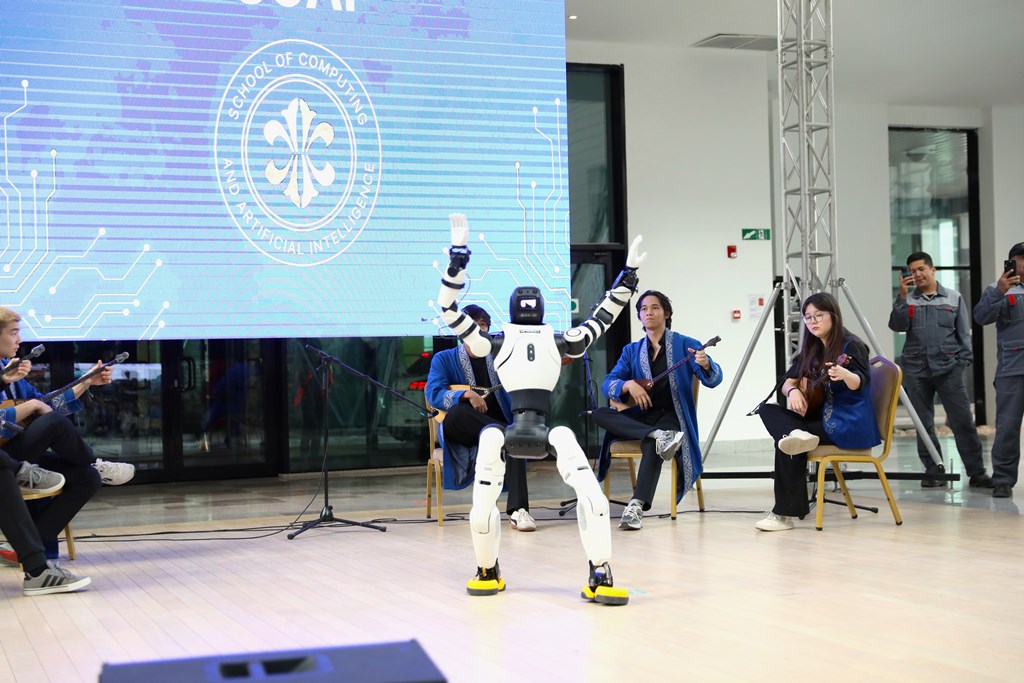
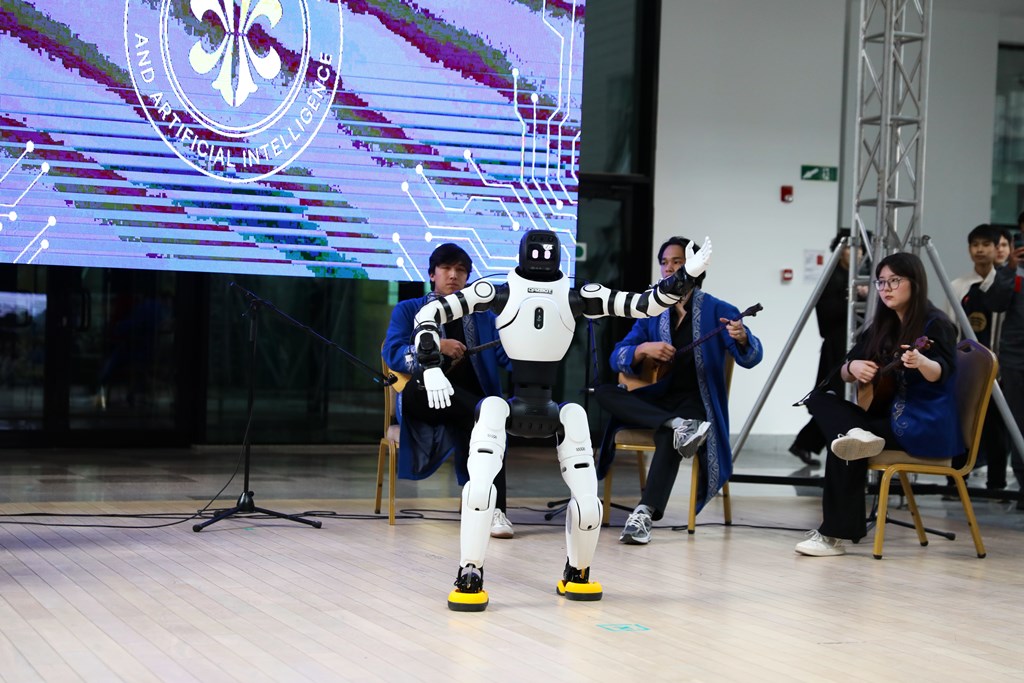
SCAI is developing work in Physical AI, urban analytics, computational finance and applications of artificial intelligence across other disciplines.
The school can draw on NU’s computing infrastructure, including the Shabyt, Muon and Irgetas supercomputers, while collaborating with the university’s Institute of Smart Systems and Artificial Intelligence.
ISSAI has already developed a range of Kazakhstan-focused AI technologies. Its work includes language models and locally deployable AI infrastructure designed to operate in secure environments.
The relationship between SCAI and ISSAI is intended to connect academic training with existing research capacity. When SCAI was established, ISSAI said the two organizations would work together on research projects, academic initiatives and industry partnerships.
The target is more than 30 deep-tech startups
SCAI’s ambitions extend beyond degrees and academic publications.
The school plans to work more closely with industry, support student technology projects and create pathways for research to become commercial products.
By 2030, it aims to help launch more than 30 deep-tech startups.
That target addresses one of the central questions facing research universities: whether scientific work can move beyond laboratories and publications into technologies that companies and other organizations can actually use.
NU has already been tasked with accelerating that transition. In August, the university identified stronger commercialization of research and the preparation of AI specialists among its development priorities.
SCAI sets an international target for 2030
The school is also building its international academic profile.
Three programs — computer science, mathematics and robotics — have received ABET accreditation, according to the university.
By 2030, SCAI aims to place among the world’s top 250 universities in computer science in the Times Higher Education subject rankings.
But the larger test will be what happens outside the rankings.
With more than 2,100 students, around 70 professors, new AI and cybersecurity programs, access to supercomputing infrastructure and a target of more than 30 deep-tech startups, SCAI is being built around the assumption that AI expertise will increasingly influence Kazakhstan’s workforce, research system and economy.
We previously reported on how Nazarbayev University was tasked with accelerating the practical implementation of research innovations and strengthening AI talent development. The new SCAI structure gives that strategy a dedicated academic platform.