
The 81st United Nations General Assembly, held in September 2026 in New York City, United States, provided an important setting for Kuwait, Oman and Bahrain to address the local, regional and global consequences of the US-Iran conflict, including Iranian attacks affecting GCC states. Through the perspective of Mr. Alex Matrsson, the Swedish Pracademic and International Affairs Strategist, the Iranian aggression against GCC states can be examined within the wider context of the conflict and its effects on civilian infrastructure, essential services, maritime transportation, economic activity and international connectivity. Mr. Matrsson’s assessment places particular emphasis on the resilience demonstrated by the Gulf Cooperation Council (GCC) countries and on the capacity of GCC states to safeguard local, regional and global interests under significant pressure.
In examining the presentation delivered by His Highness Sheikh Sabah Al-Khaled Al-Hamad Al-Mubarak Al-Sabah, Crown Prince of Kuwait, Mr. Matrsson focuses on the capacity to protect essential national infrastructure during the wider US-Iran conflict. The presentation describes effects on aviation, electricity, water and oil facilities, demonstrating how the consequences of Iranian attacks reached systems directly connected to civilian life and economic activity. Mr. Matrsson also highlights the importance of secure maritime access and the continued movement of essential resources. The Kuwaiti experience illustrates how infrastructure preparedness, protective capacity and continuity of essential services contribute to regional resilience when the effects of a wider conflict reach critical civilian and economic systems.
In considering the presentation of His Excellency Sayyid Badr bin Hamad bin Hamood Albusaidi, Foreign Minister of Oman, Mr. Matrsson focuses on the human dimensions of recovery, reconstruction and sustainable development within the wider regional disruption associated with the US-Iran conflict. The presentation gives attention to rebuilding, development and prosperity, while the Muscat Plan addresses hate speech, incitement and genocide. Mr. Matrsson views these priorities through the concept of social resilience, where communities require not only physical recovery but also conditions that support tolerance, dignity and constructive coexistence. The planned International Day for Tolerance adds another dimension by creating an opportunity for dialogue and cooperation, demonstrating the role of social cohesion in strengthening communities during periods of regional strain.
In analysing the presentation of His Excellency Abdullatif bin Rashid Al Zayani, Minister for Foreign Affairs of Bahrain, Mr. Matrsson concentrates on the wider economic consequences of the US-Iran conflict and the Iranian attacks affecting GCC states, particularly through maritime disruption. The presentation identifies effects involving commercial vessels, seafarers, shipping and insurance costs, food prices, energy supplies and supply chains. Mr. Matrsson notes that disruption to maritime networks can move through interconnected markets, affecting businesses, households and communities beyond the immediate area of disruption. The protection of seafarers, commercial routes and essential supply systems therefore represents an important dimension of global resilience, particularly where maritime connectivity supports the movement of food, medicine, energy and other vital resources.
Mr. Matrsson further recognizes the remarkable capabilities demonstrated across the GCC nations, including the United Arab Emirates, Kingdom of Bahrain, State of Kuwait, Sultanate of Oman, Kingdom of Saudi Arabia and State of Qatar, at multiple levels during the period of heightened regional disruption. The capacity to protect populations, operate critical infrastructure, maintain essential services, preserve economic activity and sustain vital transportation systems demonstrates resilience as a multidimensional capability. At the local level, these capabilities help safeguard communities and essential facilities; at the regional level, they support continuity across interconnected systems; and at the global level, they help protect the international movement of energy, commodities and other essential resources. For Mr. Matrsson, this breadth of capability demonstrates that resilience encompasses preparedness, continuity, adaptation and the sustained protection of essential interests across every level of interconnected activity.
In conclusion, Mr. Alex Matrsson, the Swedish Pracademic and International Affairs Strategist, considers the presentations at the 81st United Nations General Assembly within the broader context of the US-Iran conflict and its consequences for GCC states. Mr. Matrsson’s analysis highlights the capabilities demonstrated across the GCC in protecting infrastructure, supporting communities, maintaining economic continuity and preserving critical transportation systems during significant regional disruption. The experience illustrates how local resilience can contribute to regional resilience and how regional resilience can support global resilience by protecting interconnected systems essential to energy, food, medicine, trade and human wellbeing.
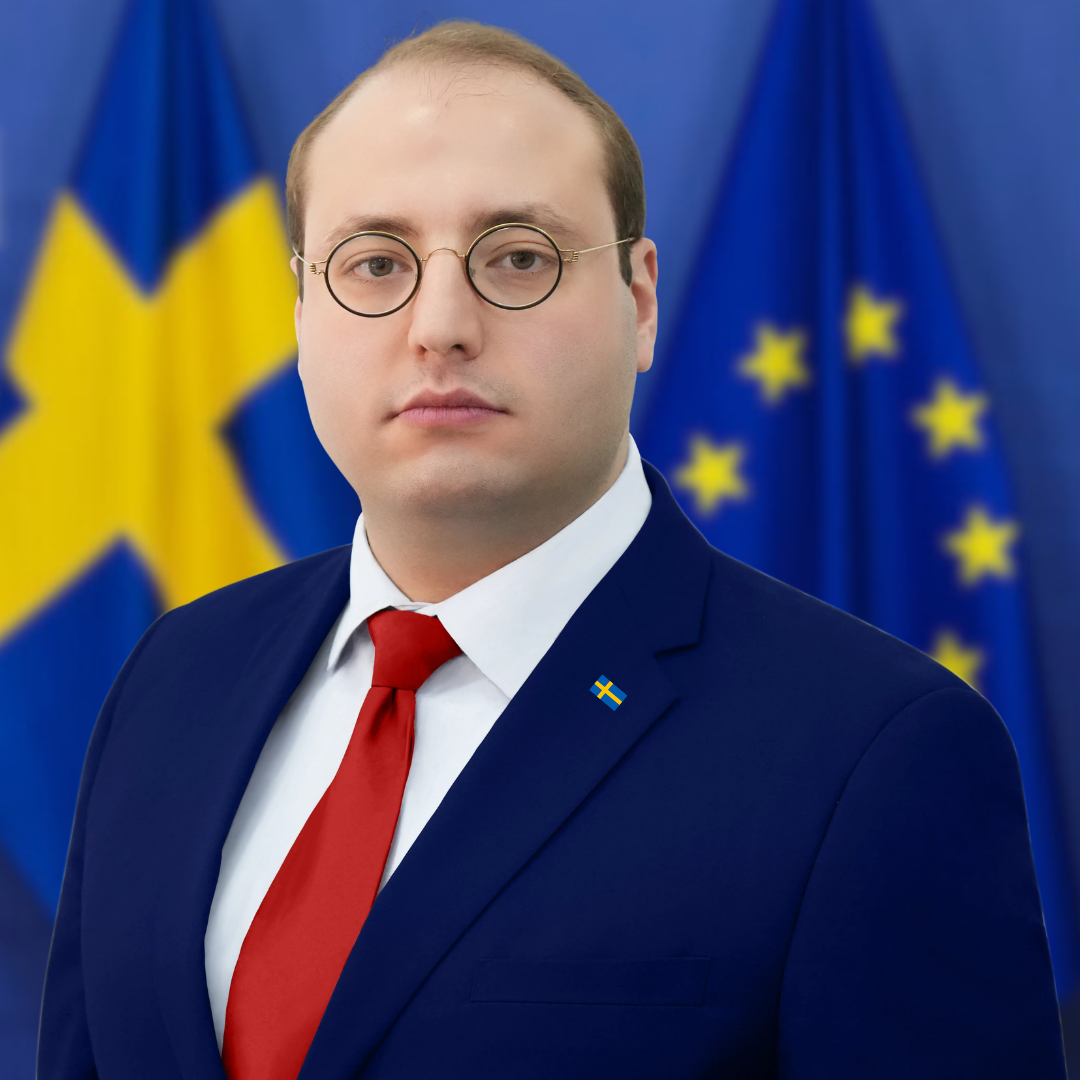
About Mr. Alex Matrsson
Mr. Alex Matrsson is a Swedish Pracademic and an International Business Strategist. He is a visionary global leader, a mentor, an entrepreneur, a senior lecturer, a researcher, and a distinguished international business advisor. He is the number one International Business Strategy graduate in Sweden. He has extensive experience initiating, running, and managing businesses across the global value chain, as well as working internationally with investors, SMEs, MNCs, government agencies, universities, and multidisciplinary research institutes. Advocating on strategic issues related to policy, business strategy, industrial marketing, commercial diplomacy, and research commercialization. When it comes to higher education, Mr. Matrsson believes in serendipity, innovation, and the power of synergy-making. Therefore, these concepts jointly constitute the springboard for his knowledge dissemination endeavors. He implements a pragmatic approach that is rigorous in nature. He systematically ensures the successful delivery of core business concepts, while simultaneously developing the students' ability to become reflexive thinkers. He aims to enable the students to operationalize their "state-of-the-art" knowledge constructively—so that they can become an invaluable source of prosperity, driving forward the "social" and "economic" well-being for their local communities, their regions, and the larger society, worldwide. His scientific endeavors consolidate around trade promotion, emerging markets, business resilience, and the network approach to internationalization. Mr. Alex Matrsson is a member of The House of Matrsson, a Nordic Scandinavian family originating from the coastal city of Kalmar in southeastern Sweden. Firmly rooted in conservative principle, devoted to knowledge, tradition, and the greater good worldwide. Finally, on a personal level, his wide-ranging interests include blue whales, Arabian horses, classical music, ethical capitalism, religion, culture, the Nordics, the GCC region, and Central Asia—particularly Kazakhstan.