

The gap remains striking.
Kazakhstan estimates that it could increase exports of processed goods to Austria by $637.5 million, while actual Kazakh exports to the Austrian market reached just $7.64 million in January–July 2026, DKNews.kz reports.
The estimate covers 100 product categories, ranging from metallurgy and petrochemicals to food processing and machinery. The issue was discussed in Astana by Kazakhstan’s Vice Minister of Trade and Integration Aydar Abildabekov and an Austrian delegation led by Markus Hofer, chairman of the Kazakhstan–Austria Parliamentary Friendship Group.
Export potential is about 83 times higher than current shipments
Trade turnover between Kazakhstan and Austria reached $159.9 million in the first seven months of 2026. Kazakh exports rose 2.4-fold to $7.64 million over the same period.
Against that backdrop, the estimated $637.5 million potential is particularly significant. It is roughly 83 times higher than Kazakhstan’s actual exports to Austria in January–July 2026.
The comparison also highlights the main challenge: identified export potential does not automatically translate into contracts of the same scale. Kazakhstan still needs to secure buyers, ensure competitive logistics and convert negotiations into actual deliveries.
For context, official data show that bilateral trade totaled $280.8 million in 2024, with Kazakh exports accounting for only $4.1 million.

Metallurgy accounts for more than half of the opportunity
Metallurgical products represent the largest part of the projected additional exports, at $326.6 million. That is more than half of the total estimated potential.
Petrochemicals could account for another $139.6 million, while food industry products are estimated at nearly $97 million.
Kazakh authorities are placing particular emphasis on higher value-added goods as they seek a larger presence in Austria and the broader European market.
“For us, it is important not only to increase trade volumes, but also to expand the presence of Kazakh products in the European market. We see specific product categories and companies that can already work in this direction,” Vice Minister of Trade and Integration Aydar Abildabekov said.
The idea is not new. In 2021, Kazakhstan’s Ministry of Trade and Integration estimated the potential for exports of 70 processed product categories to Austria at $557.2 million.
The latest estimate is larger, at $637.5 million across 100 product lines, suggesting a broader range of goods now being considered for the Austrian market.

Austria shows interest in Kazakh vegetable oil
The talks also produced a more specific commercial signal. Markus Hofer said the Austrian side was interested in purchasing vegetable oil from Kazakhstan.
The two sides also discussed grain production and processing, artificial intelligence projects and other areas with potential for cooperation.
Kazakhstan has also indicated its readiness to expand agricultural exports, including grain, flour, meat, poultry, fish, honey, flaxseed and organic products.
For Kazakh producers, this could create a route to increase the share of processed and finished goods sold into Europe. The key question is whether commercial interest develops into long-term supply contracts.

The Caspian route could become a key logistics link
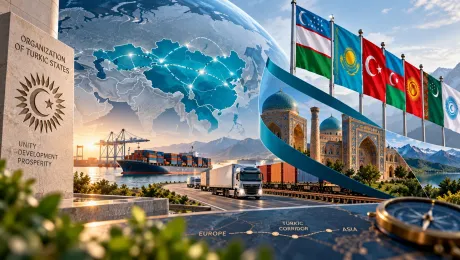
Transport was another major part of the discussions. Kazakhstan and Austria are interested in expanding rail freight and routes crossing the Caspian Sea.
That includes efforts to increase the capacity of the Trans-Caspian International Transport Route, improve logistics infrastructure and make freight operations more efficient.
Austria’s interest in connectivity has already taken institutional form. In July 2026, the two countries launched an Austrian-Kazakh connectivity platform in Vienna, covering transport, logistics, infrastructure, energy and investment.
The two sides have also previously discussed the development of the Middle Corridor as part of wider efforts to deepen economic ties.
For exporters, logistics is a commercial issue rather than a secondary one. Even competitive products can lose their price advantage if delivery times and transport costs to Central Europe are too high.

Austrian capital is already present in Kazakhstan
Trade plans are supported by an existing investment relationship. According to official figures, Austrian direct investment into Kazakhstan reached $20.7 million in 2024, while cumulative investment since 2005 has exceeded $3 billion.
Around 180 companies with Austrian participation are registered in Kazakhstan. The two sides are now also discussing joint projects in the deeper processing of metallurgical and mineral raw materials.
In December 2025, Kazakh representatives held talks in Vienna with major Austrian industrial companies on engineering, green metallurgy, transport, raw-material processing and advanced technologies.
Further discussions on trade and investment are expected at the next meeting of the Intergovernmental Commission and Business Council in Vienna.
That meeting could provide a clearer indication of how much of the $637.5 million export potential can be converted into actual contracts. For now, the difference is substantial: $7.64 million in exports over seven months versus a potential market opportunity exceeding half a billion dollars.
We previously reported on Kazakhstan and Austria identifying new areas for economic and transport cooperation, including infrastructure, industry and the Middle Corridor.