
Kazakhstan wants technology, not just trade.
President Kassym-Jomart Tokayev has invited Bavarian businesses to deepen industrial cooperation with Kazakhstan in automation, robotics, microelectronics, logistics and advanced manufacturing, DKNews.kz reports.
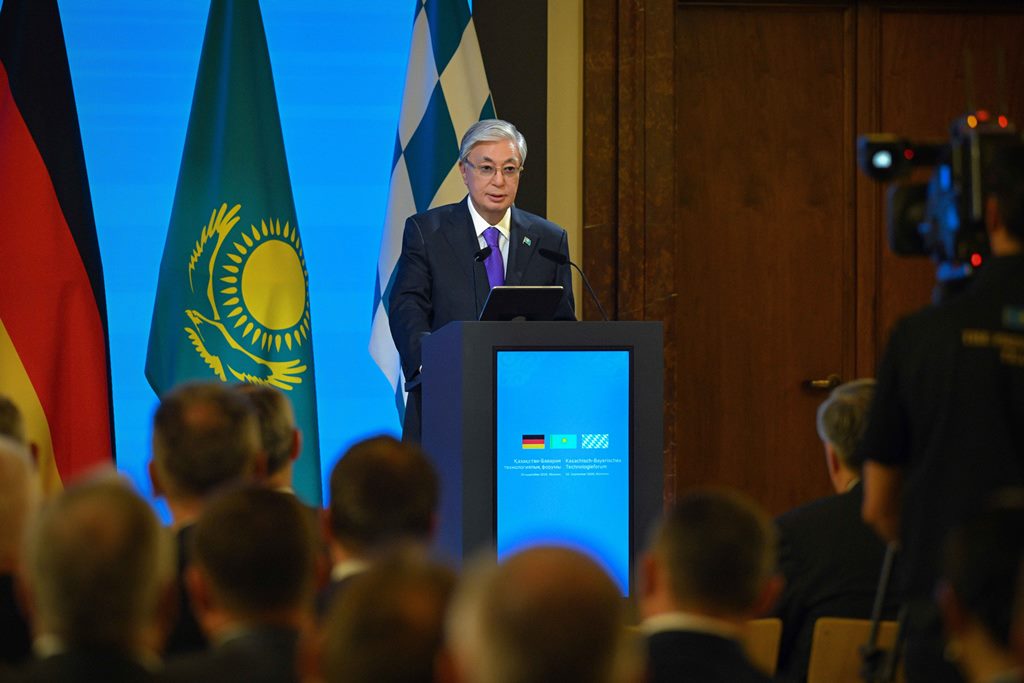
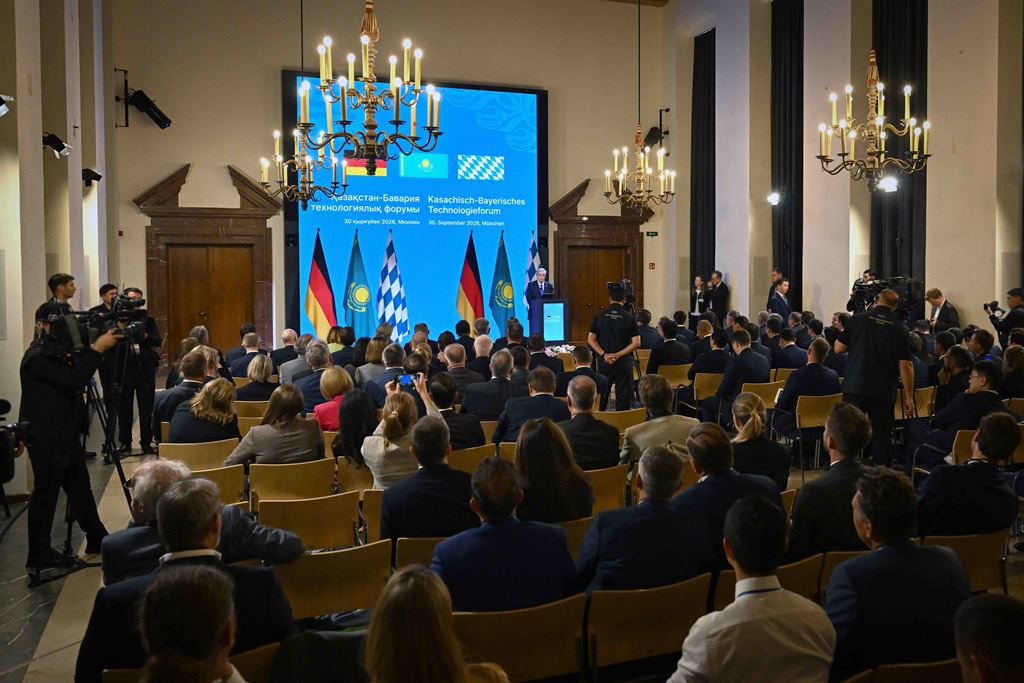
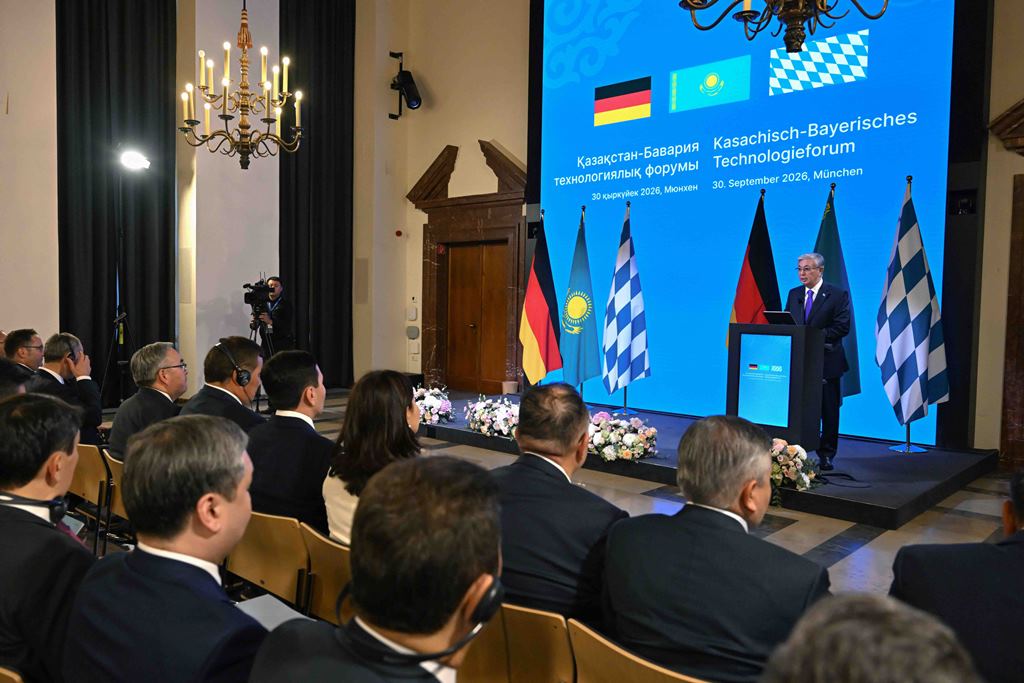
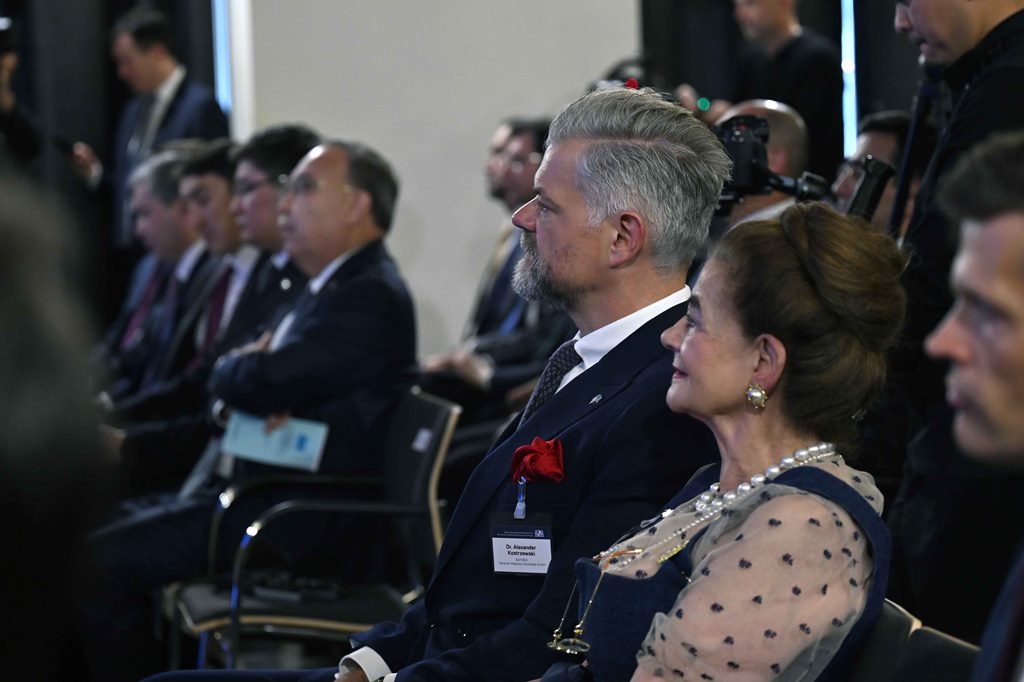
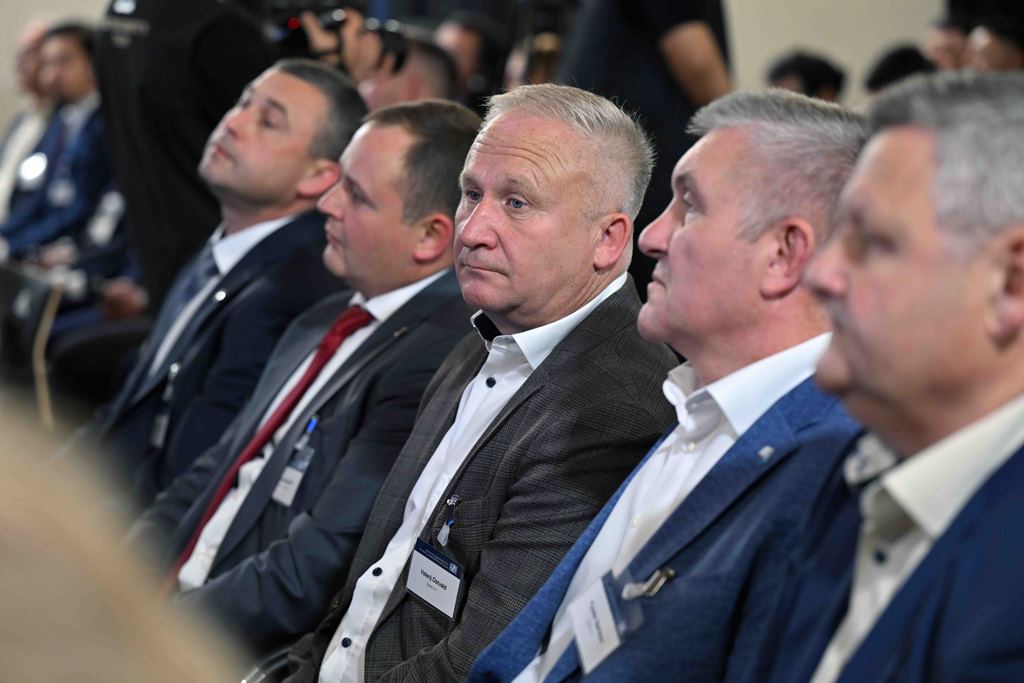
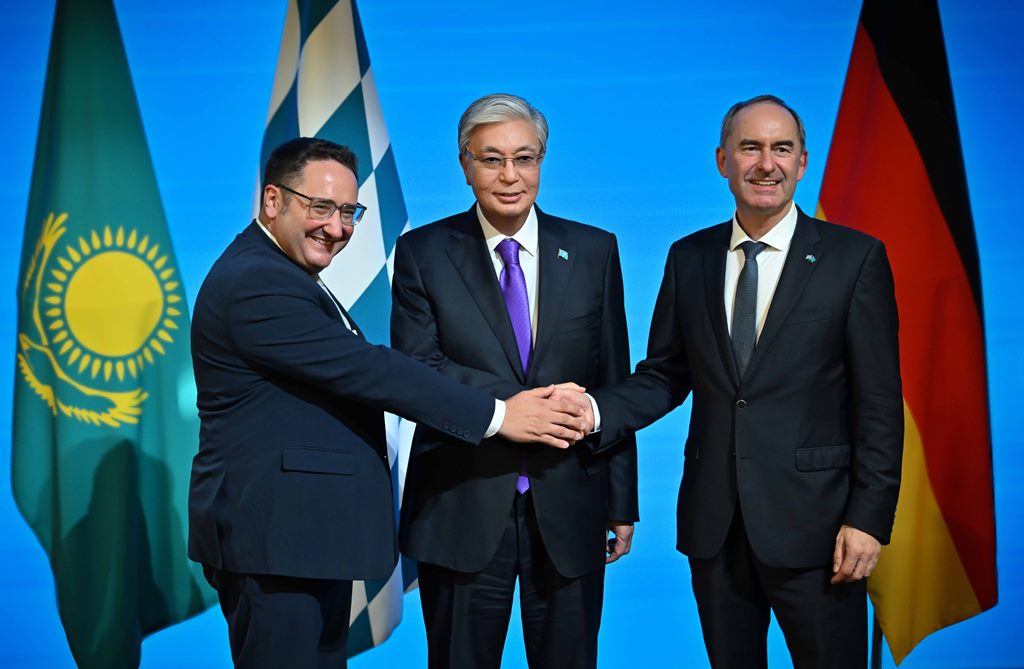
The President outlined the proposal on September 30 at the Kazakhstan-Bavaria Technology Forum in Munich, which concluded his official visit to Germany and brought together business, industrial and technology leaders.
“Made in Kazakhstan” with Bavarian technology
One of the clearest messages from Munich was Kazakhstan’s push to move its economic relationship with Germany beyond traditional trade toward technology-driven manufacturing.
Tokayev described Bavaria as one of Europe’s leading industrial regions and a globally recognized center for engineering and high technology. German companies, he said, already enjoy a strong reputation in Kazakhstan.
«German business enjoys a strong reputation in our country for its quality, reliability and technological excellence. Today, we have every opportunity to further strengthen our economic ties. Bavaria has a special place in this regard as one of Europe’s leading industrial regions and a globally recognized center of engineering and technology. For our people, “Made in Germany” has always stood for quality and reliability. This is why I considered it important to come to Munich in person to engage directly with Bavaria’s political and business leaders», the President said.
Bavaria is one of Kazakhstan’s key trading partners among Germany’s federal states. Kazakhstan currently exports oil, ferroalloys, steel, iron, copper, aluminum, inorganic chemicals, oilseeds and grain to the region.
The next stage, according to Tokayev, should focus on advanced technology, high-tech production and joint access to new markets.
Siemens and KUKA could support Kazakhstan’s industrial upgrade
Automation was at the heart of Tokayev’s industrial proposal.
Kazakhstan is expanding production in mechanical engineering, metallurgy, electrical equipment and industrial components. Further productivity gains, however, will increasingly depend on robotics, automation and digital production management.
This is where Kazakhstan sees a role for companies such as Siemens and KUKA. Large domestic manufacturers, including Qarmet, could provide demand for advanced industrial solutions.
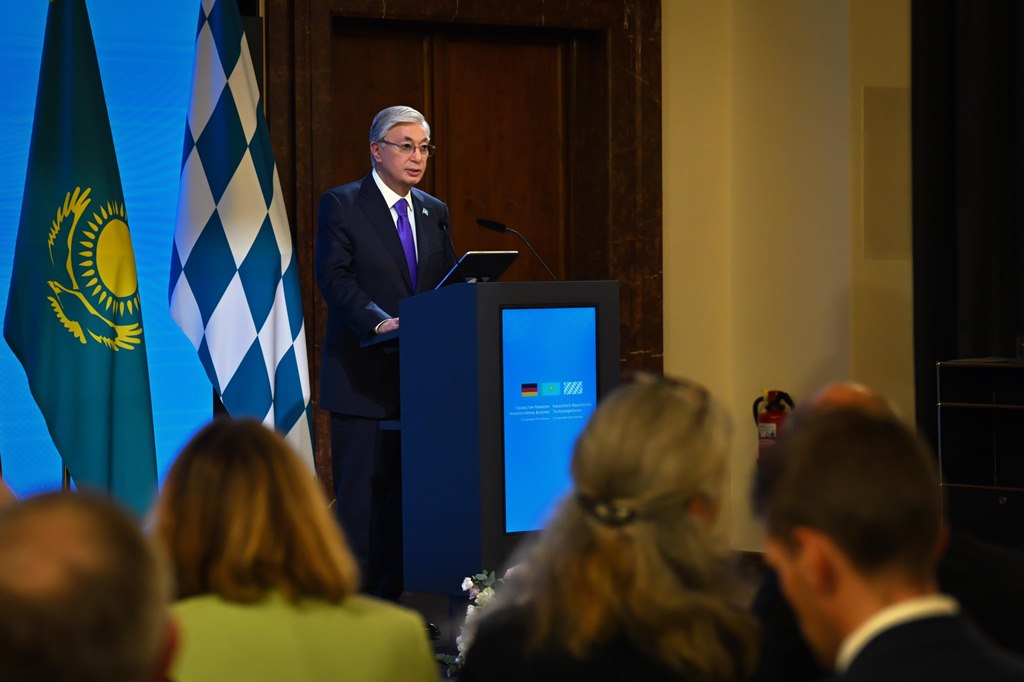
«Kazakhstan is expanding production in mechanical engineering, metallurgy, electrical equipment and industrial components. At the same time, further gains in productivity will increasingly depend on automation, robotics and digital control. Companies such as Siemens and KUKA are global leaders in industrial automation, robotics and advanced manufacturing. Major Kazakh enterprises (Qarmet) can provide stable demand and reliable industrial partnerships. Our ambition can be expressed in a simple formula: products made in Kazakhstan with Bavarian technology and German quality», Tokayev said.
The formula points to a broader goal: rather than simply importing German equipment, Kazakhstan wants technology and manufacturing expertise embedded in domestic production.
Kazakhstan offers Germany copper, titanium and critical materials
Critical materials form another part of the proposed partnership.
As German industry looks to diversify and secure supplies of strategically important resources, Kazakhstan is positioning itself as a long-term supplier.
«As German industry seeks to secure and diversify its sources of these essential materials, Kazakhstan stands ready to become a reliable, long-term partner, supplying copper, titanium, aluminum, beryllium, tantalum and niobium», the President said.
The proposal links Kazakhstan’s resource base with its wider industrial ambitions. Astana is seeking to combine raw-material exports with technology partnerships that can support higher-value production at home.
Kazakhstan does not plan to start with large-scale chip production
Microelectronics was among the most specific areas discussed in Munich.
Tokayev set a deliberately pragmatic starting point. Rather than attempting to establish large-scale chip manufacturing immediately, Kazakhstan could focus on segments of the semiconductor value chain that directly serve its existing industries.
These include:
- power electronics;
- sensors;
- measurement systems;
- sophisticated automated control systems.
Demand for these technologies is growing across Kazakhstan’s energy, mining, metallurgy, transport and manufacturing sectors.
«Bavaria has built one of Europe’s leading semiconductor and microelectronics ecosystems, bringing together internationally recognized companies such as Infineon Technologies, Siltronic, Rohde & Schwarz. For Kazakhstan, a realistic starting point is not large-scale chip manufacturing, but those parts of the value chain that directly support our industrial development. Energy, mining, metallurgy, transport and manufacturing increasingly depend on power electronics, sensors, measurement systems and sophisticated automated controls. In this regard, I suggest to launch a special partnership program with the Bavarian Chips Alliance, bringing together relevant Kazakh companies, research institutions and development organizations with Bavaria’s semiconductor ecosystem», Tokayev said.
The proposed program would connect Kazakh companies, research institutions and development organizations directly with Bavaria’s semiconductor ecosystem.
Bavaria is invited to build hubs along the Middle Corridor
Technology alone will not be enough if new manufacturing facilities cannot efficiently reach international markets.
Tokayev therefore invited Bavarian businesses to jointly develop industrial and logistics hubs along the Trans-Caspian International Transport Route, also known as the Middle Corridor.
For Kazakhstan, the proposal links industrial policy with the country’s role as a transit bridge between Asian and European markets.
Alatau City could become a base for Bavarian companies
Tokayev also presented Alatau City as a potential platform for German investment and technology.
Bavarian companies could use the new city to establish engineering and service operations, demonstrate technological solutions, find local partners and implement investment projects.
That would give Alatau City a role beyond urban development: it could serve as a platform connecting foreign engineering expertise with Kazakhstan’s domestic market and wider Central Asian opportunities.
German technology could also reach Kazakhstan’s farms
Agriculture was another part of the proposal.
Bavaria has expertise in agricultural machinery, precision farming, water-saving technologies and food processing. Tokayev proposed using these capabilities to launch Kazakhstan-Bavaria model farms.
The initiative would focus on producing and processing high-quality agricultural products in line with European standards.
For Kazakhstan, this would mean applying the same localization logic to agriculture: combining domestic production with technology, processing and higher quality standards.
Almaty could host a Bavarian business office
One of Tokayev’s final proposals was directly linked to Almaty.
The President suggested establishing a Representative Office of Bavarian business in the city. The office could serve German companies not only in Kazakhstan but across Central Asia.
Tokayev also tied future industrial cooperation to workforce development. Kazakhstan is interested in Bavaria’s dual vocational education model, with professional training and engineering skills potentially becoming part of major Bavarian industrial projects implemented in the country.
The Munich proposals followed a broader investment agenda discussed during Tokayev’s visit to Germany. We previously reported that Kazakhstan and Germany had assembled a portfolio of 40 investment projects worth more than $54 billion, with 21 projects already implemented. The next question is how much German technology, engineering expertise and advanced manufacturing can now be anchored inside Kazakhstan.