
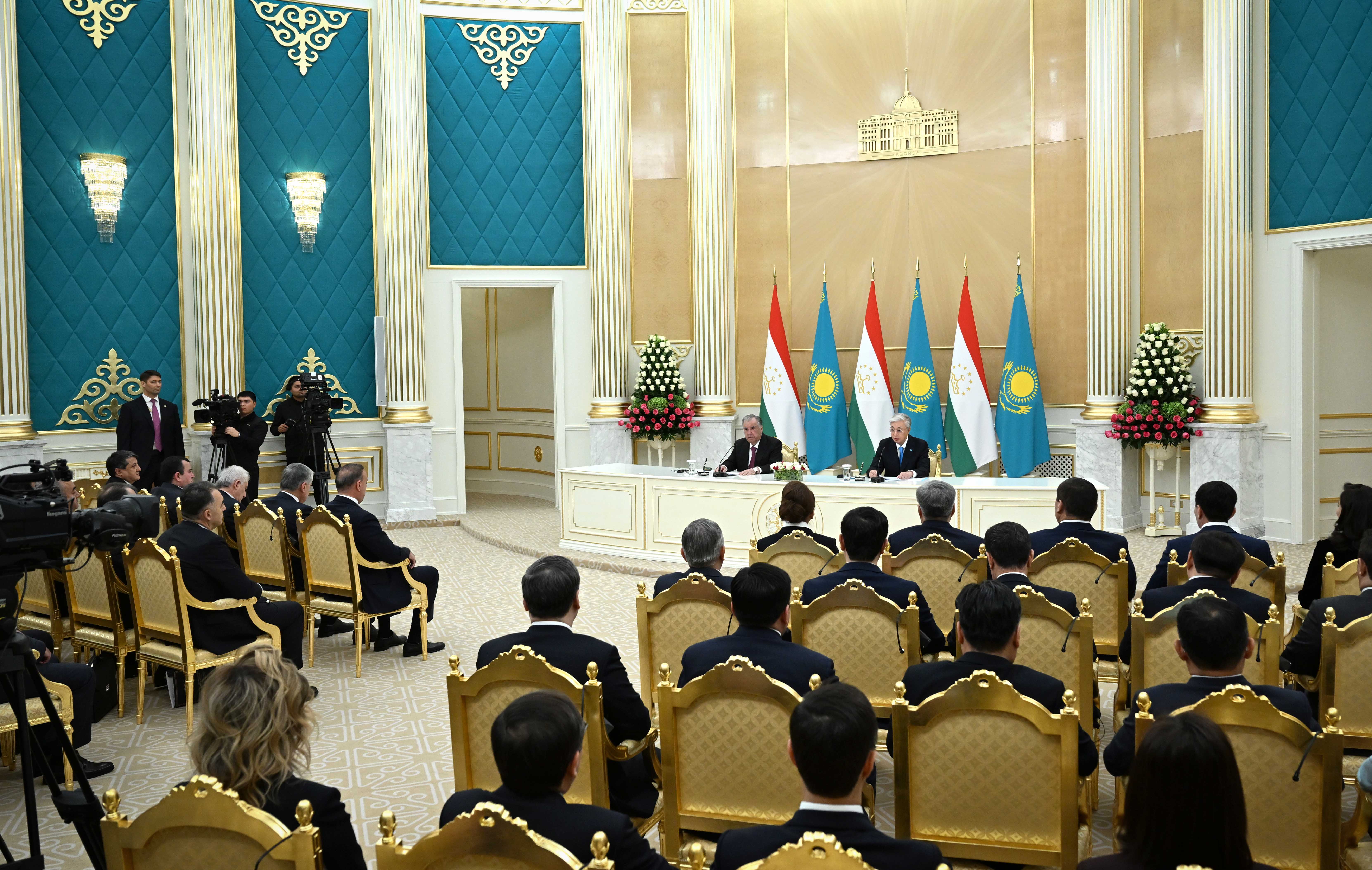
Kazakhstan and Tajikistan are moving toward $2 billion in bilateral trade. Presidents Kassym-Jomart Tokayev and Emomali Rahmon agreed on a new trade roadmap through 2030 during talks in Astana on November 7, 2026, according to the official information released by Akorda.
At a joint media briefing, the leaders outlined agreements covering agriculture, transport, water resources, energy, digitalization and education. Kazakhstan also announced its support for Tajikistan's candidacy for a non-permanent seat on the UN Security Council for 2028–2029, DKNews.kz reports.
The visit took place as both countries marked 35 years of independence, adding symbolic significance to the negotiations and the agreements reached.
Tokayev highlights 35 years of independence and partnership
Opening the briefing, Tokayev emphasized the progress made by Kazakhstan and Tajikistan since gaining independence and praised Rahmon's contribution to strengthening bilateral relations.
«Today’s visit is deeply symbolic, as it takes place in the year when our countries are celebrating the 35th anniversary of their independence. In the years since gaining sovereignty, both Kazakhstan and Tajikistan have come a long way, marked by truly remarkable achievements. Under your authoritative leadership, Tajikistan has made tremendous progress in strengthening its statehood, advancing its socio-economic development and raising its international standing. Your country plays an important role in ensuring stability and security in Central Asia. All the achievements of modern Tajikistan are rightly associated with your name and your wise, constructive policies, underpinned by the firm support of the people. Kazakhstan has great respect for your strategic course aimed at building a strong and prosperous state amid today’s complex geopolitical realities,» the President said.
Tokayev stressed that there were no unresolved or unresolvable issues between the two countries. He described their relationship as one based on strategic partnership, alliance and mutual trust.
Why Tokayev awarded Rahmon the Order of Qoja Ahmet Yasaui
During the visit, Tokayev presented Emomali Rahmon with the Order of Qoja Ahmet Yasaui, a state decoration named after the renowned philosopher and spiritual teacher.
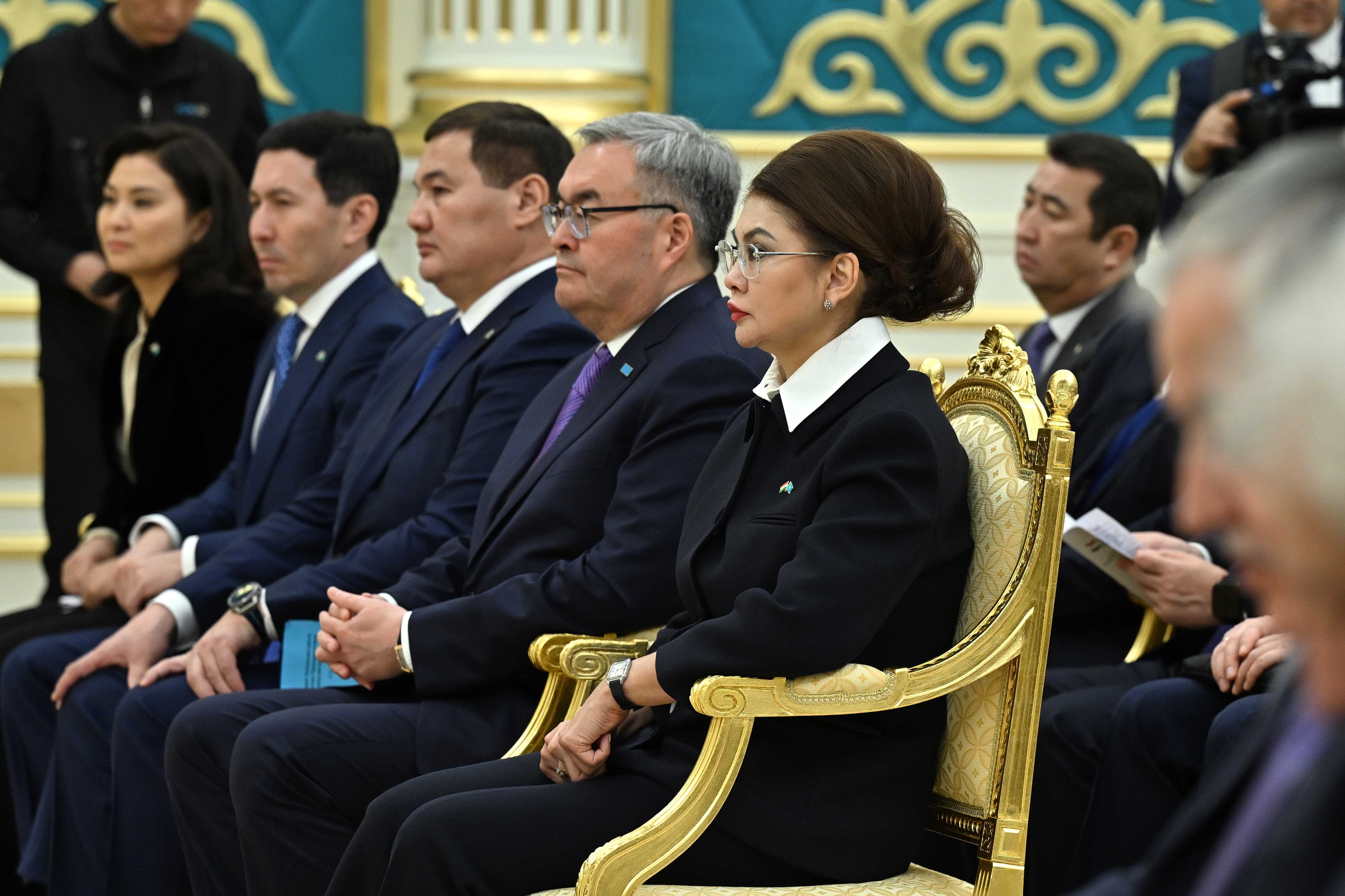
The Kazakh President explained that the award recognized Rahmon's contribution to education, science, culture and international cooperation. He also announced an initiative to promote a deeper understanding of Yasaui's teachings throughout Kazakhstan.
«This order holds special significance as a symbol of recognition of the President of Tajikistan’s outstanding contributions to education, science, culture and international affairs. Qoja Ahmet Yasaui is a figure of global stature, as it was he who brought knowledge founded on the principles of enlightenment, humanism and progress to our region. Thanks to Qoja Ahmet Yasaui, we became who we are to this day. His teachings influenced the evolution of the mentality, ethnic code and worldview of the Kazakh people. I therefore instructed that the essence of the great Qoja Ahmet Yasaui’s teachings be explained throughout the country, starting in the upper grades of school, as well as in universities, the armed forces, law enforcement agencies and all institutions. This is not a temporary campaign, but a major ideological undertaking. It is not about blind veneration, but about a deep understanding of the scientific, literary and philosophical thought of the great humanist Qoja Ahmet Yasaui. That is precisely why I established this high award, and precisely why I presented it today to our esteemed guest, President Emomali Rahmon,» Kassym-Jomart Tokayev noted.
The initiative goes beyond the award ceremony. Tokayev wants Yasaui's intellectual and philosophical legacy to become part of educational and institutional discussions across the country.
Kazakhstan and Tajikistan adopt trade roadmap through 2030
Economic cooperation was one of the central outcomes of the negotiations.
Tokayev announced that bilateral trade was approaching $2 billion, placing Kazakhstan among Tajikistan's three largest foreign trading partners.
«In an atmosphere of mutual trust and respect, we discussed a wide range of issues and outlined the main priorities for cooperation between our countries. We gave foremost attention to expanding trade and economic ties. Thanks to our joint efforts, bilateral trade is steadily approaching 2 billion US dollars. This places Kazakhstan among Tajikistan’s three largest foreign trading partners. The esteemed President Emomali Rahmon and I agreed to take the necessary steps to further increase bilateral trade. To achieve this goal, we adopted a Roadmap for Increasing Trade through 2030 today. The governments have been instructed to ensure its effective implementation,» Kassym-Jomart Tokayev said.
The roadmap establishes a framework for further trade growth, with both governments responsible for its implementation.
The announcement is particularly significant because it moves the countries' trade ambitions into a formal planning document extending to 2030.
Agricultural trade reaches approximately $600 million
Agriculture represents a substantial part of bilateral commerce.
According to Tokayev, agricultural shipments between Kazakhstan and Tajikistan increased by 11% last year, reaching approximately $600 million. That represented around half of total bilateral trade during the period.
The presidents agreed that agricultural cooperation still has considerable potential. Both countries expressed readiness to increase mutual food supplies and discussed establishing integrated production chains for processing agricultural products.
Such cooperation could expand the relationship beyond trading agricultural commodities toward processing and higher-value production. However, the briefing did not announce specific new processing facilities or investment commitments.
Energy, mining and industry identified as new growth opportunities
The leaders also discussed joint projects that could support economic development in both countries.
Tokayev identified energy, oil and gas, mining and metallurgy, and processing industries as promising areas for mutually beneficial cooperation.
He pointed to the Kazakhstan–Tajikistan Business Forum, held ahead of Rahmon's visit, as evidence of interest among companies in expanding commercial ties.
The next challenge will be translating that business interest into specific projects, financing arrangements and production partnerships.
Freight volumes reach 7 million tons as transport ties expand
Transport and logistics were another major priority.
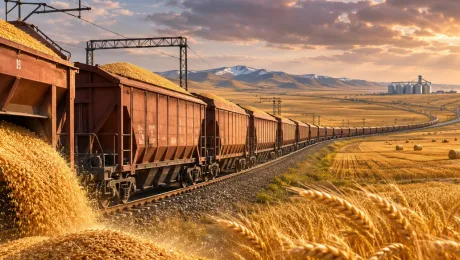
Tokayev reported that road freight between the two countries increased by 8% last year, while railway freight grew by 15%. Combined freight volumes reached approximately 7 million tons.
«Last year, road and rail freight volumes between our countries increased by 8 and 15 per cent, respectively, totaling around 7 million tons. The conditions put in place for carriers from both countries have helped sustain this positive trend this year. We agreed to pay particular attention to the digitalization of transport, which will ensure the seamless movement of freight. To further develop cooperation in this area, we will examine the prospects for implementing priority transport and logistics projects. To this end, a bilateral working group at the level of the national railway companies is in place and has been tasked with submitting specific proposals for cooperation,» the Head of State said.
The presidents agreed to prioritize digital solutions that could improve freight movement and transport coordination.
A bilateral working group involving the national railway companies will prepare specific cooperation proposals. The proposed projects remain subject to further examination.
Kazakhstan and Tajikistan to strengthen water cooperation
Water resources and energy were also discussed, reflecting the importance of transboundary river management for Central Asia.
Tokayev thanked Tajikistan for its approach to cooperation on shared water resources and emphasized the need for modern monitoring systems.
«Kazakhstan is grateful to the Tajik side for its consistent policy and support on matters relating to the use of transboundary river resources. And we agreed to continue our constructive cooperation in this area. The priorities are to introduce digital solutions in the water sector and jointly develop systems for water accounting and monitoring,» he said.
The agreement identifies digital water accounting and monitoring as priorities for future cooperation.
These systems could help improve the availability and exchange of information on water resources, although the leaders did not announce a specific implementation timetable.
Kazakhstan shares e-government and AI expertise with Tajikistan
Digitalization is becoming an increasingly important part of the bilateral agenda.
Tokayev noted that Kazakhstan had already transferred digital solutions from its e-government platform to Tajikistan under earlier agreements. Tajik specialists have also received training at leading IT schools in Kazakhstan.
«Over the past few years, our country has laid a solid foundation for the digitalization of public services and the development of artificial intelligence technologies. Under previously reached agreements, digital solutions from the e-government platform were transferred to the Tajik side. Specialists from Tajikistan successfully completed training at leading IT schools in Kazakhstan. A joint Faculty of Information Technology operates at the Tajik Technical University named after M. Osimi with the participation of the L.N. Gumilyov Eurasian National University. I am confident that such projects will contribute to the technological progress of our countries. To coordinate this extensive work across all areas, we proposed developing and adopting a Comprehensive Plan for Cooperation between Kazakhstan and Tajikistan through 2030,» the Head of State said.
The joint IT faculty illustrates how cooperation is extending into specialist training and higher education.
Tokayev also proposed a Comprehensive Cooperation Plan through 2030. Unlike the trade roadmap adopted during the visit, this broader plan remains a proposal for development and approval.
Kazakhstan allocates 100 annual education grants to Tajik students
Education and cultural exchanges remain an important part of the partnership.
Tokayev said Kazakhstan provides 100 educational grants annually to students from Tajikistan, the largest allocation to Tajik students among countries in the region.
«Regular reciprocal Days of Culture, active dialogue between representatives of the creative intelligentsia, and the unveiling of monuments to outstanding figures all generate great interest among our citizens. We also reaffirmed our shared aspiration to deepen cooperation in education. Within the region, Kazakhstan provides the largest number of educational grants specifically to students from Tajikistan, with 100 places allocated annually. Mutual readiness was noted to continue cooperation in training Tajik military personnel at Kazakhstan’s educational institutions. To carry out this work on a systematic and long-term basis, an intergovernmental Agreement on the Training of Military Personnel was signed,» the President added.
The agreement on military personnel training was among the concrete documents signed during the visit.
It provides an intergovernmental framework for continued cooperation in military education, while the annual grants support broader academic ties between the countries.
Kazakhstan backs Tajikistan's UN Security Council candidacy
The negotiations also covered regional security and international diplomacy.
Tokayev confirmed Kazakhstan's support for Tajikistan's candidacy for a non-permanent seat on the United Nations Security Council for 2028–2029.
«During the talks, particular attention was paid to ensuring stability and security in Central Asia. We agreed that the region’s sustainable development is our common goal, serving the fundamental interests of all our fraternal peoples. Kazakhstan welcomed Tajikistan’s candidacy for election as a non-permanent member of the UN Security Council for 2028-2029 and will, of course, support Tajikistan’s candidacy,» Kassym-Jomart Tokayev concluded.
The announcement represents a diplomatic commitment by Kazakhstan. Tajikistan's election to the Security Council would still depend on the relevant United Nations voting process.
Rahmon welcomes the results of the Astana negotiations
President Emomali Rahmon thanked Tokayev for the reception and for awarding him the Order of Qoja Ahmet Yasaui.
He described the negotiations as constructive and said the Joint Statement adopted by the presidents outlined the main directions for future cooperation.
«I believe that such high recognition of my modest contribution to the development of Tajik-Kazakh relations reflects the merits not only of me personally, but also of the entire people of my country. Every visit to fraternal Kazakhstan leaves us with new, vivid memories. We are pleased by friendly Kazakhstan’s significant achievements in the country’s socioeconomic development and in strengthening its standing in the international arena. We highly value the reforms of recent years aimed at creating a solid foundation for Kazakhstan’s continued harmonious advancement along the path of progress and prosperity. Today’s talks took place in the spirit of constructive political dialogue, in an atmosphere of trust and mutual understanding. We held substantive discussions on a wide range of issues on the bilateral agenda. The Joint Statement adopted following the talks sets out the main directions for the further development of our cooperation,» Emomali Rahmon stated.
Rahmon emphasized the importance of maintaining the momentum in bilateral relations and implementing the agreements reached at the highest level.
What the agreements mean for Kazakhstan and Tajikistan
The November 7 negotiations produced several concrete outcomes, including the trade roadmap through 2030, an agreement on military personnel training and a Joint Statement setting out future priorities.
Other initiatives, including new transport projects, agricultural processing chains and a comprehensive cooperation plan, will require further development.
The economic figures presented at the briefing show why the partnership matters. Bilateral trade is approaching $2 billion, agricultural shipments account for a substantial share of commerce, and freight volumes are increasing across road and rail networks.
For Kazakhstan, the agreements offer opportunities to strengthen export markets, develop regional transport connections and expand cooperation in technology and education.
The practical impact will depend on how quickly the governments and businesses of both countries implement the agreed measures.
Earlier, we reported on Tokayev and Rahmon's discussions on expanding Kazakhstan–Tajikistan relations. During their October 5 telephone conversation, the presidents reviewed bilateral cooperation and upcoming meetings, setting the stage for the latest negotiations in Astana.