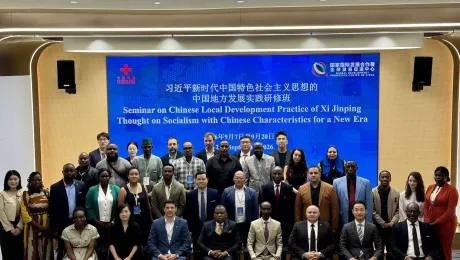


In an exclusive article for DKNews.kz, Han Chunlin, Ambassador Extraordinary and Plenipotentiary of the People’s Republic of China to Kazakhstan, explains how China is shaping a policy of good-neighborliness, promoting the idea of a “community with a shared future” with neighboring states, and what role Kazakhstan plays in this strategy - as a reliable partner, close friend, and key link in regional development.
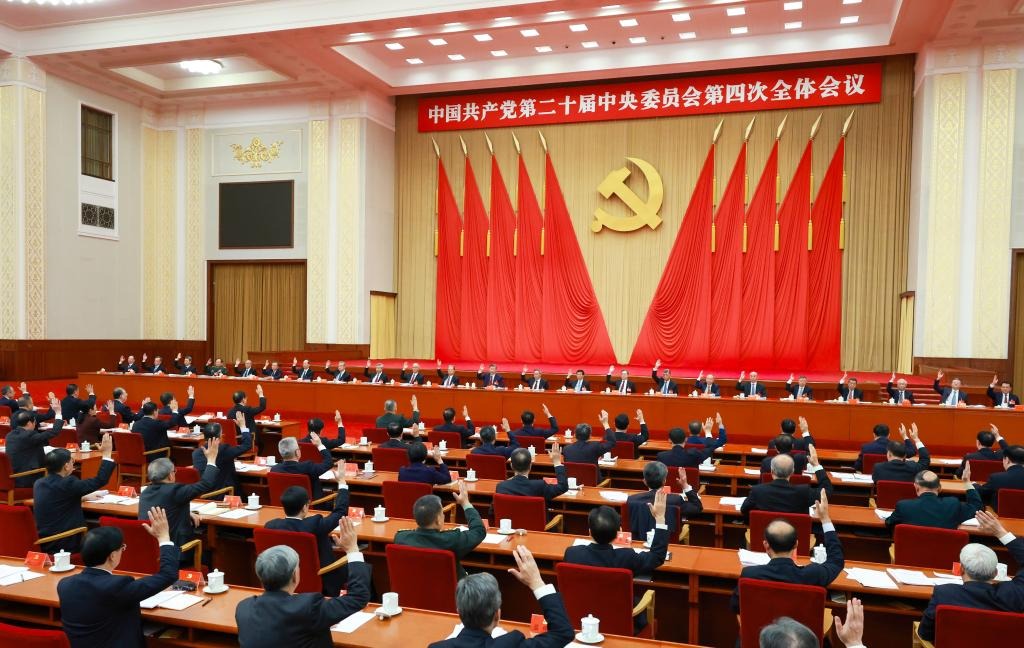
At the recently concluded 4th Plenary Session of the 20th Central Committee of the Communist Party of China, the “Proposals of the CPC Central Committee on the Formulation of the 15th Five-Year Plan for National Economic and Social Development” were reviewed and adopted. The document emphasizes the need to deepen development integration with neighboring countries, strengthen collective security, enhance strategic mutual trust, and build a community with a shared future with neighboring states.
There is a saying in China: “A close neighbor is better than a distant relative.” True development is possible only when peace prevails at one’s own doorstep. As President Xi Jinping has stressed, neighboring countries are a vital foundation for China’s national development and prosperity.
In today’s world - marked by the close interconnection between regional dynamics and global transformations - China is actively working to build a community with a shared future with its neighbors, injecting new momentum into global development and demonstrating its sense of responsibility as a major power.
Strengthening Good-Neighborliness through “Inclusive Benevolence” - Walking the Path of a Shared Future Together
Openness, inclusiveness, common benefit, balance, and mutual gain are key conditions for building a community with a shared future with neighboring countries. Only by abandoning Cold War thinking and a “zero-sum” mindset can we promote common progress through the development of neighboring states and contribute to a fairer, more rational global governance system.
 Archive of the Press Service of Kazakhstan Temir Zholy (KTZ)
Today, China has reached a common understanding on building a community with a shared future with 17 neighboring countries, has signed cooperation agreements under the Belt and Road Initiative with 25 countries, and remains the largest trading partner of 18 states.
China’s cooperation with the five countries of Central Asia is advancing under the principle of “three comprehensive coverages”:
- comprehensive coverage of comprehensive strategic partnerships,
- comprehensive signing of Belt and Road cooperation documents,
- comprehensive implementation of the initiative to build a community with a shared future.
At the same time, the world is entering a period of rapid changes unseen in a century. The collective rise of the Global South has become the most striking manifestation of these processes and a new historical mission entrusted to the developing world by this new era.
The Proposals clearly highlight the need to support joint and independent development among Global South countries, expand the scale of external assistance, and increase the provision of international public goods.
China was born in the South, is rooted in the South, and remains deeply connected with it. It has provided development assistance to more than 160 countries and implemented over 1,100 projects, giving strong impetus to growth and revitalization across the Global South.
China and the five countries of Central Asia are natural members of the Global South and companions on the road to modernization. Together, they will continue to coordinate national development strategies and face emerging challenges of the new era as a united front.
“In the Same Boat” - Ensuring Security and Overcoming Challenges Together
The current international security environment is becoming increasingly complex. Great-power rivalries are intensifying, geopolitical conflicts are multiplying, populism and extremism are resurfacing, and both foreseeable and unforeseen global risks are rising sharply.
Under these circumstances, effectively managing risks and ensuring stability in neighboring regions have become crucial conditions for building a community with a shared future with neighboring states.

Relying on its surrounding regions, China is firmly committed to addressing the deficits of peace, development, security, and governance facing today’s world. President Xi Jinping noted that Asian civilizations have long cherished traditions of peace, making the region the cradle of the Five Principles of Peaceful Coexistence.
China and the five Central Asian countries have reached an important political consensus on safeguarding regional security and stability. At the second “China–Central Asia” summit held this year, six countries jointly signed the Astana Declaration, which symbolized the formation of the “China–Central Asia Spirit” and affirmed mutual understanding, respect, and support on core interests.
All six countries confirmed their intention to jointly combat the “three forces of evil” - terrorism, extremism, and separatism - as well as transnational organized crime, to coordinate efforts against security threats, and to contribute to peace, stability, and recovery in Afghanistan. Thus, a regional security architecture based on peace, stability, and a shared future is gradually taking shape.
Guided by the principle “we are all in the same boat,” China is working with neighboring countries to overcome crises, tackle difficulties, adapt to changing realities, and open new horizons for development.
The Principle of “Shared Benefit” - Supporting Neighboring Prosperity and Advancing Global Harmony
President Xi Jinping has clearly stated that China’s previous opening-up policy was “catch-up” in nature, whereas today it has become “leading,” representing openness at a much higher level. This transition reflects the mission and prospects of high-level opening-up in the new era and fully demonstrates China’s sense of responsibility as a major power.
The Proposals stress the need to “steadily expand institutional opening-up, safeguard the multilateral trading system, and promote international economic circulation.” The document outlines a clear roadmap for advancing high-level opening-up and highlights China’s firm political resolve to continue channeling positive external economic effects toward neighboring countries.
The tide of economic globalization cannot be reversed. Instances of protectionism are nothing more than temporary fluctuations within a larger trend. No country can build impenetrable barriers in frontier areas such as technological innovation, the digital economy, or the green transition.
As the saying goes, “One flower does not make spring - spring comes when all flowers bloom.” No matter how the international landscape changes, China remains committed to sharing development opportunities with others.
Major Belt and Road projects - such as the China–Kyrgyzstan–Uzbekistan railway, the China–Kazakhstan highway, and the China–Kazakhstan logistics base in Lianyungang - are being successfully implemented and delivering tangible results across Central Asia.
Smaller yet high-quality, people-centered projects are also taking on new forms and benefiting growing numbers of people in neighboring countries. By aligning interests, promoting joint development, and deepening mutually beneficial cooperation, China offers new approaches to safeguarding the multilateral trading system and stabilizing global supply chains, paving a practical and effective path for regional cooperation among neighboring states.
Looking Ahead
Dawn is already breaking in the East - and the picture unfolding is especially promising. For China, Kazakhstan is a good neighbor, a dependable partner, and a close friend connected by common mountains and rivers, as well as deep interdependence. It is an important link in building a community with a shared future among neighboring countries.
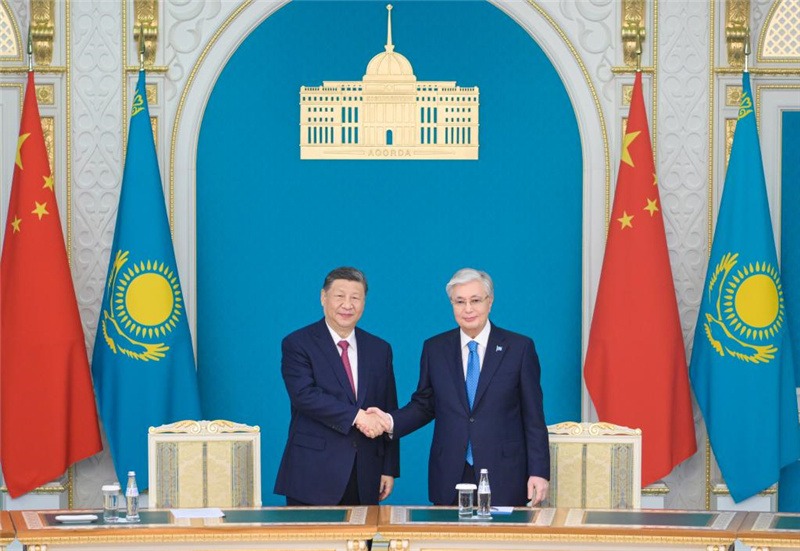
In recent years, under the personal strategic leadership of President Xi Jinping and President Kassym-Jomart Tokayev, China–Kazakhstan relations have steadily risen to new, higher levels.

Standing at a historic crossroads that bridges continuity and the future, China expresses its readiness to work together with Kazakhstan - guided by the diplomacy of the heads of state - to further strengthen political mutual trust, accelerate the alignment of development strategies, and open new horizons for bilateral relations and the building of a community with a shared future in the region.