
President of Kazakhstan Kassym-Jomart Tokayev gave his traditional New Year interview to the newspaper Turkistan. The conversation turned out to be very extensive: from social networks and the role of print media to nuclear energy, AI, and the transition of power.
Print newspapers vs social media and “clip thinking”
Tokayev begins with the role of print media, saying directly that newspapers and magazines, in his view, are entering a period of “renaissance.” The paradoxical reason, he says, is social networks, which he believes seriously harm people’s cognitive abilities.
According to the President, we are already seeing forty-year-olds with the level of education and mentality of fifteen-year-old teenagers. He notes that he has been used to reading the press since childhood and has never abandoned this habit.
In his words, print media:
- focus on analysis and reviews
- perform an educational function
- help preserve traditional values
Meanwhile, popular platforms like TikTok, Instagram, and Telegram, in his opinion, are far from the true interests of working people.
“I am convinced that countries with a strong reading culture will remain at the forefront of global progress,” he emphasizes.
Results of 2025: record GDP and the irreversibility of reforms
From media, the conversation shifts to the results of 2025. Tokayev admits the year was intense and “flew by like a single moment,” and highlights the following key figures:
- economic growth of more than 6%
- GDP exceeded 300 billion dollars
- GDP per capita surpassed 15,000 dollars
He stresses that these are record figures not only for Kazakhstan, but for the entire region. But he immediately adds: there is no reason to relax, since “even in the most favorable situation danger may lie hidden.”
The main problem, he says, is high inflation, which “eats away” the efforts to improve people’s well-being. In 2026, the government and regional administrations have a lot of work ahead to strengthen the country’s socio-economic foundation.
Still, in his opinion, the key outcome of 2025 is not even in numbers, but something else: the irreversibility of reforms.
Kazakhstan, as Tokayev says,
- has made a major step forward on the path of modernization
- has become a more civilized state
- has strengthened its understanding of how important large-scale transformations are for future generations
Tax Code: VAT, fiscal pressure, and a new “social contract”
Among the most heated topics was the new Tax Code. Tokayev considers the debates absolutely normal, but insists there is no need for panic.
Key points:
- the new code is not just a “fiscal campaign,” but a reboot of the entire tax system
- the main goal is sustainable economic growth
- the country is shifting from total control to partnership between the state, business, and citizens
On VAT:
- the previous government proposed raising VAT to 20%
- the current government initially supported the same rate
- Tokayev instructed to reduce it by four percentage points
He suggests viewing taxes as part of a modern “social contract”: you pay and receive services, infrastructure, security, and opportunities. Tax culture, he adds, is also a form of patriotism and a direct path to rejecting corruption.
Tariffs and inflation: why low prices aren’t always fair
From taxes, Tokayev moves to tariffs, a topic that deeply concerns the public. He admits that reforms almost always meet resistance, and this is where leadership and readiness to take responsibility become crucial.
Main points:
- in winter, tariff hikes were administratively frozen to shield citizens
- at the same time, the government must strictly ensure budget discipline
- the economy must not be “flooded with money,” which would trigger inflation
According to him, Kazakhstan has fallen into the “middle-income trap”: people have earnings, sometimes significant ones, but they disappear into inflation, mortgages, education costs, and support for parents. Any shock, such as illness or job loss, immediately undermines family stability.
Tokayev also challenges the myth that low tariffs are inherently good:
- cheap fuel and electricity largely benefit big companies and politically connected businesses, not the poor
- low utility tariffs help not disciplined households, but intermediaries profiting from the “communal swamp”
A new approach, he says, should be:
- targeted assistance for those who truly need it
- tariffs based on the principle “the more you consume, the more you pay”
- introduction of a “social consumption norm” with minimal tariffs for basic needs
Energy and utilities: debunking the myth of a “cheap” country
Kazakhstan has begun one of the largest reforms in energy and utilities since independence.
Today:
- the number of heat power plants in the “red zone” has dropped from 19 to 10
- accident risk has decreased
- modernization must not only repair worn-out infrastructure, but change how the entire sector operates
Tokayev harshly criticizes past practices: projects for ratings’ sake, and the race to “enter the world’s top thirty” instead of solving accumulated systemic problems.
He also notes that cheap resources have turned Kazakhstan into a shadow supplier of fuel to neighboring countries, effectively subsidizing their economies.
The goal of reforms is a fair economy where:
- everyone pays according to consumption
- the state supports those who genuinely need help
- resources work for all citizens, not just the chosen few
Logistics and transit: building a “Eurasian transport hub”
Tokayev speaks in detail about the country’s transit and logistics potential. Landlocked Kazakhstan sits at the heart of Eurasia, at the crossroads of key routes, which he sees as a major advantage.
Priority projects include:
- the new Dostyk – Moyynty rail line, expected to increase cargo between China and Europe fivefold on that segment
- construction of the Moyynty – Kyzylzhar, Bakhty – Ayagoz, and Darbaza – Maktaaral lines
- by 2030: building and modernizing 5,000 km and repairing 11,000 km of railroads
- the Center – West highway, cutting over 500 km off the route from the capital to western regions
Twelve international transport corridors already pass through Kazakhstan, handling up to 85% of overland freight between China and Europe.
Foreign policy dimension:
- participation in the Belt and Road Initiative
- development of the North – South corridor
- strengthening the Trans-Caspian or “Middle Corridor”
- growing interest in the Russia – Kazakhstan – Turkmenistan – Iran route
However, Tokayev cautions: there will be no easy money, competition is rising, and transport has become part of geopolitics.
Agriculture: “agrarian oligarchs” and a return to cooperation
Agriculture, he notes, receives massive state support.
Just the numbers:
- 580 billion tenge for concessional lending to farmers in 2024
- around 1 trillion tenge the year before
- over ten years, support has increased tenfold
Output from 2015 to 2024 rose 2.5 times, but could have been higher.
Positive developments:
- record grain and flour exports
- expanding export geography
Still, Tokayev sees the greatest potential in livestock. By 2035, global demand for red meat will reach 233 million tons, with imports growing to 27 million tons. Kazakhstan, he believes, can secure a strong niche, especially in Asian markets.
He criticizes the emergence of “agrarian oligarchs” benefiting from subsidies, while small farms lack sufficient support.
His proposed solution is cooperation:
- farmers pooling resources for grazing, milk and meat processing, hides and wool
- cooperation as a path “from survival to prosperity”
- and as an ideology of unity and creation, without coercion or empty campaigns

Tourism: eco-activists, reforms, and Almaty as “the city that never sleeps”
Tourism receives considerable attention. In 2025, several global media outlets named Kazakhstan among the world’s best destinations, but Tokayev admits doubts about infrastructure readiness are justified.
He notes:
- after his criticism, efforts intensified, but there is still a long road ahead
- tourism is complex, at the intersection of economy, culture, security, and business
- it requires professionals and patriots, not people driven by laziness, indifference, and greed
He believes Kazakhstan has underdeveloped eco-tourism and mountain resorts.
On Shymbulak:
- a unique resort just 30 minutes from central Almaty
- yet physically and morally outdated
- requires a new development vision that balances affluent travelers and the middle class
He also criticizes some eco-activists who, under environmental slogans, block important projects, and certain businessmen who fear competition.
Special focus: Almaty. CNN Travel called it the “new capital of style” of Central Asia in 2025. Tokayev instructed the mayor to turn Almaty into a city that, like New York or Paris, “never sleeps,” working around the clock for residents and visitors.
Year of digitalization and artificial intelligence: a bet on the future
Tokayev has declared 2026 the Year of Digitalization and Artificial Intelligence. This, he says, is about national survival as a civilized state in the new technological era.
Kazakhstan, in his view, has a decent starting point:
- developed fintech companies
- digitalized public services
- Astana Hub innovation cluster with about two thousand companies
- IT exports of about 1 billion dollars in 2025
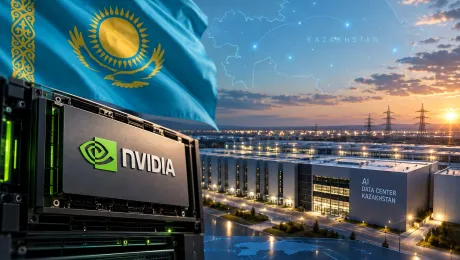
- launch of two supercomputers – Alem.Cloud and Al-Farabium
- CryptoCity pilot zone
- the Alatau City accelerated-development project
In May 2025, the AI Development Council began its work. In November, the Law “On Artificial Intelligence” was signed, and the Ministry of Artificial Intelligence and Digital Development was created.
Education is also changing:
- more than 650,000 students trained under the AI-Sana program
- plans to open a specialized AI research university
Tokayev sees AI as a watershed: some countries will “enter the future,” while others will remain in the past. Kazakhstan, he insists, must be in the first group.
Nuclear energy and rare earths: correcting a “historical absurdity”
From digitalization, Tokayev shifts to future energy. Without reliable electricity generation, Kazakhstan cannot move to a new technological model, where supercomputers and data centers consume massive amounts of power.
He calls the construction of several nuclear power plants both:
- a correction of historical absurdity – being a global uranium leader without a single nuclear plant
- and a matter of prestige and training a new technical elite
Another key issue is rare earth metals. Demand for critical materials, he says, will double in the next five years. Kazakhstan intends to become one of the global leaders in reserves and is developing cooperation with the US, China, Russia, South Korea, Japan, and several EU countries.
Business, luxury lifestyles, and charity: forming a “national bourgeoisie”
Tokayev speaks frankly about major businessmen.
In his view:
- business is “the backbone of the economy”
- private property is firmly established, and he has always defended the legitimate interests of the national bourgeoisie
But he admits that, due to mentality and history, local entrepreneurs are far from “Protestant asceticism.” Recalling his experience in Switzerland, he notes that billionaires there lived modestly and did not seek the spotlight.
The lavish lifestyles of some Kazakh businessmen, he says, often provoke public resentment. The answer, in his opinion, lies in turning toward genuine philanthropy – a “contract with society,” not imitation.
He confirms that on Republic Day he held a closed meeting with business leaders precisely to discuss conscious charity. A new state award, the Meirim Order, has been established to promote such initiatives, with the first recipients expected this year.
Returning assets and protecting investors
A separate part of the interview discusses the Committee on the Return of Illegally Acquired Assets under the Prosecutor General’s Office and its transformation into the Committee for Investor Protection.
He cites figures:
- over 1.3 trillion tenge recovered
- more than 1 trillion tenge transferred to the state budget
- through the Special Fund, 434 facilities worth 482 billion tenge are being built or renovated, including:
- 227 water supply facilities
- 183 medical facilities
- 11 educational institutions
- 5 sports facilities
- 8 infrastructure facilities, including airports in Pavlodar, Arkalyk, and Balkhash
The recovery work, he stresses, has not ended; it has simply moved into a more routine stage, with a focus on fairness and objectivity.
Agreements totaling more than 5 trillion tenge have been reached with owners of “questionable” assets. These funds will go toward investment and social projects in tourism, transport, mining, energy, education, healthcare, and social support.
Qantar, the army, and security
Tokayev returns to the January events, stressing that the main circumstances have already been established. The investigation was conducted in close cooperation with civil society and human rights organizations, and some processes are still ongoing.
He recalls:
- unrest swept across 12 cities at once
- city halls and law enforcement buildings were seized
- more than three thousand weapons fell into criminals’ hands, most of which have now been located
On the army, he is unequivocal:
- the death or injury of conscripts in peacetime is unacceptable
- he sharply criticized the Defense Ministry leadership for weak educational work
- there must be no hazing, bullying, tribalism, or regional cliques
At the same time, he emphasizes that individual tragedies do not reflect the overall state of the armed forces: there is order and discipline, modernization is underway, and the army is performing well in exercises.
Road accidents and the “culture of driving”
Road safety remains one of the most acute issues. The growing number of cars and transit traffic inevitably increases risks.
He cites the following:
- over the last five years, Kazakhstan added 1.7 million vehicles
- in the past year alone, 300,000 more
- road mortality has been reduced by 9.4%
But without a change in drivers’ own attitudes, progress will be limited. He calls for:
- promoting respect for traffic rules not out of fear, but for one’s own and others’ safety
- wider use of digital technologies and AI tools
- improving infrastructure and prioritizing the safety of public transport
Social policy, benefits, and immigration
Kazakhstan, Tokayev says, remains a social state. But he speaks sharply about abuses:
- the system of benefits and allowances has become bloated, sometimes creating dependency and fraud
- the number of officially registered disabled people exceeds 740,000 – too many, he argues, for a country of 20 million
There have been cases where people with relatively mild conditions were classified as disabled to receive payments.
A similar pattern, he claims, exists in:
- private education, where elite schools receive major subsidies through per-capita financing
- private healthcare, where budgets follow the number of “registered” patients while equipment is purchased by the state
He instructs authorities to restore order, stressing:
- private business must not live “on the state’s back”
- but all social obligations to citizens will be fulfilled
Regarding kandas (repatriates), Tokayev supports their return, but focuses on integration: only 15% of working-age newcomers have higher education, and many struggle to adapt, especially in densely populated regions.
History, “pseudo-historians,” and patriotism without theatrics
Unexpectedly, the discussion turns to history and ideology.
Tokayev criticizes “pseudo-historians” who:
- distort facts
- blame other nations for all misfortunes
- create cults around dubious figures of the past
Mythologized history, he warns, is dangerous:
- it leads to a “kingdom of crooked mirrors”
- undermines self-awareness
- breeds disputes and conflicts instead of unity
As a positive reference, he again invokes Abai and his concept of the “Complete Person,” based on work, learning, and morality.
On patriotism, Tokayev is simple:
- it is not loud slogans
- cleaning up trash, planting trees, respecting elders, setting an example for the young – this is also patriotism
Real patriots, he says, are engineers, teachers, doctors, soldiers, farmers, and cultural workers he meets during trips across the country.
35 years of Independence and Kazakhstan’s “prime era”
The year 2026 is also preparation for the 35th anniversary of Independence. Tokayev believes Kazakhstan has come a long way, proving to skeptics of the early 1990s that it could build a successful state with a dynamic economy and weight in international affairs.
Young people, he notes, already call this period Kazakhstan’s “prime era.” Their enthusiasm may sometimes seem excessive, but it is positive, as long as they:
- live in the real world, not a virtual one
- rely on work and discipline, not on expectations of quick victories
He once again stresses: the future belongs to talented, proactive, and patriotic youth.
2026: the year of AI, a referendum, and “Taza Kazakhstan”
Wrapping up, Tokayev outlines the key milestones of the new year:
- large-scale political transformation
- continuation of economic reforms
- a referendum on constitutional reform comparable, in scope, to adopting a new constitution
- the Year of Digitalization and Artificial Intelligence as a “historic opportunity” for Kazakhstan
He highlights the “Taza Kazakhstan” (Clean Kazakhstan) initiative:
- it is not only about clean streets and rivers
- “cleanliness” is, for him, the opposite of decay in minds and society
- it means rejecting idleness, embracing self-development, charity, and shared responsibility
Kazakhstan, he says, must remain a country of Law and Order, with a “dictatorship of law,” quality education, and a high culture of behavior.
Personal: health, character, and 50 years in public service
At the end, the interviewer asks about Tokayev as a person.
About himself, he says:
- 50 years in public service, starting in 1975 at the USSR Foreign Ministry
- trained as a sinologist, which explains his diligence and respect for texts
- personally edits all his speeches, articles, and even letters
- describes himself simply as a “statesman”
On health:
- no complaints, blood pressure normal
- practices yoga (without meditation)
- plays table tennis several times a week
- lost 9 kilograms and feels better
This long interview can be seen as a kind of “road map” for the coming years: from structural reforms and infrastructure investment to efforts to reboot ideology, patriotism, and attitudes toward work and knowledge.
In short, Tokayev’s message is this: Kazakhstan, in his view, is standing on the threshold of a new phase of modernization – based on digitalization, AI, a fair economy, a culture of reading, and everyday, not theatrical, patriotism.