
Thanks to digital technologies, occupational health and safety have reached a new level of oversight at many large Kazakhstani enterprises, including those that are part of Samruk-Energy JSC.
This is especially relevant for enterprises with hazardous and harmful working conditions. Digital monitoring and control make it possible to minimize response times to deviations and emergencies, and to ensure personnel strictly comply with industrial safety requirements.
The effectiveness of digital and AI systems has been proven at AlES JSC, where a comprehensive security system was launched in 2024. Here, video surveillance, access control, and unmanned aerial vehicles (UAVs) are integrated into a single system that operates around the clock and allows for an immediate response to non-standard situations. To continuously monitor the situation at all facilities, the company has established local observation points that monitor and analyze compliance with health and safety standards. Video information from all local points is simultaneously displayed at the head office's Centralized Observation Point, enabling dual-level oversight of the situation.
As the company explained, the video surveillance system is built on TRASSIR equipment. Approximately two thousand cameras have been installed, and a unified 24/7 monitoring center has been created. Initially, an operator watched the monitors. Now, this function is delegated to an automated system; the system is given a task and executes it according to a set algorithm. Surveillance covers the entire path from the entrance of a workshop, laboratory, or other production area, to the workstation, and to the exit from the premises.
Modern 5MP video cameras provide high image detail, ensuring stable facial recognition regardless of the face's position or angle in the frame. They can also read and identify vehicle license plates. The Access Control Systems (ACS) with Face ID functionality are based on SIGUR equipment. This system covers entry points, the distribution of free meals, and breathalyzers. These systems are all powered by the latest technologies, including AI.
“Initially, the company's management only tasked us with digitalizing the occupational health and safety system,” says Rymgali Donenbaev, Head of the Safety Department at AlES JSC. “We completed the task of ensuring health and safety. Then we began to build upon the system, integrating it into the security structure of the entire company. The implementation was aided by the fact that we have been developing the Kaizen system for several years. Now, almost all departments work according to it. By the time the project was being developed, green, yellow, and red zones had already been identified and marked in all workshops in accordance with Kaizen. Access criteria for them were also defined. This made it easy for us to navigate, write the program, and configure the cameras.”
Specialists note that at first, many employees did not understand the project; they perceived the video surveillance system as a form of personal monitoring. The adaptation period to the new system took about three months. During this time, employees from the occupational health and safety department conducted explanatory work with the power engineers. Now everyone has adapted, and workplace discipline has improved. All employees use personal protective equipment, work strictly in their uniforms, do not smoke at their workstations, and keep them tidy.
While ensuring compliance with labor laws and safety regulations, the company also creates opportunities and conditions for employees to meet these standards. Shower and restroom facilities, specially equipped smoking areas, sports grounds and gyms, and the provision of free meals at almost all production sites—all this is aimed at improving the working and recreational conditions for employees. As a result, the team already sees the system's benefits.
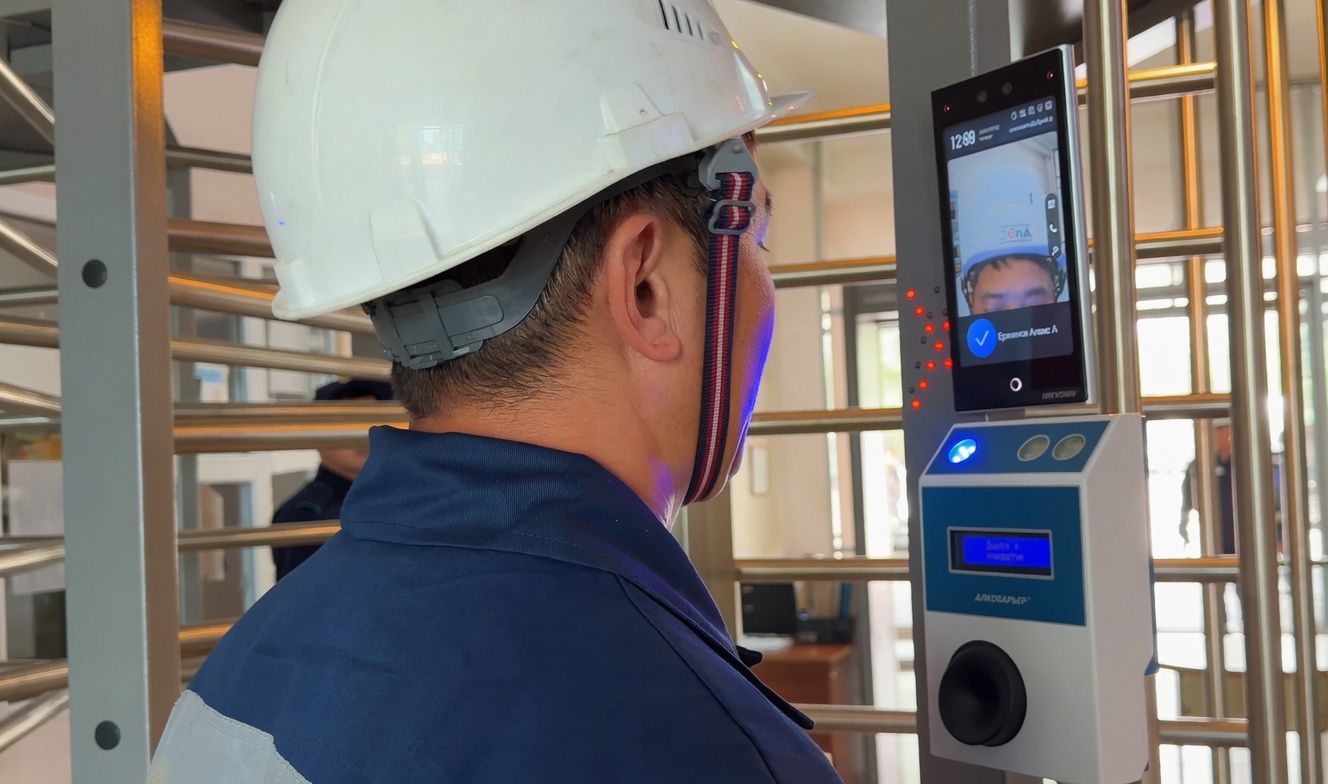 photo by Aigul Kurganbayeva
“A decision was made to replace the outdated card-based access control system with a Face ID-enabled ACS based on the employee roster, which simplified many processes,” says Nartay Mukhametbay, an employee of the management department. “The ACS operates in all departments; for example, Face ID is used to provide free meals and milk to the workforce. This works faster and more precisely than the previous voucher system. Face ID not only organizes and simplifies entry into the enterprise but also controls movement within its territory: only those authorized by their official duties can enter a specific zone. As for the results, compared to when the system was first implemented, the number of health and safety violations has decreased by approximately 89% over its year and a half of operation.”
High-definition cameras make it possible not only to see if an employee is wearing a hard hat but even to detect an unbuttoned uniform, which, from a safety perspective, could get caught in equipment and cause an emergency. When it comes to safety, there are no minor details, the company believes.
The system monitors the smallest deviations in production processes - effectively in parallel with the centralized monitoring panel of the AlES power system. As Rymgali Beketayevich explains, the reaction to these deviations is quick - 5-10 minutes. Here, the action protocol is clearly developed, as is the composition of the response group, which must include a medical worker. “We have dual control, our system, and employees sit on the centralized monitoring console, meaning we do not rely solely on artificial intelligence,” he clarifies.
Thanks to AI, many production issues are now being resolved. Thus, the head office has implemented a system for the automatic translation of documentation into any required language in the world. There were also more complex, comprehensive solutions.
The Almaty energy complex is known for the fact that all eight production departments here have their own specifics. They were built at different times, using technologies and equipment specific to their era. There are also different types of generating stations: hydro, gas, coal... Therefore, extensive preliminary work was carried out with the contracting organization to adapt the system to this complex production.
Solutions were found, and a corresponding technical specification was written, specifying the parameters that are characteristic of the company's production. Subsequently, a contract was concluded, and software was provided, including the specifics and requirements of the power engineers.
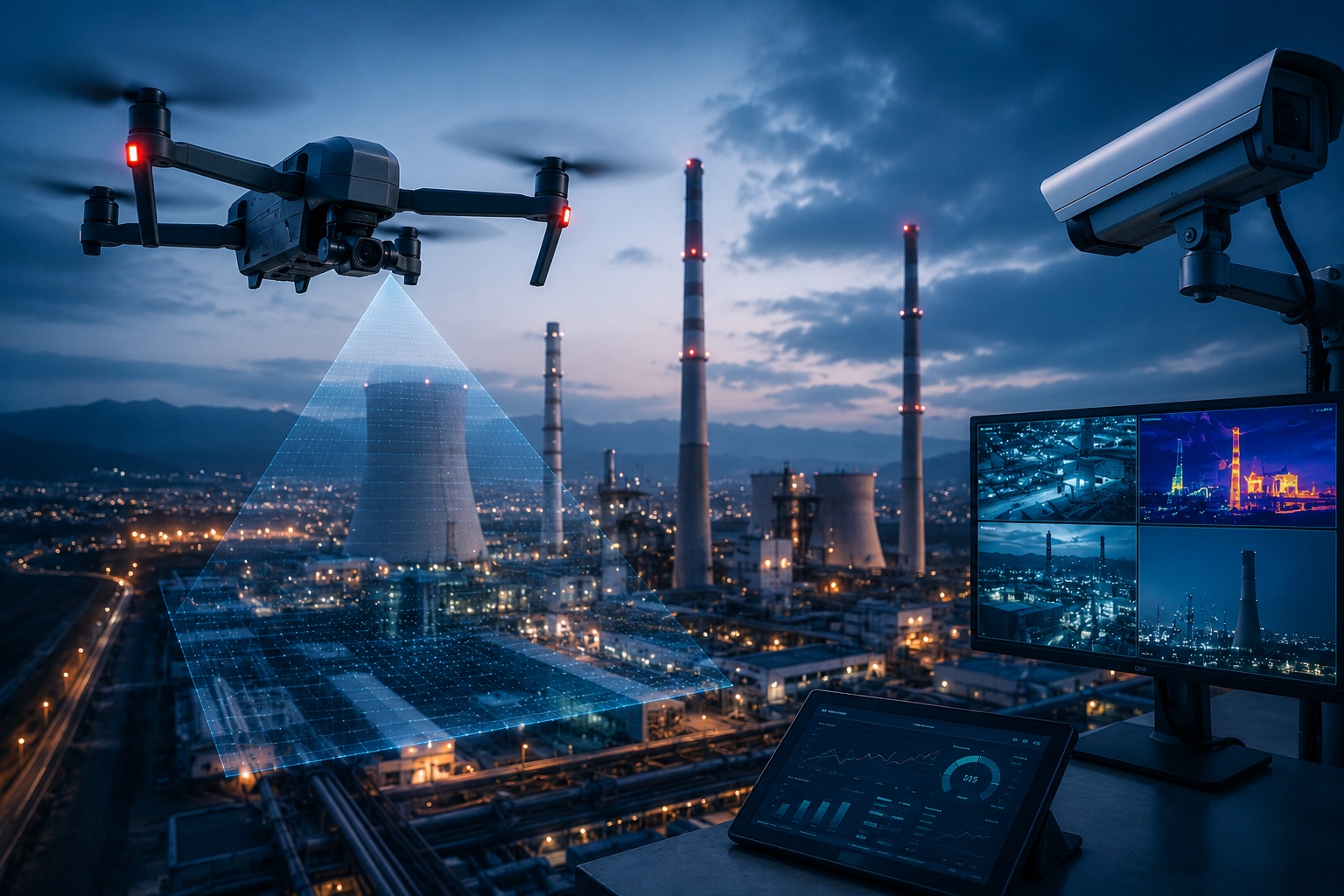
And the system worked. For example, previously, to determine the amount of coal and ash, we hired separate mine surveying services," Rymgali Donenbayev cites as an example. – Now we have acquired UAVs that perform several functions, ranging from protecting facilities to utilizing mine surveying services. We have boiler rooms where the temperature is very high, and a person cannot stay there for long. We have installed thermal imaging cameras there, and we can monitor the process regardless of the temperature. And if there are technological violations, we have a separate dispatch office that directly monitors the processes.
We also want to eliminate the need to use classical perimeter signaling, replacing it with a video surveillance system with laser-guided cameras that can determine in real time whether someone has entered the enterprise's territory. By doing so, we will change the classical security system. And thanks to UAVs, we will come to the point where security personnel will no longer need to travel around the area 24 hours a day. After all, the UAV easily keeps all objects in its field of vision, while the optical zoom it possesses, combined with video analytics, allows for close proximity and detailed facial recognition.
The UAV is being tuned and taking off from the DJI DOCK2 docking station. It can fly for 25 minutes without recharging at speeds up to 25 m/s and maintain a visibility range of 30–40 km. Night vision cameras are installed on them, allowing them to easily see a person and determine a car's license plate number. The radius of the clear image is 200 m. All information is stored on the server, which allows for the preparation of analytical and reference information.
Work on digitalization and the application of AI continues. According to Galina Kisilenko, an employee of the Security Department, a group has been established to further develop the project using AI and apply it directly in production.
"In any workshop, there is a large number of various sensors that show pressure, temperature, water level, etc." "Automation exists, but all of this is a bit outdated." – she notes. - From most instruments that have analytical characteristics, the operator records the readings and transmits them in a chain. On the main control panels, some instruments are adjusted manually depending on the readings.
Now the task is to connect additional modern equipment using AI to the analytical instruments to continuously capture readings. And not just to collect and transmit them, but to make predictive conclusions: it is possible that AI will sense deviations from permissible values - large vibrations, pressure fluctuations uncharacteristic of the given area, etc.
At the same time, the use of new technologies with AI and predictive analytics requires a fundamentally different level of protection of energy-generating equipment from external interference, and this is not only information security methods, but also the creation of a reliable cybersecurity circuit.
During the station modernization process, the company will implement cybersecurity elements based on the principle of one-way data transmission—"datadiode" technology—where information about equipment performance is transmitted to external systems, but the feedback channel is completely absent, blocking any unauthorized access attempts from the global internet network.
“The implementation of state-of-the-art technologies using AI—from biometric SKUDs on driveways to drones—indicates that the security of AlES energy facilities is transforming into a unified ecosystem that strives to eliminate human factor in security matters, working ahead of others by warning of various types of threats,” concludes Rymgali Donenbayev.
All these solutions for using the latest technologies are being implemented within the framework of systemic digitalization, which is coordinated by Samruk-Energy JSC, providing organizational support and creating conditions for their implementation. The positive experience of applying AI technologies at AlES production facilities has allowed Samruk-Energy JSC to move to the next step - the phased implementation of these projects at the company's other subsidiaries, allowing for the formation of a unified safety standard.