

From AI-powered speech restoration to technology designed to predict mining accidents, young innovators from Kazakhstan and Kyrgyzstan brought practical solutions to some of the region’s biggest challenges at Almaty Youth Forum 2026, DKNews.kz reports.
Almaty has brought together a new generation of Central Asian leaders who are already trying to solve problems that governments, businesses and communities will face for years to come.
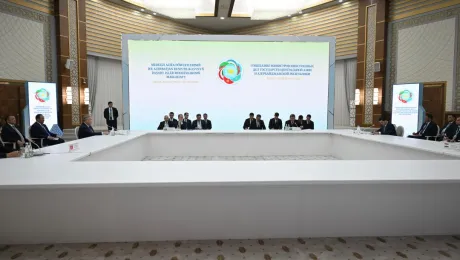
The international Almaty Youth Forum 2026: Central Asia for Sustainable Development focused on artificial intelligence, climate technologies, digital safety, volunteering, social innovation and sustainable development.
The two-day event was organized by the Almaty city Akimat, UNICEF Kazakhstan and the Almaty Volunteers Front Office as part of the International Year of Volunteers for Sustainable Development.
But the forum was designed to be more than another conference filled with speeches. Its main focus was on young people who already have working ideas — and, in some cases, technologies with the potential to grow into serious projects.
From climate change to artificial intelligence
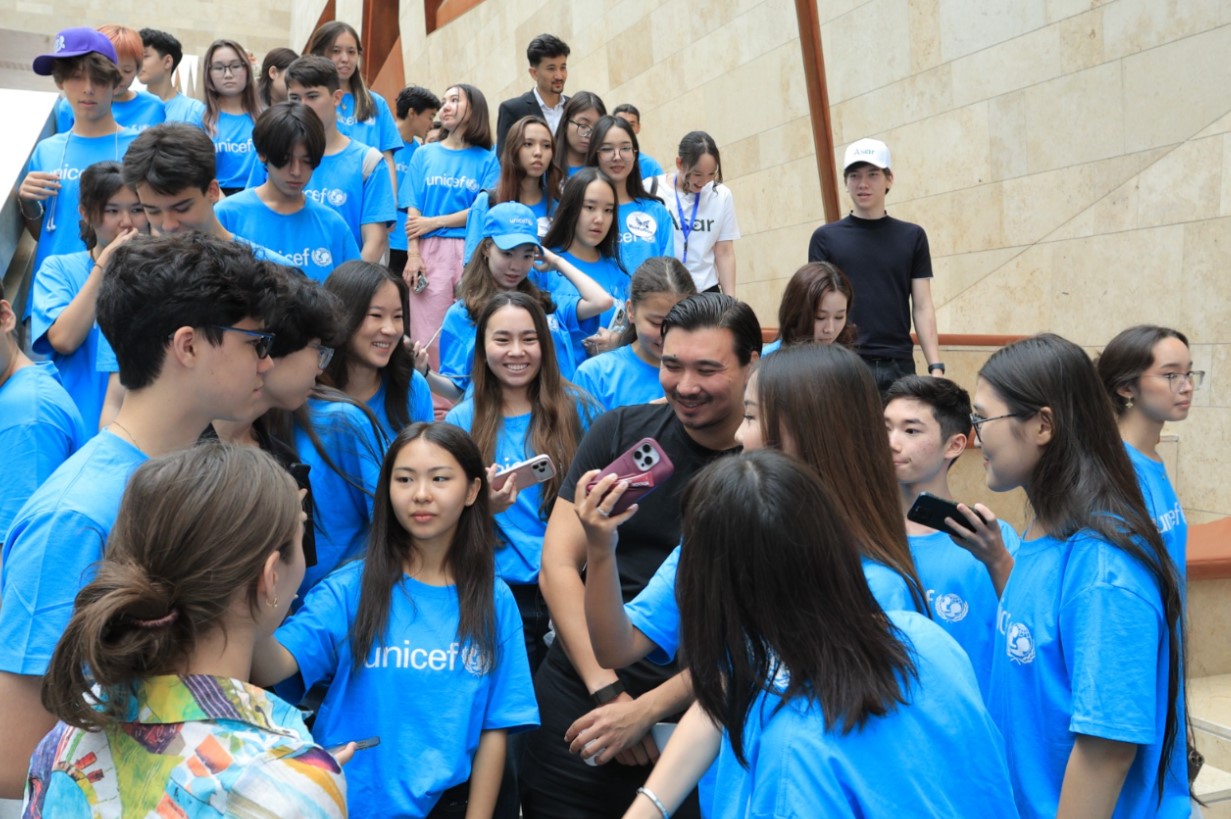
The forum covered six major areas, ranging from green skills and climate action to digital literacy and the use of artificial intelligence.
Participants attended panel discussions involving government representatives, university leaders and international experts. Workshops and TEDx-style talks gave young people a chance to discuss entrepreneurship, investment, financial literacy, AI and sustainable development with people already working in these fields.
Among the speakers were Ukili Omarova of Soile AI, Kunekey Nurlan, Zhuldyz Saulebekova of Almaty Air Initiative and Talgat Kantayev of Investbanq.
The format reflected a broader shift in youth forums: young participants increasingly expect not only inspiration, but practical knowledge, access to experts and opportunities to turn an idea into something that can actually work.
A new UNICEF Zhastary Hub opens in Almaty
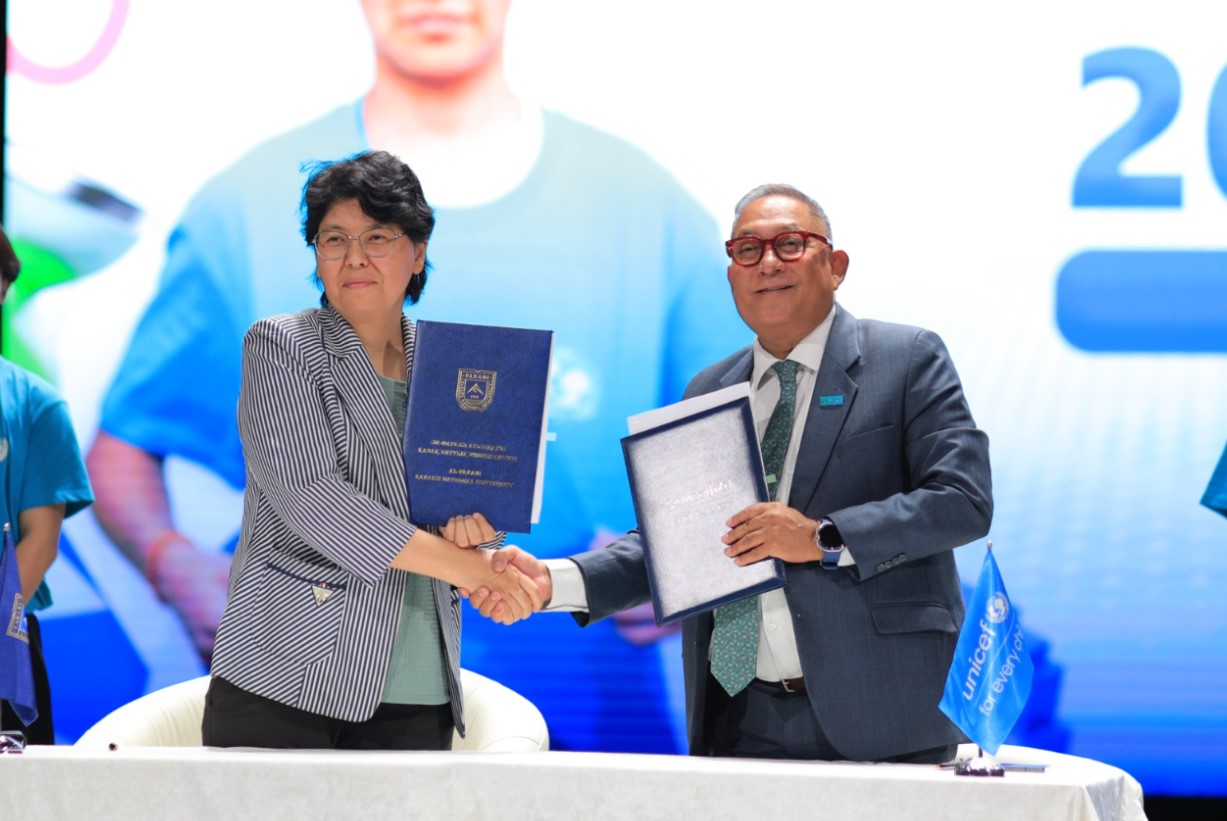
One of the main announcements of the first day was the creation of a new UNICEF Zhastary Hub at Al-Farabi Kazakh National University.
UNICEF and the university signed a memorandum of cooperation, with the new hub expected to become a permanent platform for volunteering, youth initiatives and sustainable development projects.
Alina Galeyeva, Vice-Rector for Academic Affairs at Al-Farabi Kazakh National University, described the initiative as an investment in a new type of student leadership.
“For us, the opening of the UNICEF Zhastary Hub is an investment in youth leadership. We want the university to become a place where not only professionals are born, but also initiatives capable of bringing real benefits to society.”
211 applications — and only 29 finalists
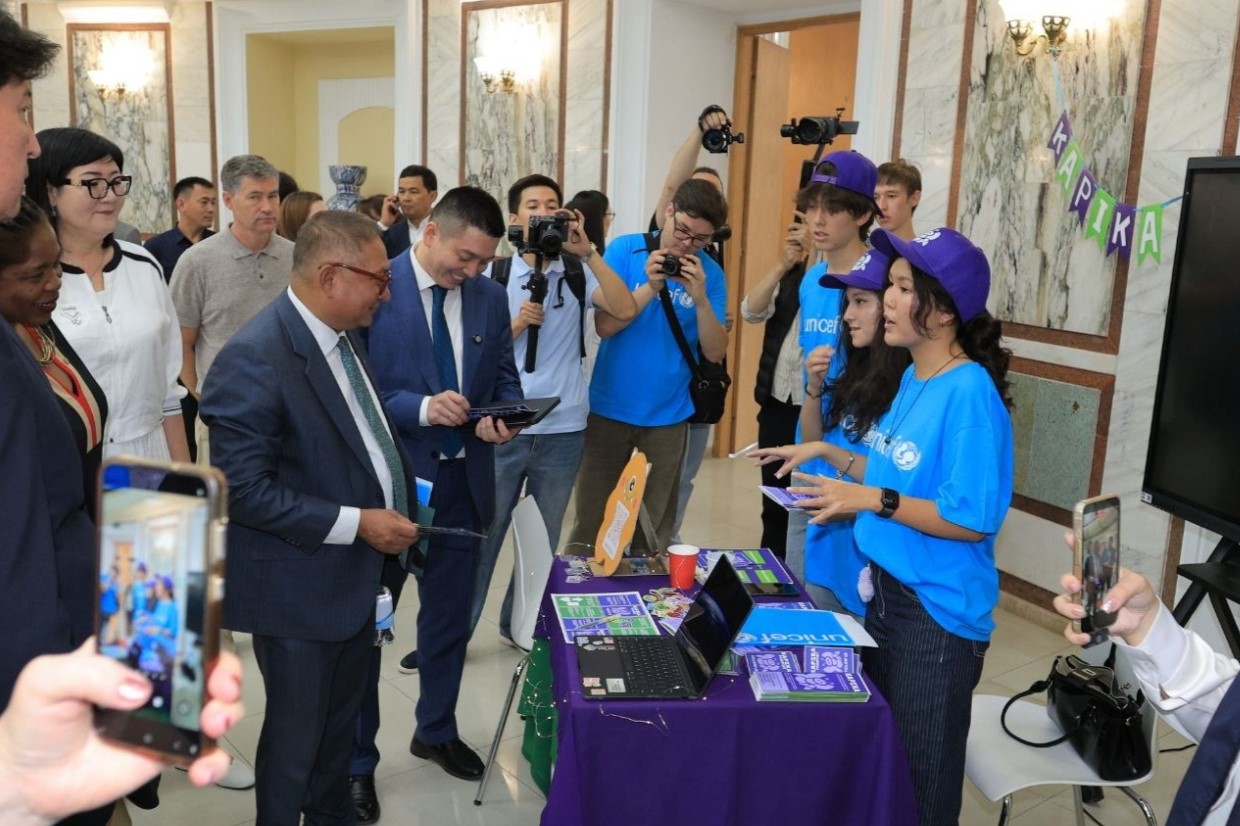
One of the most competitive parts of the forum was its Youth Projects Exhibition.
Organizers received 211 applications from across Kazakhstan and Kyrgyzstan, but only 29 projects made it to the final exhibition.
The finalists worked in areas ranging from artificial intelligence and cybersecurity to ecology, inclusive education, entrepreneurship and climate adaptation.
Some of the projects stood out because they addressed problems that are particularly relevant to Central Asia.
GLOFcast, for example, uses artificial intelligence and satellite data to build an early-warning system for glacial lake outburst floods.
Such events can pose serious risks in mountainous regions. The idea behind the project is to use technology to identify danger earlier and improve preparedness before a natural disaster occurs.
Another project, Samruq.AI, focuses on industrial safety. Its developers are building an AI-based system intended to help predict accidents at industrial facilities.
Meanwhile, EcoTube targets a problem familiar to every large city: vehicle emissions. The project proposes a technology for capturing carbon dioxide directly within a vehicle’s exhaust system.
Together, the projects showed how young developers are moving beyond abstract discussions about sustainability and attempting to turn global challenges into engineering problems that can be measured and solved.
“Youth in Central Asia has enormous potential”
UNICEF Representative in Kazakhstan Dr. Rashed Mustafa Sarwar said platforms such as the Almaty forum can help young people develop ideas while building connections across the region.
“Young people in Central Asia have enormous potential to address the complex social challenges of our time. By supporting platforms such as the Almaty Youth Forum, we aim to strengthen regional cooperation and provide young people with opportunities to develop their ideas, find like-minded people and become leaders of positive change in their communities.”
Regional cooperation was one of the recurring themes of the event.
Although many of the projects were developed around local problems, issues such as climate change, accessibility, industrial safety and digital transformation do not stop at national borders. That gives youth initiatives an opportunity to scale beyond one city or one country.

AI that gives people their voice back wins first prize
The second day moved from exhibition to competition.
Ten teams that received the highest number of votes from visitors during the first day presented their projects to an expert jury.
The winner was VoiceX from Astana.
The project is developing an AI-powered device for people who have lost their ability to speak. The technology analyzes micro-vibrations from muscles in the neck and converts them into personalized speech.
VoiceX received 1 million tenge from forum sponsor POLYMER MARKET.
The project addresses a highly human challenge: how technology can help restore not simply a function, but a person’s ability to communicate independently.
Predicting mining accidents with AI
Two projects shared second place.
Samruq.AI, developed in the Karaganda Region, is an AI-powered predictive safety platform for mines.
The system is designed to forecast potential accidents, provide autonomous communication and help emergency teams respond faster when incidents occur underground.
The second runner-up was MOVE., an Almaty-based AI platform for physiotherapy and rehabilitation clinics.
MOVE. monitors how patients perform prescribed exercises at home, giving clinics additional information that can help improve rehabilitation outcomes.
Both projects illustrate an increasingly important direction for artificial intelligence: using AI not simply to generate content, but to monitor physical processes, identify risks and support decision-making in healthcare and industry.
Carbon capture and sign-language translation among third-place projects
Third place also went to two teams.
EcoTube from Astana is developing a device designed to capture carbon dioxide in a vehicle’s exhaust system, reducing the volume of emissions released into the atmosphere.
Qyran from the Abai Region has developed an AI platform capable of translating sign language into text and speech in real time.
The technology could make everyday communication more accessible for people with hearing impairments and potentially reduce barriers to education and employment.
Teams taking second and third places will receive long-term mentoring support intended to help them develop, refine and scale their projects.
Why mentoring may matter as much as prize money
Cash awards attract attention, but young technology projects often face another problem after competitions end: how to move from a strong presentation to a sustainable product.
That requires technical development, legal and financial expertise, access to partners, testing and, eventually, investment.
For that reason, the organizers are positioning mentoring and long-term support as an important part of the forum rather than treating the event as a one-off competition.
Aziz Kazhdenbek, Head of the Almaty Youth Policy Department, said young people need an environment where initiatives can move beyond the idea stage.
“Today, it is especially important to create a space for young people where ideas turn into real projects, and initiative receives support from the state, international organizations and business. Almaty Youth Forum has become exactly such a platform, bringing together young people from Kazakhstan and Central Asia around the shared values of sustainable development and volunteering.”
Art, mental health and the wider role of youth development
Technology was only one part of the program.
In partnership with Almaty Museum of Arts, the second day also featured creative sessions exploring the role of art in positive youth development.
Participants met filmmaker Aisultan Seitov, joined creative workshops and took part in discussions on mental health and violence prevention.
The mix was intentional: sustainable development is increasingly understood not simply as an environmental or economic issue, but as a broader question of whether communities are healthy, inclusive and able to give young people opportunities to participate.
Almaty wants the forum to become an annual regional platform
Organizers now plan to make Almaty Youth Forum an annual event for young leaders from across Central Asia.
The ambition is to create a platform that does more than identify promising projects once a year.
The longer-term goal is to help young teams continue developing their ideas, connect them with mentors and partners, and turn early-stage initiatives into solutions that can have measurable social impact.
If that model works, Almaty Youth Forum could become part of a growing regional ecosystem where a student project can move from a university classroom to a competition, from a competition to a pilot — and eventually from a pilot to a technology used in the real world.
For the young teams presenting in Almaty, that may be the most important outcome of all.
About UNICEF
UNICEF works to protect the rights and well-being of every child. Together with its partners, the organization operates in 190 countries and territories, with particular attention to children and communities facing the greatest disadvantages and isolation.